AI Integration · Developer Tools
Grok 4.5: Is xAI's Cursor-Trained Coding Model Worth Switching To?
xAI and Cursor shipped Grok 4.5 on July 8, trained on trillions of tokens of real Cursor usage data, priced at $2/$6 per million tokens. Here's how it actually compares to GPT-5.6 and Claude Opus 4.8 on price and where it fits your stack.

Abhishek Gupta
4 min read
Sponsored
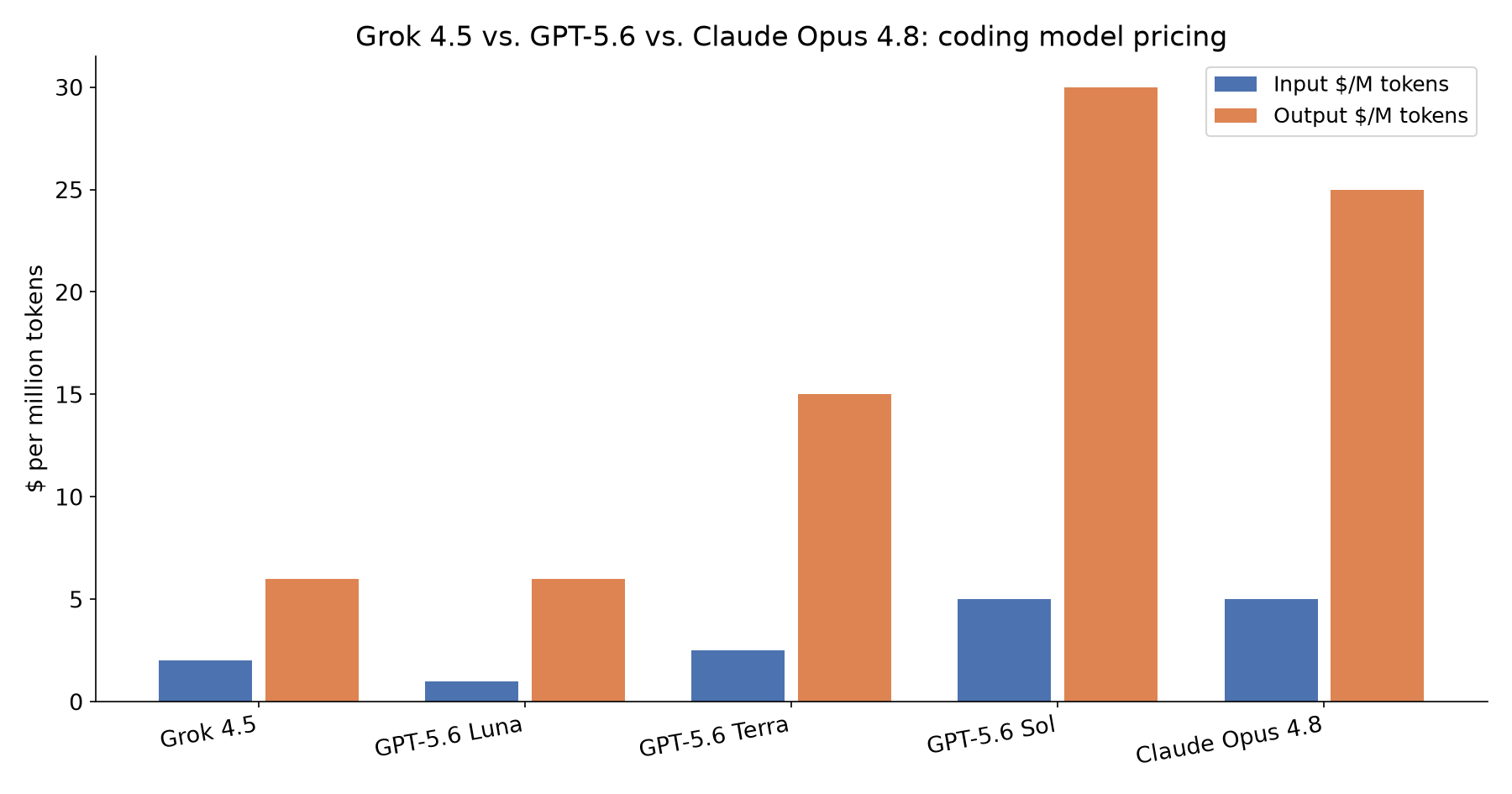
xAI and Cursor shipped Grok 4.5 on July 8, and the headline number is the pricing, not the benchmark chart. At $2 per million input tokens and $6 per million output tokens, it undercuts Claude Opus 4.8’s published $5/$25 rate by more than half, while xAI is positioning it as competitive with Opus-class reasoning for coding and agentic work.
Whether that positioning holds up on your codebase is a separate question from whether the number is real. The number is real. Here’s what else is.
What’s actually new here
The technical pitch is the training data, not a new architecture. Grok 4.5 is a mixture-of-experts model trained in part on trillions of tokens of real Cursor user interactions: actual developers editing, debugging, and navigating live codebases inside their editor, layered on top of general STEM tasks and research papers. That’s a different data source than the public-code-plus-documentation mix most coding models train on, and the argument is that it teaches patterns around how developers actually work through a problem, not just what correct code looks like at rest.
It ships broadly from day one: desktop, web, iOS, CLI, and SDK, with usage allotments doubled for the first week to encourage trial.
Pricing, side by side
This is the part worth the five minutes to actually look at, because the gap is large enough to matter for any team running meaningful volume.
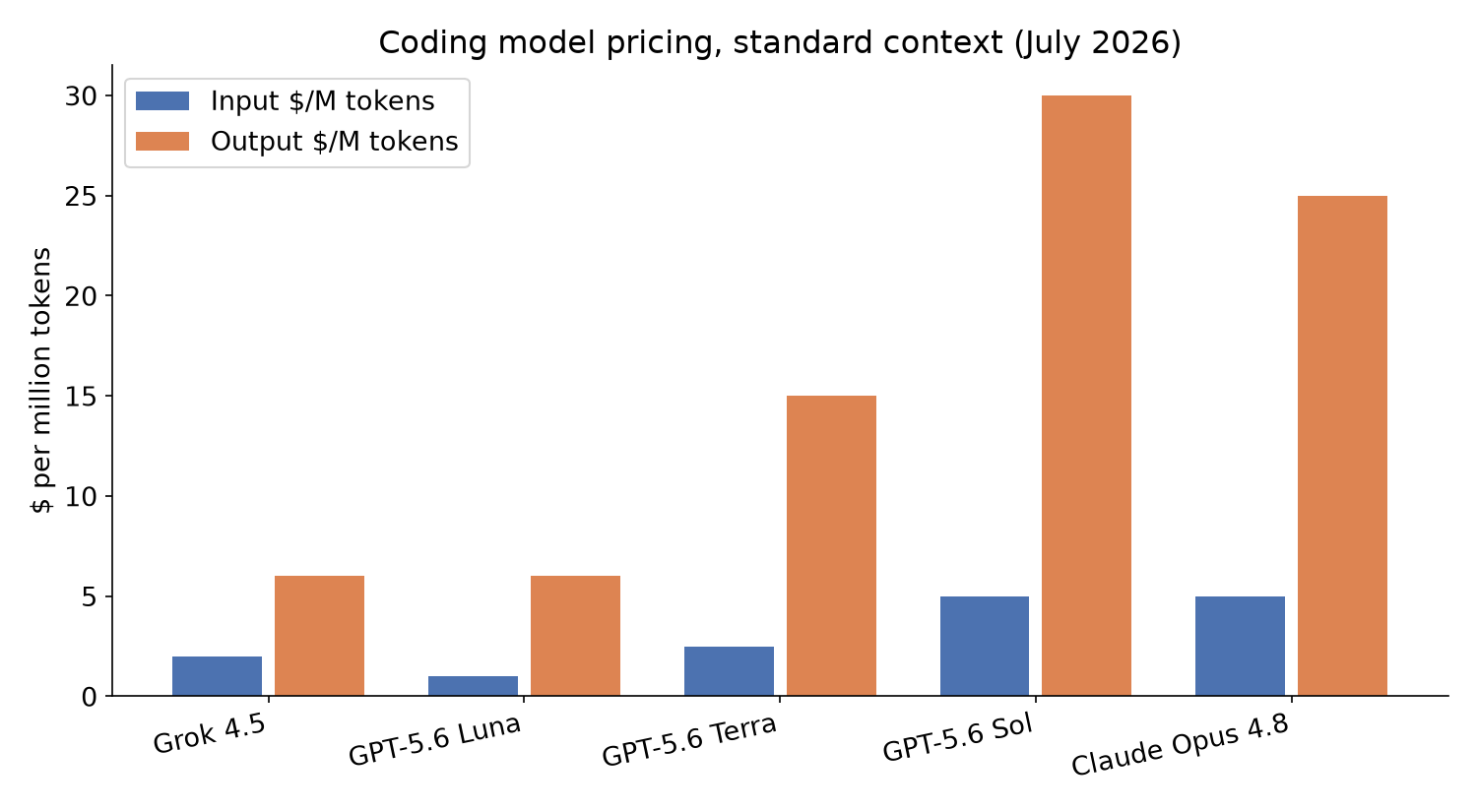
| Model | Input $/M | Output $/M | Context before price doubles |
|---|---|---|---|
| Grok 4.5 | $2.00 | $6.00 | 200K tokens |
| GPT-5.6 Luna | $1.00 | $6.00 | N/A |
| GPT-5.6 Terra | $2.50 | $15.00 | N/A |
| GPT-5.6 Sol | $5.00 | $30.00 | N/A |
| Claude Opus 4.8 | $5.00 | $25.00 | N/A |
Grok 4.5 sits almost exactly between OpenAI’s cheapest tier (Luna) and its mid tier (Terra) on input, while beating Terra on output by more than half. Against Opus 4.8, the gap is stark: 60% cheaper on input, 76% cheaper on output, for a model claiming comparable coding capability. If that claim holds even loosely, it’s a meaningful shift in what “frontier-adjacent” coding assistance costs.
The claim you should verify yourself
Elon Musk’s framing, an “Opus-class model, but faster, more token-efficient and lower cost,” is xAI’s own marketing language at launch, not an independent evaluation. That doesn’t make it wrong, but it means the number to trust at this point is the price, which is contractual and fixed, not the capability comparison, which is a claim from the party selling the model.
The realistic way to find out is a scoped test: take one real, moderately complex task from your actual backlog, something with enough surface area to expose weaknesses, and run it through Grok 4.5 alongside whatever your team uses today. Compare output quality, not just speed, since a fast wrong answer costs more in review time than a slower correct one. This is the same evaluation discipline we’ve recommended for comparing frontier coding models generally: benchmarks tell you what a lab wants to highlight, your own codebase tells you what actually matters.
Where it plausibly fits
Given the pricing and the Cursor-native training story, Grok 4.5 looks best suited to two situations right now:
- Teams already inside the Cursor ecosystem, where the model’s training data should, in theory, align well with how Cursor’s agent mode already operates.
- High-volume, cost-sensitive workloads, like large-scale code review, automated refactoring passes, or agentic tasks running thousands of calls a day, where a 60-75% cost reduction against Opus-class pricing compounds fast even if raw capability is a notch below.
It’s a weaker case, at least until independent benchmarks land, for teams doing the hardest reasoning-heavy work: deep architectural review, security analysis, or debugging the kind of subtle concurrency bug where an extra 10% of reasoning quality is worth paying 4x for.
The bottom line
Grok 4.5 is a real, meaningfully cheaper option that showed up with day-one availability across every major surface, not a limited preview. The pricing alone justifies a trial. The capability claims justify skepticism until you’ve run your own comparison. Do both, in that order, before you route production traffic through it.
Frequently asked questions
- What is Grok 4.5?
- Grok 4.5 is a coding and agentic-tasks model released jointly by xAI and Cursor on July 8, 2026. It's a mixture-of-experts model trained partly on trillions of tokens of real Cursor user interactions with live codebases, in addition to general STEM and research data, and is aimed at software engineering, data science, and general computer-based problem solving.
- How much does Grok 4.5 cost compared to GPT-5.6 and Claude?
- Grok 4.5 is $2 per million input tokens and $6 per million output tokens for contexts under 200K, doubling to $4/$12 above that threshold. That undercuts Claude Opus 4.8's published $5/$25 rate substantially, and lands close to OpenAI's cheapest GPT-5.6 tier, Luna, at $1/$6, while claiming capability closer to the flagship tiers of both.
- Is Grok 4.5 actually as good as Claude Opus 4.8 for coding?
- xAI and Cursor describe it as 'Opus-class' performance at a fraction of the cost, but that's the model maker's own positioning, not a third-party benchmark result available at launch. Treat it as a claim to verify against your own workload, not an established fact.
- Where does the Cursor training data actually help?
- The pitch is that training on real, in-editor developer sessions, not just finished code on GitHub, teaches the model patterns around how developers actually navigate, debug, and iterate on a codebase, rather than just how to produce syntactically correct output. Whether that translates into a measurable quality difference on your specific stack is something you have to test, not assume.
- Should we switch our team to Grok 4.5?
- Not wholesale, not yet. Run it against a real, moderately complex task in your own codebase alongside whatever you use today, and compare on your own numbers rather than the vendor's benchmark claims. The pricing gap is real enough to be worth that hour of testing regardless of how it lands.
Sources
Sponsored
More from this category
More from AI Integration
 R.01
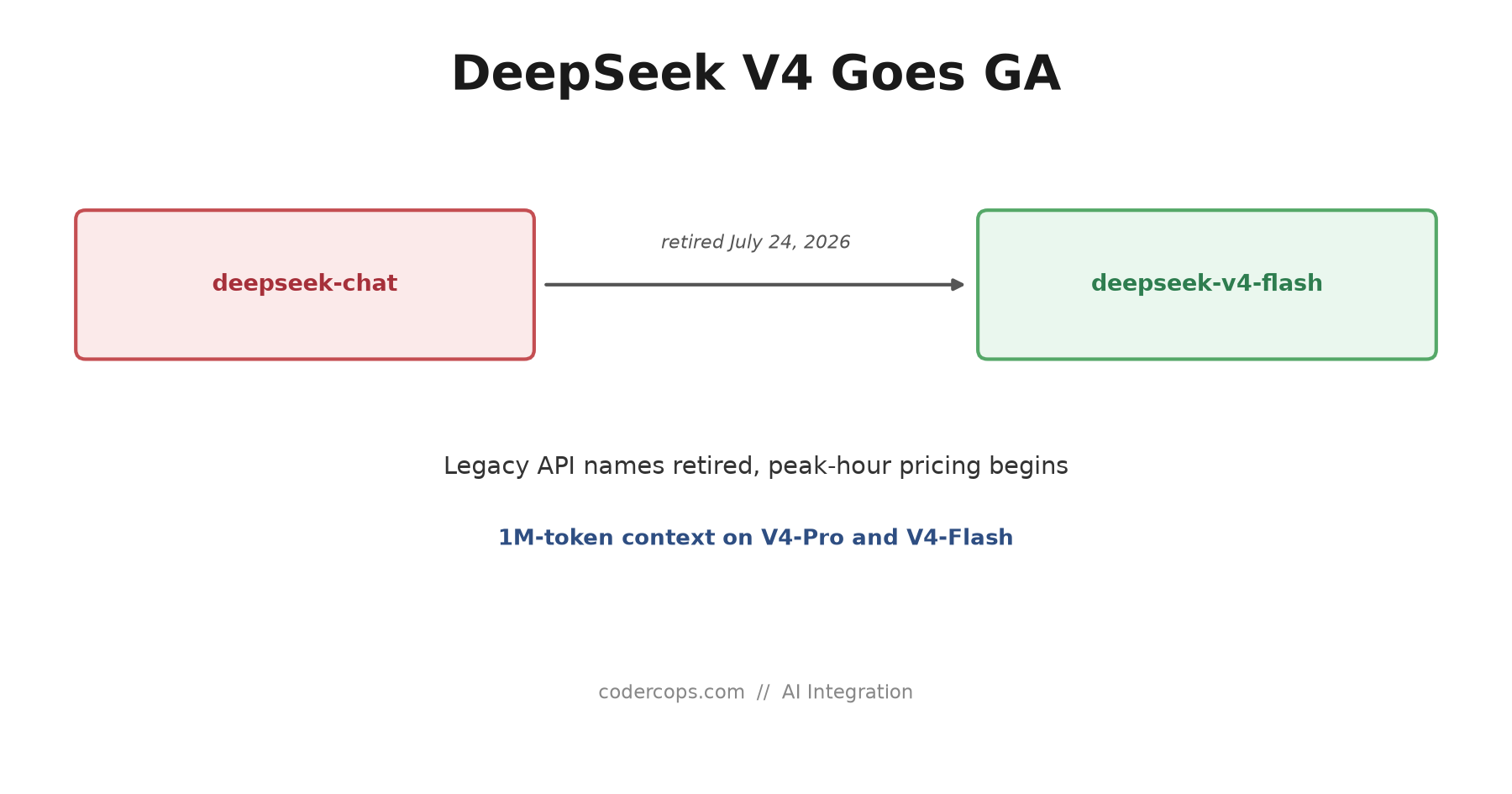
R.01 DeepSeek V4 Is Now the Only Option: The Legacy API Cutoff and What Actually Changed
 R.02
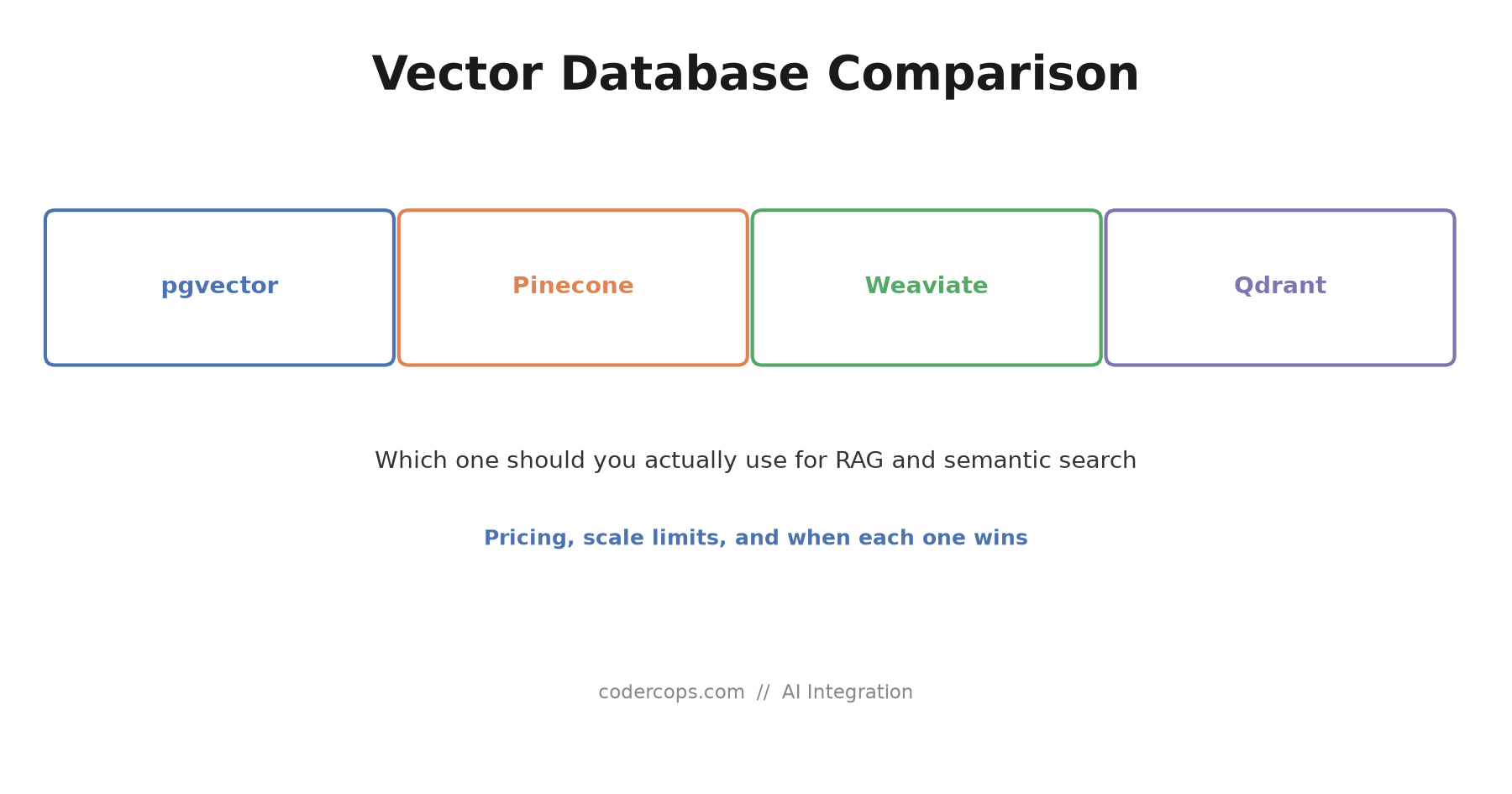
R.02 pgvector vs Pinecone vs Weaviate vs Qdrant: Which Vector Database Should You Actually Use in 2026
 R.03
R.03 OpenAI Presence: What a Guardrailed Enterprise Agent Platform Means for Product Teams
Sponsored
Discussion
Join the conversation.
Comments are powered by GitHub Discussions. Sign in with your GitHub account to leave a comment.
Sponsored