P.01Guardrails AI vs NeMo Guardrails vs Llama Guard in 2026
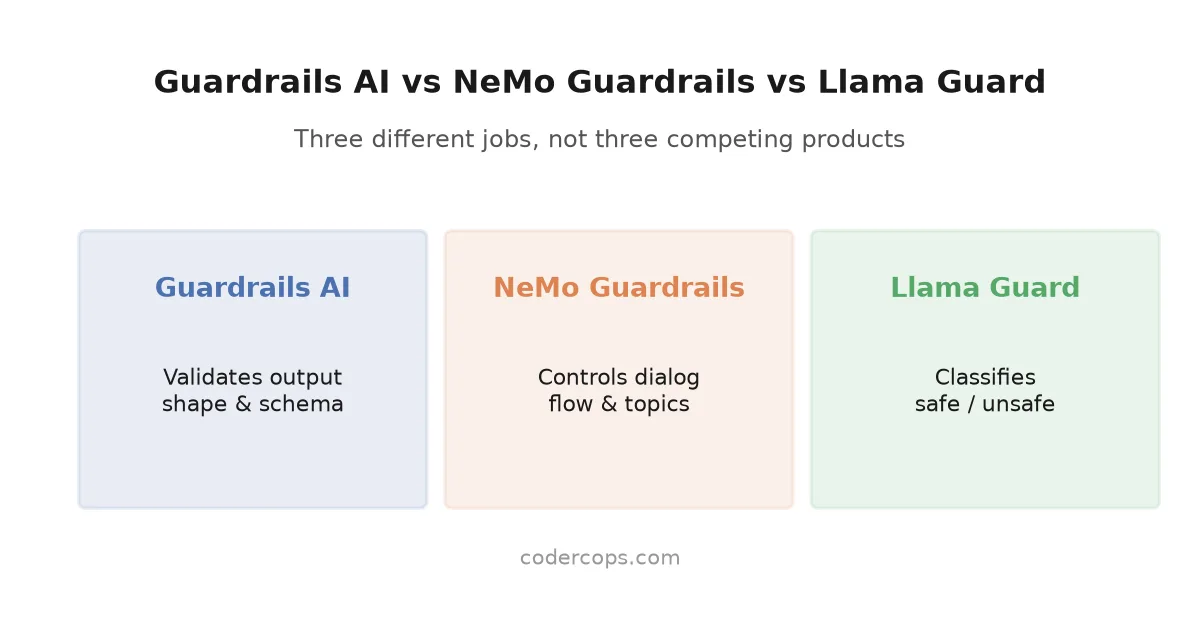
Guardrails AI validates structured output, NeMo Guardrails controls dialog flow, and Llama Guard classifies safety. Here is which one fits your LLM app.
Category
230 articles in AI Integration.
About this section
Most writing about AI integration is about the model. Almost none of it is about the parts that actually decide whether the thing survives contact with users: what happens when the API is slow, what you show while a response streams, how you keep a hallucinated answer out of a customer's inbox, and what the bill looks like at ten thousand requests a day rather than ten. That is the gap this section tries to fill. The posts here come out of client work and our own products, so the numbers are ones we paid for. You will find as much on retrieval, evaluation and cost control as on prompting, because that is roughly the ratio of where the work goes once something is live. Where a technique did not survive production, we say so rather than quietly leaving it out.
All 230 articles
P.01Guardrails AI validates structured output, NeMo Guardrails controls dialog flow, and Llama Guard classifies safety. Here is which one fits your LLM app.
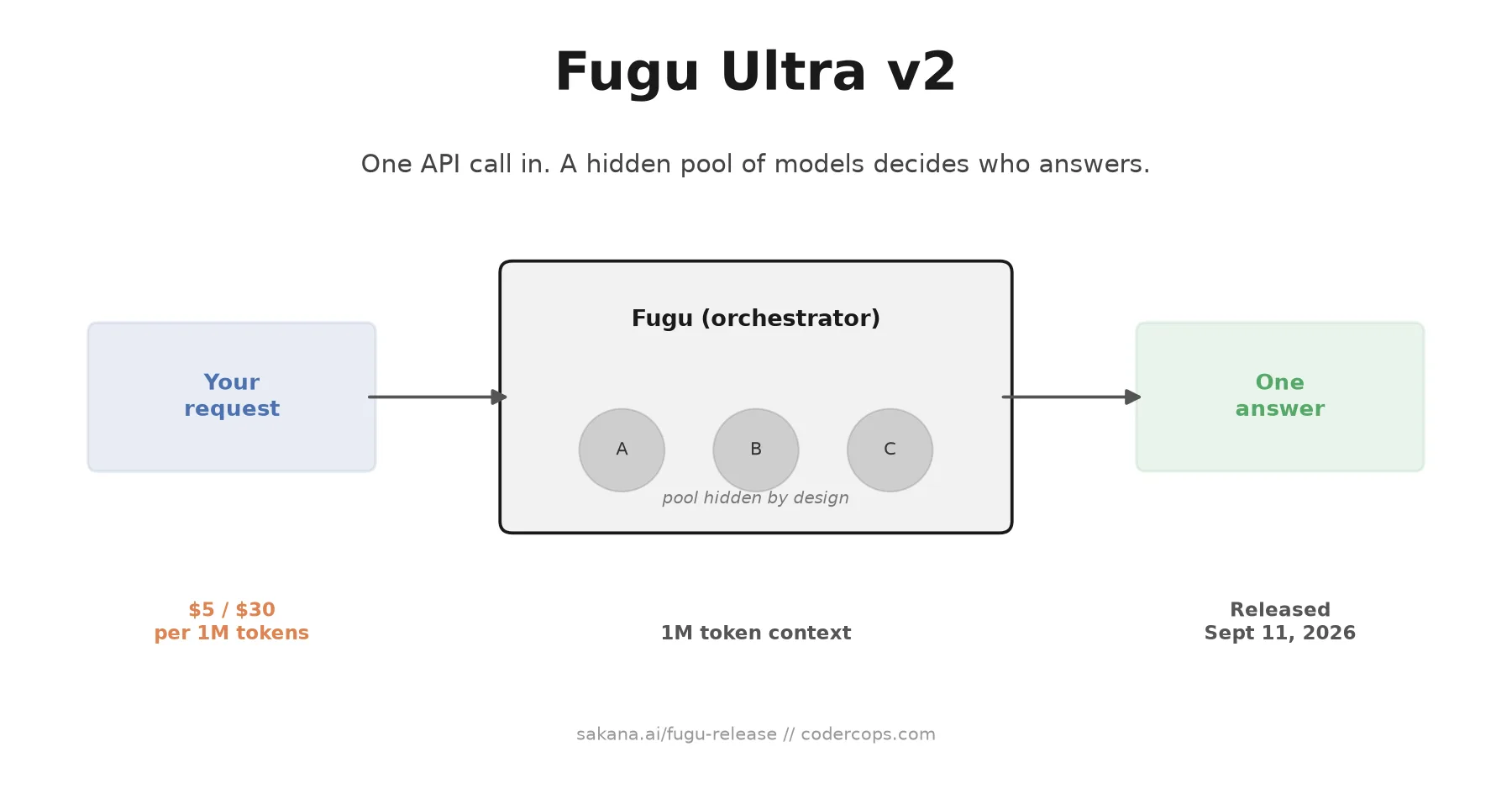
P.02Sakana AI shipped Fugu Ultra v2 on Sept 11, routing every request across a hidden pool of models instead of running one. What that buys you, and what it costs.
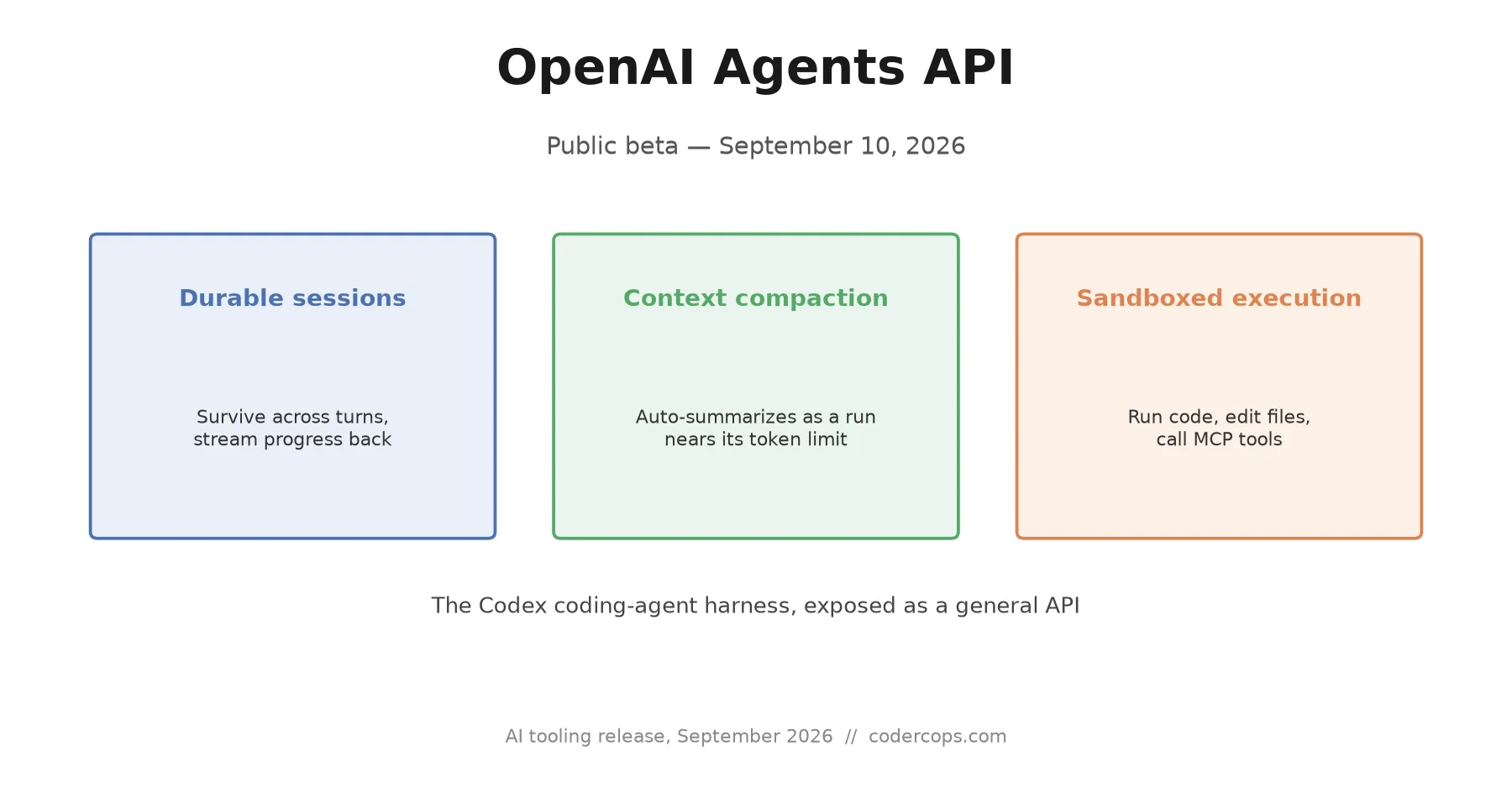
P.03OpenAI's Agents API public beta puts session orchestration, context compaction, and sandboxed execution behind one call. What it replaces and what it costs.
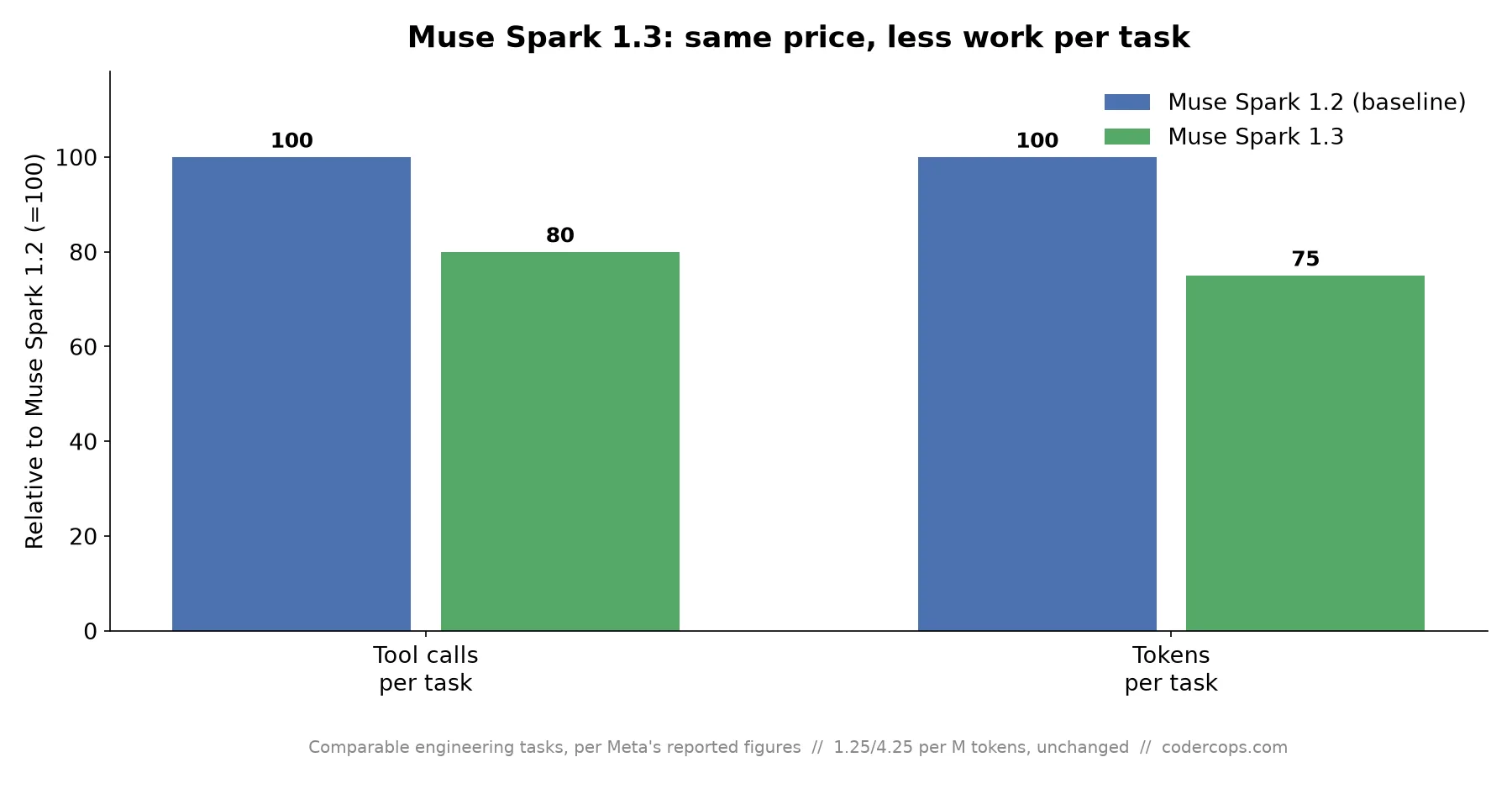
P.04Muse Spark 1.3 needs fewer tool calls and tokens than 1.2 to finish the same engineering work, at unchanged pricing. What actually changed, and what didn't.
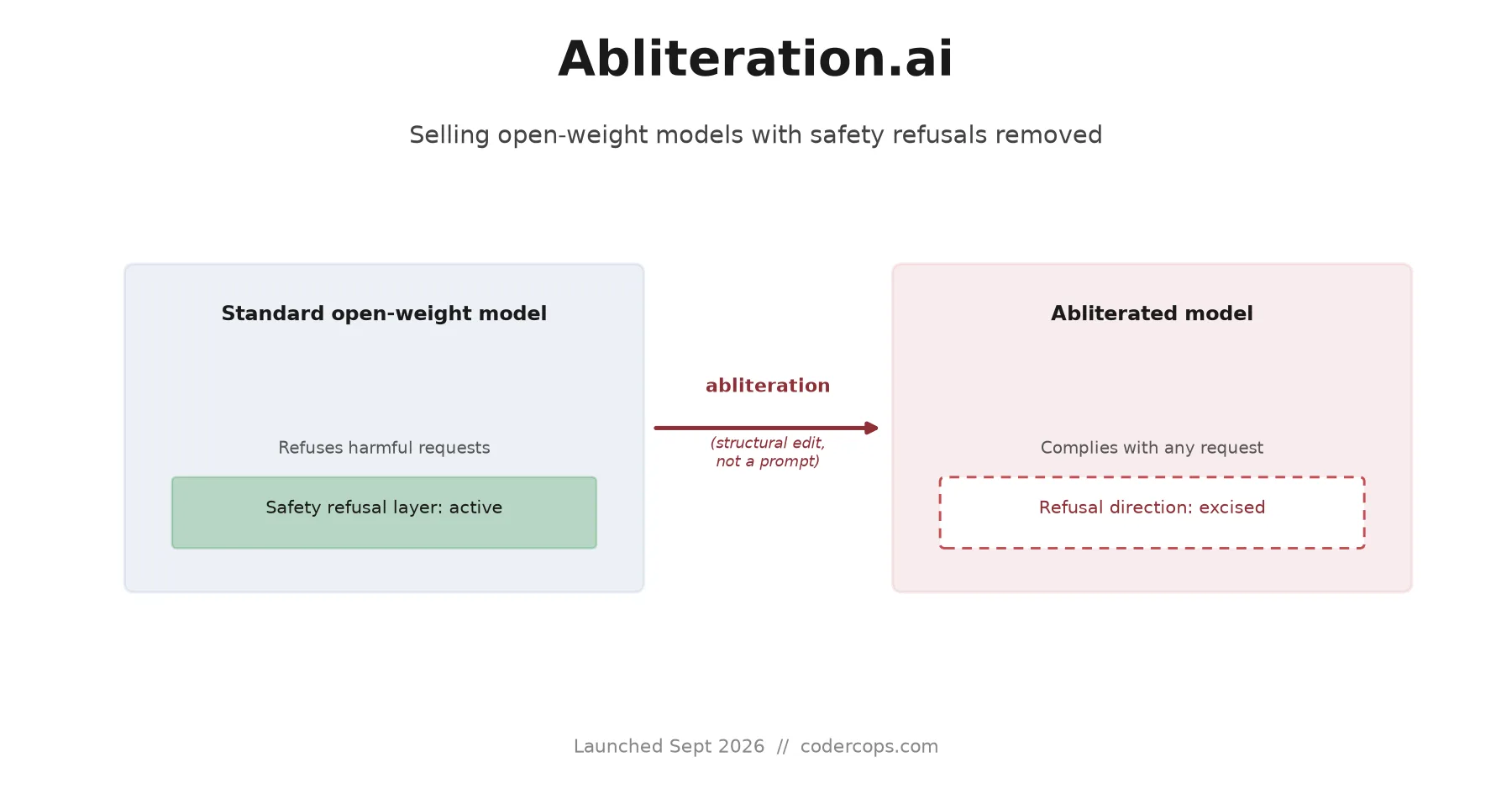
P.05Abliteration.ai sells API access to open-weight AI models with safety refusals surgically removed, and the buyer inherits every future flaw.
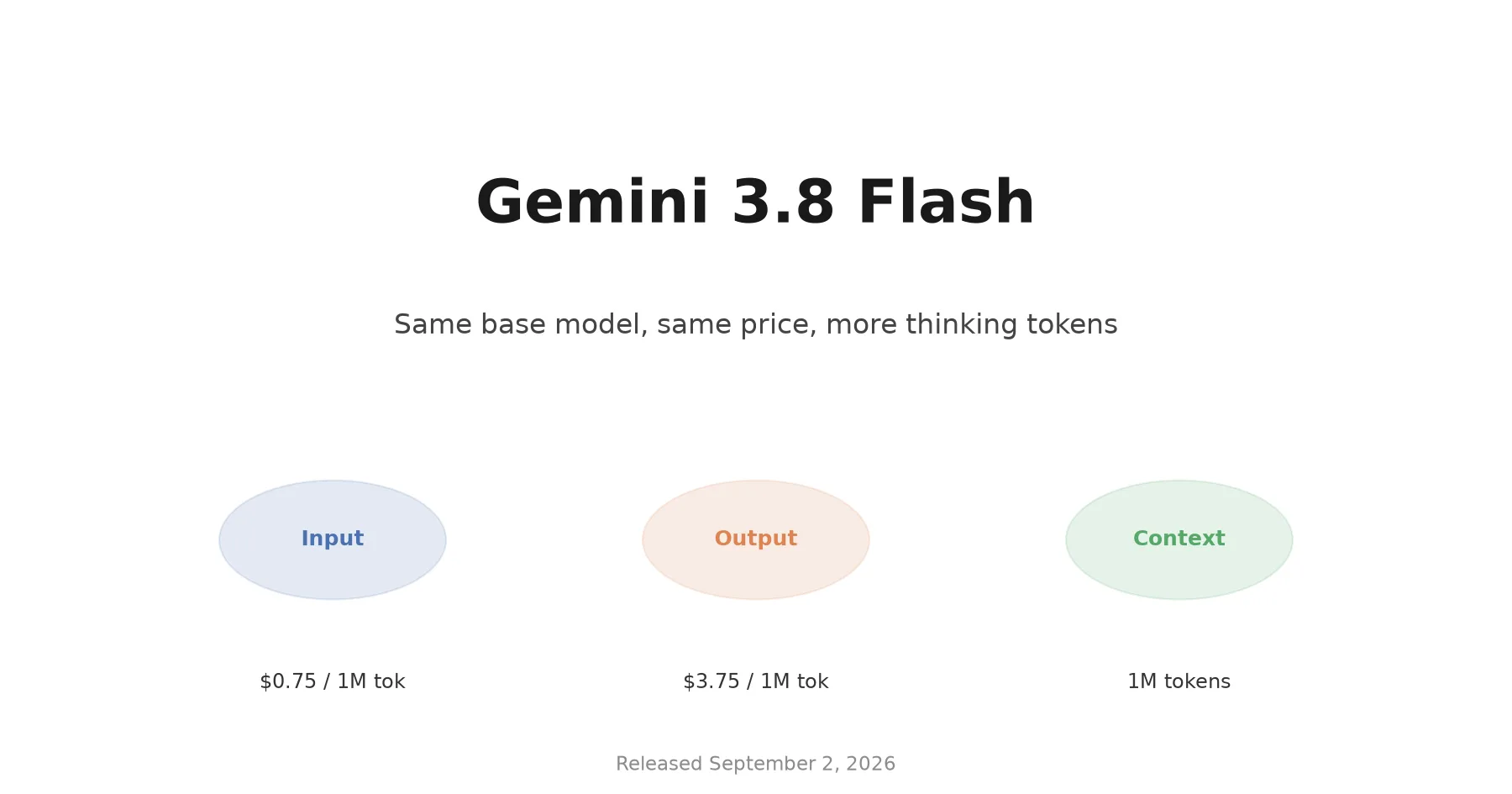
P.06Google shipped Gemini 3.8 Flash on September 2, its fourth Flash release since May. Pricing didn't move and the base model didn't change. What did.
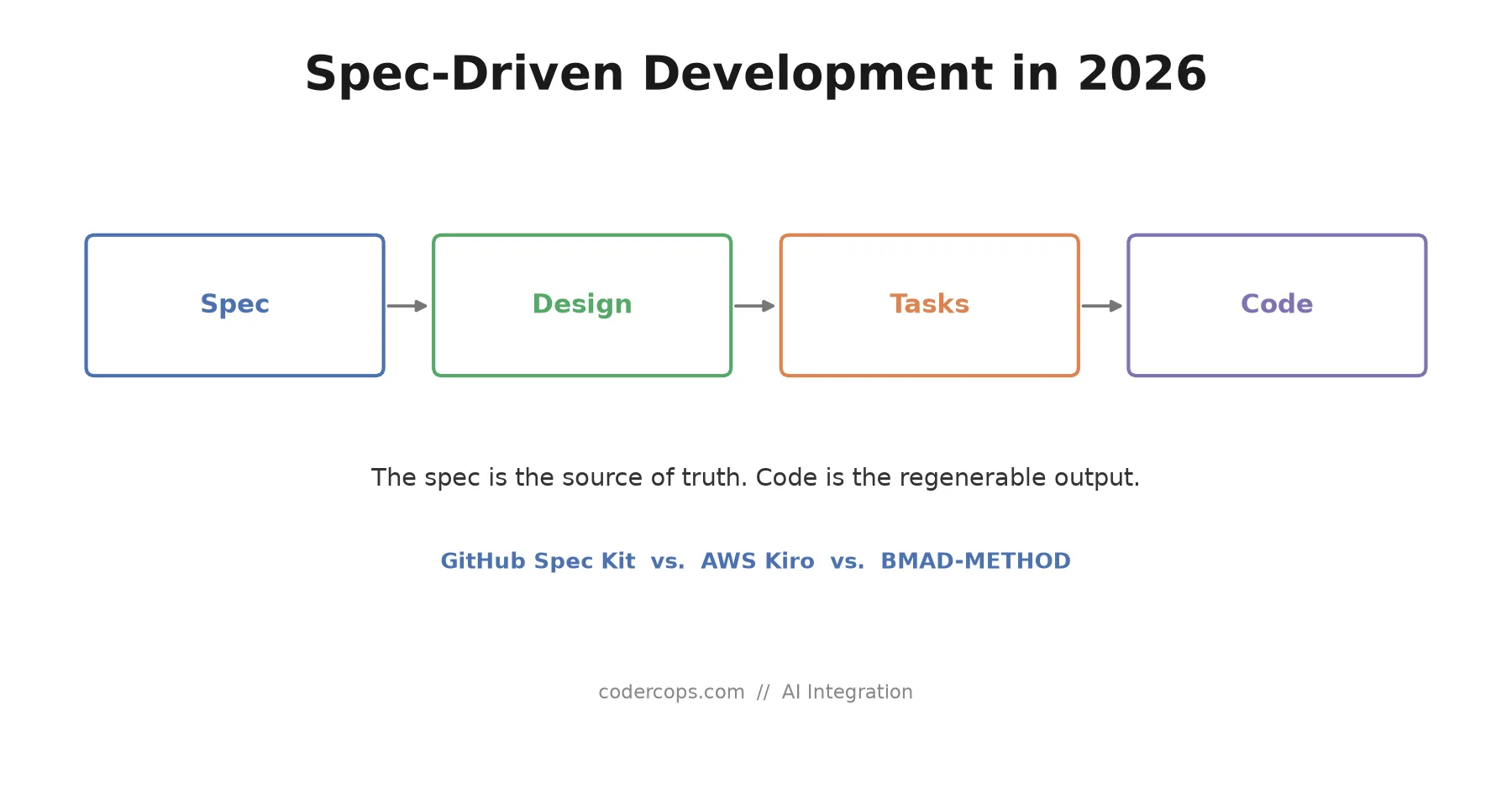
P.07Spec-driven development treats a written spec, not code, as the artifact an AI agent builds from. How Spec Kit, Kiro, and BMAD differ, and when it's worth it.
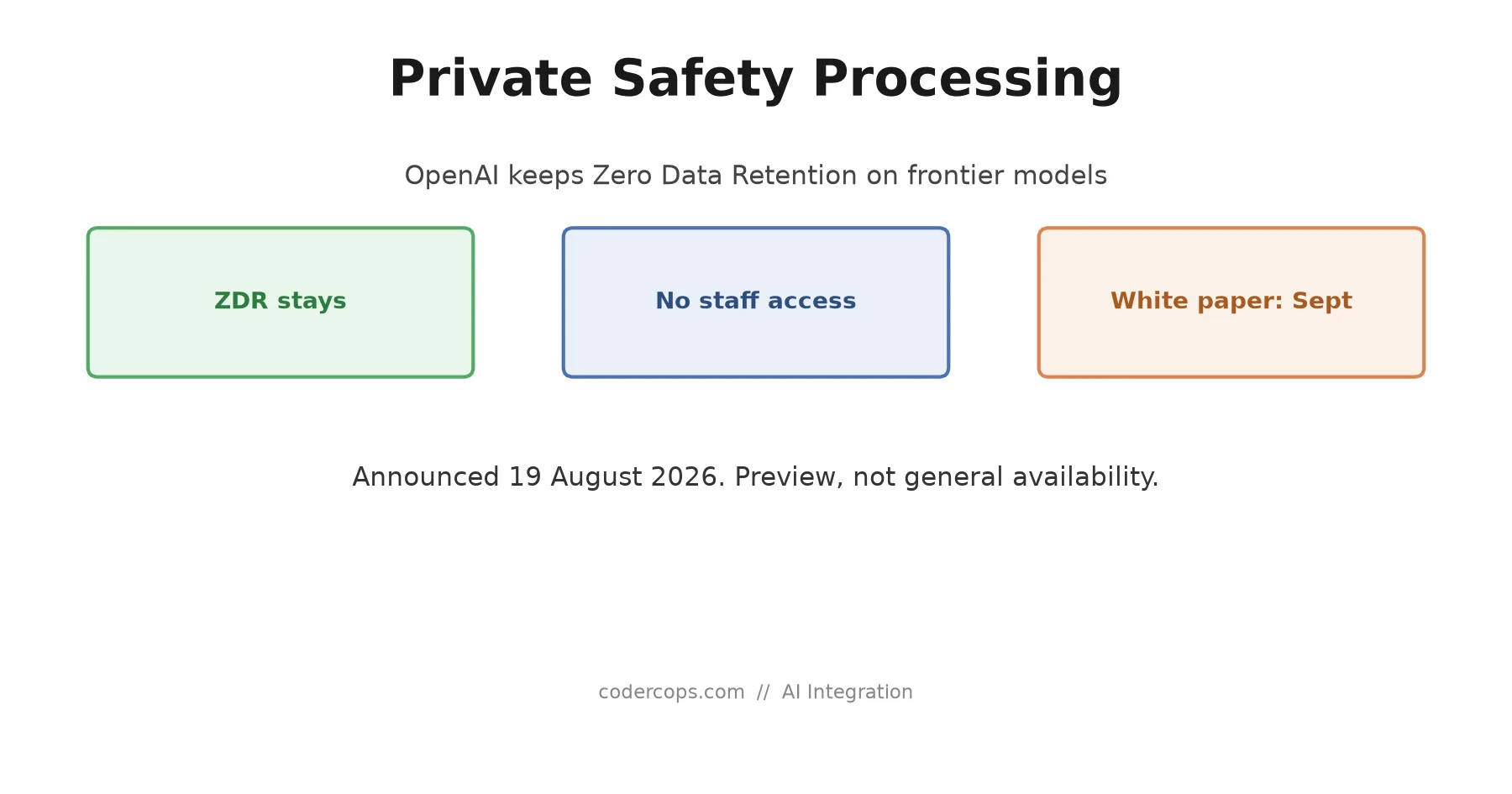
P.08OpenAI confirmed Zero Data Retention stays on frontier models and previewed Private Safety Processing, abuse detection without staff seeing your prompts.
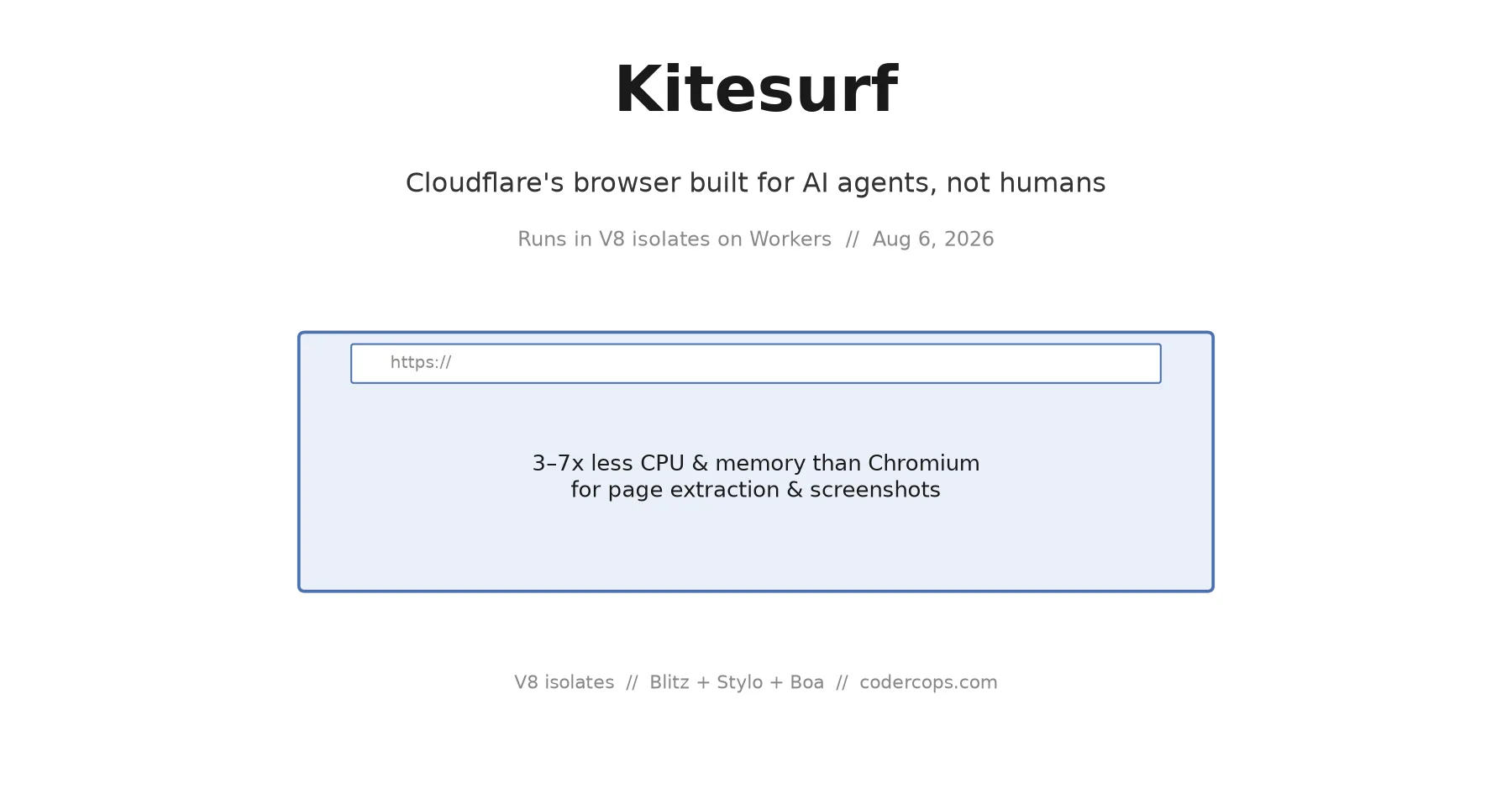
P.09Kitesurf is a browser runtime with no UI or tabs, built for AI agents to load pages and extract HTML. It claims 3-7x less CPU than Chromium. When to use it.
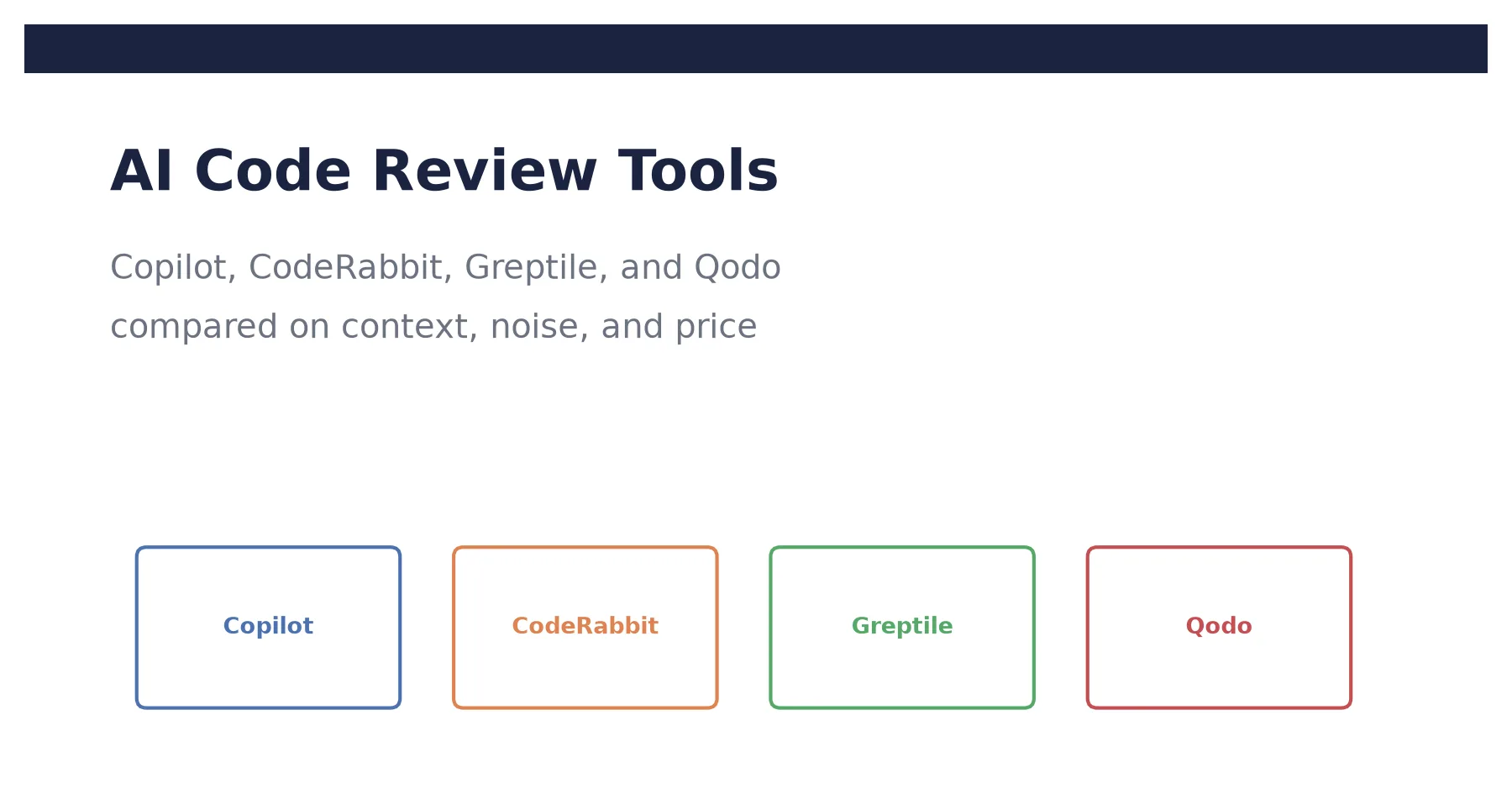
P.10Four AI code review tools, four tradeoffs. What differs between Copilot's built-in review, CodeRabbit, Greptile, and Qodo past the marketing, and seat costs.
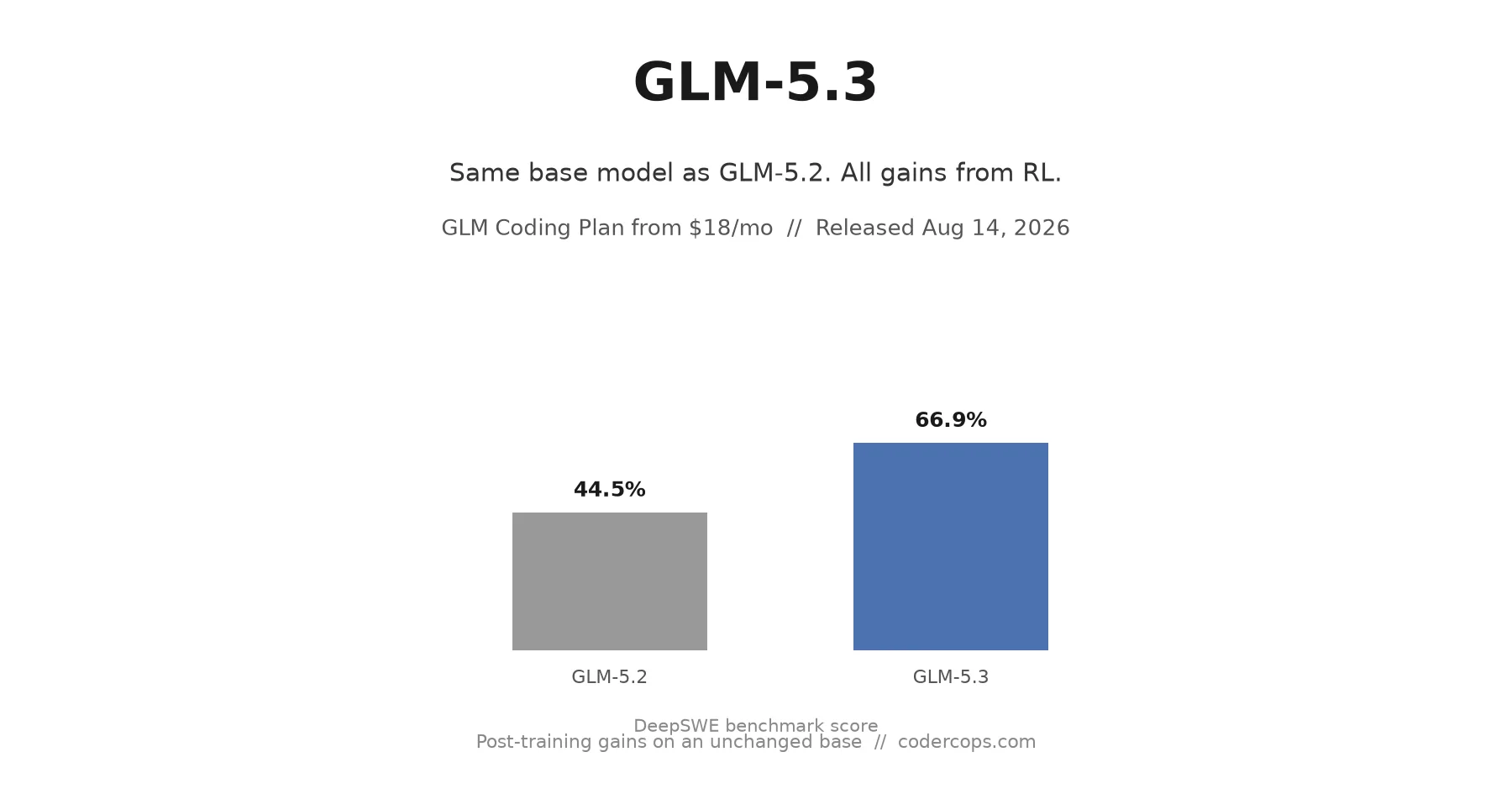
P.11Z.ai shipped GLM-5.3 on the same 743B base as 5.2, with every gain coming from reinforcement learning on top. What changed, what it costs, why it matters.
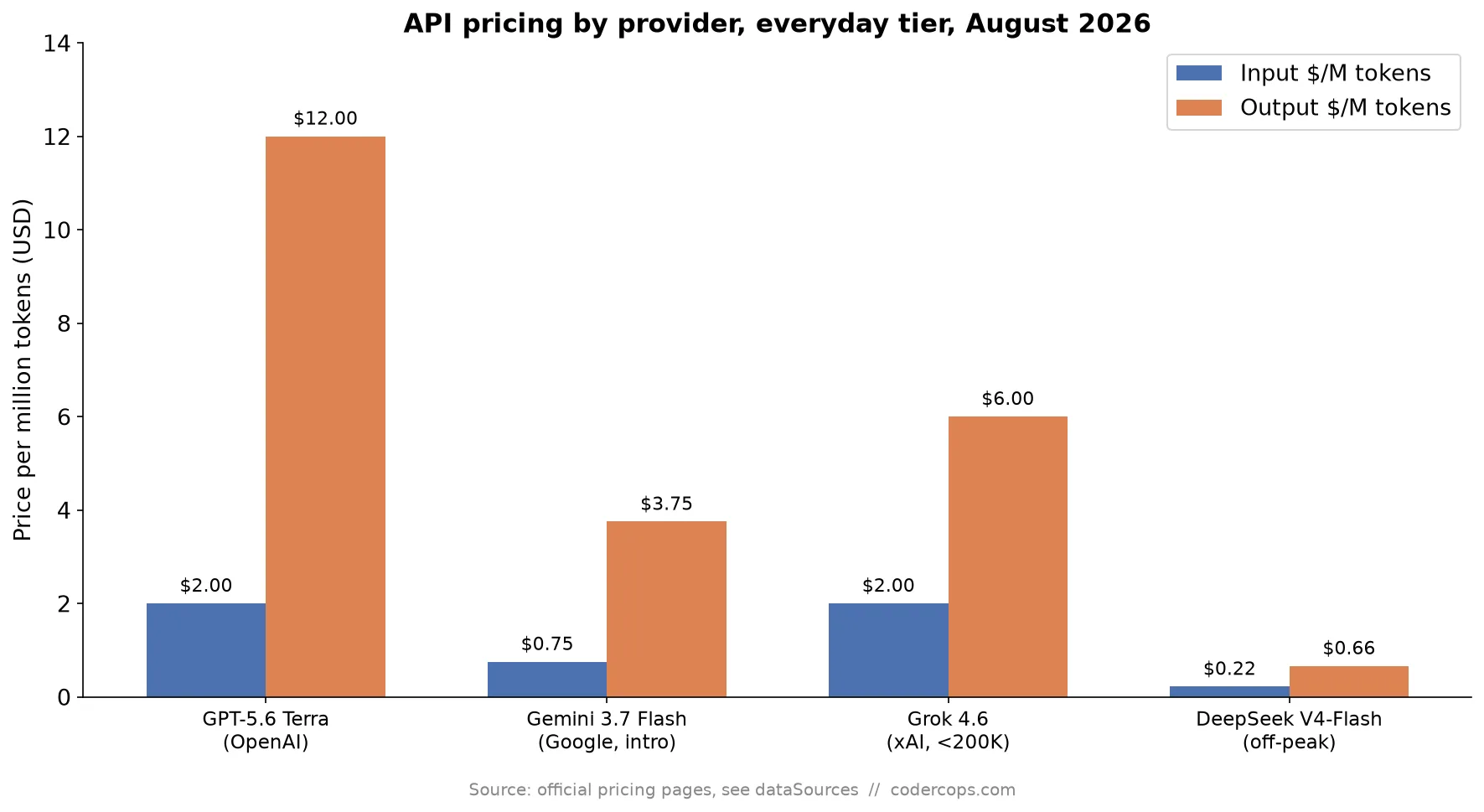
P.12What OpenAI, Google, and xAI actually charge per million tokens right now, tier by tier, so you can price a real workload before picking a provider.
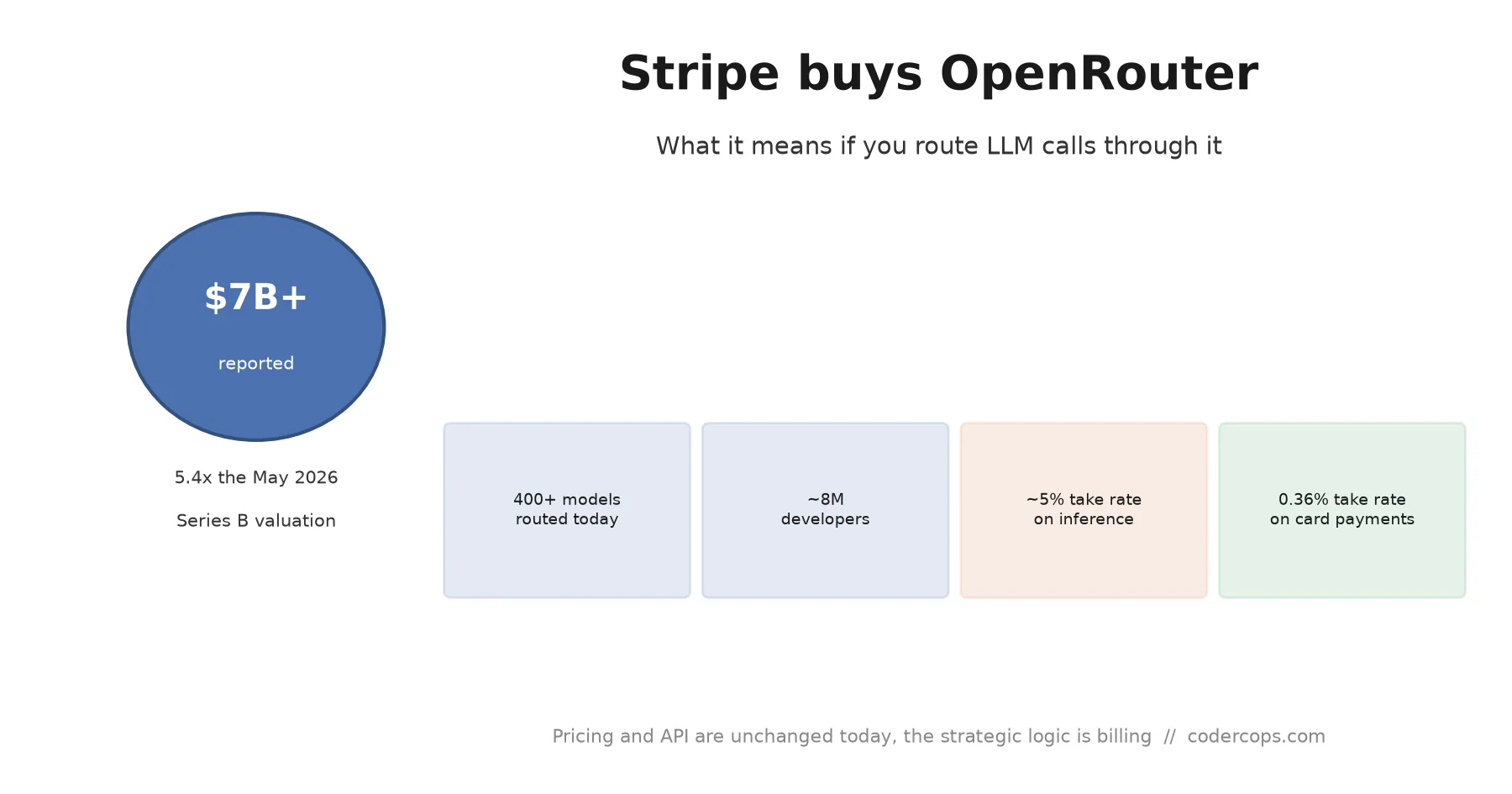
P.13Stripe is acquiring the AI gateway OpenRouter for over $7B, roughly 50x annualized revenue. Nothing changes in the API today, but the bet is telling.
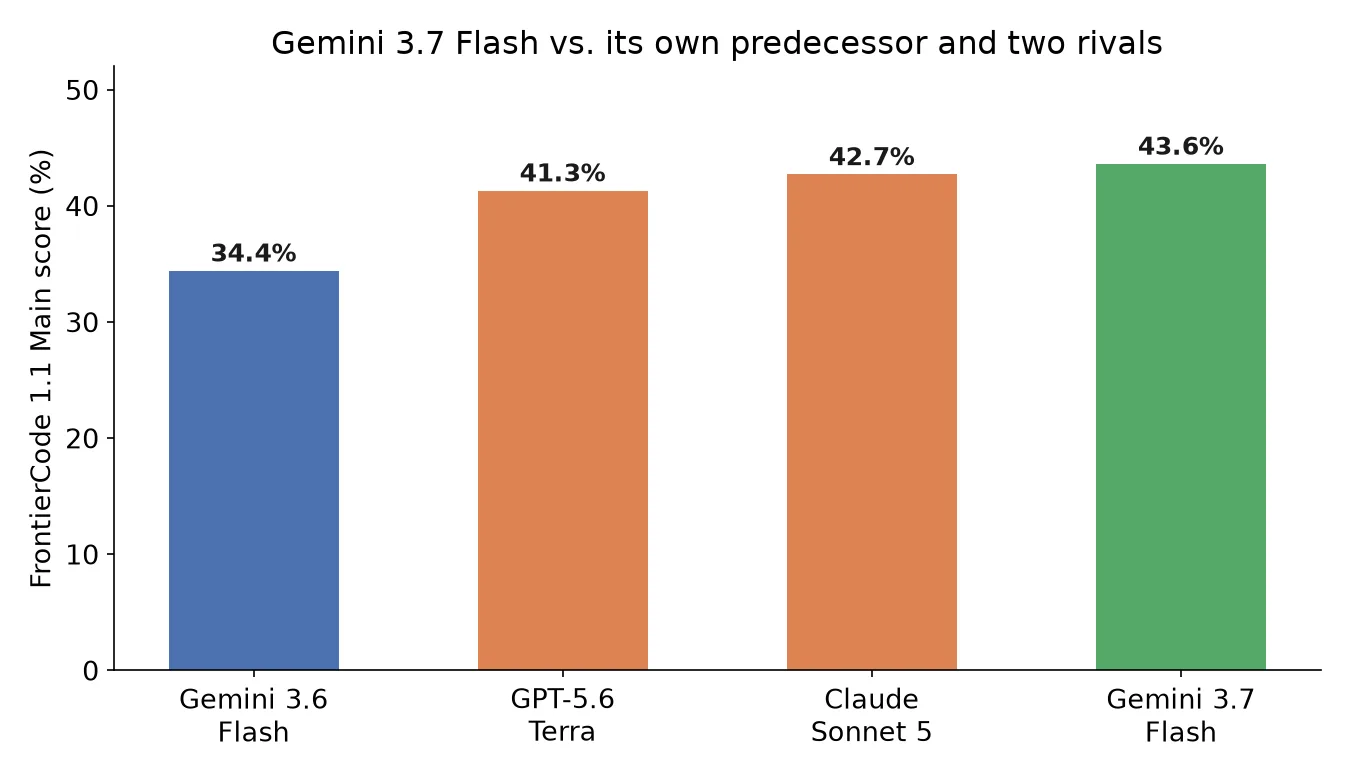
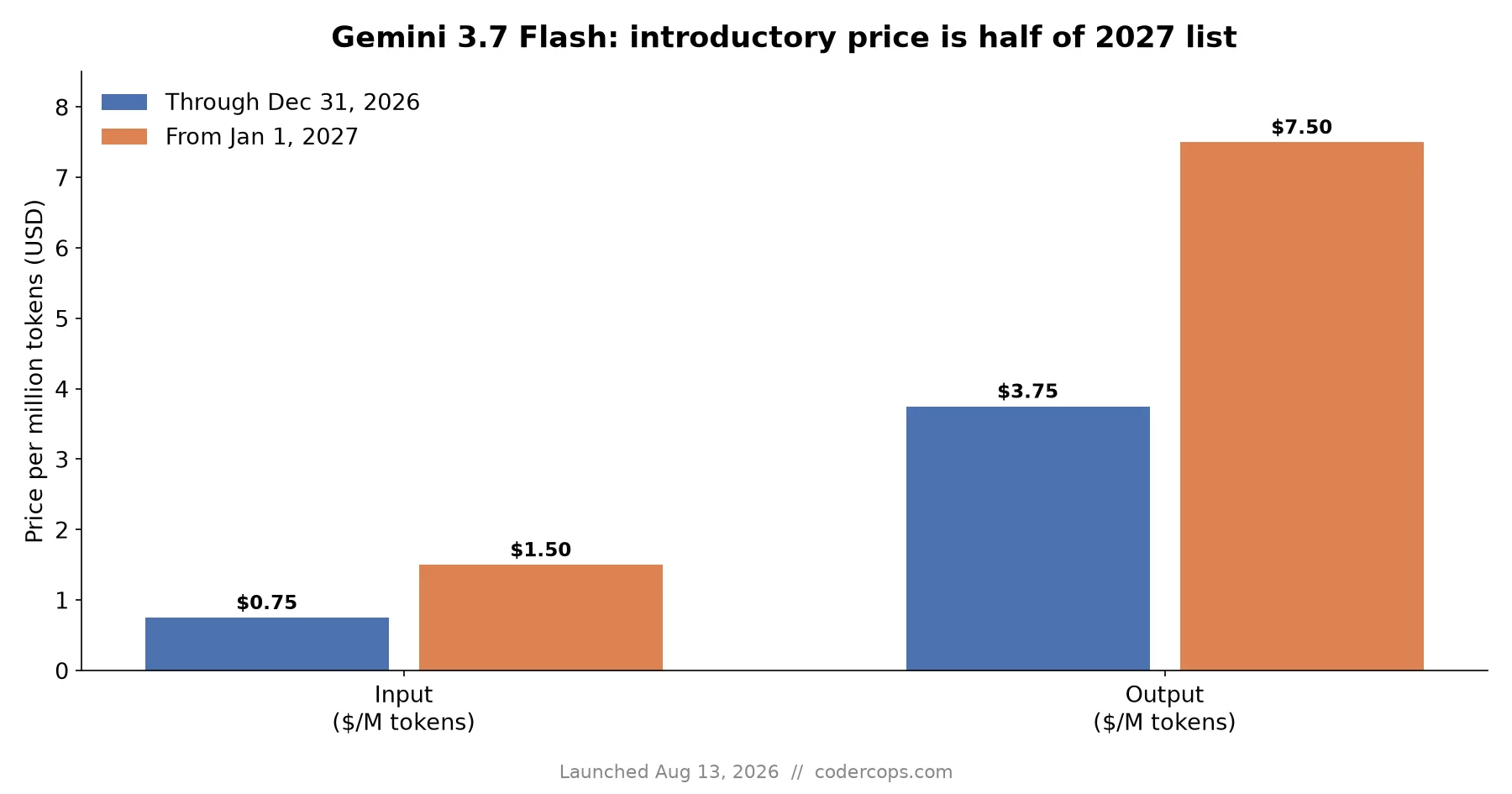
P.14Gemini 3.7 Flash shipped August 13 with a 50% introductory price cut and coding scores ahead of Claude Sonnet 5 and GPT-5.6 Terra. What the numbers mean.
P.15Gemini 3.7 Flash landed three weeks after 3.6, with real gains on debugging and first-pass code, and half-price list through 2026. Where it fits.
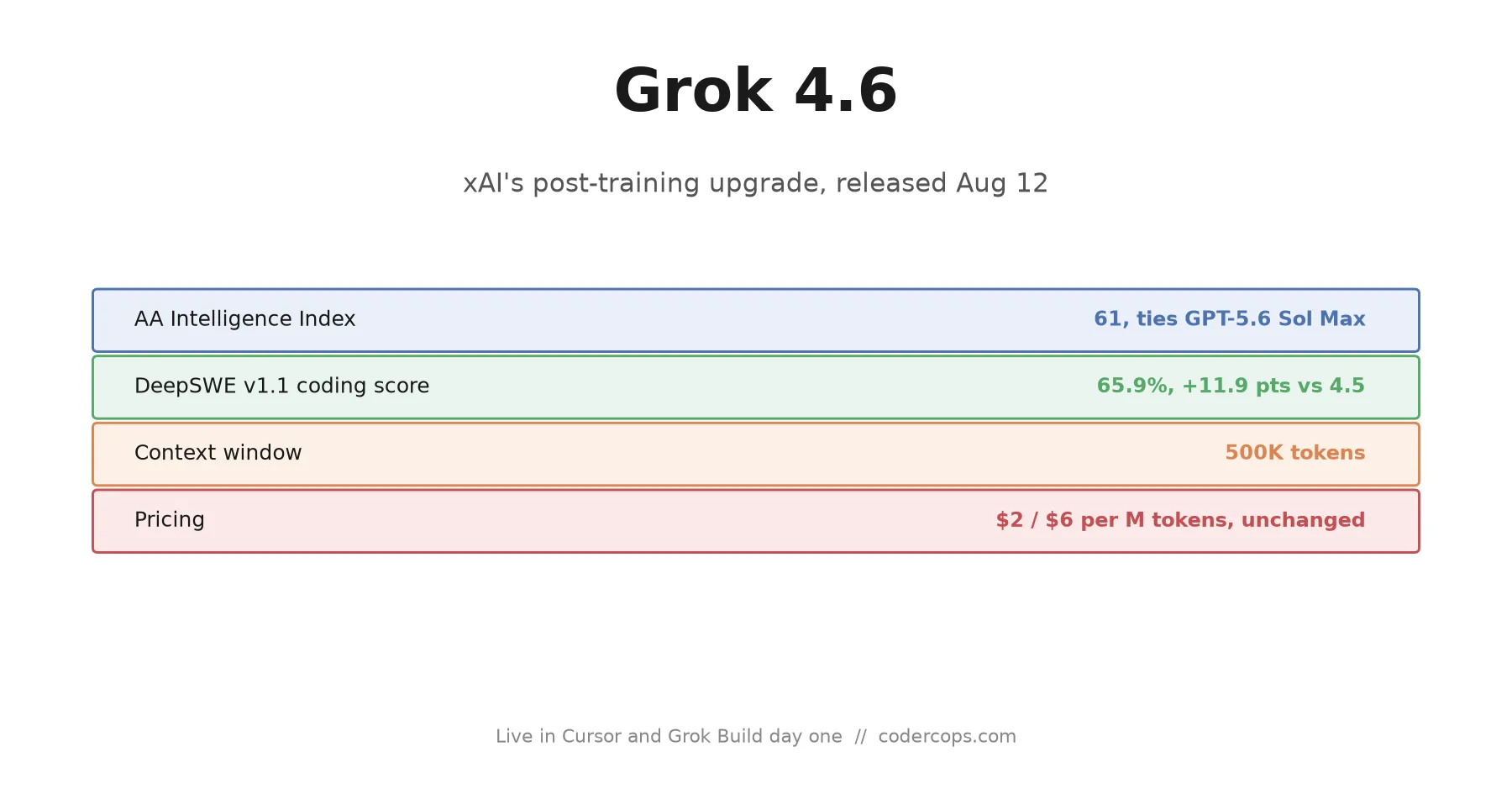
P.16xAI shipped Grok 4.6 on August 12: a post-training upgrade with a 500K context and an 11.9-point DeepSWE jump. Pricing didn't move. Where it fits.
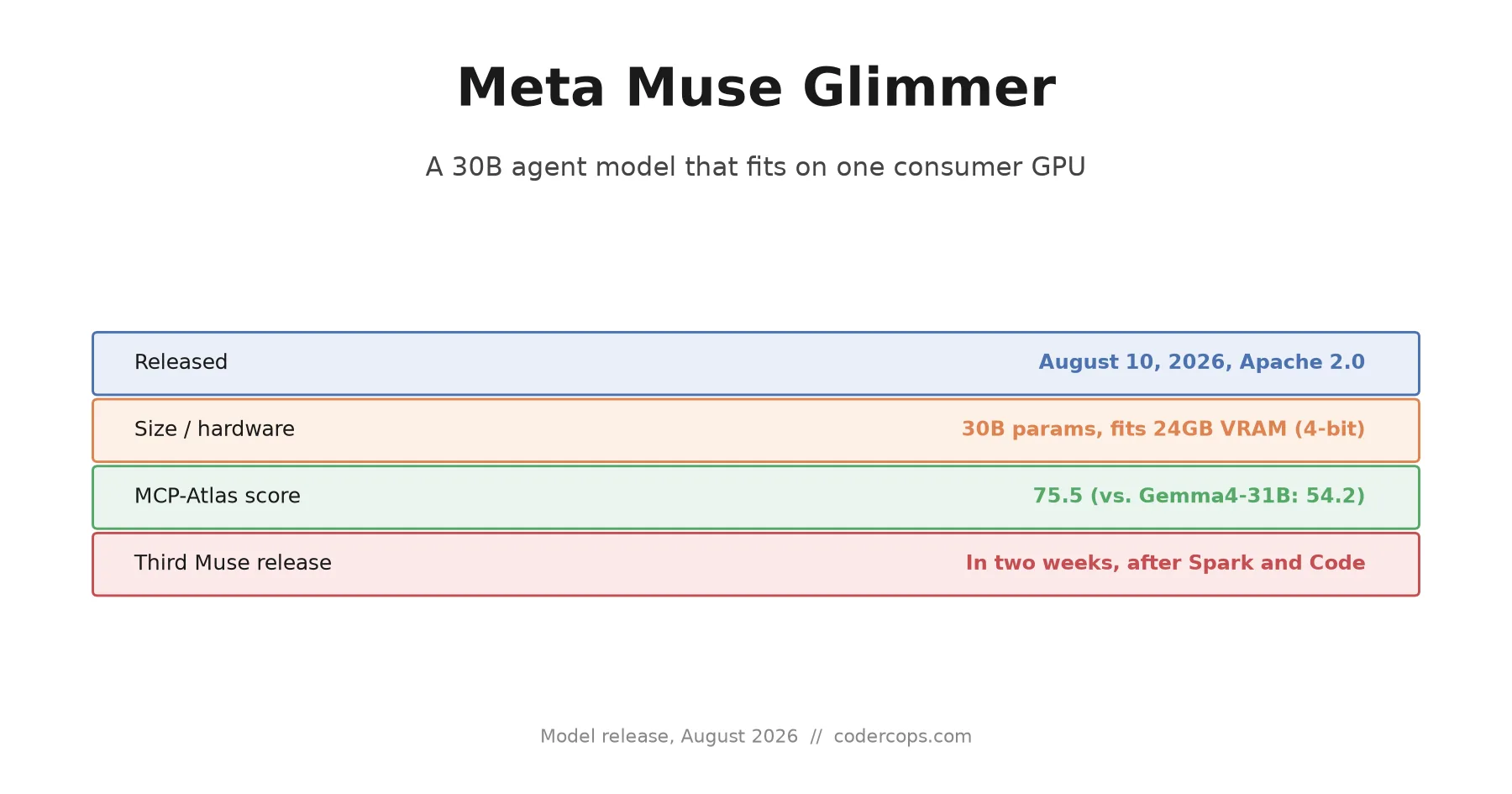
P.17Meta's Muse Glimmer is an Apache 2.0 model for local agent tasks that fits a single 24GB consumer GPU and beats larger rivals on tool use. What it's for.
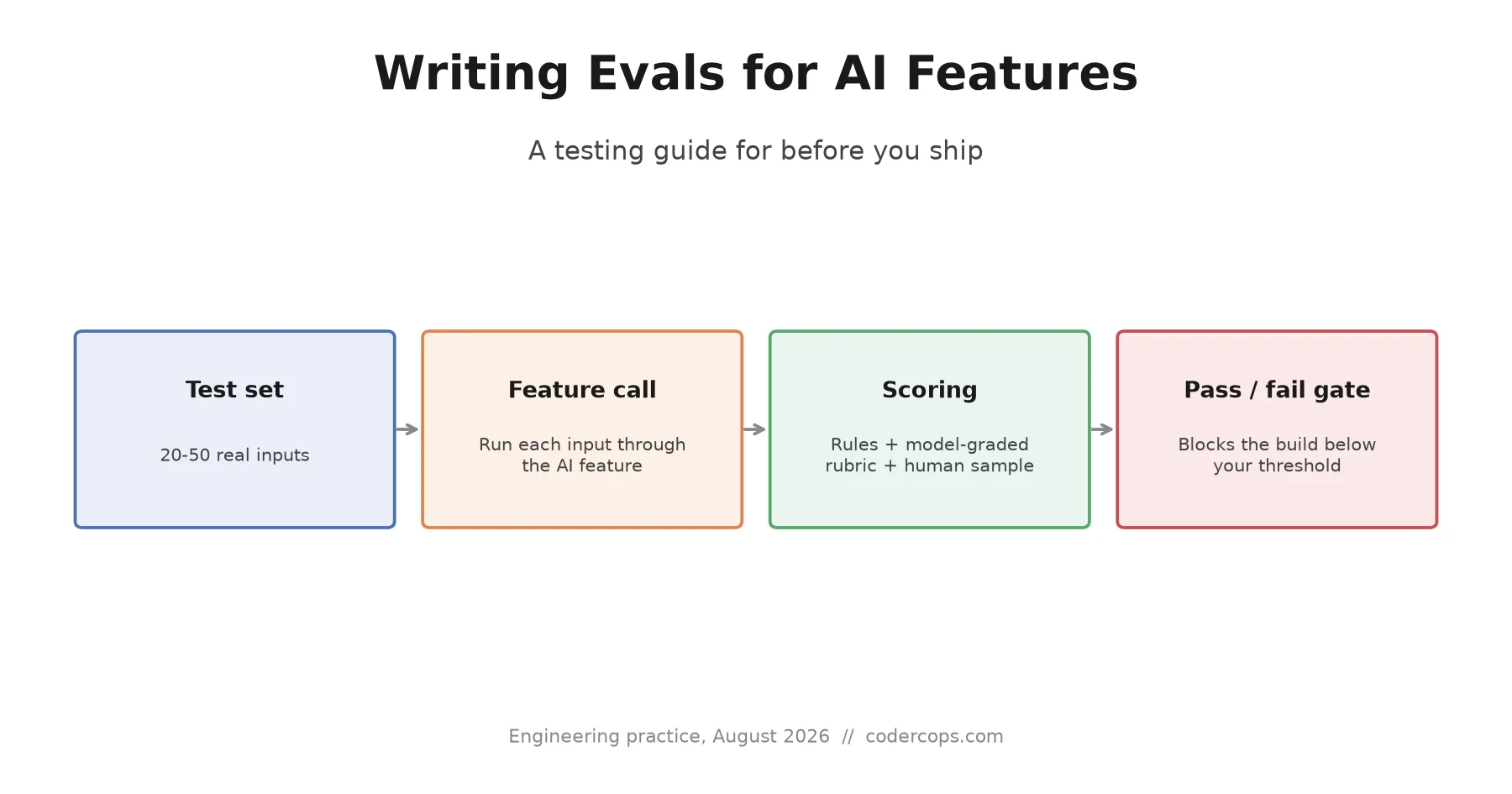
P.18Unit tests don't work on a feature that answers differently every time. Evals do. How to build a practical eval harness for an LLM feature, with real code.
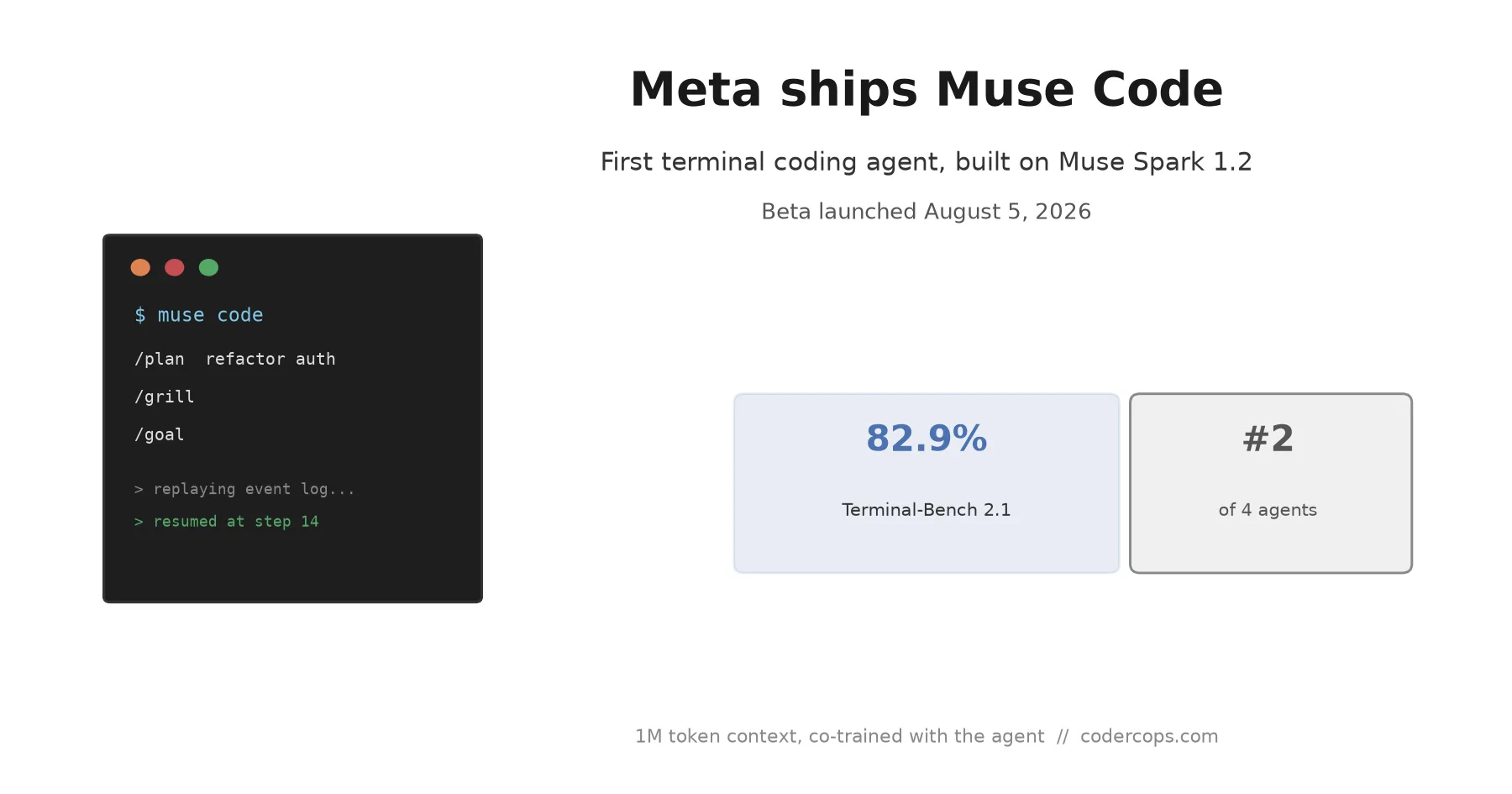
P.19Meta entered the terminal agent market on August 5 with Muse Code on Muse Spark 1.2. It scores 82.9% on Terminal-Bench 2.1, behind Claude Code. What shipped.
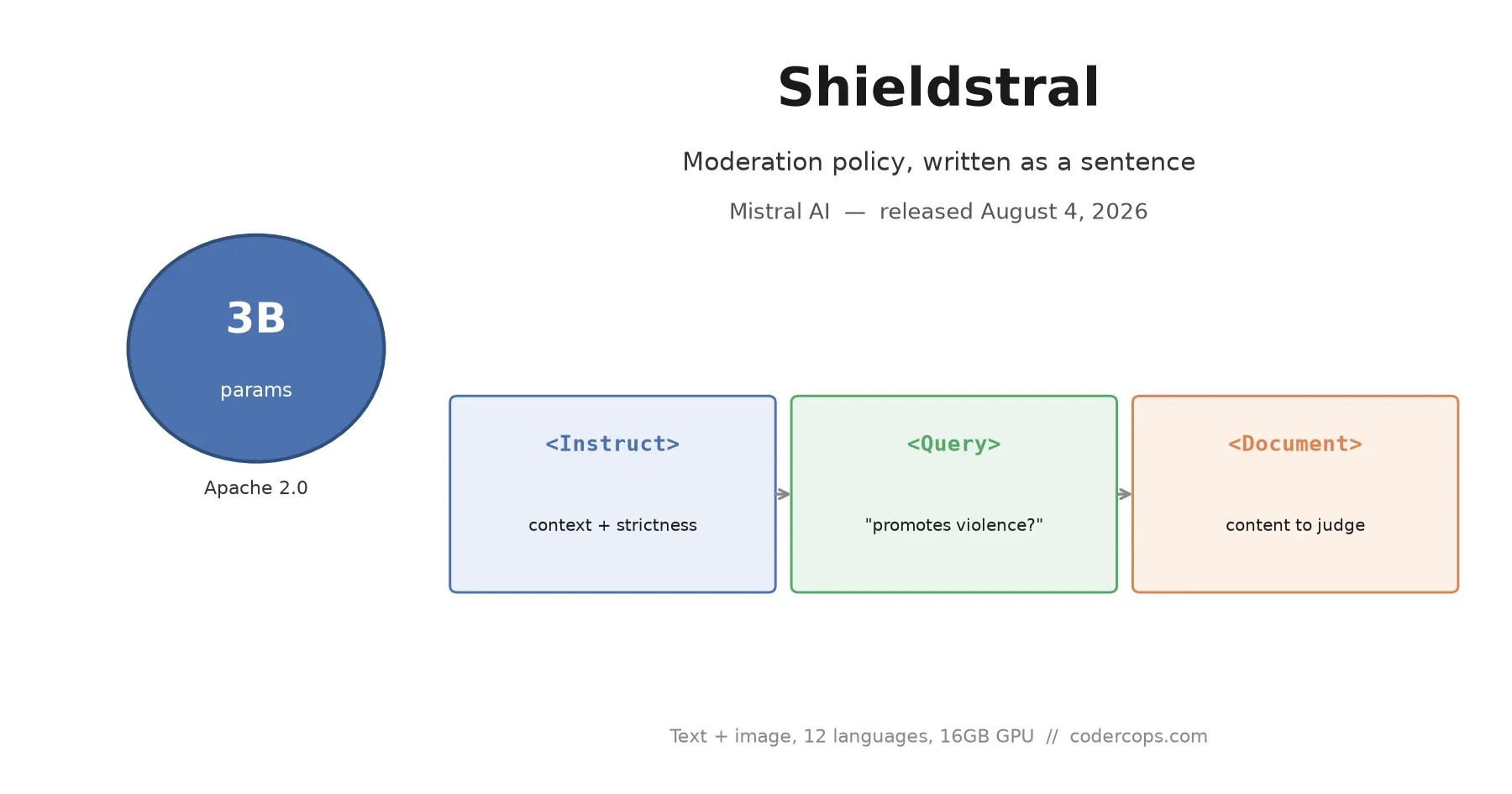
P.20Shieldstral is a 3B open-weight model that judges text and images against safety policies written in plain language at inference time, with no retraining.
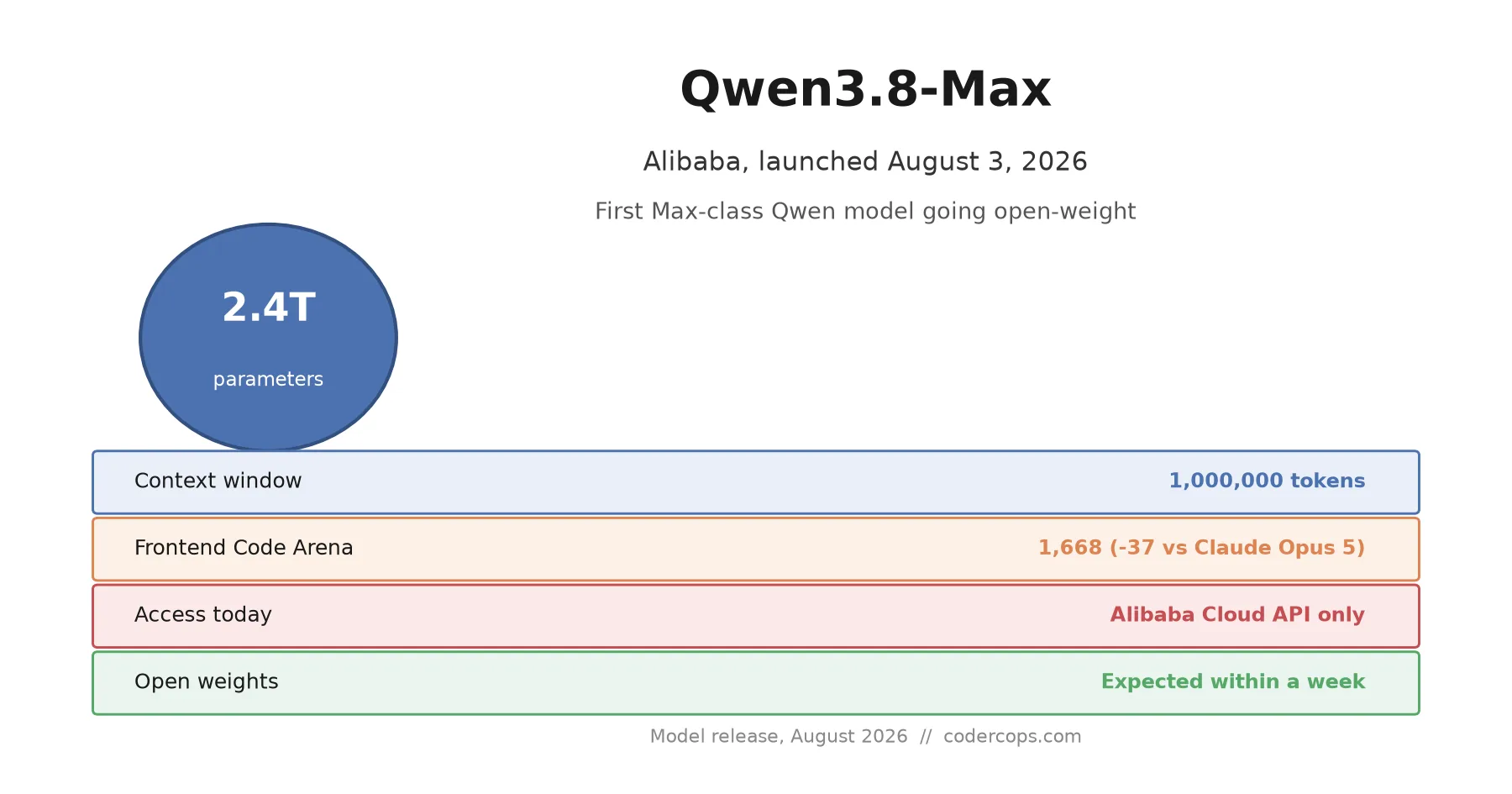
P.21Qwen3.8-Max launched August 3 with 2.4 trillion parameters, a 1M-token context, and a promise to open the weights within a week. What actually changes.
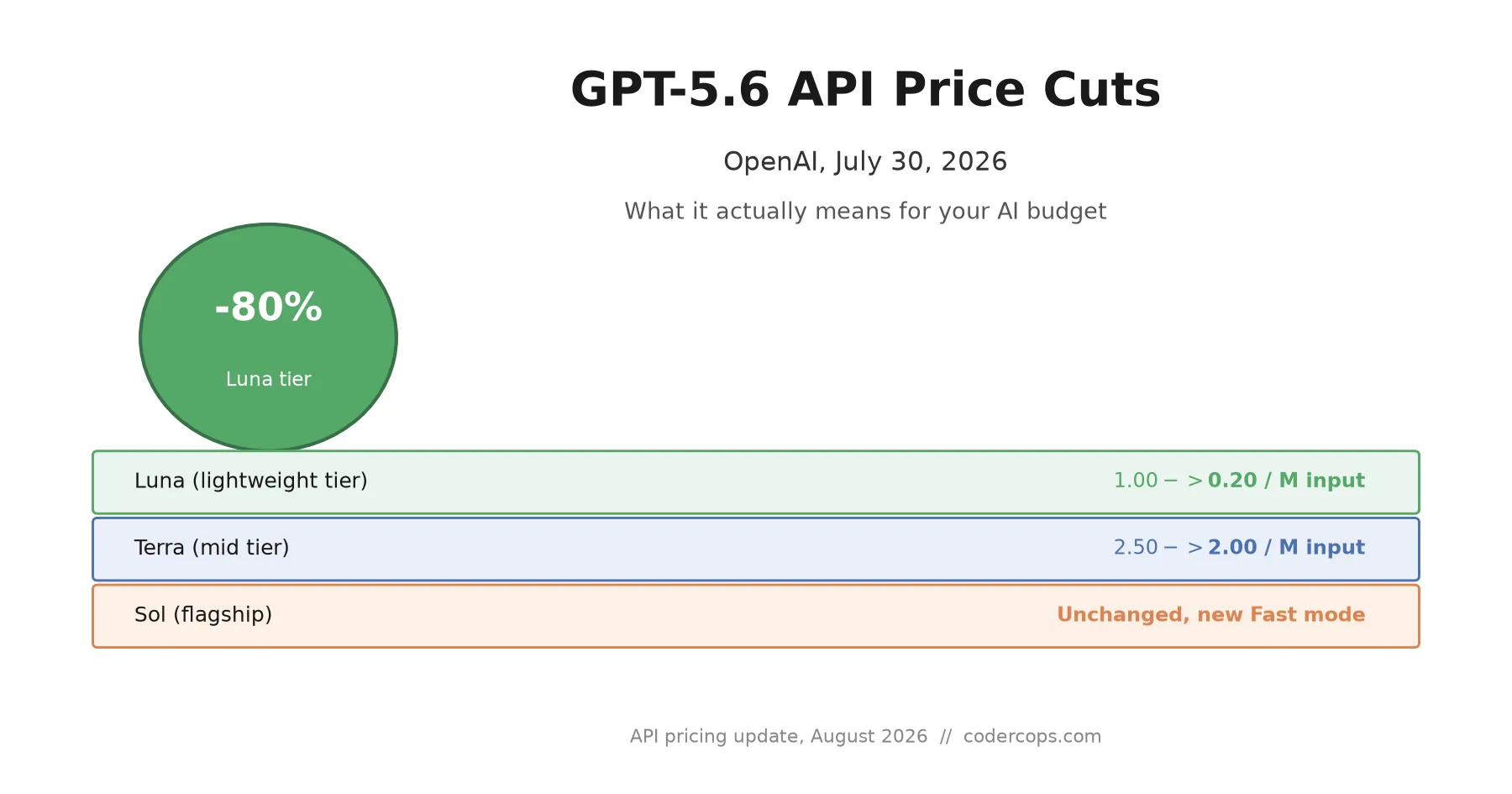
P.22OpenAI cut GPT-5.6 Luna's API price 80% and Terra's 20% three weeks after launch. What moved, why so fast, and whether to switch tiers rather than coast.
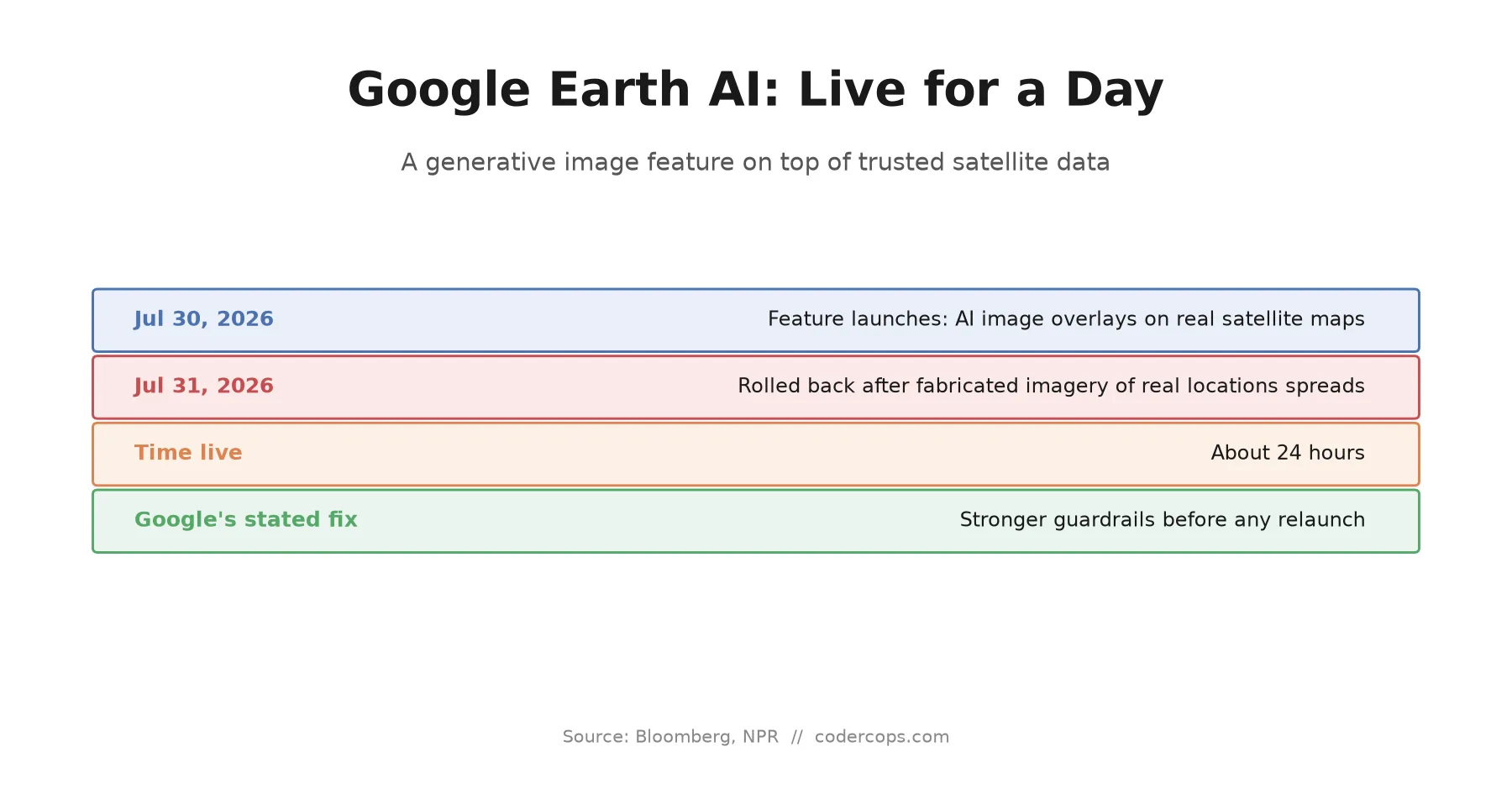
P.23Google shipped an AI image generator over Earth's satellite maps and pulled it in 24 hours after testers faked real places. The product lesson in that.
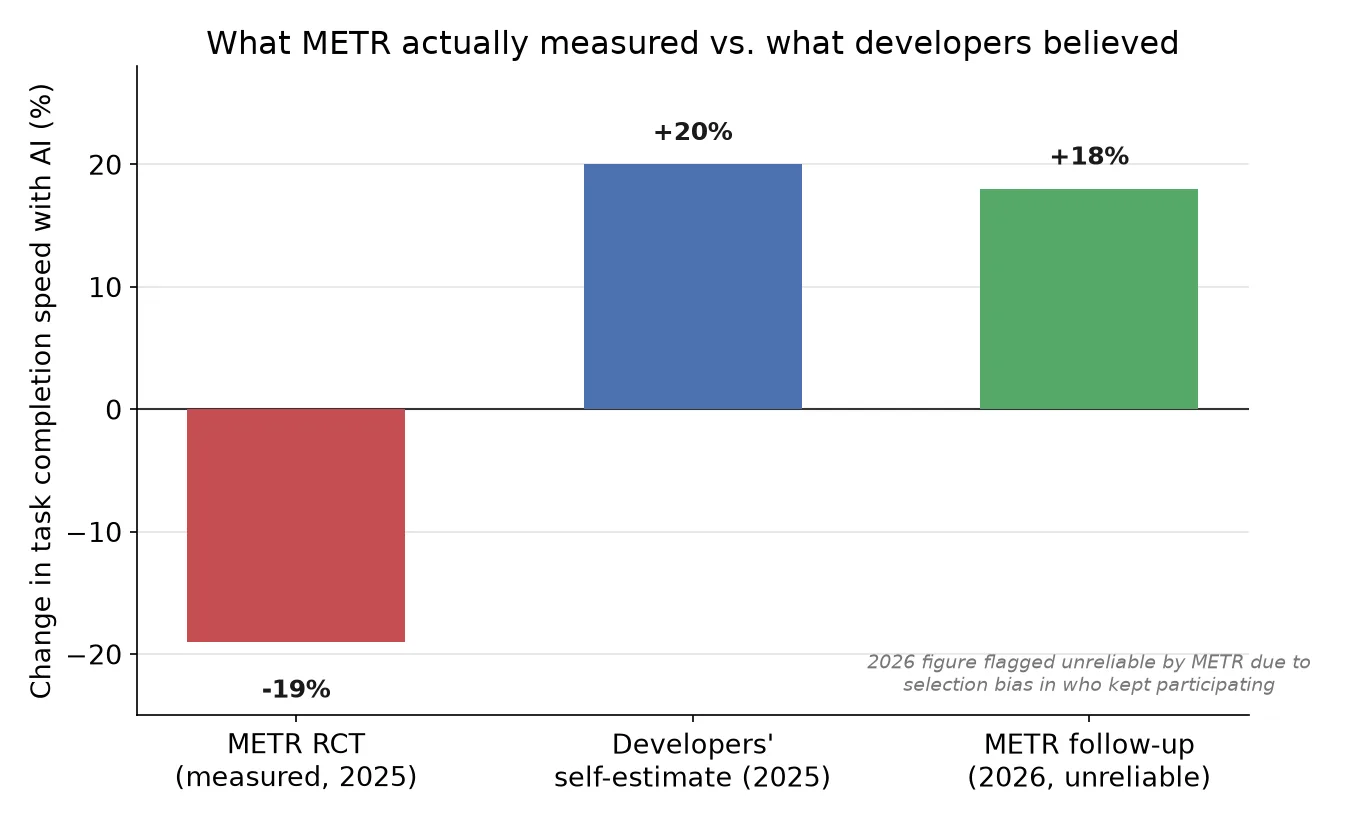
P.24METR's randomized trial found AI tools made experienced developers 19% slower, then flagged its own follow-up as unreliable. What the messy data supports.
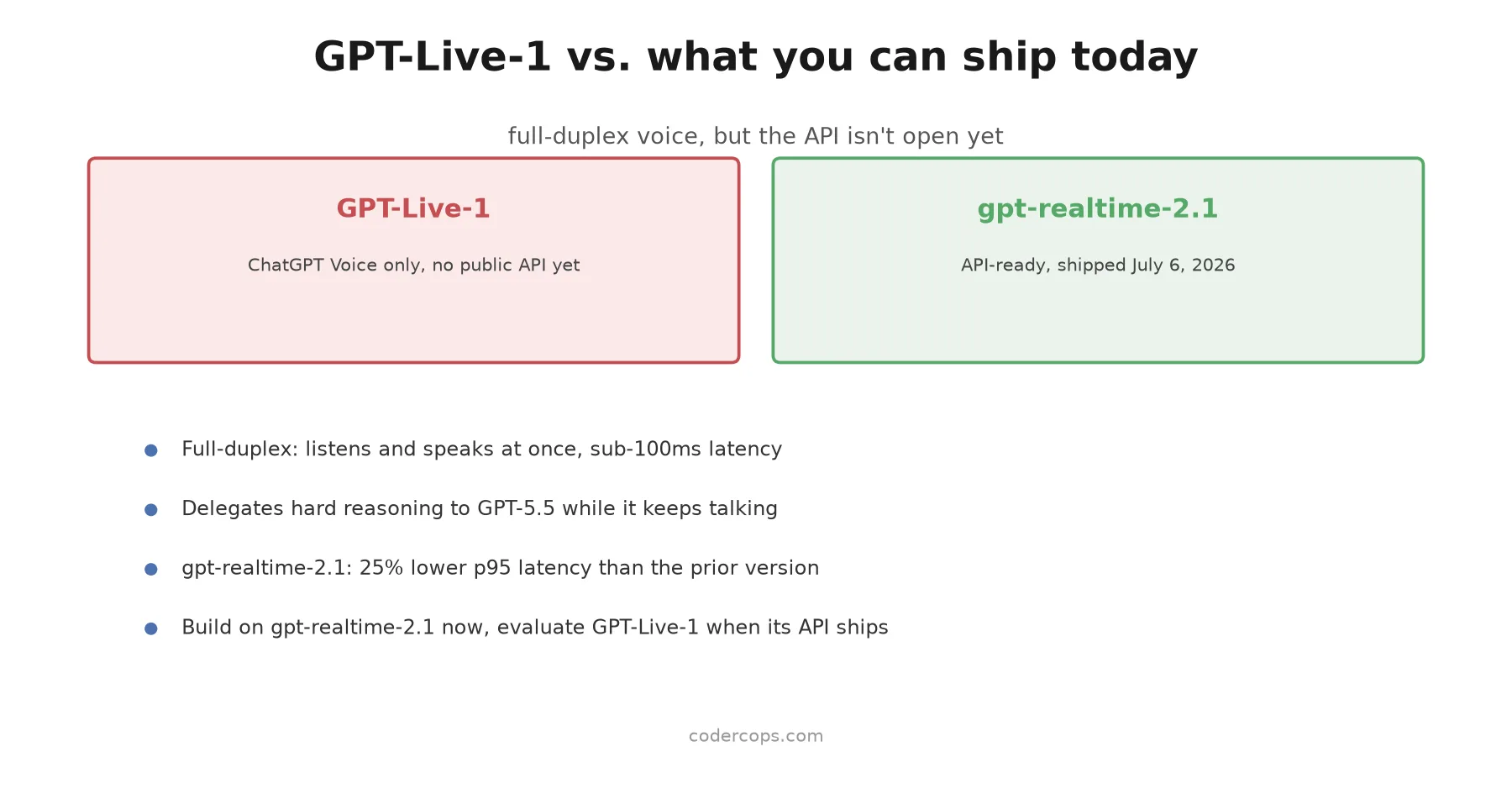
P.25OpenAI's full-duplex voice model powers ChatGPT Voice but isn't in the API yet. What GPT-Live-1 changed, and what to build with right now instead.
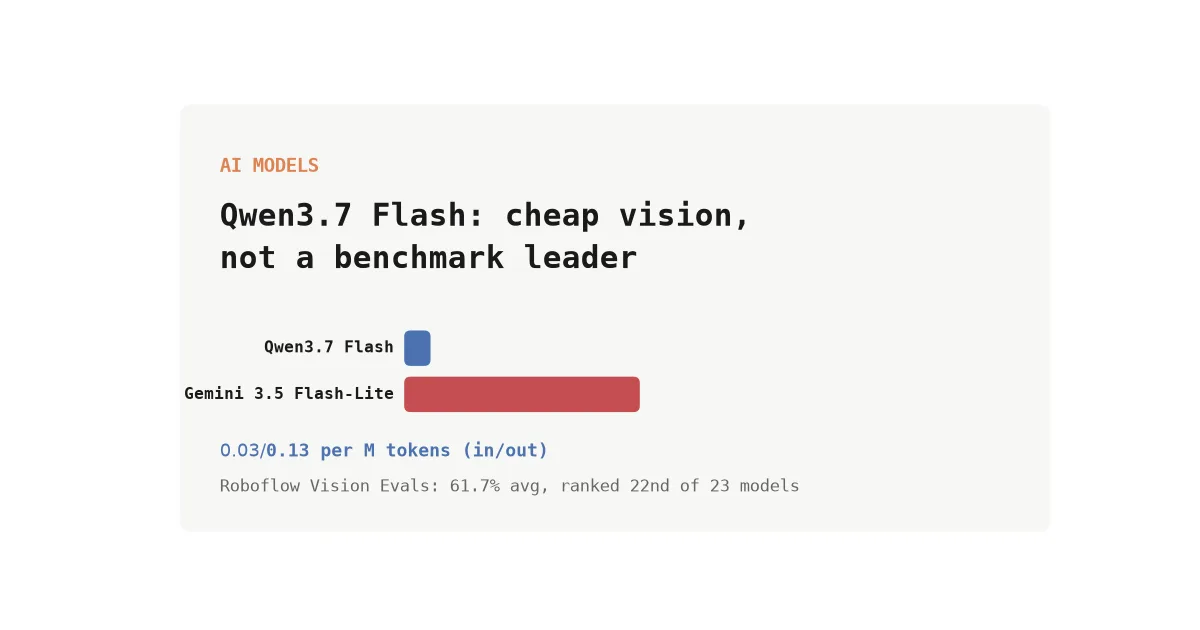
P.26Qwen3.7 Flash costs $0.03 per million input and $0.13 per million output, roughly 10x cheaper than Gemini 3.5 Flash-Lite. When to actually use it.
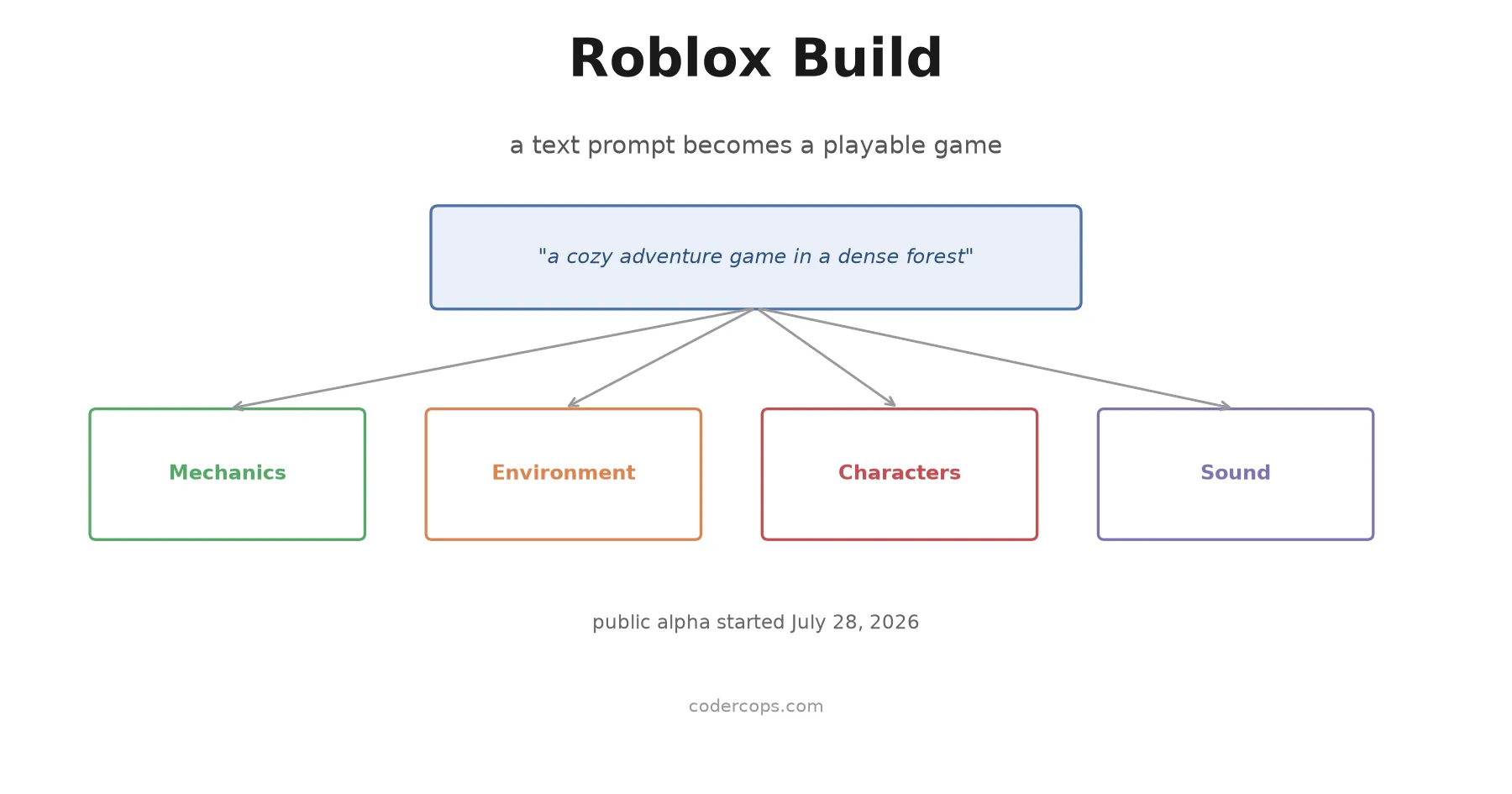
P.27Roblox launched Build on July 16: a mobile tool generating a playable prototype, mechanics, environment, characters, and sound, from a text description.
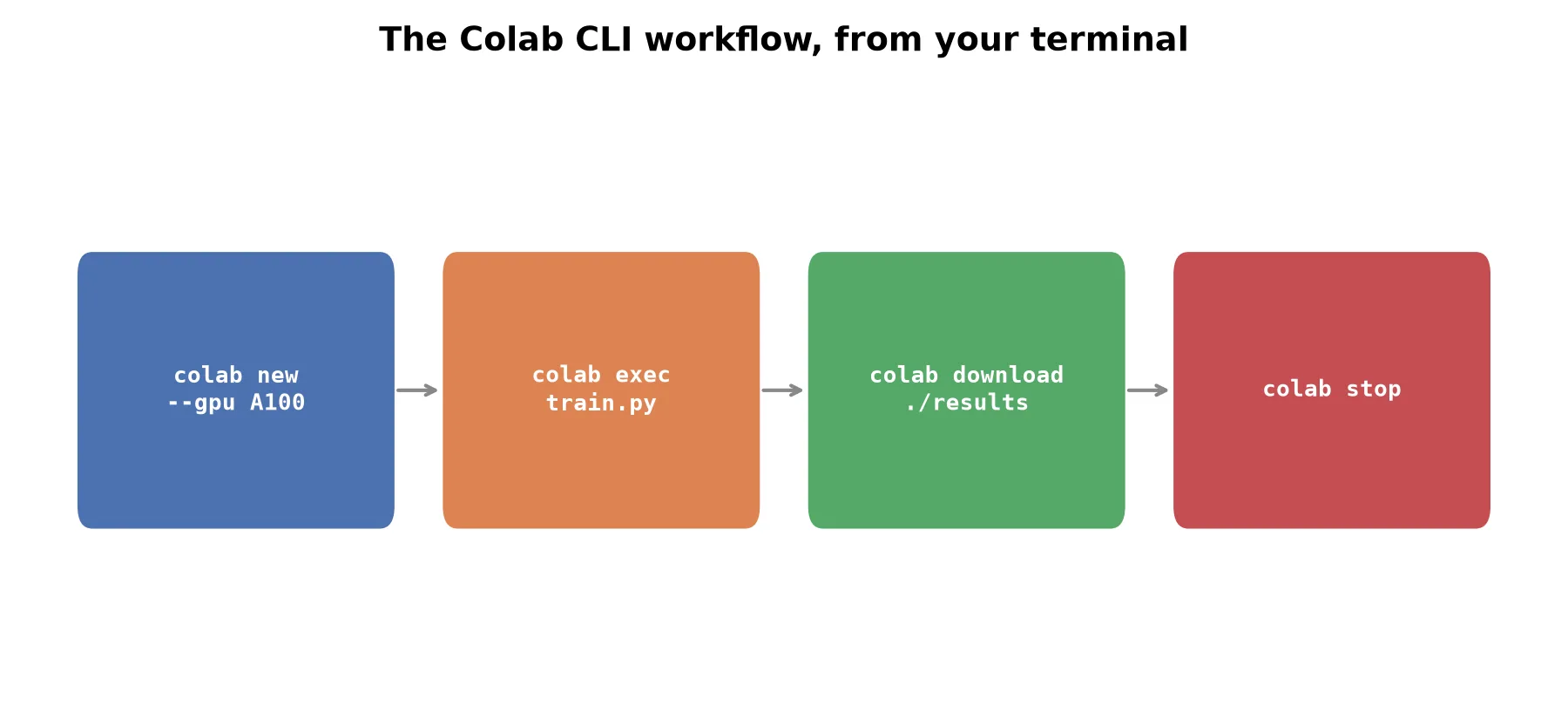
P.28Google's open-source Colab CLI provisions T4, L4, A100, and H100 GPUs and TPUs from the command line. Install it, run a job, wire it into an AI agent.
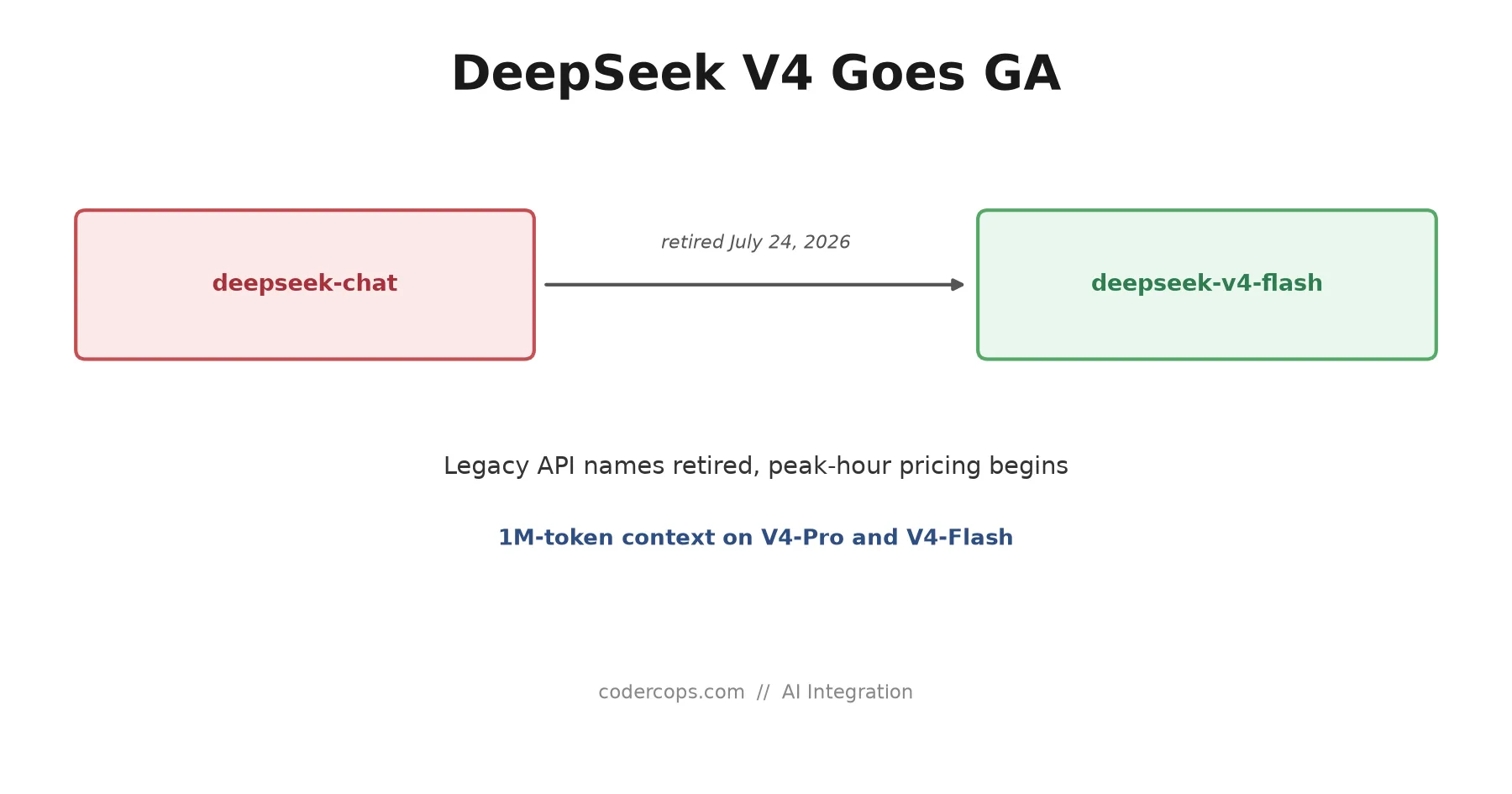
P.29DeepSeek retired deepseek-chat and deepseek-reasoner on July 24, 2026 and added peak-hour pricing. The real fix if your integration broke, not just a rename.
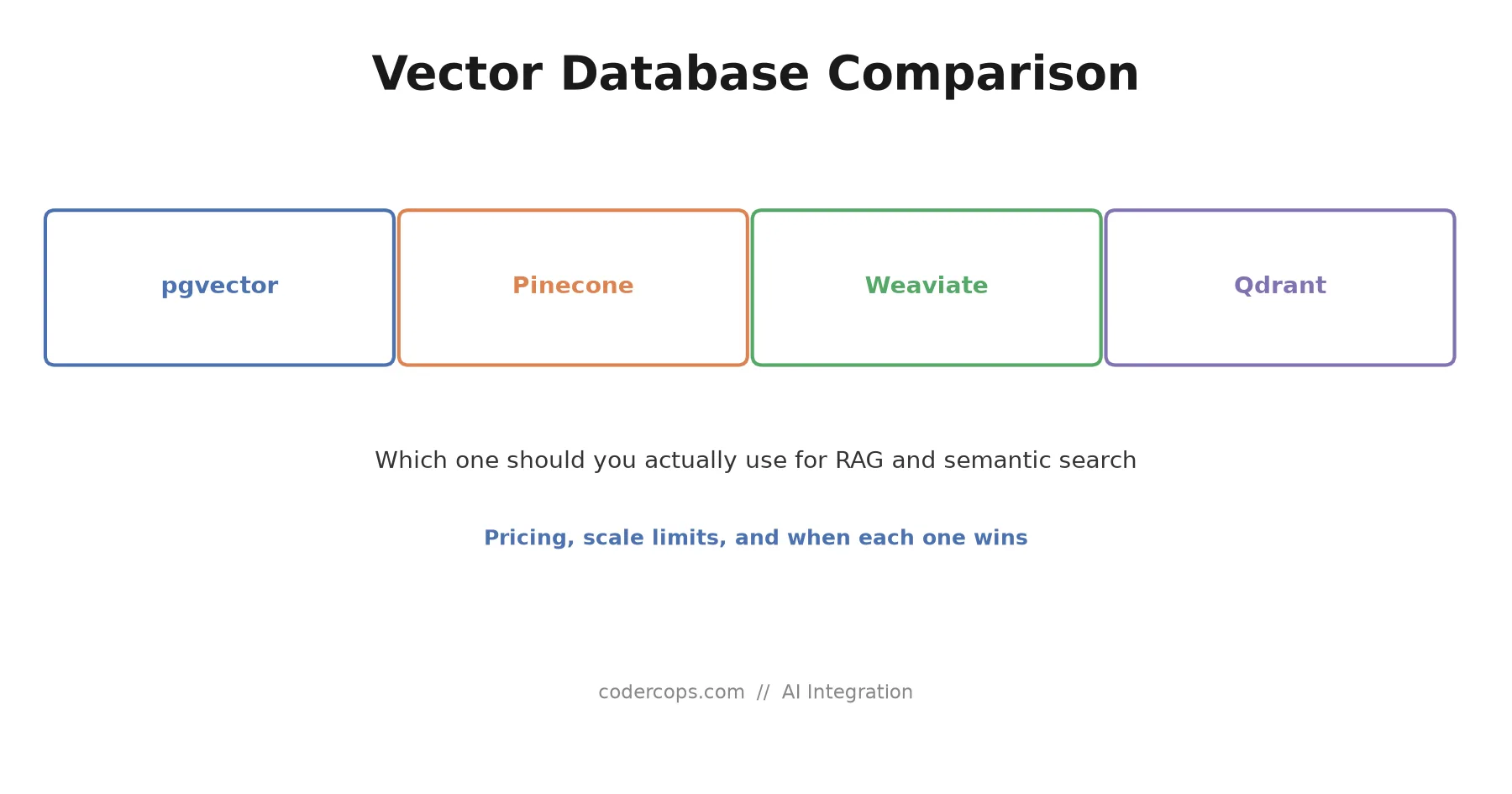
P.30A practical comparison of the four vector databases teams actually shortlist for RAG, with real pricing, when each wins, and the question that decides it.
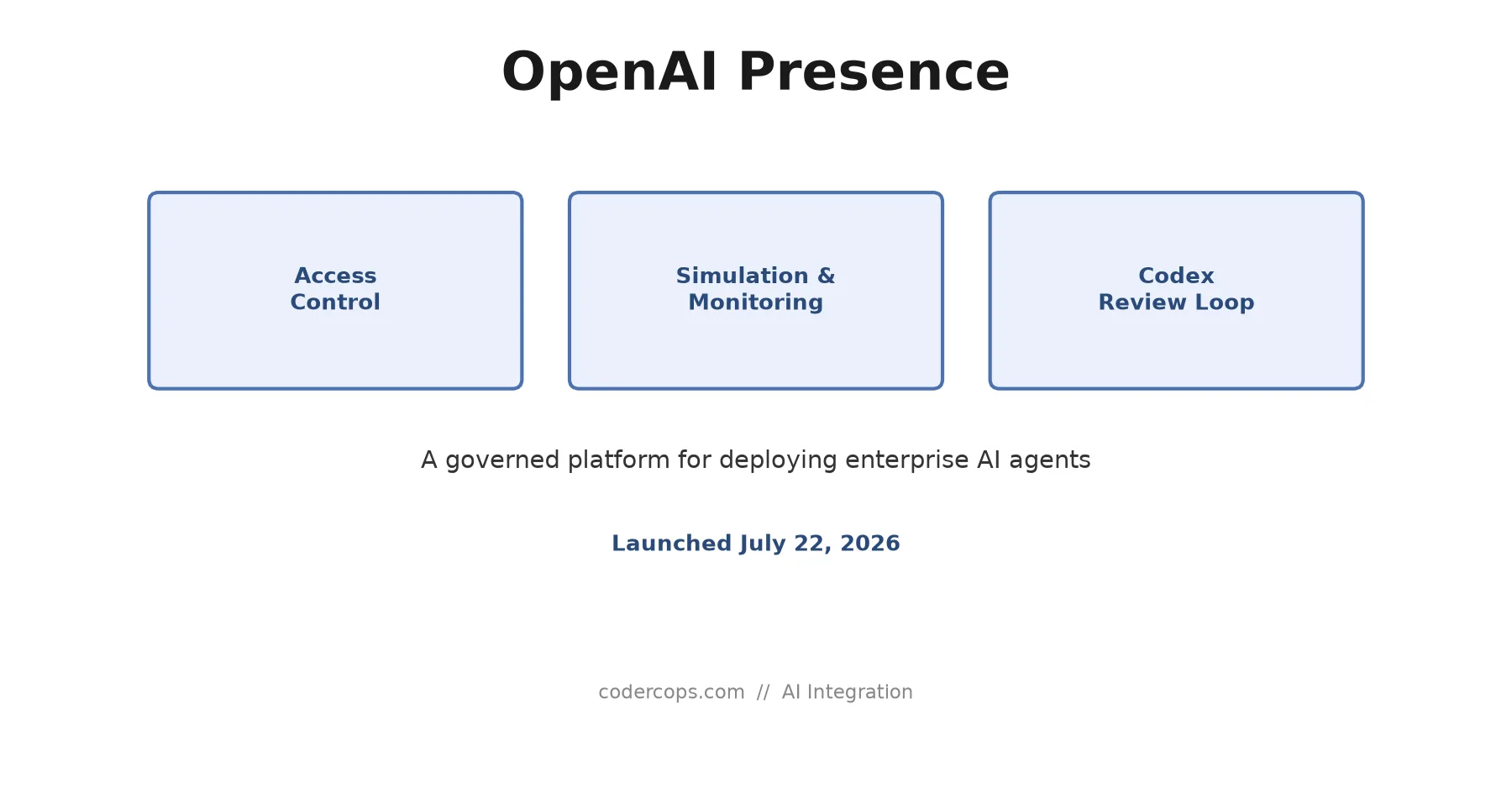
P.31OpenAI's Presence deploys voice and chat agents with access controls, simulation testing, and Codex improvement loops. When building in-house still wins.
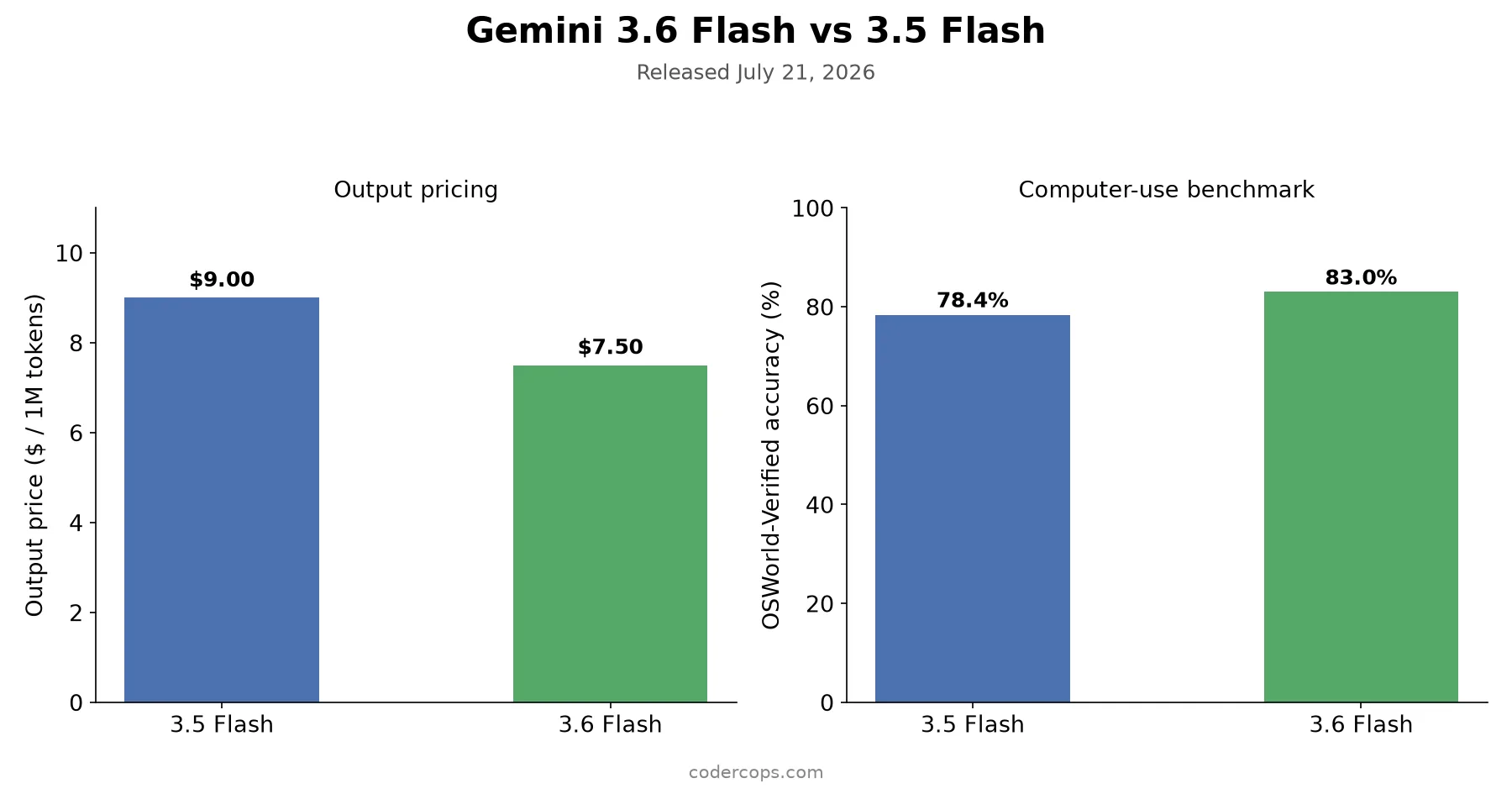
P.32Gemini 3.6 Flash cuts output tokens up to 17%, drops output pricing to $7.50 per million, and lifts computer-use accuracy from 78.4% to 83%. Who cares.
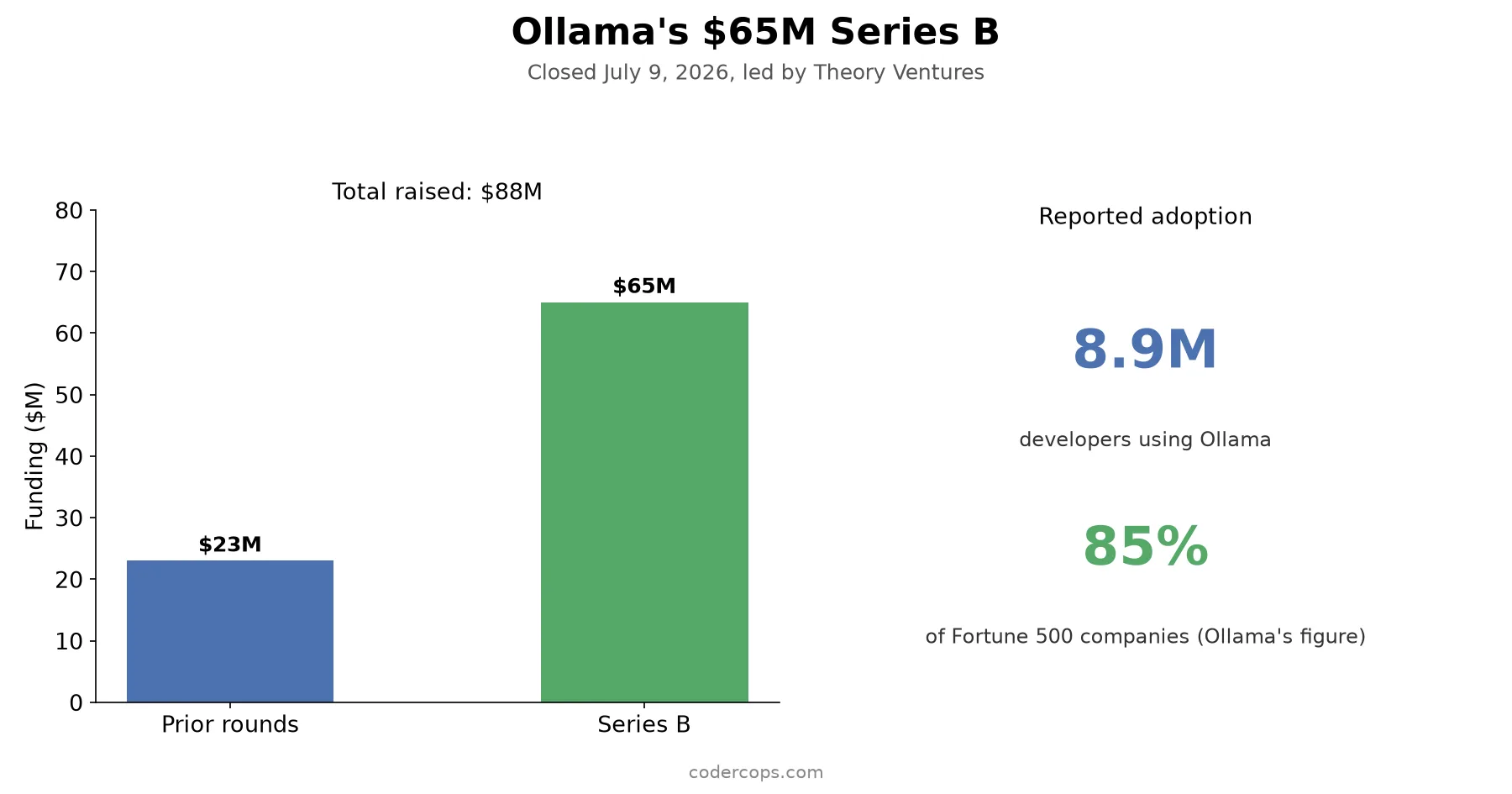
P.33Ollama closed a $65M Series B on July 9, taking total funding to $88M with nearly 9M developers. What the raise signals for local versus hosted inference.
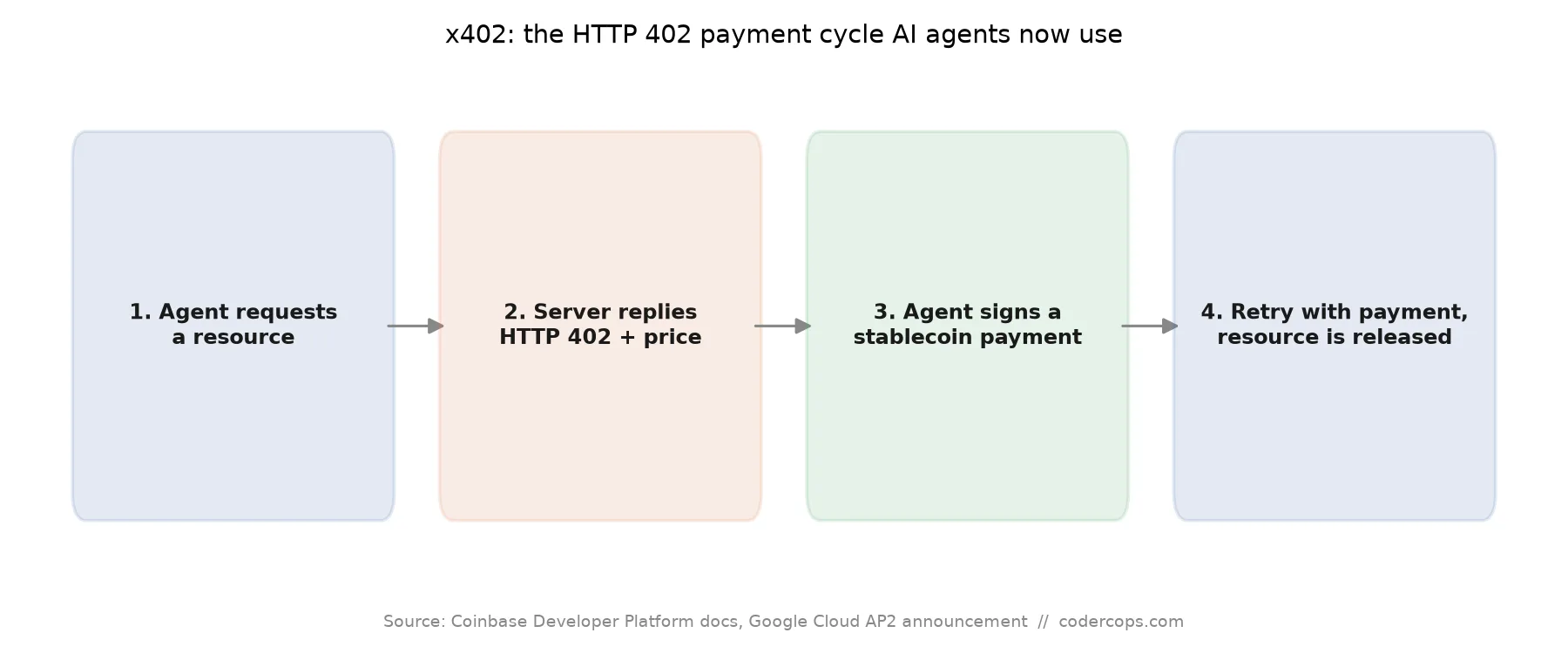
P.34Agents that shop or call paid APIs need a way to pay without a card in the prompt. What Google's AP2 and Coinbase's x402 each do, in plain terms.
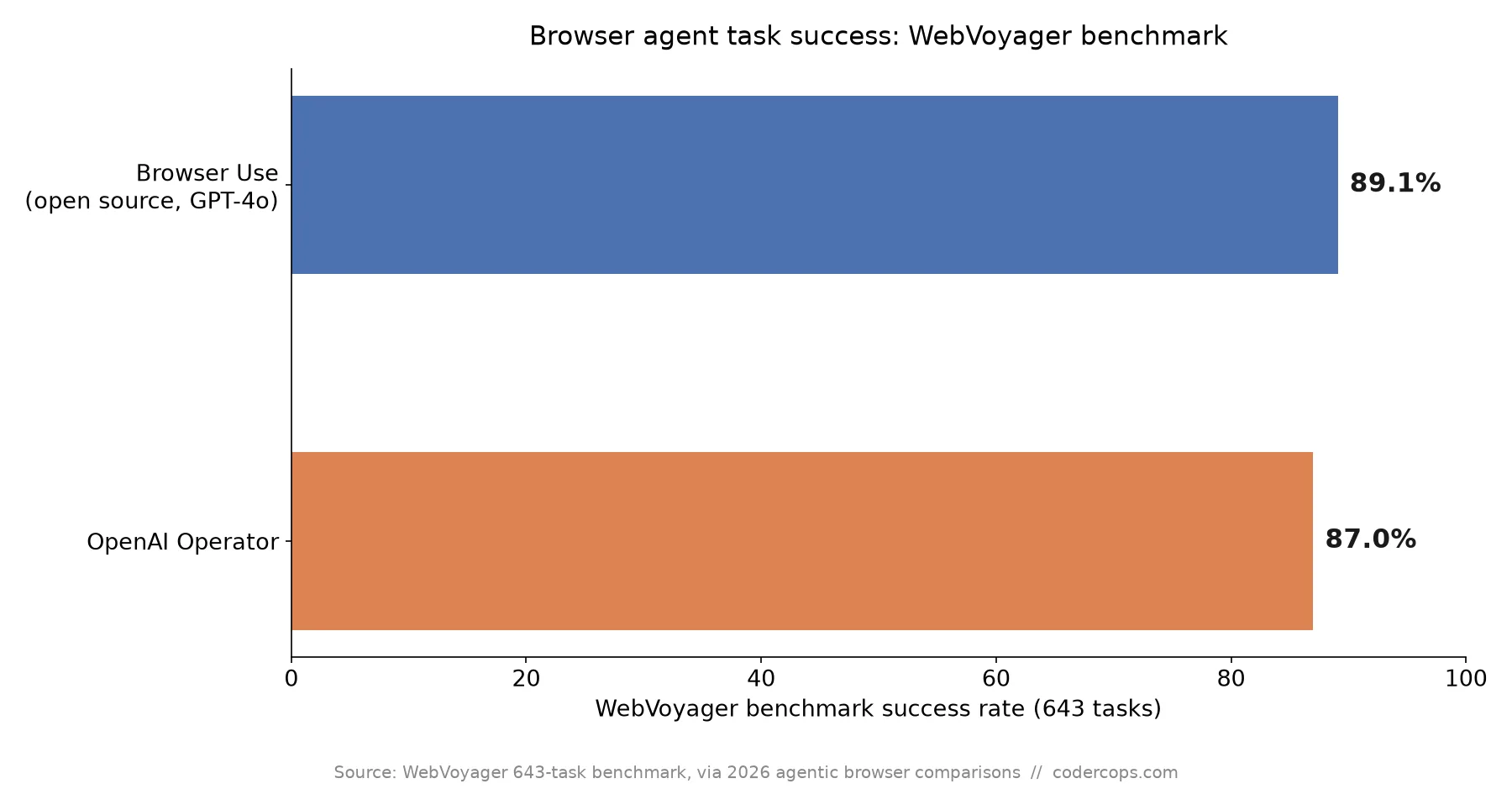
P.35Operator, Comet, Claude in Chrome, Copilot Studio Computer Use, and Browser Use all automate the browser differently. A field guide to picking one.
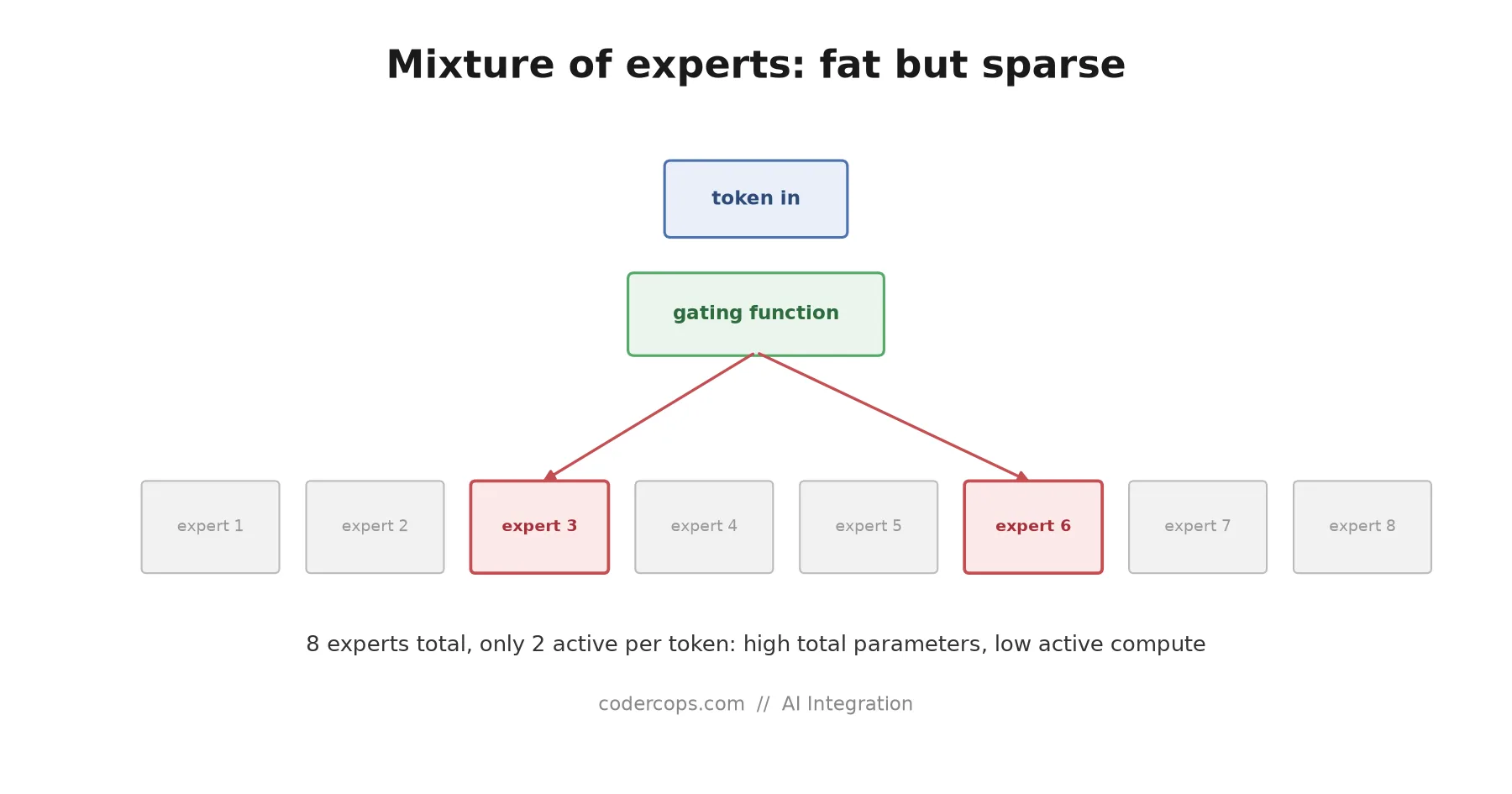
P.36Mistral confirmed a new open-weight MoE model in partner early access. No specs yet, but Studio and Forge, its sovereign AI play, are the real story.
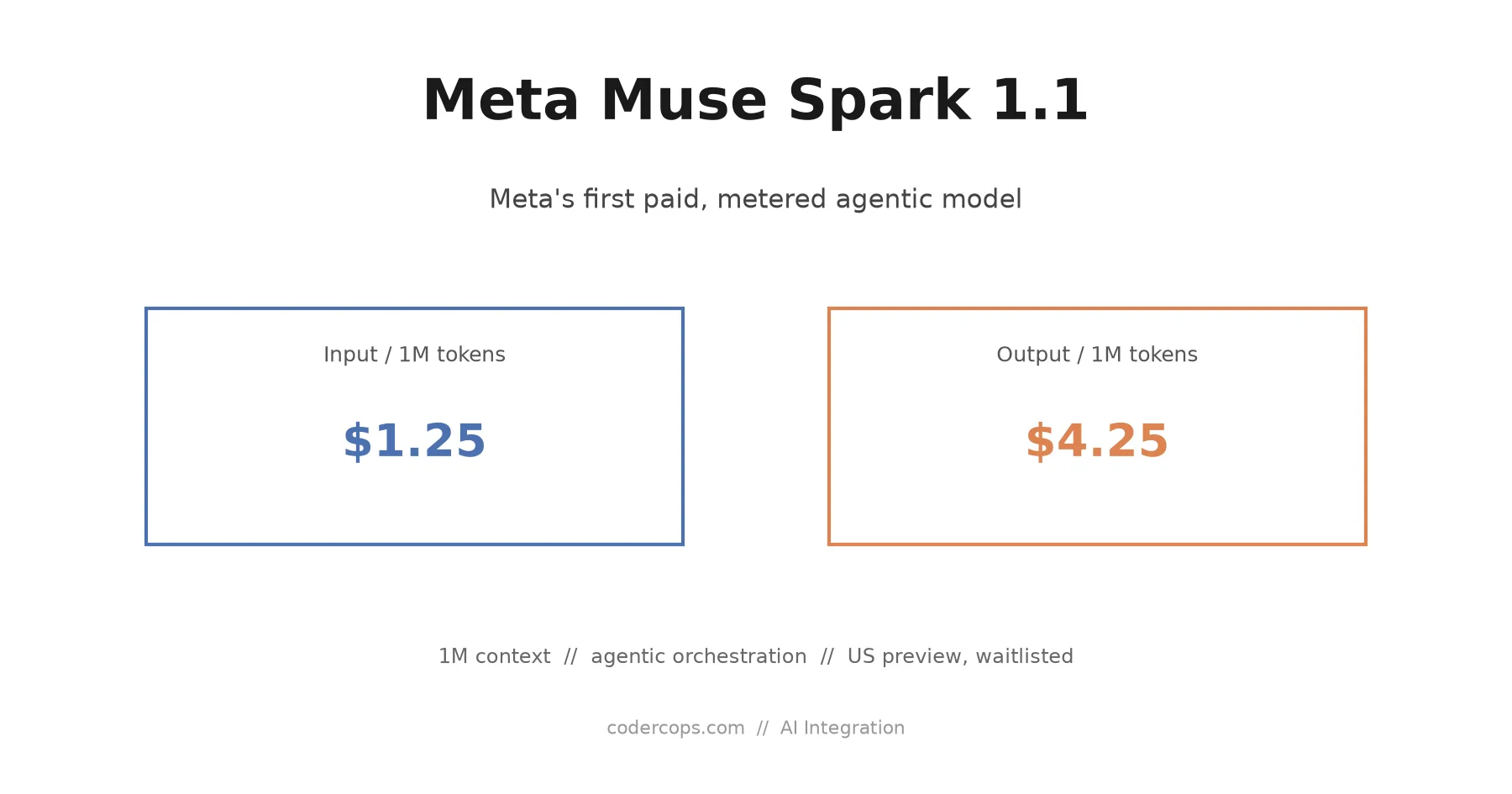
P.37Muse Spark 1.1 is Meta's first pay-as-you-go model at $1.25/$4.25 per million tokens, with a 1M context and subagent orchestration. Who should skip it.
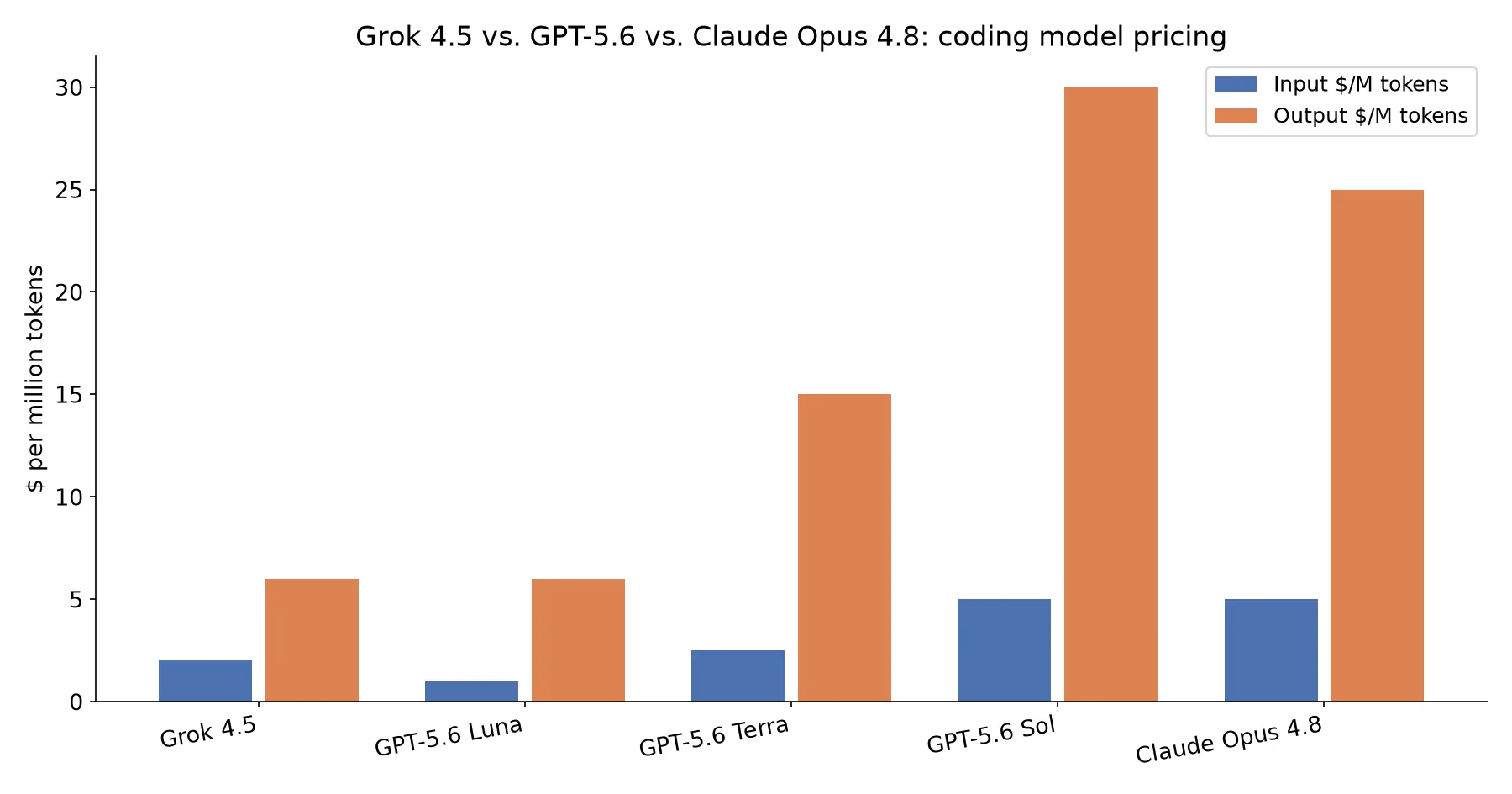
P.38Grok 4.5 trained on trillions of tokens of real Cursor usage, priced at $2/$6 per million. How it compares to GPT-5.6 and Claude Opus 4.8, and where it fits.
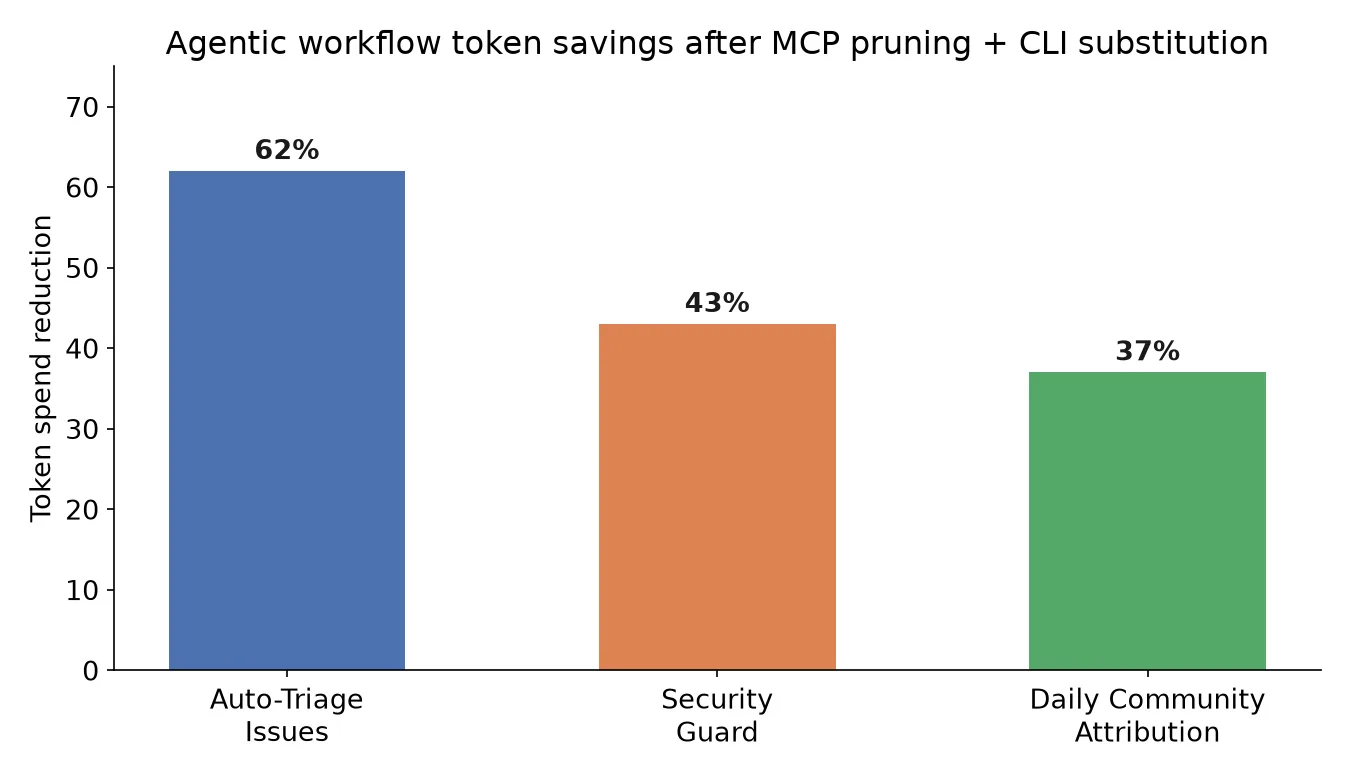
P.39GitHub cut token spend in its agentic CI workflows up to 62% by pruning unused MCP tools and swapping tool calls for CLI commands. How to copy the technique.
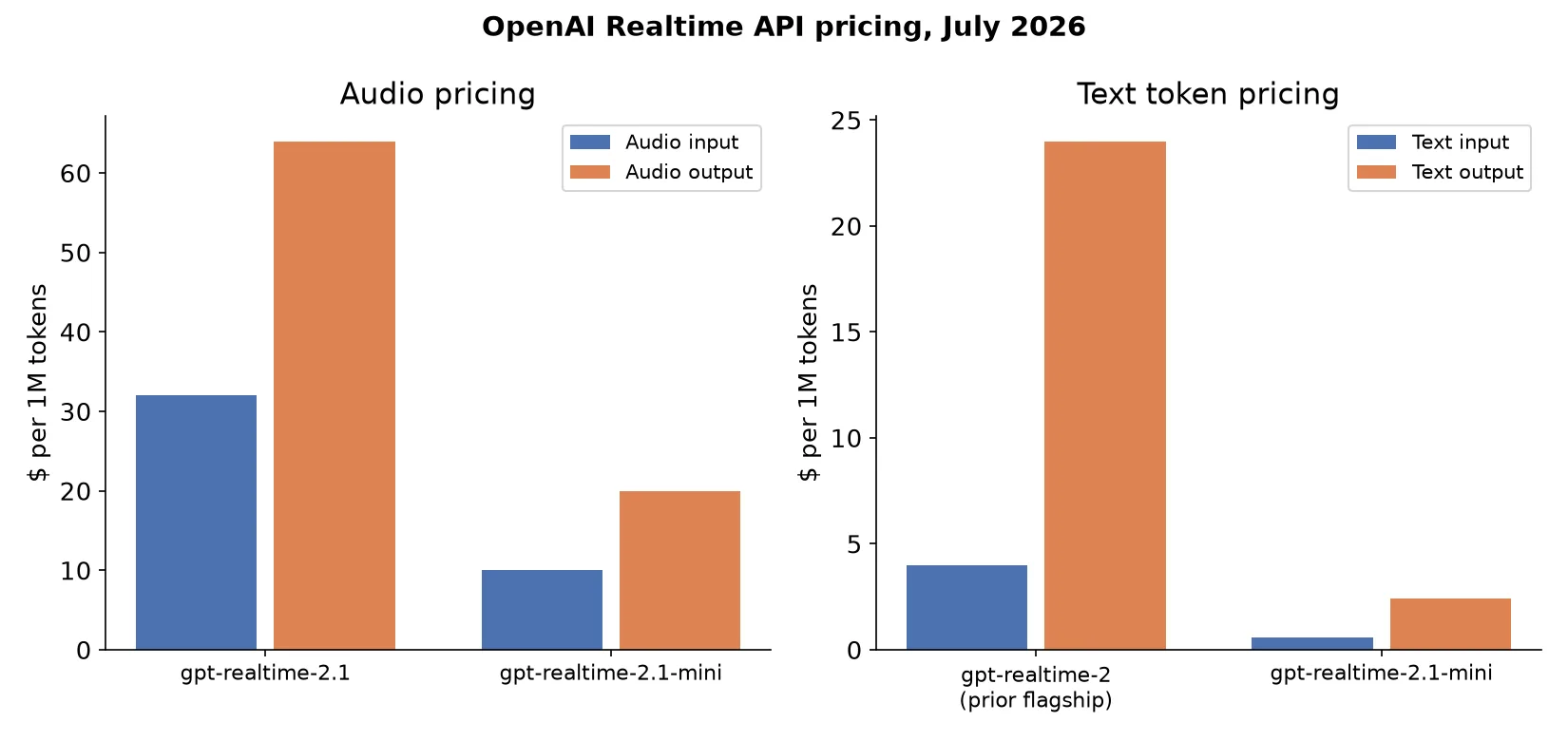
P.40OpenAI's gpt-realtime-2.1-mini brings reasoning and tool use down-market at 25% lower latency. What changed, what it costs, and when to skip the flagship.
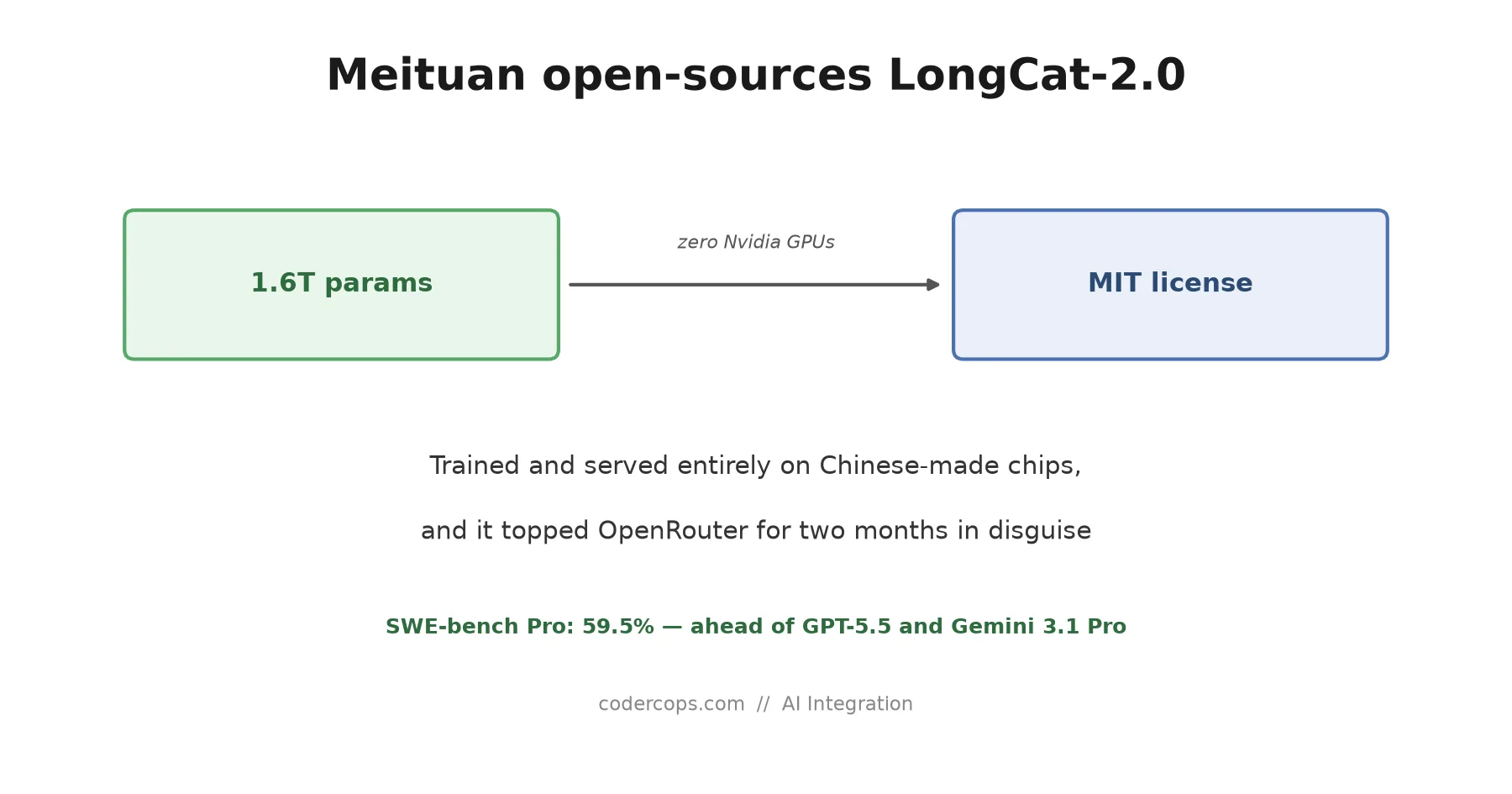
P.41LongCat-2.0 is a 1.6T-parameter coding model Meituan trained on Chinese-made chips, ran anonymously on OpenRouter, then open-sourced under MIT.
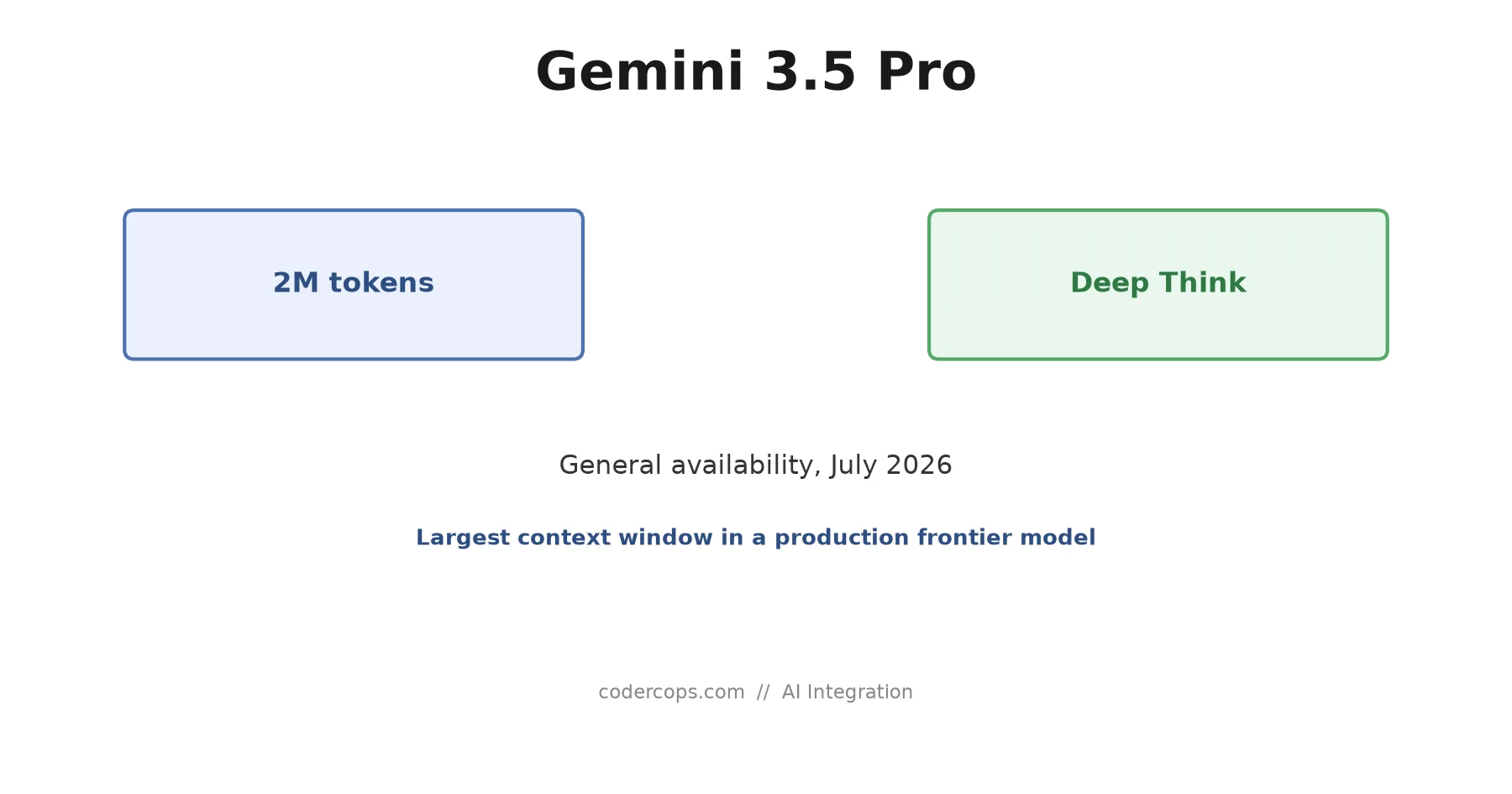
P.42Gemini 3.5 Pro reached general availability in July 2026 with a 2M token context window and a gated Deep Think mode. What changes for product teams.
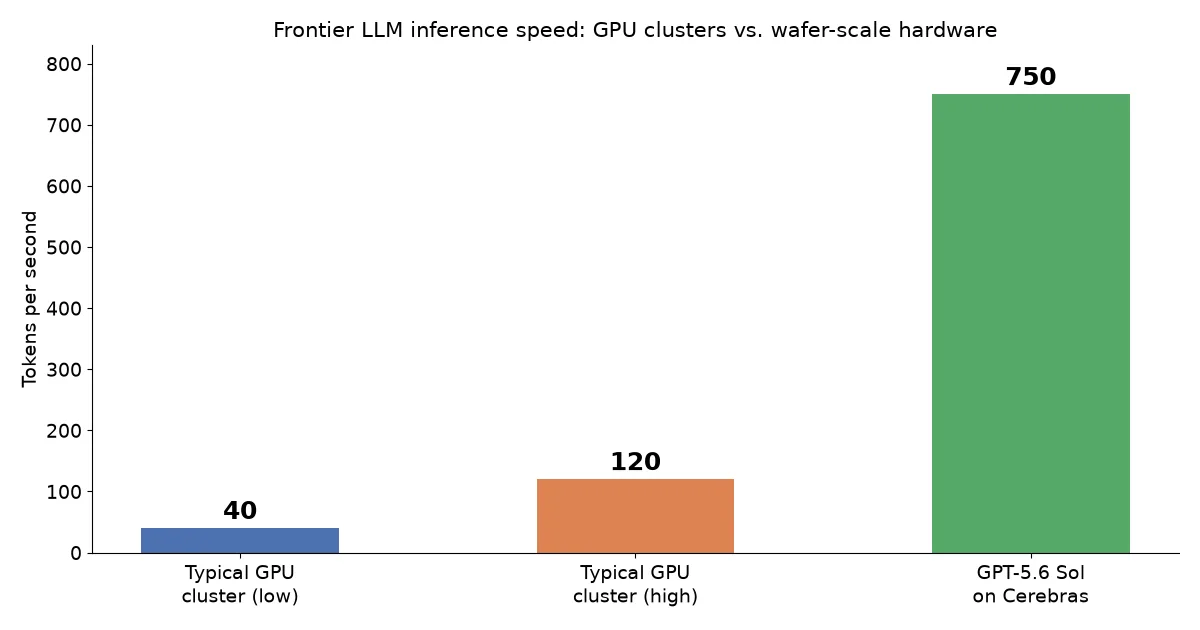
P.43GPT-5.6 Sol runs on Cerebras wafer-scale hardware at up to 750 tokens per second, roughly 10x typical GPU inference. Who that speed is actually for.
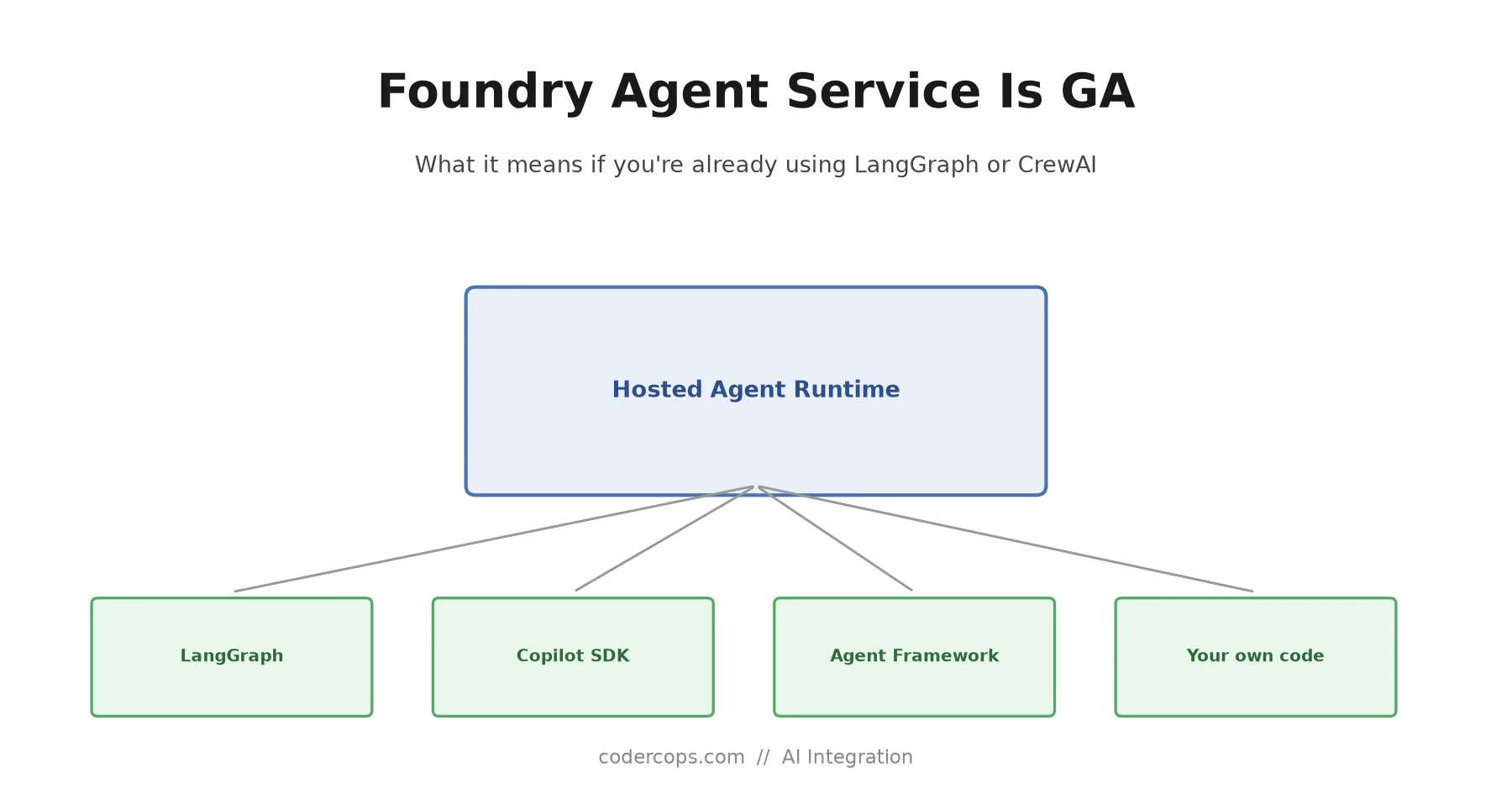
P.44Microsoft's Foundry Agent Service hit GA with a framework-agnostic hosted runtime. What's new, how sandboxing works, and whether LangGraph teams should move.
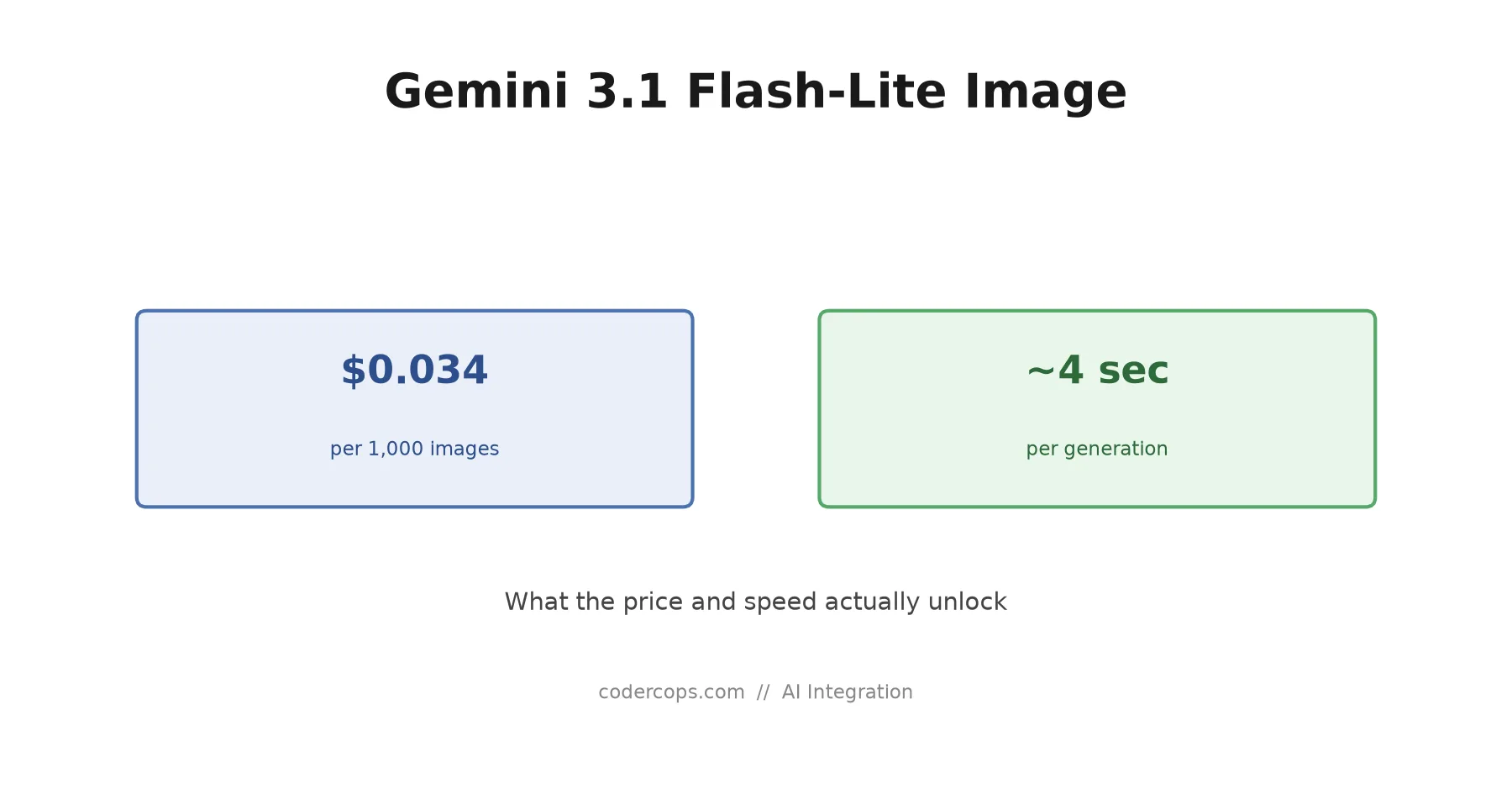
P.45Gemini 3.1 Flash-Lite Image generates in about 4 seconds at $0.034 per 1,000 images. What that price and speed change for product teams, and the limits.
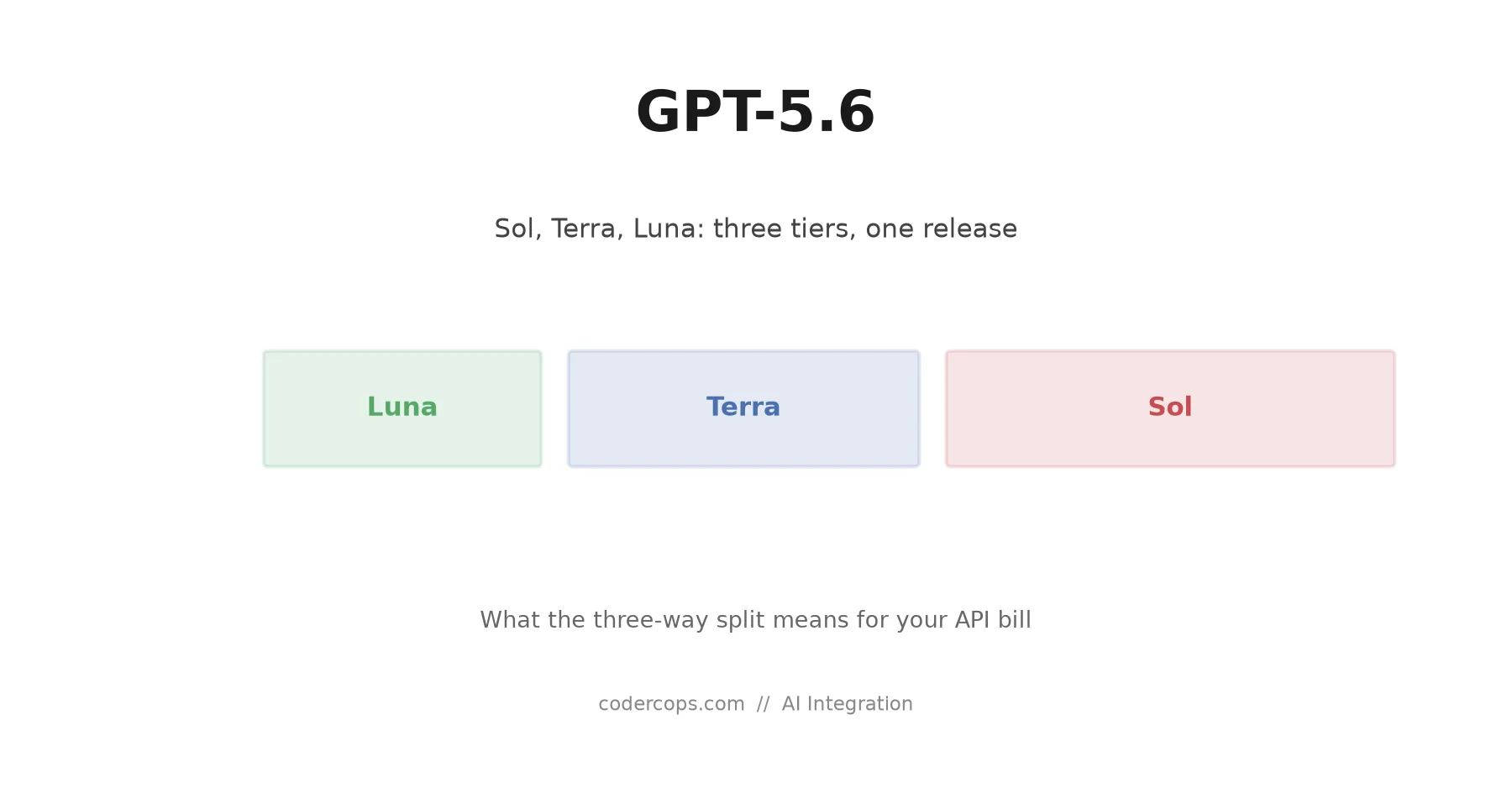
P.46GPT-5.6 splits into three tiers: Sol for frontier work, Terra at half GPT-5.5's cost, Luna for volume. What changed, what it costs, which tier fits you.
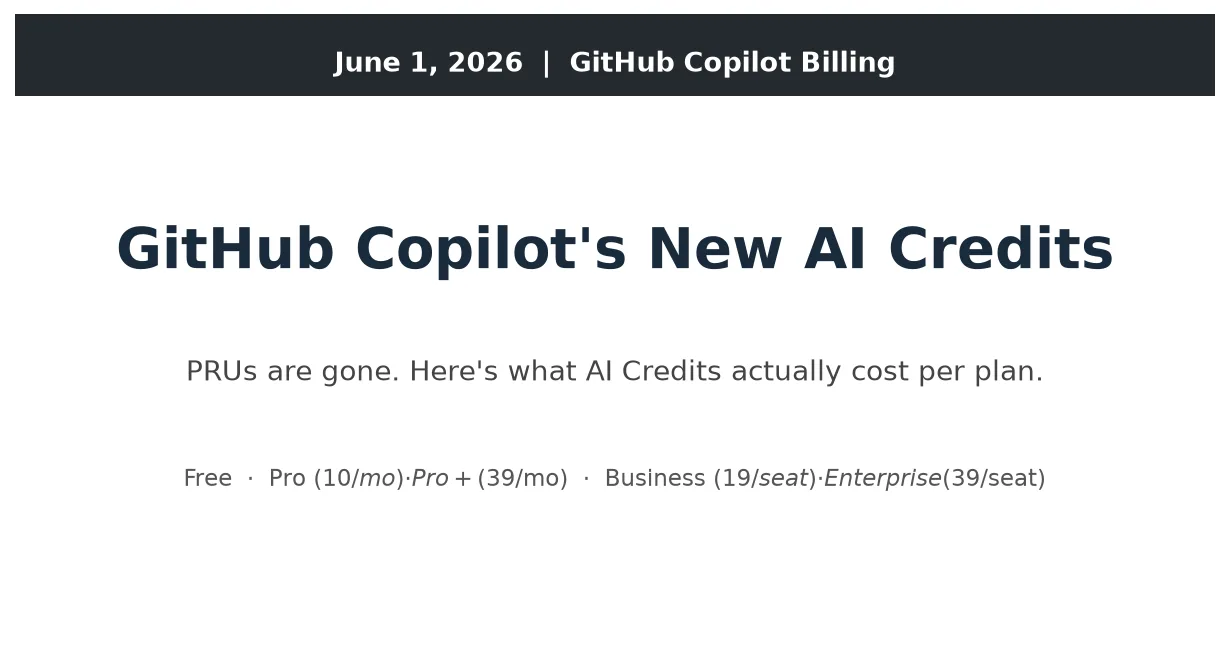
P.47Copilot swapped Premium Request Units for AI Credits on June 1, 2026. Completions stay unlimited; chat, review, and PR summaries draw from a credit pool.
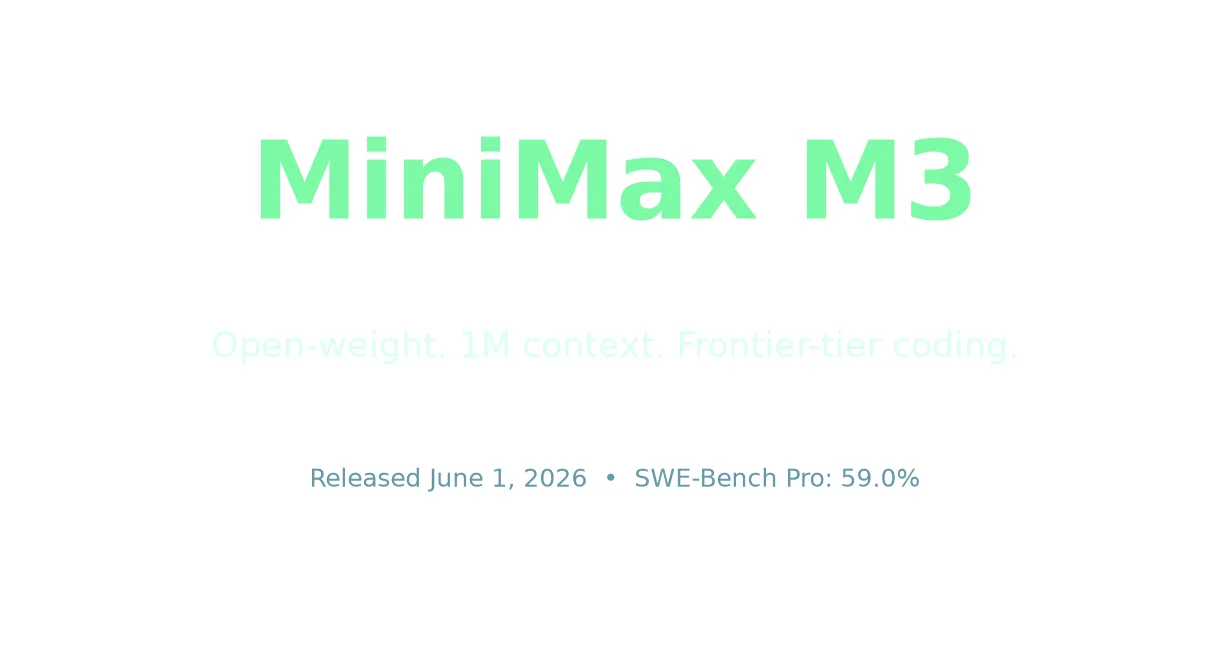
P.48MiniMax M3 is the first open-weight model to combine frontier-tier coding, a 1M-token context, and native multimodality. What it does, and how it benchmarks.
LLM bills grow faster than usage. Prompt caching, semantic dedup, tiered routing, and batch inference cut 40-80% without degrading output quality.
Comparing LangSmith, Braintrust, and W&B Weave for LLM evaluation: what each does well, where each breaks down, and a minimum viable eval pipeline.
Both frameworks can build RAG pipelines and agent systems, but they're designed with different priorities. Here's when to reach for each and when to skip both.
Ollama runs Llama, Mistral, Phi-4, and dozens of open-weight models on your laptop with one command. Here's what actually works and when to use it.
Getting a language model to return reliably structured data is not just about asking nicely. Here's the pattern that actually works at production scale.
MCP is the standard for connecting AI models to external systems. How it works, how to implement a server, and what to lock down before production.
Clients ask agencies to automate PDFs constantly. Here's how to actually build document extraction pipelines: OCR, vision models, and validation.
AI video tools have moved from toy to production-grade in 18 months. Here's what's real, what still fails, and how to have an honest conversation with a client about it.
A growing class of AI agent frameworks can control a browser the way a human does — clicking, typing, navigating. Here's what works in production, what breaks, and when to actually reach for these tools.
Both approaches customize LLM behavior for your use case, but they solve different problems. Here is how to decide which one you need, how to know when to use both, and what teams consistently get wrong.
Three leading agent orchestration frameworks, three different mental models. Here's when each one earns its place, what each costs you in complexity, and what the choice looks like when you're debugging at 2am.
An agent that forgets everything when the session ends is a limited tool. Here are the practical patterns for building different kinds of memory into your agents.
When your AI agent needs to run the code it writes, you can't let it touch your production servers. Here's how the main isolation options work and when to use each.
Past the chatbot hype, AI is genuinely improving specific e-commerce outcomes. Here are the implementations producing measurable results, and the ones that still mostly disappoint.
AI makes generating and refreshing technical documentation cheap, but keeping it accurate as code changes is still a process problem, not a model one.
The Vercel AI SDK has become the default for building AI features in JavaScript apps. Here is what it actually does, how its core primitives work, and where the sharp edges still live.
Hallucination is not a bug that gets patched in the next model release. It is a property of how language models work. Here are the patterns that actually reduce it in production systems, and what they cost.
Single-provider AI dependencies are a reliability risk. Routing layers like LiteLLM and OpenRouter let you fall back across providers, cap costs, and try smaller models first. Here is the architecture and when it actually matters.
CodeRabbit, GitHub Copilot code review, and similar tools have changed the first-pass review. Here's what they actually catch, where they fail, and the workflow that combines both effectively.
Add similarity search to your existing Postgres database using pgvector. Real setup, indexing strategies, and when you actually need a dedicated vector database.
LLM observability means tracking traces, token costs, latency, and output quality to debug production failures instead of guessing. Covers Langfuse and Helicone.
Unit tests confirm your code runs. They don't confirm your AI feature gives good answers. Here's how to build an eval pipeline that catches real failures.
AI IDE rules files inject project-specific context into every completion. Here is how to write rules for Cursor, Windsurf, and Copilot that change generated code.
Rolling back a bad API endpoint takes seconds. Rolling back a bad LLM integration is harder — the damage may already be in your logs, your users' inboxes, or your clients' feeds. Feature flags are how you ship AI features without betting everything on launch day.
AI features ship fast. Then the monthly API bill arrives. Here's a systematic approach to understanding and reducing LLM costs without breaking the product.
Getting a language model to return valid, schema-conforming JSON is harder than it looks. Here's what works in production, from native structured output APIs to library-level validation.
AI coding agents now read tickets, write code, run tests, and submit pull requests with minimal human input. Here is what changed for engineering teams in 2026.
AI coding tools introduce subtle, systemic problems most teams miss. Here are 7 AI-specific mistakes from 11 client projects and how we prevent them.
Cursor, GitHub Copilot, and Claude Code solve different problems. After 18 months on client projects, we found most developers need at least two of them.
Andrej Karpathy coined 'vibe coding' in 2025. By 2026 it has become the most misunderstood term in software development. Here is what it actually means, how it works, when to use it, and when it will get you fired.
P.79Gemini AI now powers Google Docs, Sheets, Slides, and Drive with cross-app synthesis, real-time web data, and enterprise controls priced at $12-18/user monthly.
Google's 2026 AI Agent Trends report calls this the 'agent leap.' We break down what it means and compare Claude Code, Devin, Operator, and Mariner.
Claude Opus 4.6, GPT-5.3 Codex, Gemini 2.5 Pro, DeepSeek V3.2, and Qwen3-Coder compared on benchmarks, pricing, and real coding tasks to pick the right model.
A data-driven comparison of Claude Sonnet 4.6 and Opus 4.6 covering benchmarks, pricing, speed, coding performance, and real-world use cases. We help developers choose the right Anthropic model for their needs.
Prompt engineering is dead. Context engineering, managing system prompts, RAG results, tool outputs, memory, and history, is the skill that matters now in 2026.
DeepSeek V4's Engram memory, mHC, and Sparse Attention combine to deliver million-token context at a fraction of the cost of Western frontier models.
February 2026 packed six AI launches into three weeks: GPT-5.3 Codex, Claude Opus and Sonnet 4.6, Gemini 3.1 Pro, DeepSeek V4, compared on benchmarks and price.
How we built production multi-agent systems with the Claude Agent SDK and MCP, covering orchestrator-worker patterns, handoffs, error handling, and tracing.
Perplexity launches Model Council, a multi-AI consensus feature that queries GPT, Claude, and Gemini simultaneously and synthesizes one verified answer. Here is how it works and why it matters.
Modern RAG in 2026 goes beyond vector search: ColBERT, SPLADE, hybrid search, and contextual retrieval compared with benchmarks and when RAG beats fine-tuning.
Run Llama 4, Qwen3, Phi-4, and Mistral on consumer GPUs like the RTX 4090 and 5090. Covers quantization, inference engines, VRAM needs, and local vs. API costs.
Small language models like Phi-4, Qwen2.5, and Gemma 3 now beat cloud LLMs on latency, cost, and privacy for most production edge deployments in 2026.
P.91Models that think before they answer are reshaping AI engineering. We break down how extended thinking, reasoning budgets, and chain-of-thought inference work across Claude, OpenAI o3, Gemini, and DeepSeek-R1 — and when you should actually use them.
P.92EditorPickVibe coding hit 92% daily developer adoption in 2026, but only 15% call it their real workflow. We break down the tools, the risks, and what replaced what.
Every agency claims to 'use AI' now. But there's a fundamental difference between bolting AI onto existing workflows and building an agency around AI from the ground up. Here's why we made that choice and what it actually means.
The network latency between your Django app and your FastAPI ML service is probably longer than inference itself. Here is how to serve models from Django directly.
Gartner predicted AI agents would enter the trough of disillusionment in 2026. They were right. After a year of failed deployments, runaway costs, and overpromised demos, the market is finally getting serious about what agents can actually do.
We spent two years turning AI from autocomplete into a genuine collaborator. Here is what that human-AI transition actually looked like, and what we got wrong.
Not everything needs the cloud. Edge AI is putting real intelligence on devices, sensors, and cameras — with millisecond latency and zero internet dependency. Here is where the technology actually stands.
Most AI agents fail in production. Here are the architecture patterns, error handling strategies, and guardrails we use to build agents that actually ship.
After 90 days of using Claude Code across our entire engineering team, here is what actually changed — the good, the bad, and the productivity numbers.
Claude Sonnet 4.6 matches Opus performance at Sonnet pricing. Full breakdown of benchmarks, features, adaptive thinking, and what it means for developers.
A step-by-step guide to deploying a production-ready AI chatbot with streaming responses, conversation memory, and rate limiting using Claude API and Vercel.
Naive RAG is broken. Here is how contextual retrieval, hybrid search, and intelligent chunking are reshaping how we build AI applications in 2026.
We automated visual regression testing, test generation, and bug triage with AI. Here are the real results after 6 months — including what still needs humans.
How we built an AI-powered interface that lets non-technical users query any database using plain English, eliminating SQL expertise requirements and democratizing data access.
The EU's Digital Omnibus on AI is now adopted law: most high-risk AI obligations are pushed from August 2026 to December 2027. Here is what actually changed, what still applies on schedule, and the practical compliance guide development teams need.
From Google's voluntary exit program to widespread automation, here's a data-driven look at how AI is reshaping the job market in 2026 and what workers can do.
93% of executives say AI sovereignty is mission-critical in 2026. Learn what AI sovereignty means, why it matters, and how to build a sovereign AI strategy.
Budget 2026 launches Bharat-VISTAAR, a multilingual AI platform for Indian farmers. Here's how it works and why agritech startups should pay attention.
India's AI market hits $17B by 2027 but lacks comprehensive data privacy laws. Explore the ethical AI challenges India faces and frameworks for responsible innovation.
Google's CBO Philipp Schindler offers voluntary exit packages to employees not embracing AI. Here's what this means for tech workers and the industry in 2026.
India AI Impact Buildathon 2026 is the country's biggest AI challenge. Here's how to participate, what to expect, and why this signals India's AI ambition.
India's AI market is projected to reach $17B by 2027 with 45% YoY growth. Explore the sector-by-sector breakdown of AI adoption in banking, healthcare & education.
Microsoft ($17.5B), Amazon ($35B) & Google ($15B) are investing $67.5B in India's data centres. Here's what this AI infrastructure race means for India's tech future.
Discover 9 emerging Indian AI startups from Bengaluru, Gurugram & Kerala that are driving AI innovation in 2026. From agentic AI to content creation tools.
Physical AI enables robots, drones & smart equipment to operate autonomously. See how Amazon, BMW & others are deploying embodied AI in 2026.
NASA's Perseverance rover used Claude AI to plan its own Mars drive route. Here's the pipeline, verification, and safety layers that made it work.
With 38 states passing AI legislation and a federal executive order pushing for preemption, AI developers face a fragmented regulatory landscape. Here's your comprehensive guide to compliance in 2026.
Microsoft, Google, Amazon, and Meta are collectively spending $650 billion on AI infrastructure in 2026. We break down what each company is building, why the numbers keep climbing, and what it means for developers.
Developer AI adoption hit 84% in the 2025 Stack Overflow survey, yet trust in AI accuracy fell to 46% distrust. Here's what the data actually shows.
Alphabet announced $175-185 billion in 2026 capital expenditure, nearly double 2025 spending. Stock dropped 5% as investors question Big Tech's AI spending sustainability, despite Google Cloud revenue spiking 48%.
Amazon reported quarterly revenue beating estimates but stock dropped 10% after-hours as investors digest the company's $200 billion capital expenditure plan for 2026, driven by aggressive AI infrastructure investment.
Alphabet, Amazon, and Meta collectively announced over $600 billion in 2026 AI capital expenditure. Stocks dropped across the board as investors question whether returns will ever justify the spending.
P.123EditorPickClaude Opus 4.6 adds agent teams, a 1 million token context window, and adaptive thinking, with benchmark gains that put pressure on OpenAI and Google.
We tested all three agentic AI IDEs on real projects. Here's how their agent modes, codebase understanding, and pricing actually compare.
Google's Gemini app has crossed 750 million monthly active users, approaching ChatGPT scale. Combined with the Apple Siri deal, Google is positioning Gemini as the default AI layer for billions of devices.
Microsoft appointed Charlie Bell, formerly its security chief, as its first engineering quality czar, citing the rising cost of AI reliability failures.
Anthropic used Super Bowl ads to pledge Claude will never show ads, contrasting itself with OpenAI's move to add sponsored suggestions to ChatGPT.
Apple confirmed its acquisition of Israeli AI audio startup Q.ai for nearly $2 billion. The deal brings advanced audio AI technology that could transform Siri, AirPods, and Apple's entire audio ecosystem.
Apple and Google announced a multi-year deal to power next-gen Siri with Gemini AI. iOS 26.4 beta in February brings conversational Siri, with full release in March. The AI assistant wars just got complicated.
Anthropic launched domain-specific Claude Cowork plugins for legal, finance, sales, and marketing, with MCP integrations for Slack, Figma, and Salesforce.
Anthropic releases Claude Sonnet 5 codenamed Fennec with 82.1% SWE-Bench score, surpassing Opus 4.5. Optimized for Google's Antigravity TPU with 1M token context at $3/M input tokens.
DeepSeek's V4 model brings 1 trillion parameters, Engram conditional memory, and open-source weights under Apache 2.0. We break down the architecture, coding benchmarks, geopolitical implications, and what it means for developers.
Goldman Sachs partnered with Anthropic to build autonomous AI agents for accounting and compliance. Here's how they did it, what they learned, and what other enterprises can take from this deployment.
Microsoft announced its second-generation Maia AI chip with software tools designed to challenge NVIDIA's CUDA dominance. The chip powers Azure AI workloads and signals Microsoft's push for AI infrastructure independence.
Moonshot AI's Kimi K2.5 is a 1-trillion-parameter open-source model with a 2M-token context window that nears GPT-5 performance. Here's how it was built.
Skyryse closed a $300M Series C at a $1.15B valuation to fund FAA certification of SkyOS, its AI flight system built to make any aircraft easier to fly.
Anthropic's AI legal plugin for Claude Cowork erased $285 billion in software stock value in hours, as traders priced in AI's threat to SaaS.
By 2028, 1 in 4 job candidates will be fake. North Korean operatives have infiltrated 300+ US companies using AI-generated personas. Deepfake job fraud is the hiring crisis nobody prepared for.
Google DeepMind's Project Genie generates navigable 3D worlds from text prompts in real time, and gaming publisher stocks dropped within days of launch.
OpenAI and Anthropic released flagship coding models the same day. We compare GPT-5.3 Codex and Claude Opus 4.6 on benchmarks, pricing, and real coding tasks.
Microsoft's new AI QuickStart Programme aims to help 1,000 SMBs deploy enterprise-ready AI solutions in under three months. Here's what's included and how developers can capitalize on the opportunity.
OpenAI is retiring GPT-4o, GPT-4.1, GPT-4.1 mini, and o4-mini from ChatGPT on February 13, 2026. Only 0.1% of users still choose GPT-4o daily, but the model's retirement marks the end of the GPT-4 generation.
Elon Musk merged SpaceX and xAI into a $1.25 trillion entity, the largest corporate merger in history, aiming to move AI compute into orbit.
Alphabet's Waymo raised $16 billion in the largest autonomous driving funding round ever, more than doubling its valuation to $126 billion. The company plans expansion to 20+ cities including Tokyo and London.
AI-first web agencies build apps with built-in intelligence, like chatbots and predictive features, as one product instead of two disconnected teams.
Claude Opus 4.6 found 500+ unknown zero-day vulnerabilities in open-source code, a milestone for AI-powered security research and what it means for developers.
AI IDEs now manage entire repos and ship features from natural language. Here's how Cursor, Windsurf, Copilot, and Antigravity compare in 2026.
Google's search share has dipped below 90% for the first time since 2015 as Perplexity and ChatGPT pull queries away. Here is who is winning and why it matters.
41% of global code is now AI-generated. Senior devs report 81% productivity gains. But 63% have spent more time debugging AI code than writing it themselves. The vibe coding revolution has a fine print.
AI-discovered drug candidates are now in mid-to-late-stage clinical trials for the first time, testing whether AI can cut drug costs and timelines.
The big tech AI arms race hit $350B+ in 2026 spending across Meta, Microsoft, Alphabet, and Amazon. Here's where the money is going and what it means for you.
A trademark dispute, crypto scammers, 100K GitHub stars, a social network for AI agents, and a security crisis — the Clawdbot saga has everything. Here's the full story of the viral AI assistant that broke the internet.
UPS cut 30,000 jobs, Dow cut 4,500, and Nike automated distribution in a single month. Here is what is actually driving the 2026 corporate layoff wave.
Grok's non-consensual deepfake scandal and a viral fake Maduro image exposed the same failure: AI image tools shipping without adequate safety guardrails.
CES 2026 made smart glasses mainstream: ASUS gaming AR, RayNeo's phoneless glasses, and Samsung's creaseless foldable signaled wearable displays are inevitable.
Yann LeCun left Meta to build world models with a $5B valuation target. Google DeepMind launched real-time 3D world models. Here's why researchers believe this is AI's next major leap.
P.157EditorPickAI agents are being deployed everywhere, but their security surface is wildly underexplored. From tool poisoning to memory injection, here's the threat landscape developers must understand in 2026.
P.158EditorPickClaude Code by Anthropic went viral in January 2026. Developers and non-developers alike are getting Claude-pilled. Here is an honest breakdown of what it does, how it compares, and whether the hype holds up.
P.159Cursor revealed how hundreds of concurrent AI agents built a full web browser from scratch. Planner/worker architecture, GPT-5.2 vs Opus 4.5 benchmarks, and what industrial-scale AI coding actually looks like in practice.
P.160DeepSeek and Qwen surged from 1% to 15% of the global AI market in a year, powered by 700M+ Hugging Face downloads and open-source models rivaling closed ones.
TII's Falcon-H1R 7B scores 88.1% on AIME-24 math, outperforming 15B models. Built on a hybrid Transformer-Mamba architecture, it signals a new era for efficient AI. Here's what it means for developers.
Nearly half of Indian VC deals in 2026 have an AI component, up from 12% in 2023. Here's what an AI-first MVP actually costs and takes to build.
P.163Meta is buying Singapore-based Manus AI to supercharge Meta AI and WhatsApp. This deal reshapes the agentic AI race between Meta, Google, OpenAI, and Microsoft. Here's what it means for developers.
MIT Technology Review dropped its annual list of breakthrough technologies for 2026. From AI coding tools to quantum leaps, here is what actually matters to developers and what is just noise.
CES 2026 made physical AI real. Atlas got human hands, LG's CLOiD folds laundry, Bosch built an agentic kitchen, and NVIDIA's Cosmos trains it all. Here is what developers should actually pay attention to.
P.166EditorPickClawdbot turns WhatsApp, Telegram, and Discord into a self-hosted AI assistant with persistent memory. Here's the setup guide for macOS, Linux, and Windows.
Prompt engineering shapes behavior, RAG adds knowledge, fine-tuning changes reasoning. Here's the cost and benchmark comparison to pick the right one.
P.168EditorPickForget simple chatbots. Agentic AI is rewriting how businesses operate by orchestrating entire workflows end-to-end. Here's what's actually happening, why it matters, and how to get started.
P.169AI regulation in 2026 is a fragmented patchwork of EU, US, and state rules. This guide covers what builders and deployers of AI actually need to comply with.
P.170AI job anxiety jumped from 28% to 40% in two years, and the IMF calls it a tsunami. Here's what the layoff data and hiring trends actually show.
P.171AI agents are starting to buy things with stablecoins. Here is what agentic commerce is, how the payments work, and the risks nobody should ignore.
P.17297% of investors penalize firms that skip AI upskilling, but only 23% of companies have a real program. Here's what effective AI upskilling actually looks like.
P.173Multimodal AI models that see, hear, and act are becoming digital workers in 2026: what's real in production, what's hype, and how to start building.
P.174The AI industry is shifting from massive general-purpose models to smaller, specialized ones that outperform giants in specific tasks. Here's why this matters and how to take advantage of it.
Voice AI hit 97% accuracy and sub-200ms latency in 2026, yet most teams still build voice UX wrong. See the architecture and patterns that actually work.
Traditional test suites break when outputs are non-deterministic. Here's how we test AI-powered features — from LLM output validation to regression testing for prompt changes, with real frameworks and examples.
NVIDIA leads AI chips in 2026, but AMD MI300X and Intel Gaudi 3 close the gap on price and specific workloads. Compare specs, benchmarks, and picks by use case.
Model Context Protocol is the new standard for connecting AI to external tools. Here's a practical guide to building, deploying, and debugging MCP servers — with real code examples from production.
A developer's introduction to Physical AI: NVIDIA Cosmos, Isaac Sim, ROS 2, and closing the sim-to-real gap before you touch any hardware.
AI infrastructure runs on tight power and chip supply limits in 2026, shaping API pricing, latency, and model availability for developers building on top of it.
A wrong AI partner choice wastes 6 months and $50K+. This 23-question checklist across technical depth, process, and security helps CTOs pick the right one.
Architecture patterns, prompt engineering, cost control, and a production checklist for AI applications. The parts that outlast any given model.
Should you build a custom AI chatbot or use an off-the-shelf solution? We break down the real costs of Dialogflow, Rasa, custom OpenAI builds, and agency development — with monthly TCO projections.
P.184Meta Compute, OpenAI's 750MW deal, and a projected $3 trillion investment in AI infrastructure. The biggest story in tech isn't about models—it's about who controls the compute.
Shipping AI for 11 clients taught us fallbacks, privacy, and cost control matter more than model choice: lessons from healthcare, e-commerce, and Web3 work.
P.186NVIDIA announces Vera Rubin architecture in production and DLSS 4.5 with Transformer-based Super Resolution. Here's the complete breakdown of what's new and what it means for gaming and AI workloads.
P.187EditorPickNVIDIA's Cosmos, LG's household robot, and the rise of Physical AI dominated CES 2026. Here's what developers need to know about robots entering our homes and workplaces.
P.188EditorPickGitHub's Repository Intelligence gives AI coding tools full codebase context: relationships, commit history, and team conventions, not just the current file.
P.189Small language models now beat frontier LLMs on cost and latency for narrow tasks. Here is why teams are shipping SLMs in production in 2026.
The essential developer takeaways from CES 2026 - from NVIDIA's Cosmos platform to AMD's Ryzen AI processors and Intel's Panther Lake. Here's what matters for your next project.
A deep dive into the biggest announcements from CES 2026 - from NVIDIA's Rubin platform to humanoid robots entering our homes. Here's everything developers need to know.
GitHub Copilot vs Cursor vs Claude Code - which AI assistant actually saves you time? A practical comparison based on real-world testing and developer workflows.
From IBM's quantum roadmap to Google's error correction breakthroughs, quantum computing is reaching an inflection point. Here's what it means for software developers.
Understand overfitting and underfitting in ML models with practical solutions including cross-validation, regularization, early stopping, and data augmentation.
Perform EDA on the Boston Housing dataset using scatter plots and regression lines to identify relationships between features and housing prices.
Explore dimensionality reduction techniques — PCA, LDA, t-SNE, and autoencoders — for improving model performance and data visualization.
Discover the key advantages of Random Forest algorithms — high accuracy, resistance to overfitting, feature importance, and handling missing data.
GridSearchCV trains and cross-validates a model across every hyperparameter combination you define, then picks the best. How it works and where it costs you.
Build a sentiment analysis pipeline with text preprocessing, CountVectorizer token counts, and Multinomial Naive Bayes classification on Twitter data.
Learn how centroid-based clustering algorithms like K-means partition datasets into meaningful groups based on distance metrics.
A guide to clustering algorithm types — partition-based, hierarchical, density-based, and model-based — with use cases and selection criteria.
Explore time series forecasting methods including ARIMA, exponential smoothing, and seasonal decomposition for real-world prediction tasks.
Understand decision tree algorithms for classification and regression, their pros and cons, and build an Iris classifier with Python code.
Learn SVM theory including hyperplanes and the kernel trick, then build a classifier on the breast cancer dataset using scikit-learn.
Build a logistic regression model to predict diabetes outcomes using the Pima Indians dataset, covering sigmoid functions, feature scaling, and evaluation.
Implement K-Nearest Neighbors classification using scikit-learn with data visualization, model training, and performance evaluation on real datasets.
Understand the KNN algorithm — how it works, distance metrics, choosing K, and its applications in both classification and regression tasks.
Compare Naive Bayes, SVM, Decision Tree, and Random Forest for email spam detection with a complete Python pipeline from data loading to evaluation.
Learn Occam's Razor, regularization, pruning, ensemble methods, cross-validation, Bayesian model selection, genetic algorithms, and more to boost ML performance.
Master MAE, MSE, R², RMSE, accuracy, precision, recall, F1-score, AUC-ROC, and confusion matrices with formulas and Python code examples.
Understand the bias-variance tradeoff in machine learning with mathematical formulas, visual explanations, and strategies to find the right balance.
Build an insurance cost prediction model using multivariate linear regression with one-hot encoding, evaluation metrics, and residual analysis.
Master 7 encoding techniques for categorical variables — one-hot, label, dummy, binning, count, frequency, and target encoding with Python examples.
Build a linear regression model from scratch using scikit-learn, with data visualization, feature selection, and model evaluation metrics.
Explore reinforcement learning fundamentals — agents, environments, states, actions, Q-learning, SARSA, Actor-Critic, and deep RL approaches.
Understand unsupervised learning methods including clustering, dimensionality reduction, anomaly detection, and generative models with practical examples.
Explore derivatives, integrals, multivariate calculus, optimization, and differential equations with Python implementations using SymPy and NumPy.
Learn essential statistics concepts — mean, median, mode, variance, standard deviation, percentiles, quartiles, and z-scores with Python implementations.
Understand vectors, matrices, transpose, inverse, determinant, trace, dot product, and eigenvalues with NumPy implementations for data science.
Learn to create compelling data visualizations using Matplotlib and Seaborn — line plots, scatter plots, bar charts, histograms, heatmaps, and more.
Master Pandas for data manipulation — reading data, selecting columns, grouping, merging DataFrames, handling missing values, and working with dates.
Learn NumPy essentials — arrays, shapes, reshaping, slicing, stacking, broadcasting, universal functions, and image processing with practical examples.
A comprehensive guide covering 10 regression types — linear, polynomial, logistic, ridge, lasso, elastic net, and more — with Python code examples and selection criteria.
Discover how artificial intelligence and machine learning are transforming augmented and virtual reality applications in gaming, education, and beyond.
Understand the key differences between artificial intelligence, machine learning, and deep learning with clear definitions, examples, and real-world applications.
Learn OpenCV fundamentals including image I/O, pixel manipulation, color conversion, resizing, filtering, edge detection, and feature detection with SIFT and SURF.
Exploratory data analysis means visualizing, cleaning, and summarizing data before modeling. This guide covers plots, correlation, PCA, and feature engineering.
Build a CNN model using ResNet50 transfer learning to classify gender from eye images, covering data preprocessing, model architecture, and evaluation.
Learn to predict stock prices using Long Short-Term Memory (LSTM) networks in Python with TensorFlow, from data preprocessing to building and evaluating the model.
A hands-on guide to building a fruit image classifier using transfer learning with ResNet50 in TensorFlow and Keras, achieving high accuracy on the Fruits-360 dataset.