Web Development · Architecture
React vs Angular vs Vue in 2026: How to Choose the Right Framework
The three major frontend frameworks have all matured significantly and all make different tradeoffs. This is how we help clients choose — and why there is no universally right answer.

Anurag Verma
7 min read

Sponsored
Clients ask us this question constantly. “We’re starting a new project — should we use React, Angular, or Vue?” My answer is always the same: it depends on four things, and none of them is “which is more popular.”
We have shipped production systems in all three frameworks. We have also seen teams pick the wrong one, and the cost of that decision plays out slowly over months and years — not in a dramatic failure but in friction, in developers who are fighting the framework, in codebases that resist change. Getting the choice right upfront is worth the careful thought.
Here is how we think about it.
The actual state of all three in 2026
All three frameworks are production-ready, actively maintained, and used by large companies with significant engineering investment. The “which will die?” question is not a useful frame for any of them.
React is the most widely used frontend library. That is not in dispute. It is a library for building UI components, and it intentionally does not have opinions about routing, state management, data fetching, or anything else at the application level. You assemble a React application from React plus a collection of other libraries. The most common full-stack React setup in 2026 involves Next.js or Remix as the meta-framework.
React’s core API has stabilised around hooks. Server Components and the React Compiler (which optimises re-renders automatically) are the two most significant recent additions, and Next.js has led on adopting both.
Angular is a complete application framework. It ships with a router, HTTP client, dependency injection, forms API, and testing utilities. You do not assemble an Angular application from parts — you configure the parts that are already there. The major evolution in recent releases is the signals API (stable since Angular 17) and the path to zoneless change detection, which removes one of Angular’s historical performance complaints.
Vue 3 landed in 2020 and the ecosystem has fully migrated. The Composition API in Vue 3 is analogous to React hooks — state and logic colocated in a setup function. Pinia is the official state management library. Vite is the expected build tool. The Vue experience in 2026 is clean: the framework is opinionated enough to have a happy path, but not so opinionated that you feel constrained on smaller projects.
The decision framework
Team size and experience
Small team, fast pace. Vue is worth serious consideration. The Composition API is ergonomic, the documentation is among the best of any framework, and the opinions are gentle enough that you are not fighting the framework to build something non-standard.
React is also a strong choice here, primarily because of ecosystem depth. If you need a specific library — a chart library, a rich text editor, a date picker with specific behavior — React’s library ecosystem is the deepest. Vue and Angular have equivalents for most things, but React has more of everything.
Large team, long time horizon. Angular’s value proposition becomes clearer here. When ten developers work on the same codebase over multiple years, the enforced structure Angular provides is not overhead — it is coordination tooling. The dependency injection system makes large-scale refactoring more tractable. The strict TypeScript requirement means the codebase has types even when the team changes. The opinionated file structure means a developer new to the project can find things without a tour.
React scales fine in large teams too, but it requires explicit discipline that Angular provides by default. Many large React codebases develop informal conventions that function like the structure Angular would have given them — they just accumulated the coordination cost along the way.
How long will the codebase live?
For a prototype, an MVP, or a project with a planned lifespan under two years, this question matters less. Pick what your team knows.
For a production system that will need to be maintained and extended for five-plus years, framework stability and ecosystem maturity matter more. All three frameworks have strong track records here. Angular’s major version upgrades have historically been well-managed with migration guides (the AngularJS-to-Angular 2 transition was painful, but that was a framework replacement, not an upgrade). React has maintained strong backwards compatibility. Vue 3 required a migration from Vue 2 that was significant in scope but is complete.
Hiring and team growth
If you anticipate growing the team and hiring into the framework, React’s larger talent pool is a real advantage. More developers know React, which means a wider applicant pool for roles and more developers who can onboard without a framework learning curve.
Angular has a concentrated but loyal developer community. The hire is harder to find but tends to come with specific enterprise delivery experience. See our guide on hiring Angular developers for what to look for.
Vue hires are the thinnest pool in English-speaking markets, though this is less true in Asian markets where Vue has significant adoption. If you are building a Vue team from scratch, expect the search to take longer.
Performance requirements
For most web applications, the performance differences between the three frameworks are not meaningful in production. All three ship reasonable amounts of JavaScript, all three support server-side rendering and static generation, and all three can be optimised if performance becomes a bottleneck.
The cases where framework performance actually matters:
React’s new compiler reduces re-renders automatically — the manual memoization that was common in React codebases is less necessary in projects using the compiler. This is a practical improvement for data-heavy UIs.
Angular’s zoneless mode, achievable with signals in Angular 18+, removes the Zone.js overhead that caused some performance complaints historically. For applications with many concurrent users on lower-powered devices, this is a real improvement.
Svelte (not in this comparison but worth mentioning) compiles components to imperative DOM updates with no virtual DOM. For extreme performance requirements, Svelte’s output is genuinely leaner. We cover that separately in our Svelte developer hiring guide.
SEO and Core Web Vitals
All three frameworks support server-side rendering and static site generation with their respective meta-frameworks (Next.js for React, Angular Universal or Analog for Angular, Nuxt for Vue). If SEO matters, pick the meta-framework, not the component library.
In practice, Next.js has the most investment and the broadest adoption for SSR/SSG use cases. Nuxt 3 is excellent and genuinely comparable. Angular’s SSR story has improved substantially and is production-viable.
The cases that are clear-cut
Build a new internal enterprise tool that will need 8-15 developers working on it over 4 years. Use Angular. The structure it enforces is worth the upfront investment.
Build a consumer web app with a team of 3-5 that needs to move fast. React or Vue. React if your team already knows it or you anticipate heavy hiring. Vue if you are starting fresh and want the most ergonomic experience.
Build a content-heavy marketing site with complex interactive components. React with Next.js or Vue with Nuxt. Both handle SSG and SSR well. Pick based on your team.
Build a medium-complexity SaaS product with a team of 5-10. Any of the three works. If the team knows one, use that. If you are starting fresh, Vue or React with Next.js are the most common starting points.
The decision nobody wants to hear
You probably should use whatever your team already knows.
Framework migrations are expensive. They create regressions, require parallel codebases during the transition, consume time that could go to features, and often deliver less gain than expected — because the framework was rarely actually the bottleneck. Before choosing a framework for a new project, confirm you genuinely have a new project (greenfield) rather than a project that has been declared greenfield to justify a framework switch.
If you are hiring a team to build something new, the decision is genuinely open. Use the factors above. If you want to discuss the decision as it applies to a specific project, our services page describes how we approach that kind of technology selection conversation with clients.
React, Angular, and Vue are all good choices. The goal is matching the choice to your situation, not selecting the winner.
Frequently asked questions
- Which is better, React or Angular or Vue?
- None of them is better in general. React is better for hiring and ecosystem breadth. Angular is better for large teams with long-lived codebases that benefit from enforced structure. Vue is better for teams that want ergonomic development without React's setup overhead or Angular's verbosity. The right answer depends on your specific constraints — team size, project scope, existing skills, and how long the codebase needs to live.
- Which framework has the most jobs in 2026?
- React, by a significant margin. If you are building a product where you need to hire quickly from a broad pool, React gives you the largest candidate market. Angular has a loyal enterprise market. Vue is common in Asia and in smaller teams, but its job market in the US and UK is noticeably smaller than React's.
- Is Angular making a comeback in 2026?
- Yes, in the enterprise space it never really left. The signals API, zoneless change detection, and standalone components have genuinely improved Angular's development experience. Teams that abandoned Angular in favour of React between 2018 and 2022 may find the modern version of the framework worth reconsidering for enterprise use cases.
- Is Vue still worth learning in 2026?
- Yes, particularly for developers who want to understand what thoughtful API design looks like. Vue 3's Composition API is similar enough to React hooks that knowledge transfers, and the full Vue + Vite + Pinia stack is genuinely pleasant to work in. Vue is widely used in production; it is just not the framework that dominates English-language job boards.
- Should I migrate from one framework to another?
- Rarely. The cost of a framework migration is almost always underestimated and the gains are almost always overstated. If the product is working, the team knows the framework, and the codebase is maintainable, the right move is to keep going. The cases where migration makes sense are: the framework is being deprecated (this has happened with AngularJS and Backbone), the performance requirements have changed in ways the current framework genuinely cannot meet, or the team has fundamentally changed and no longer has the skills for the current stack.
Sources
Sponsored
More from this category
More from Web Development
 R.01
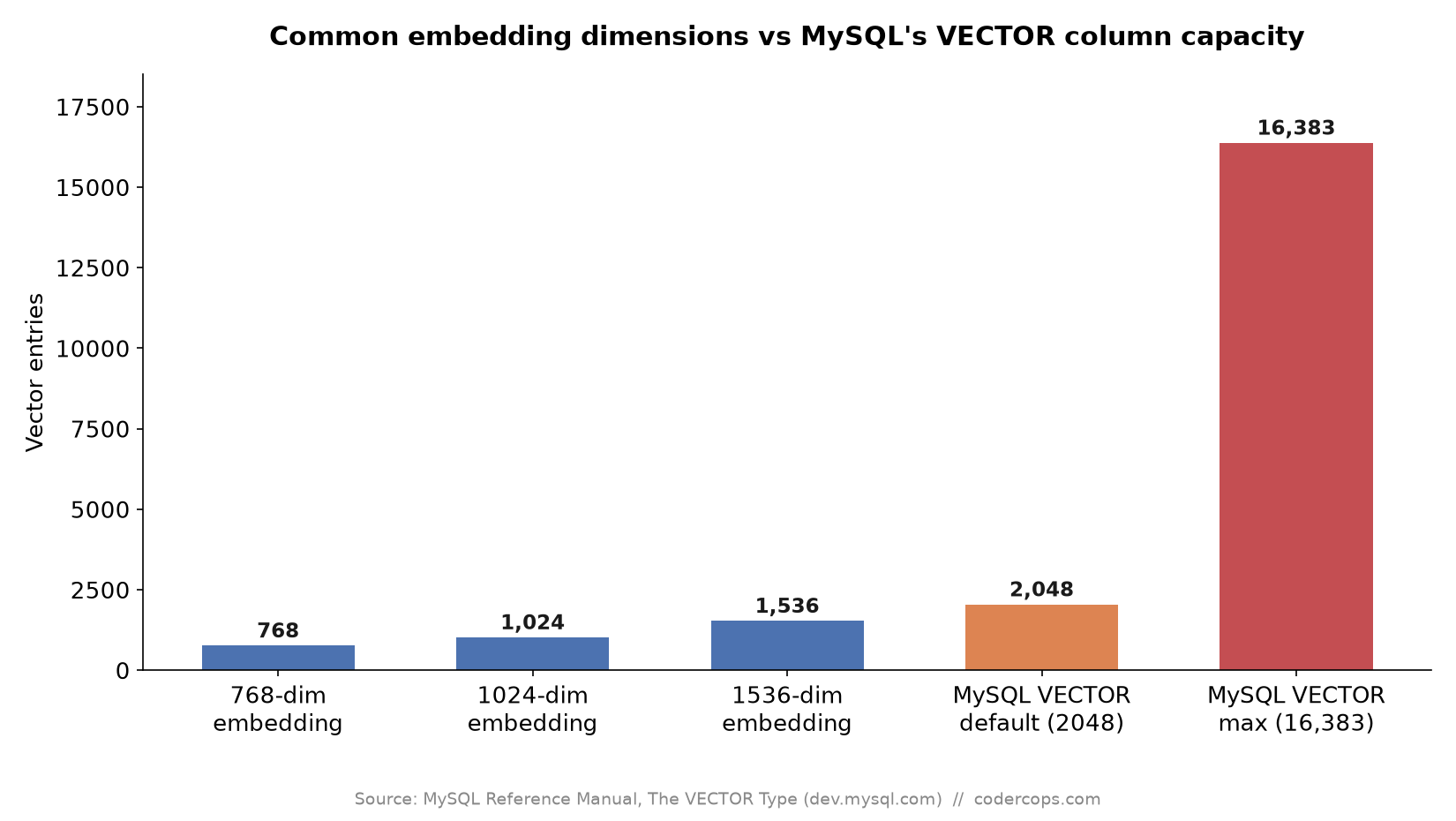
R.01 MySQL Now Has a Native VECTOR Type. Should You Drop pgvector For It?
 R.02
R.02 React 19.2 vs 'React 20': There Is No React 20, and Here's What's Actually New
 R.03
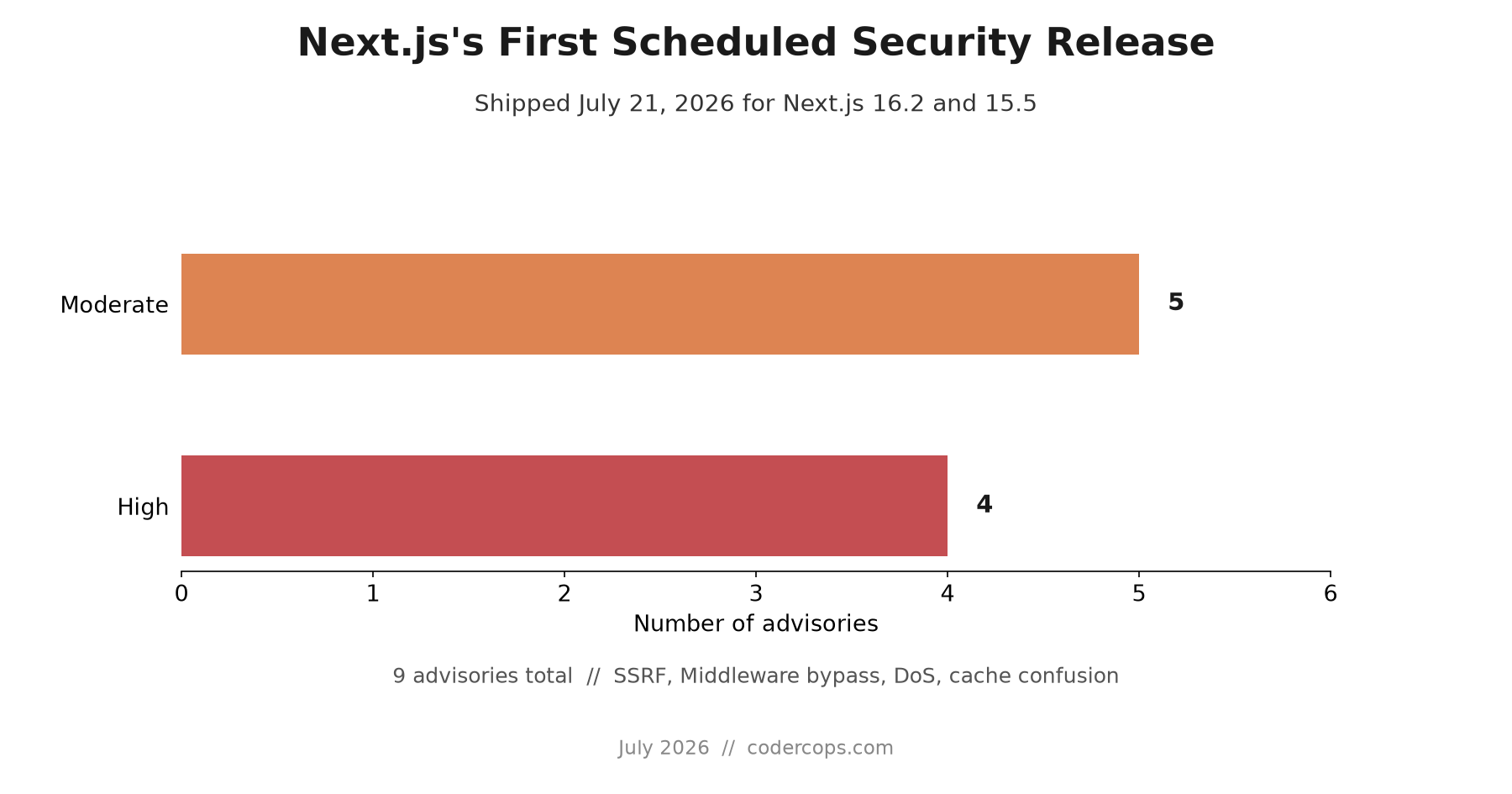
R.03 Next.js's First Scheduled Security Release Shipped: 9 Advisories, What to Patch
Sponsored
Discussion
Join the conversation.
Comments are powered by GitHub Discussions. Sign in with your GitHub account to leave a comment.
Sponsored