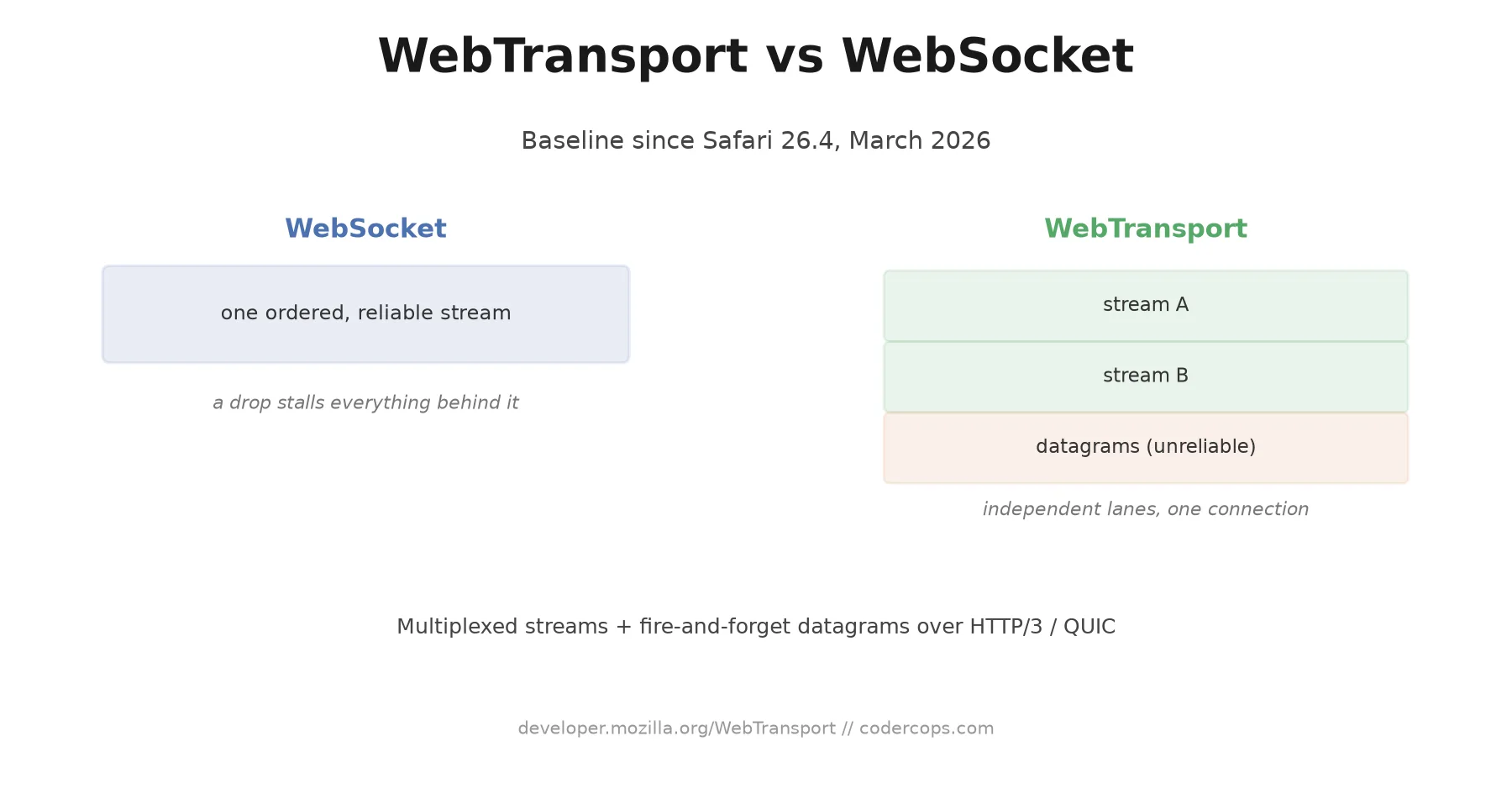
P.01WebTransport Explained: A Real WebSocket Alternative Now
WebTransport hit Baseline in March 2026 when Safari 26.4 shipped it. Here's what it actually does, how it differs from WebSockets, and when to reach for it.
Category
237 articles in Web Development.
About this section
This is the largest section on the site and the least trend-driven. The work behind it is agency work: sites and applications built for clients who will still be running them in three years, which changes what counts as a good decision. A framework that is pleasant for a weekend project and awkward to hand over is not a good decision here. Expect a bias toward things that are boring in the right places, toward rendering strategies chosen for what the page has to do rather than for what is current, and toward the unglamorous parts, migrations, accessibility, build pipelines, that decide whether a codebase is still workable after the third handover. Several posts are postmortems of our own choices, including ones we would make differently now.
All 237 articles
P.01WebTransport hit Baseline in March 2026 when Safari 26.4 shipped it. Here's what it actually does, how it differs from WebSockets, and when to reach for it.
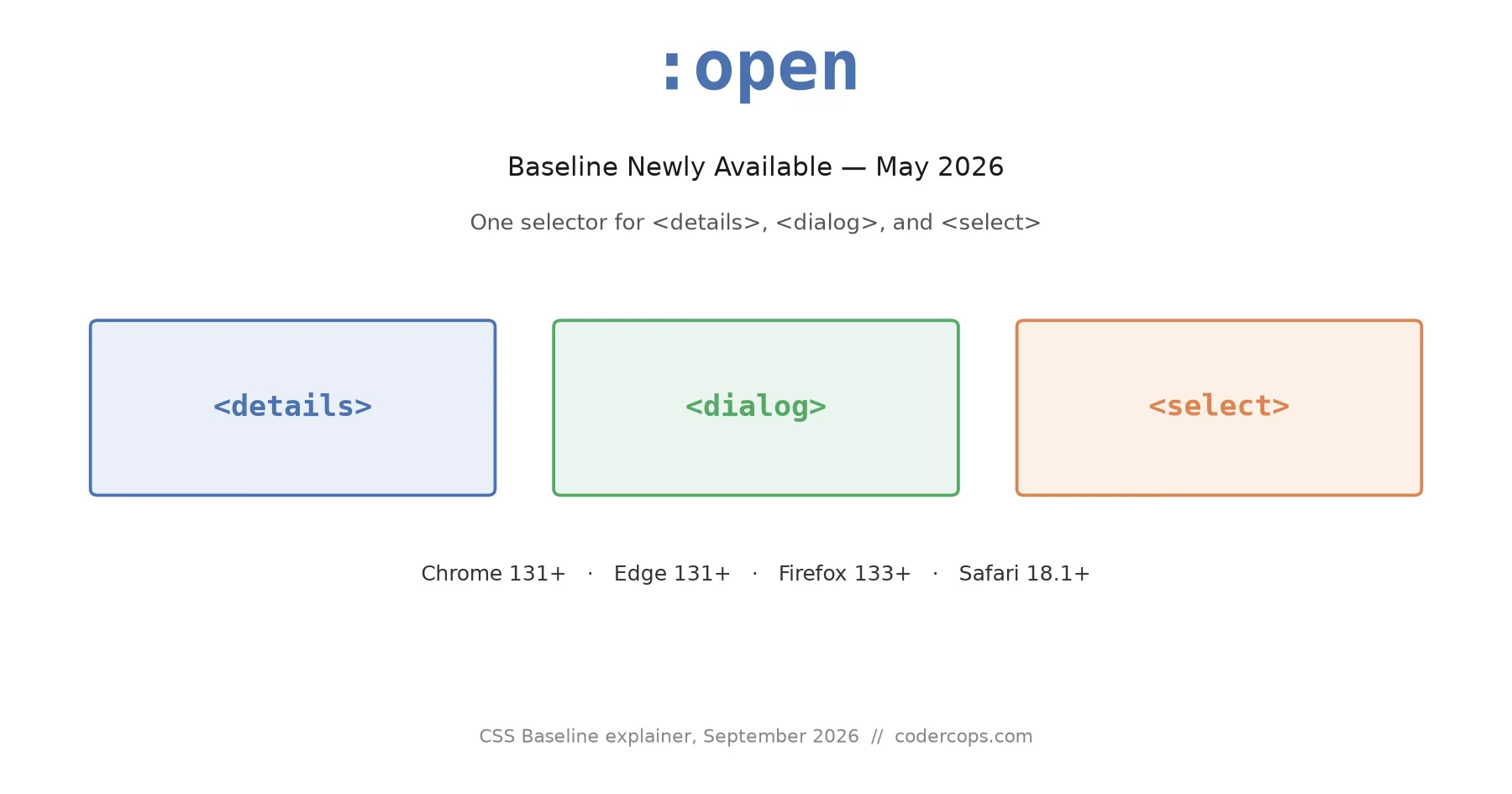
P.02The :open pseudo-class, Baseline since May 2026, styles <details>, <dialog>, and <select> in their expanded state with one selector. No JS classes needed.
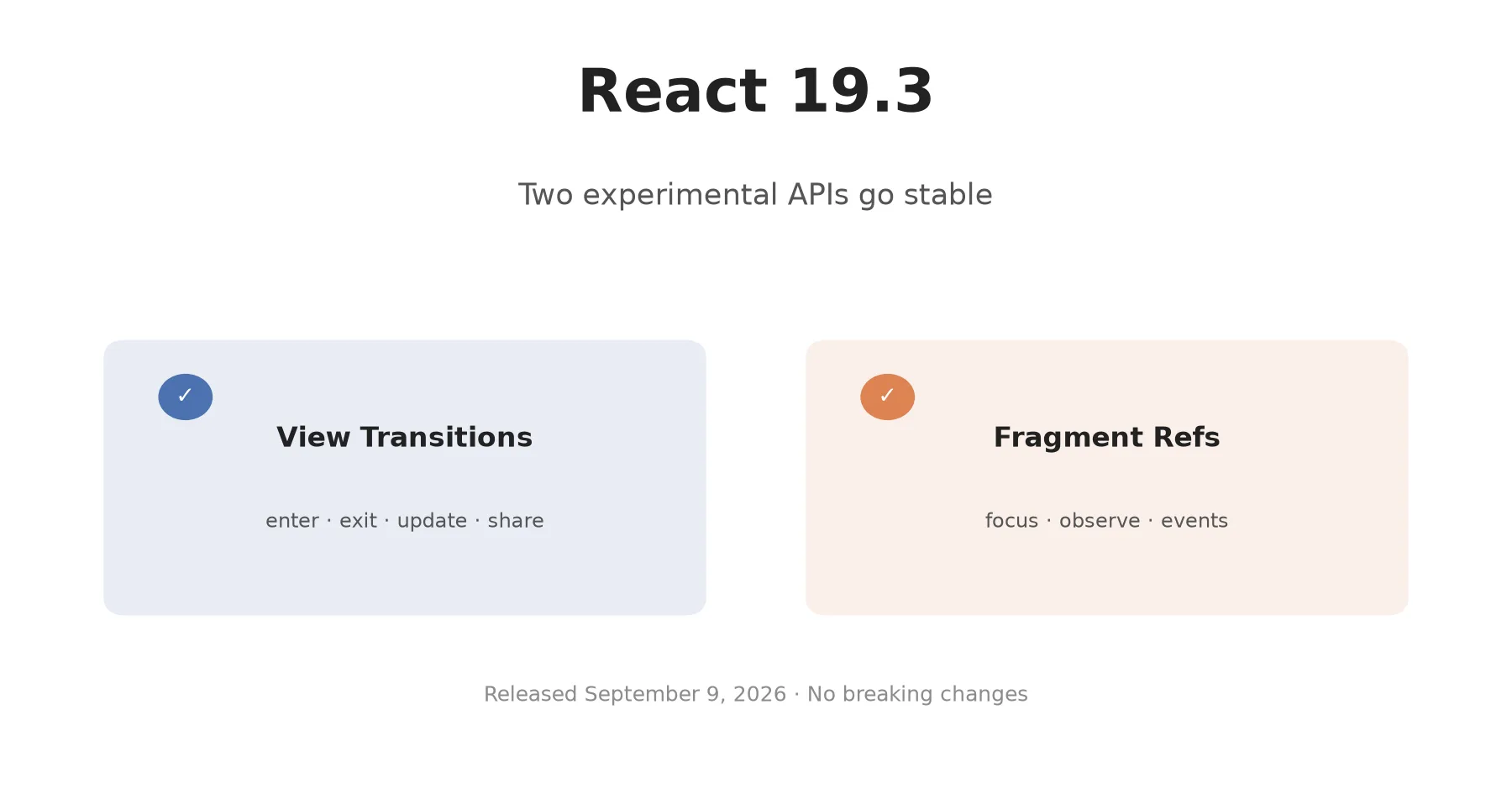
P.03React 19.3 shipped September 9, 2026, and turned two long-experimental APIs stable: View Transitions and Fragment Refs. What changed and whether to upgrade.
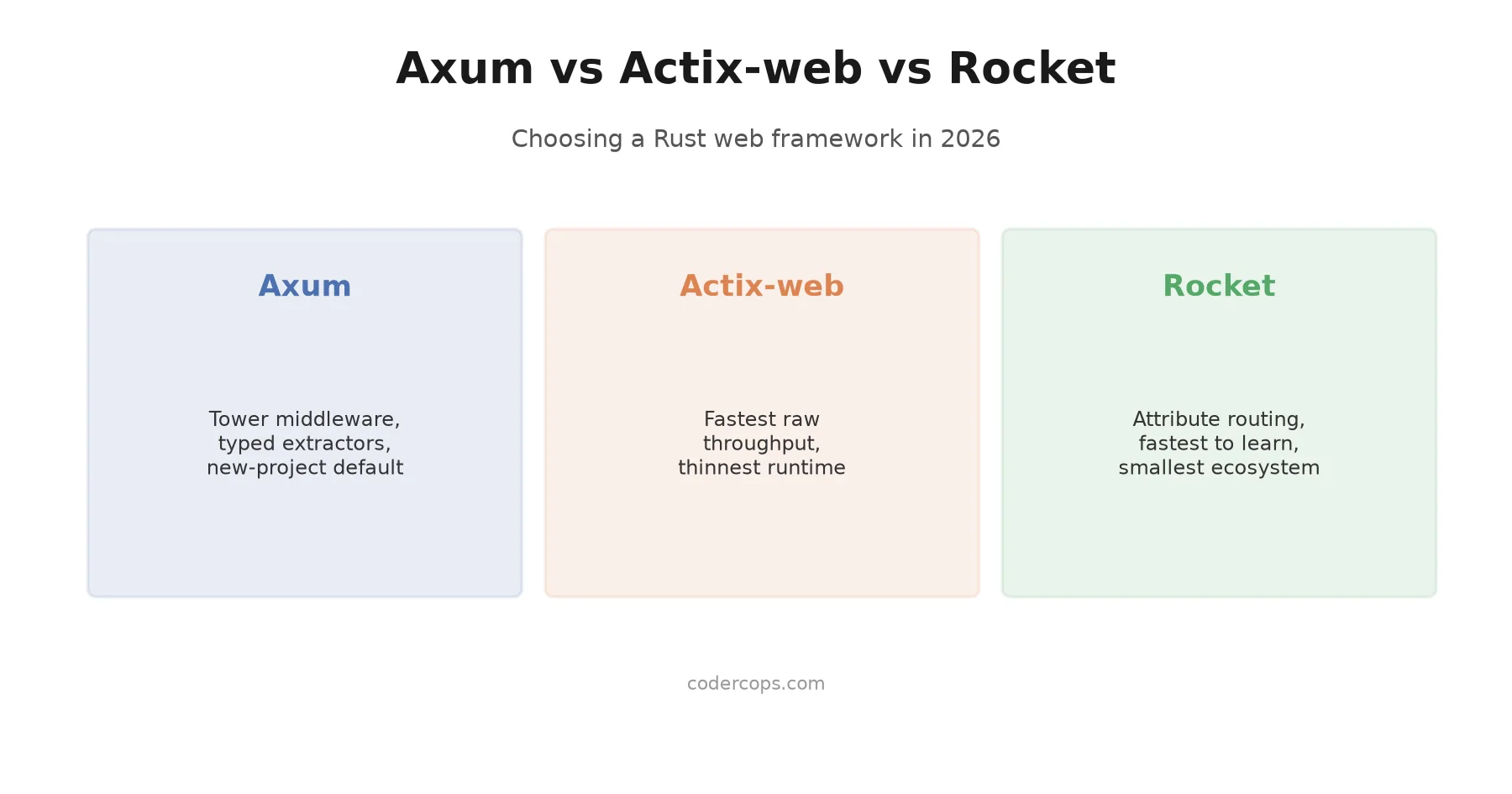
P.04Axum is the default for new Rust APIs in 2026, Actix-web wins on raw throughput, and Rocket wins on ergonomics. Here is which one fits your team.
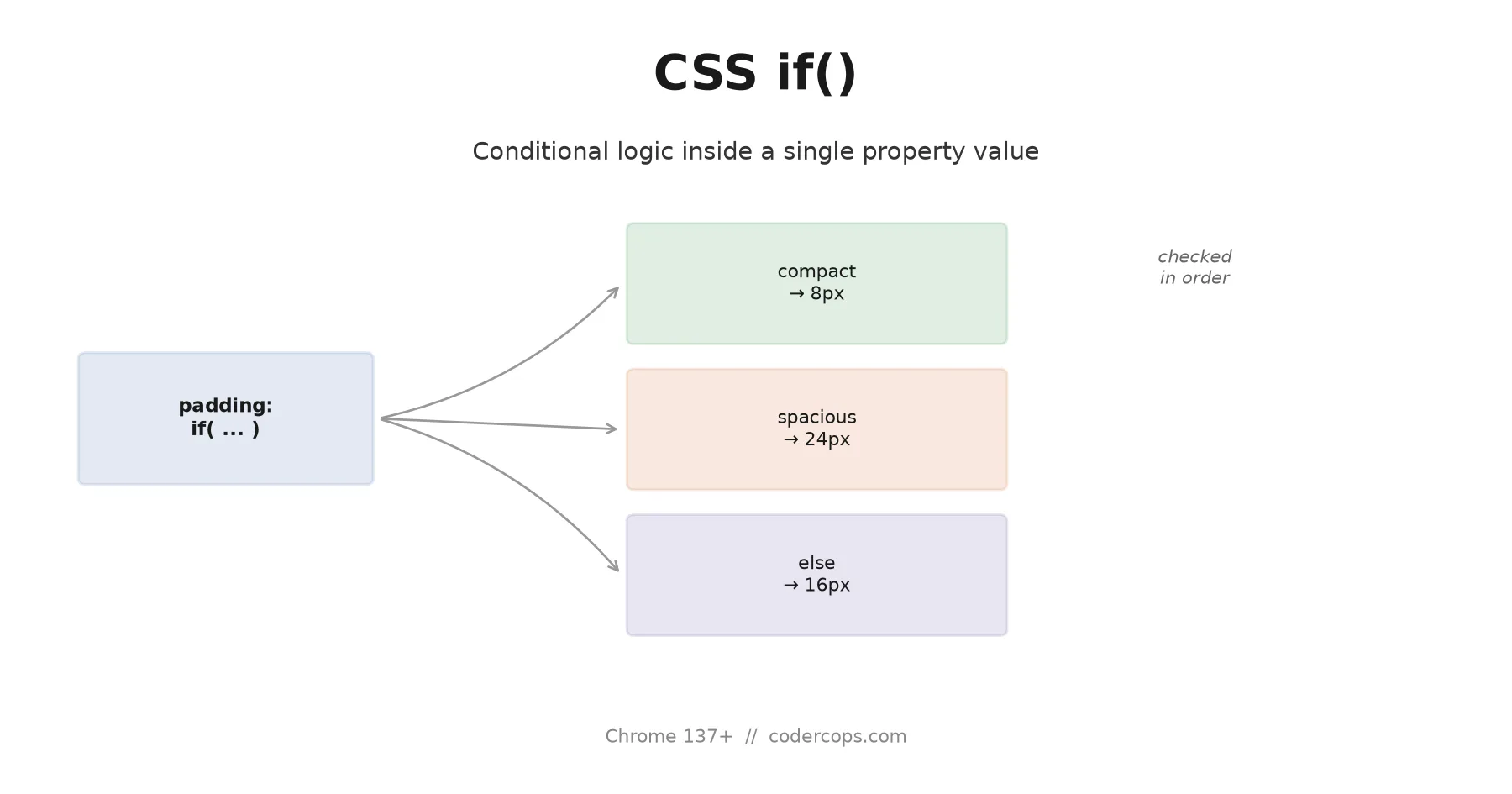
P.05The CSS if() function lets a single property branch on media, container, or feature conditions. What it does, the syntax, and where it still can't replace JS.
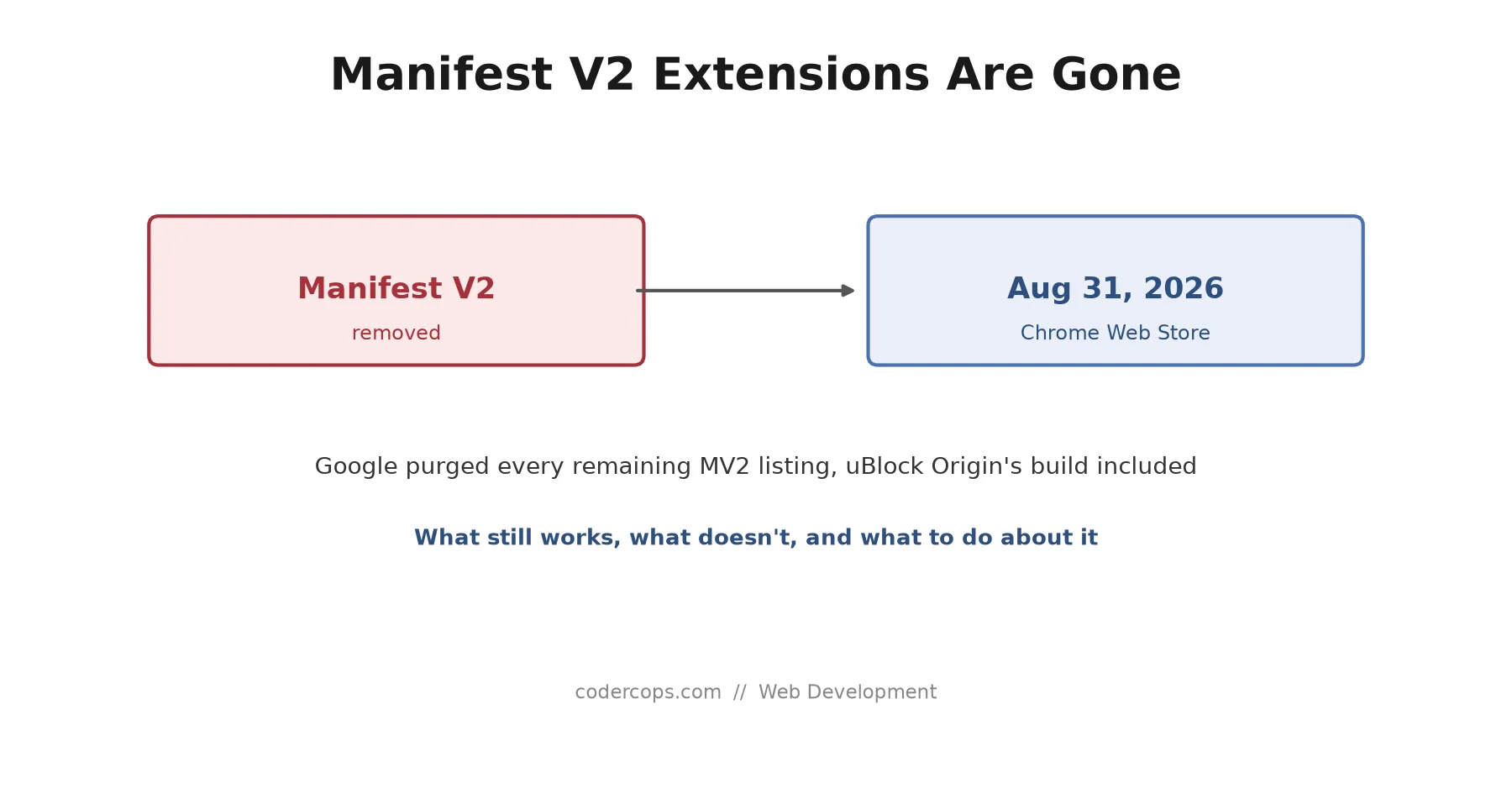
P.06On August 31, 2026 Google deleted every remaining Manifest V2 extension from the Chrome Web Store, including uBlock Origin's MV2 build. What broke.
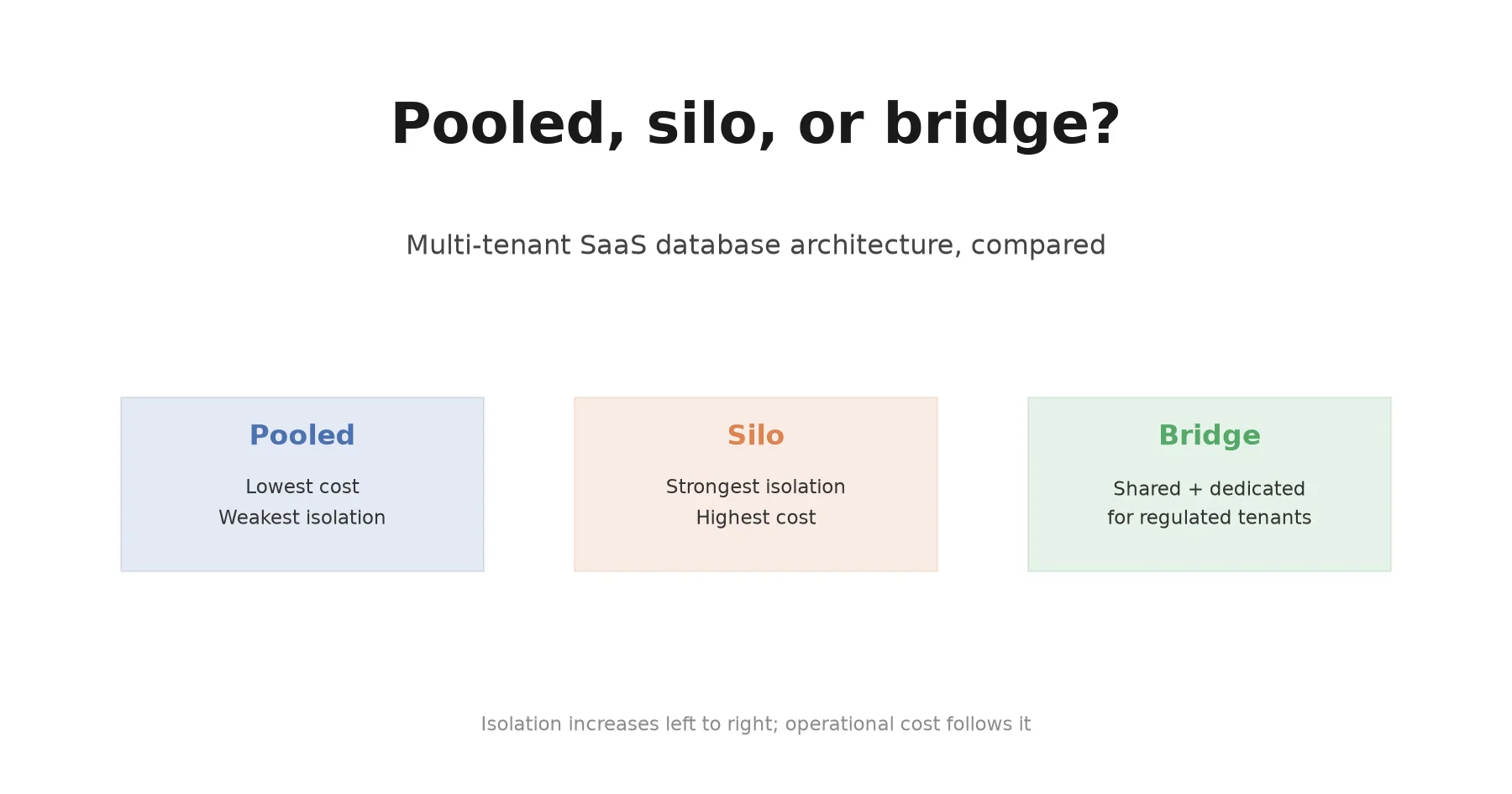
P.07Shared database or one per customer? Most SaaS teams pick wrong for their stage and pay later. How the three patterns trade off, and which one you need.
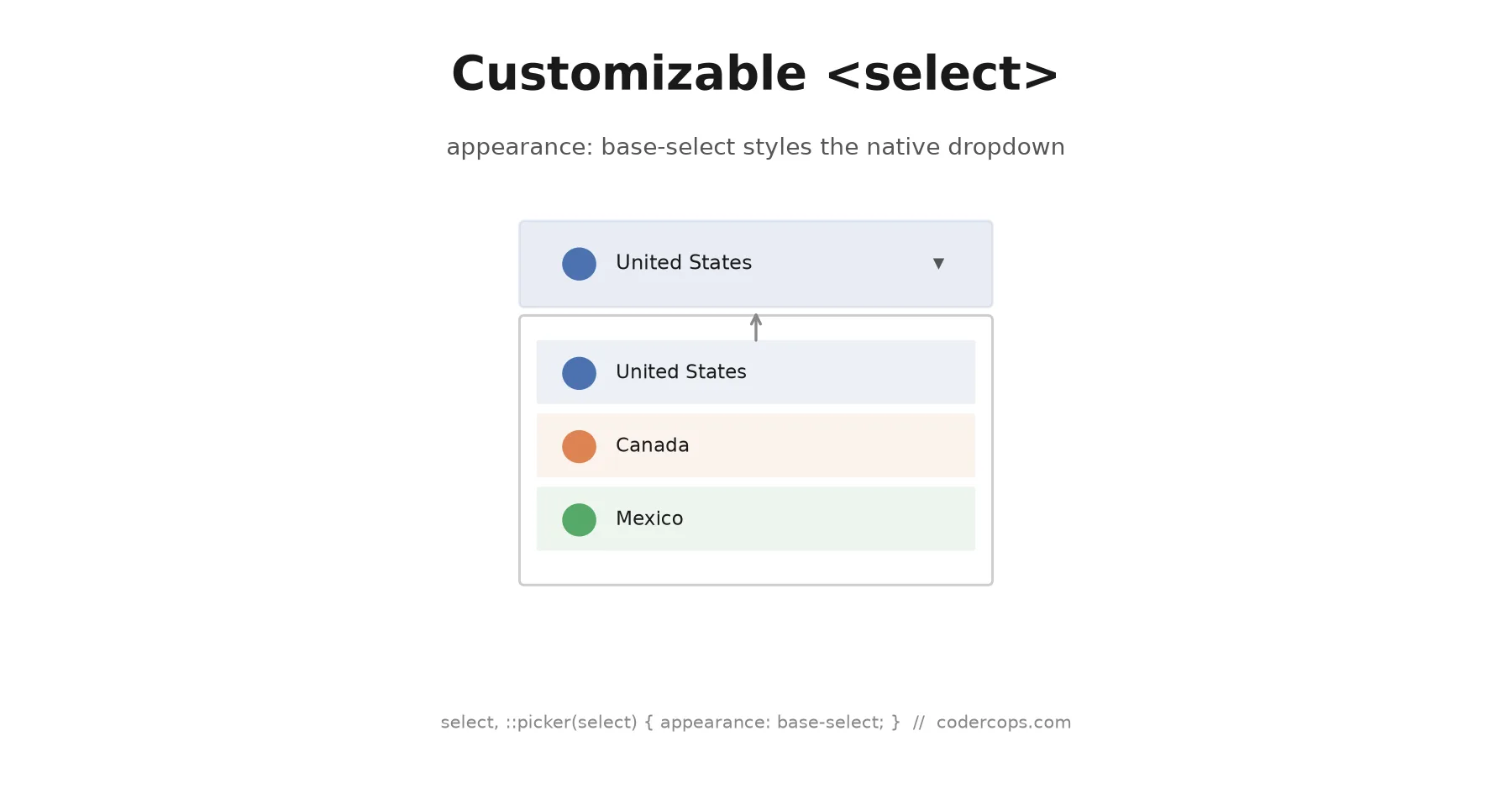
P.08One CSS property finally styles the browser's own select, options and icons included, with no dropdown library. The syntax, an example, and real support.
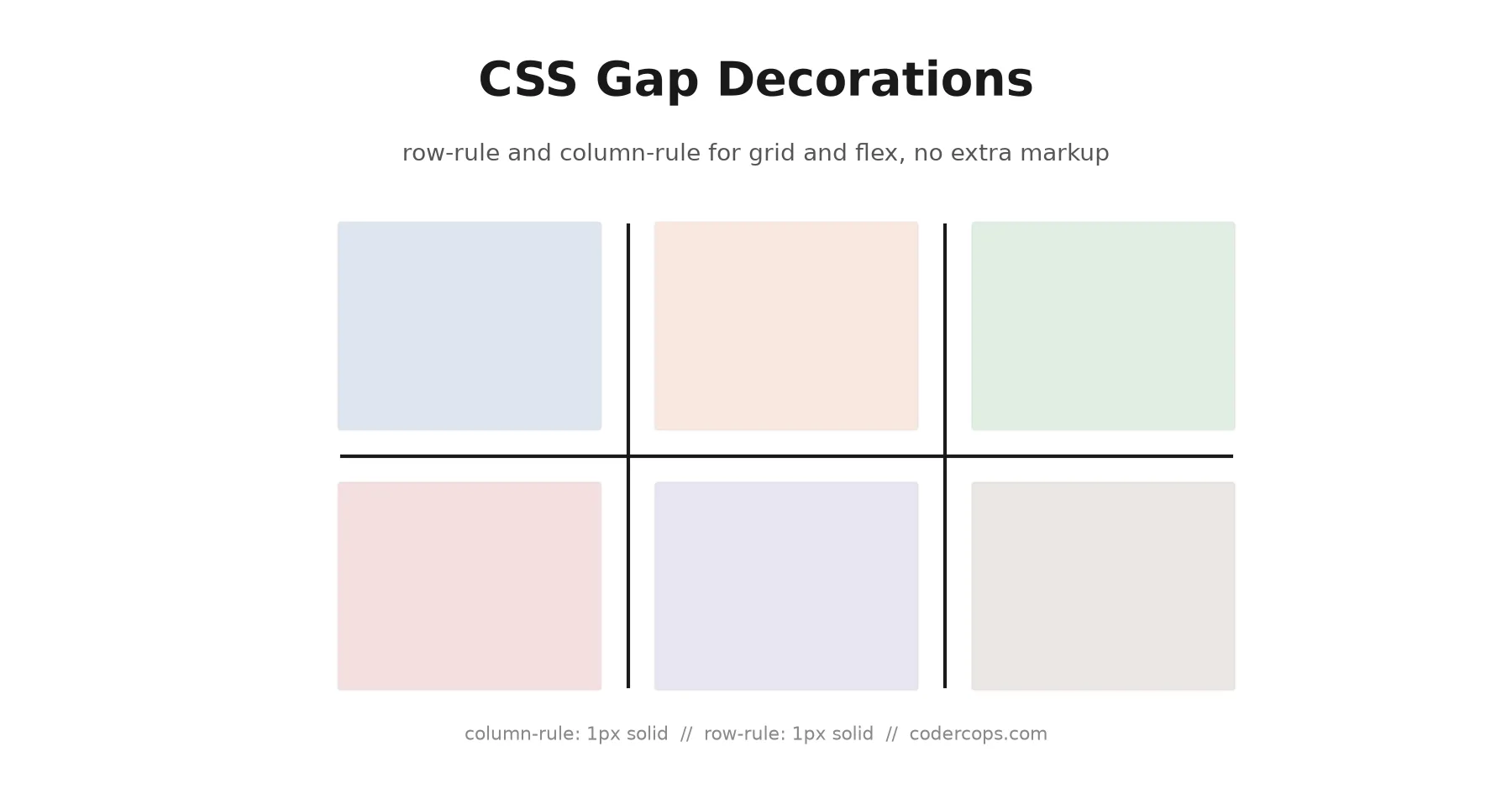
P.09column-rule now works in grid and flexbox, and row-rule joins it. Draw dividers between items in two lines of CSS, plus what to do about support.
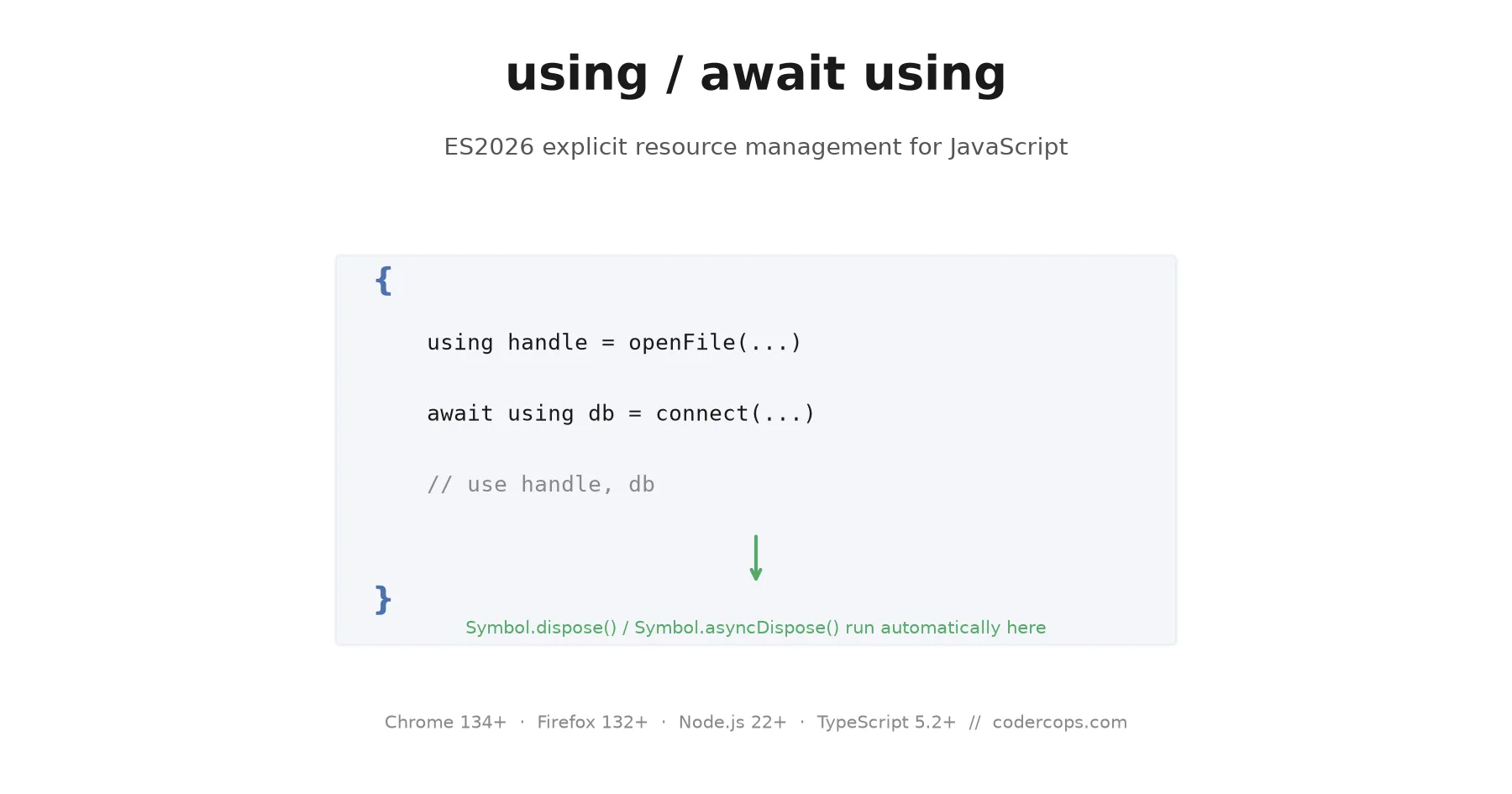
P.10ES2026's using and await using close files, connections, and locks when a block ends, with no try/finally. The syntax, real examples, and support today.
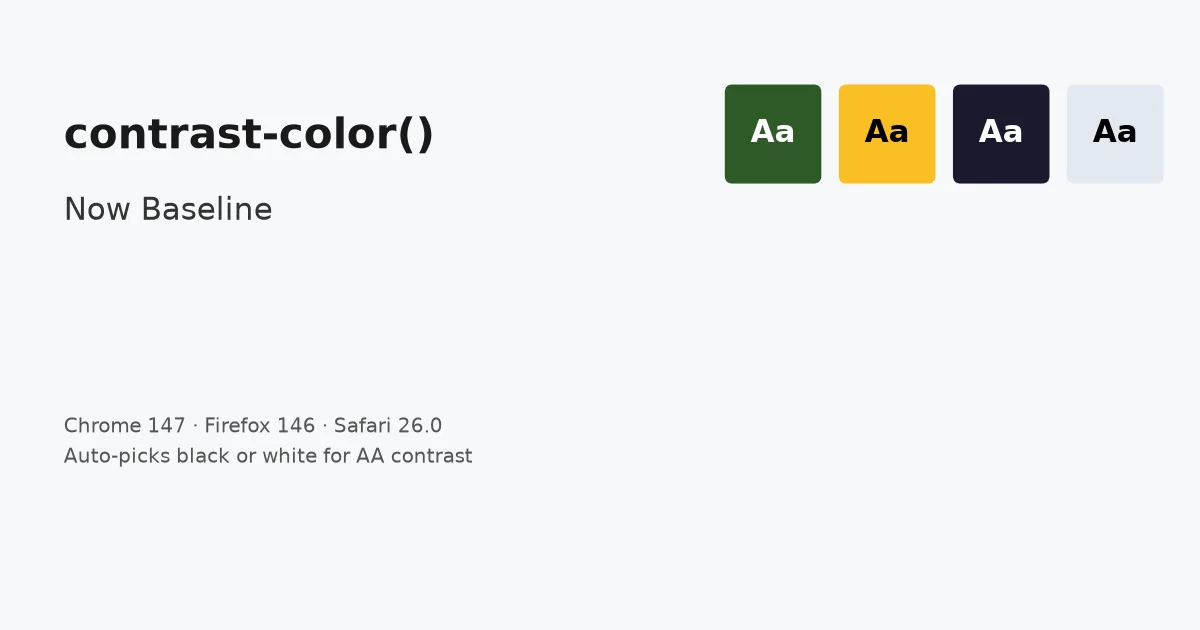
P.11Chrome 147, Firefox 146, and Safari 26 all ship contrast-color(), which picks black or white text to meet WCAG AA on any background. Syntax and fallback.
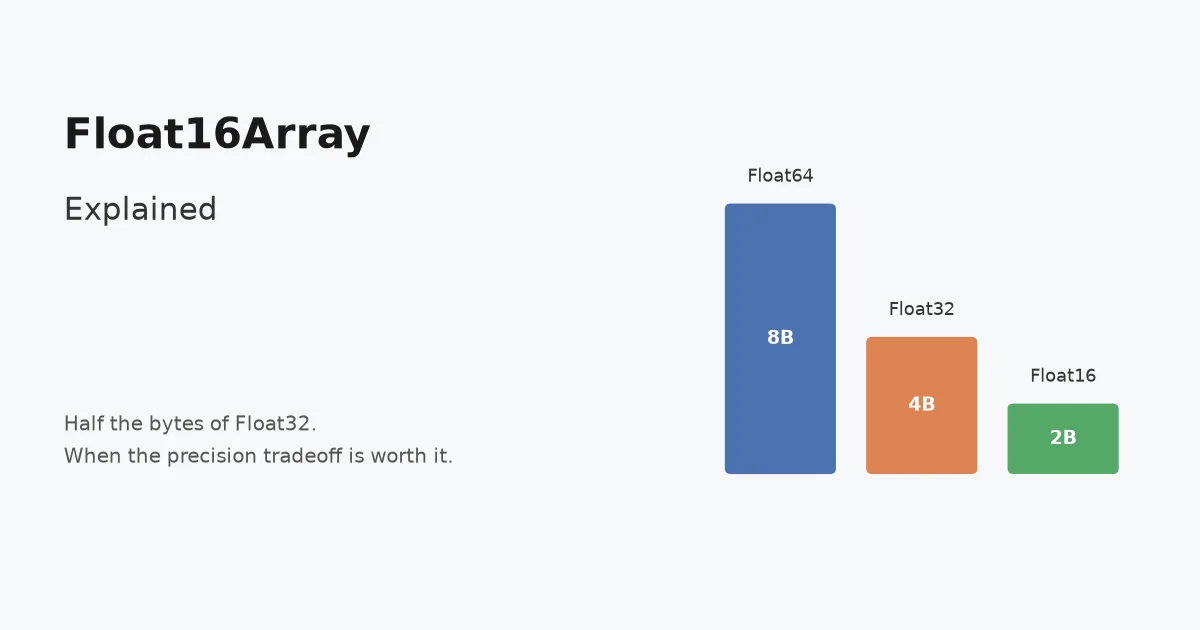
P.12Float16Array stores numbers in half the bytes of Float32Array, trading precision most workloads never used. What it's for, what it costs, where it fails.
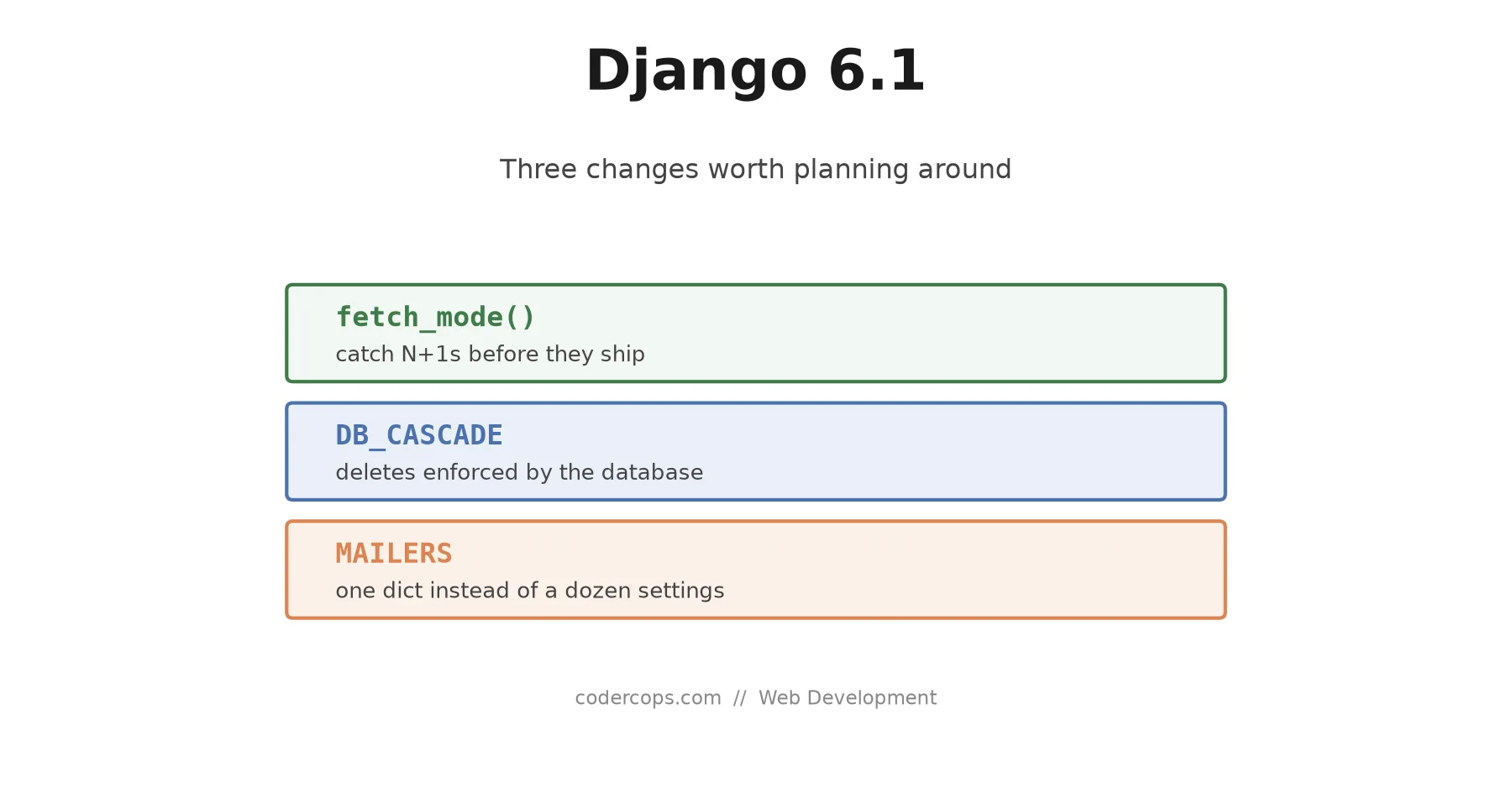
P.13Django 6.1 adds QuerySet.fetch_mode() to catch accidental N+1s, ON DELETE pushed into the database, and one MAILERS setting replacing loose EMAIL_ config.
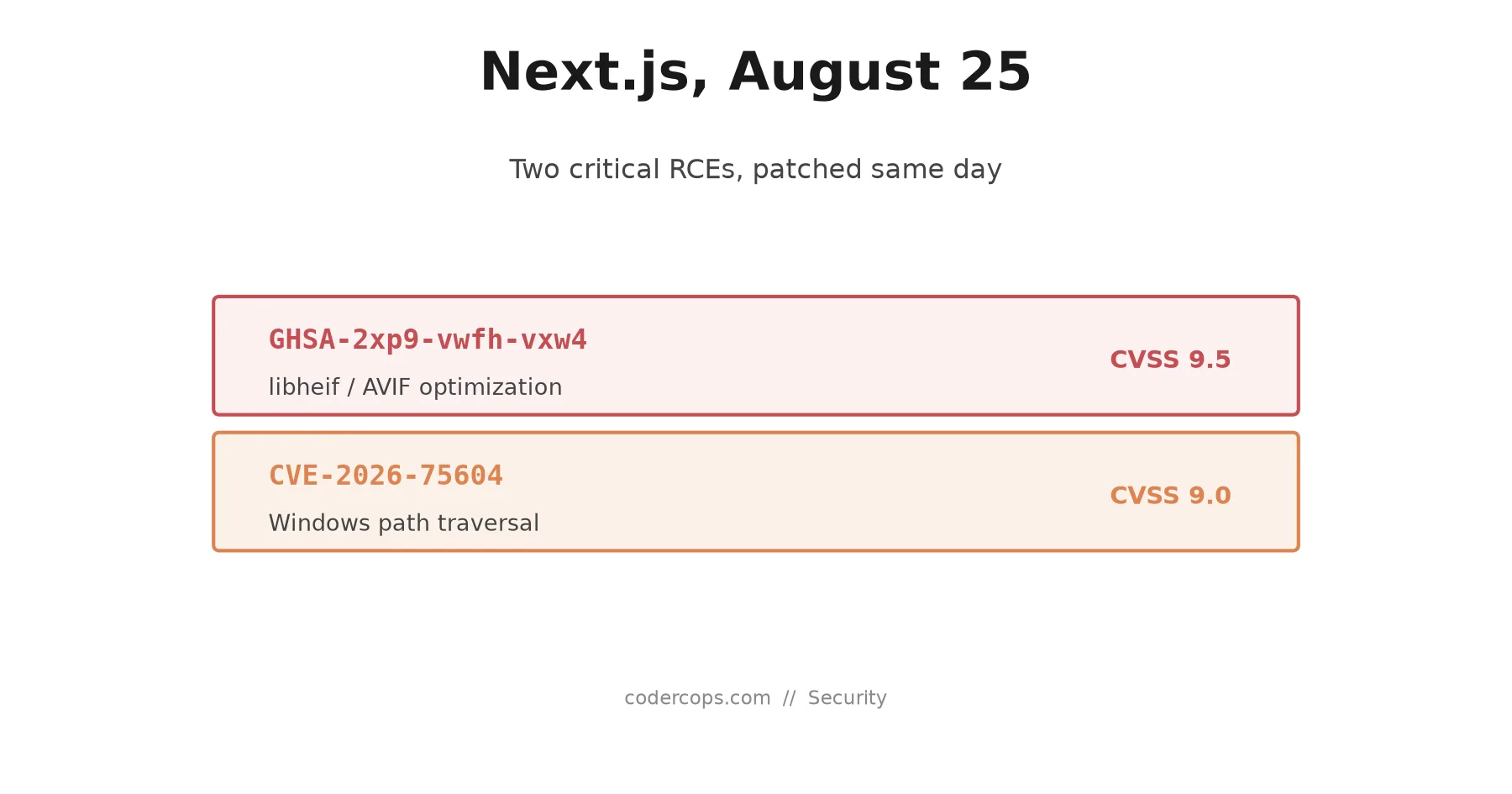
P.14Next.js 16.3.3 and 15.5.24 fix a libheif overflow reachable through AVIF optimization and a path traversal that runs code on Windows hosts. Who's exposed.
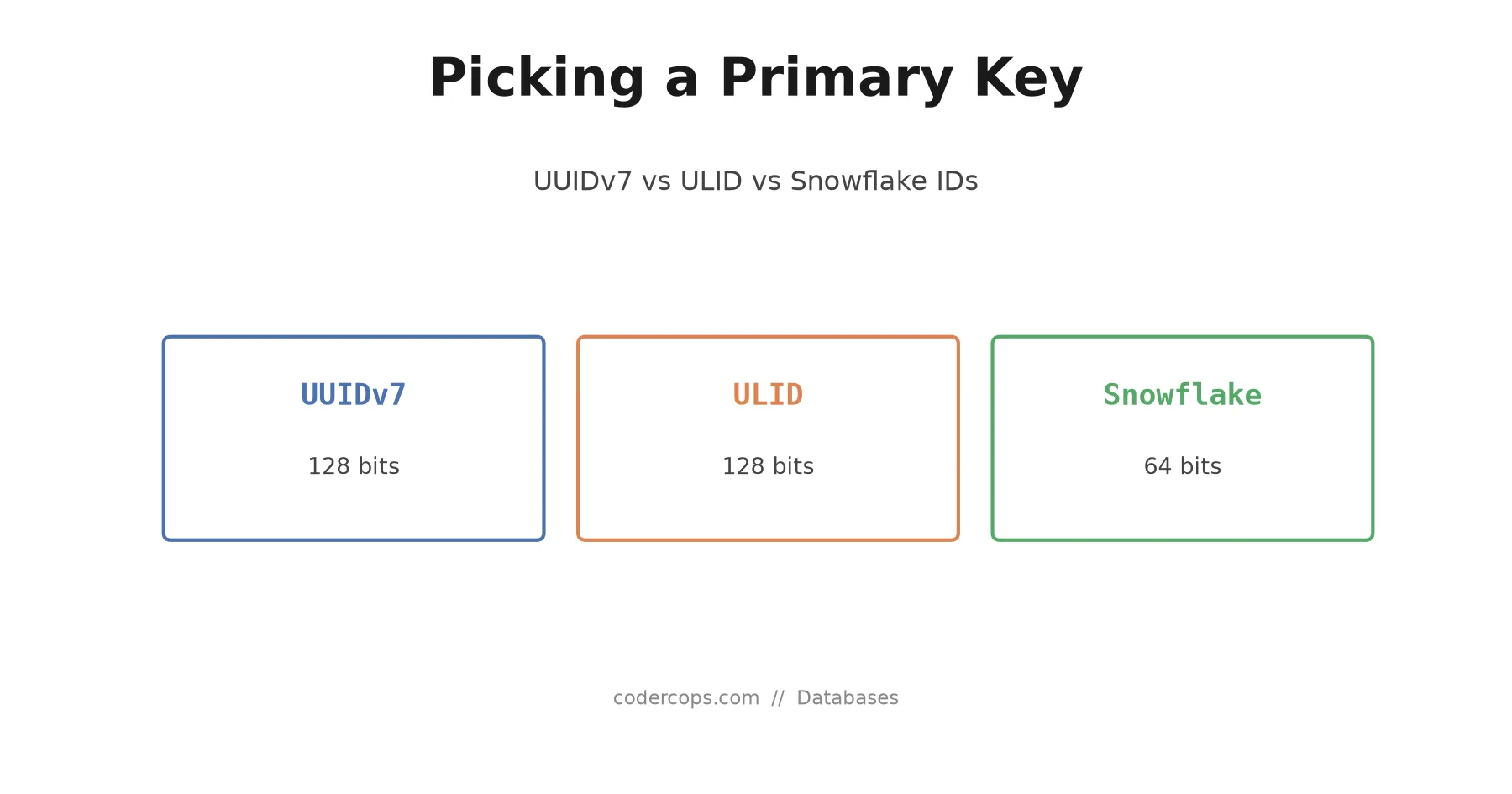
P.15Random UUIDs wreck index locality; auto-increment leaks counts and won't shard. What UUIDv7, ULID, and Snowflake each give you, and the real tradeoffs.
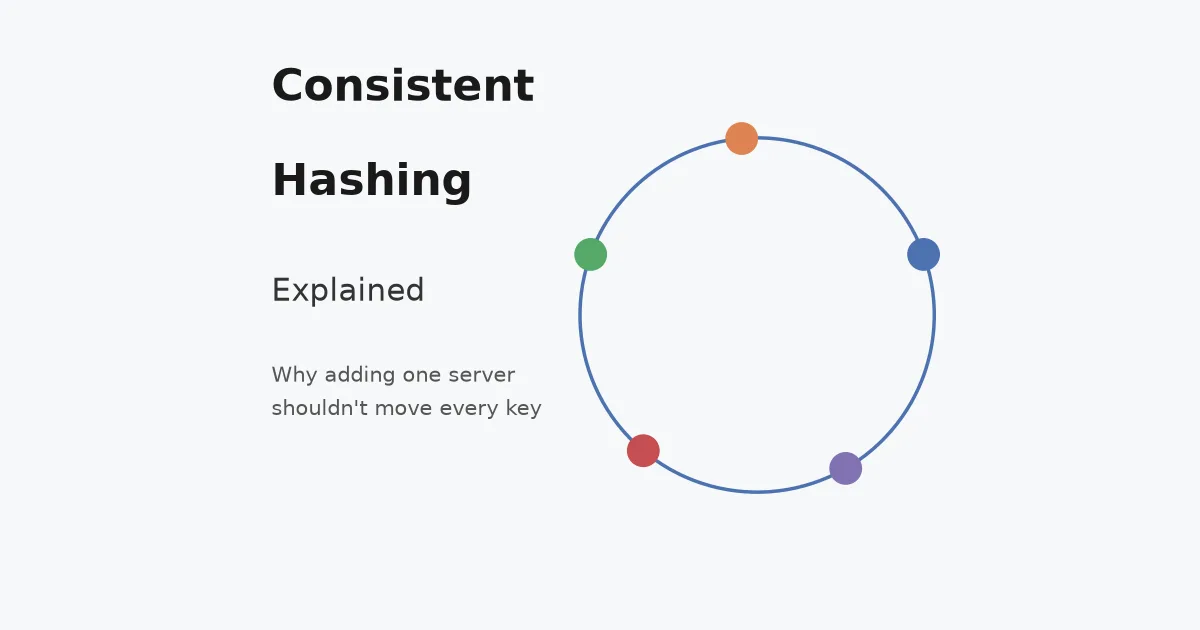
P.16Plain mod-N hashing reshuffles almost every key when you add a server. Consistent hashing moves roughly 1/N instead. Working code and a real simulation.
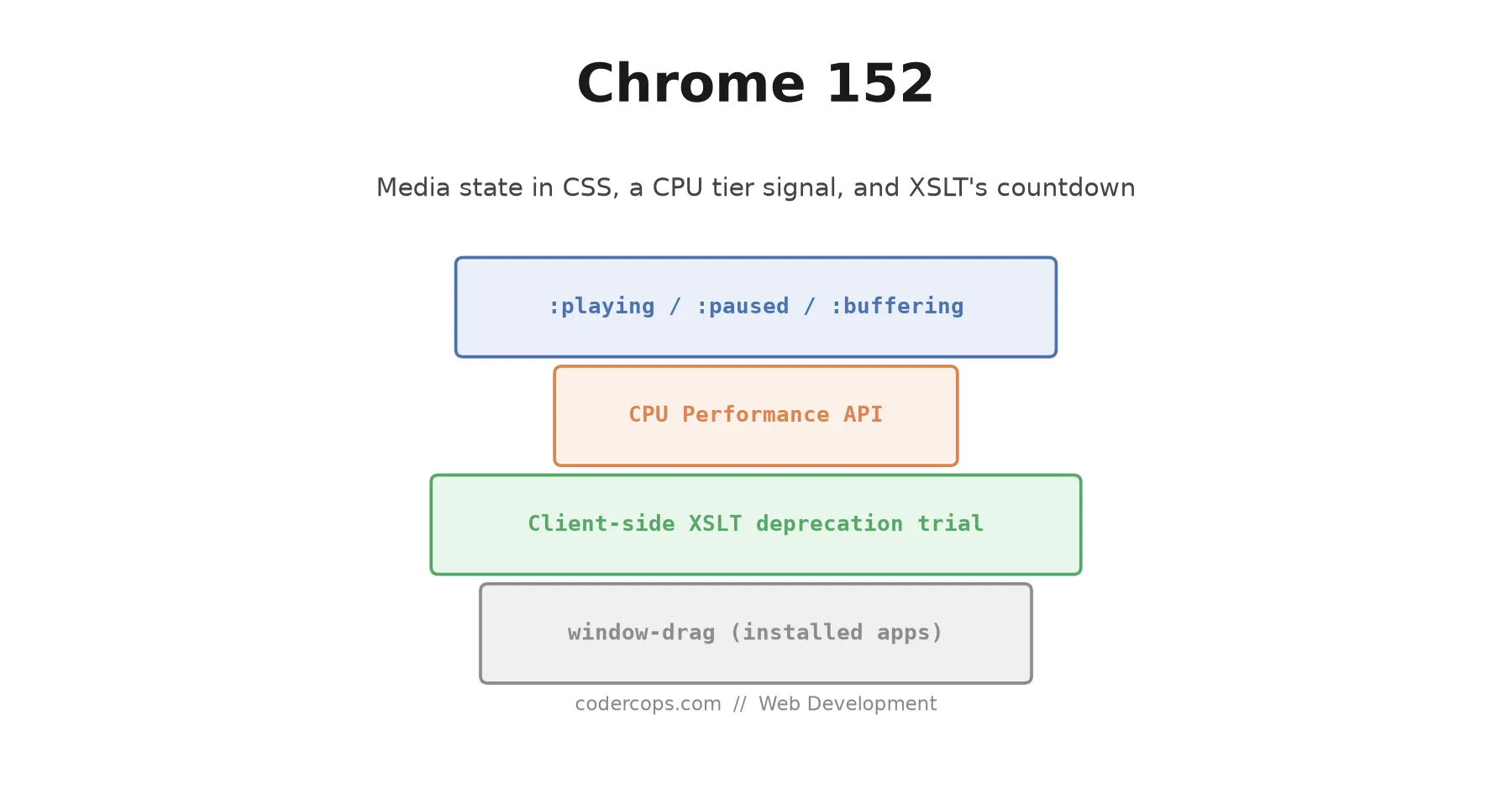
P.17Chrome 152 shipped CSS pseudo-classes matching video and audio state, a CPU Performance API for device tiers, and the start of the end for client-side XSLT.
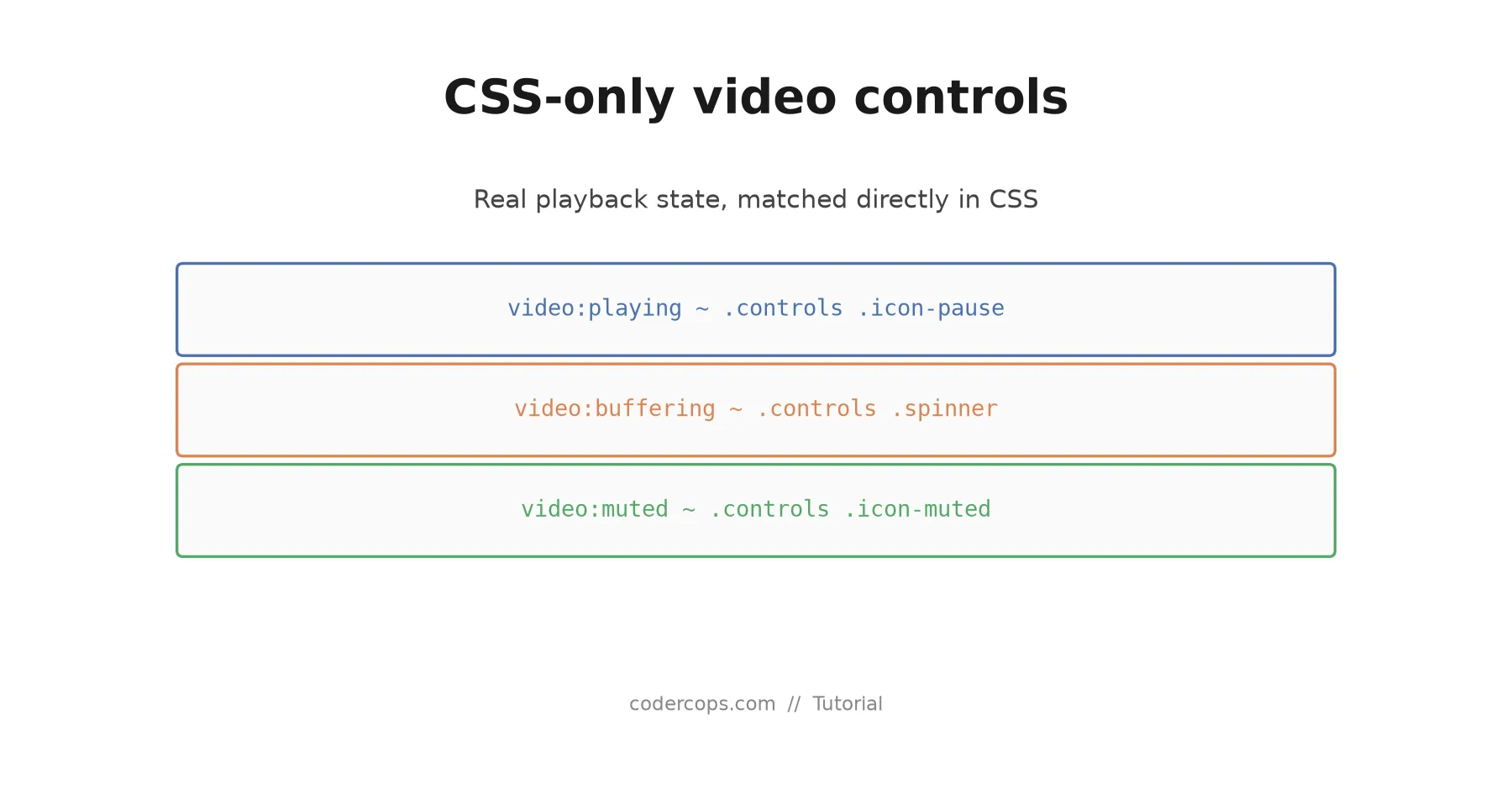
P.18Chrome 152 added :playing, :paused, :buffering, and :muted as real pseudo-classes. A runnable custom player built on them, plus the JS fallback.
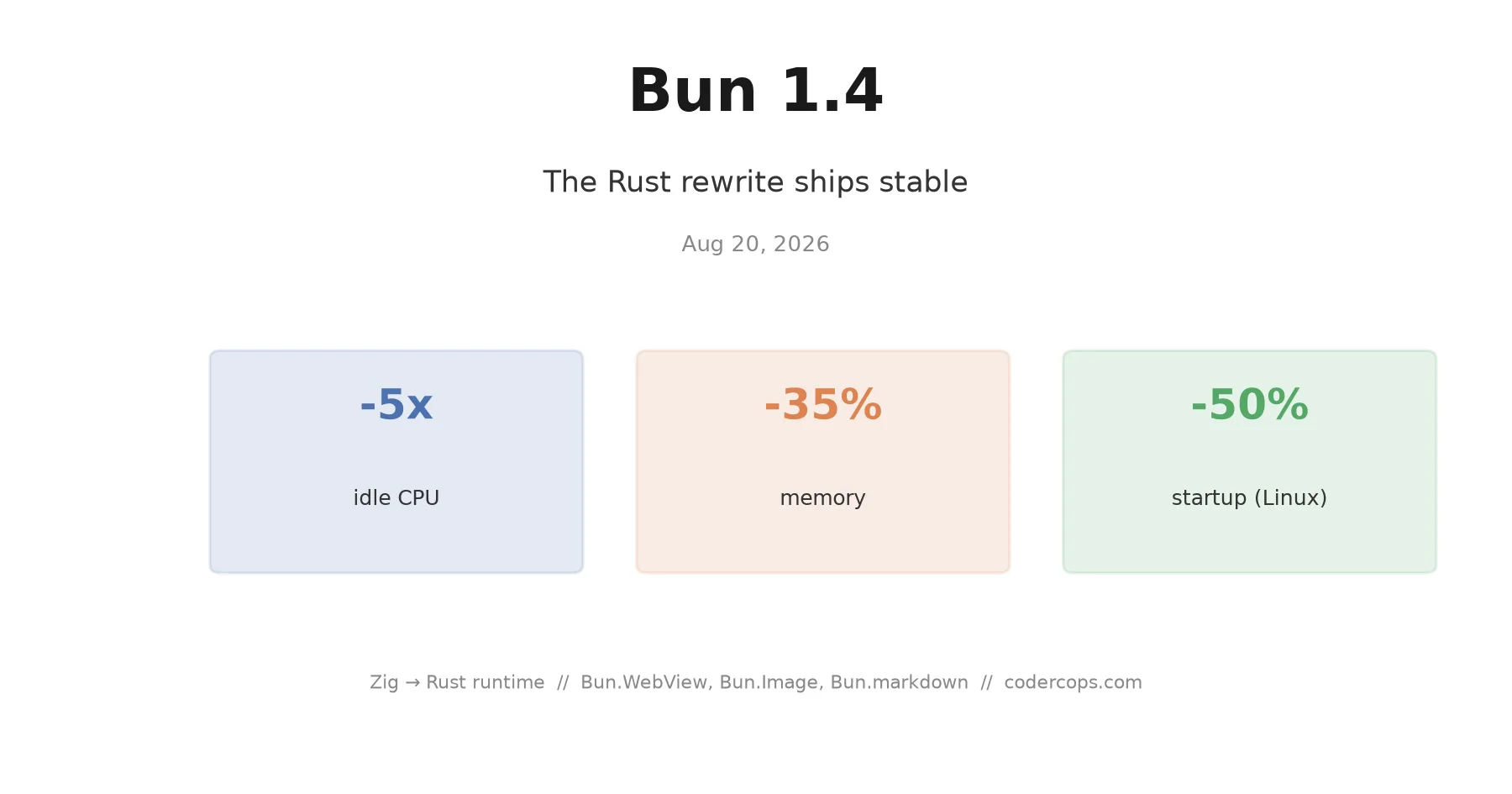
P.19Bun 1.4 is the first stable release on the Rust runtime, adding browser automation, image and markdown APIs, and real speedups. Why it split opinion.
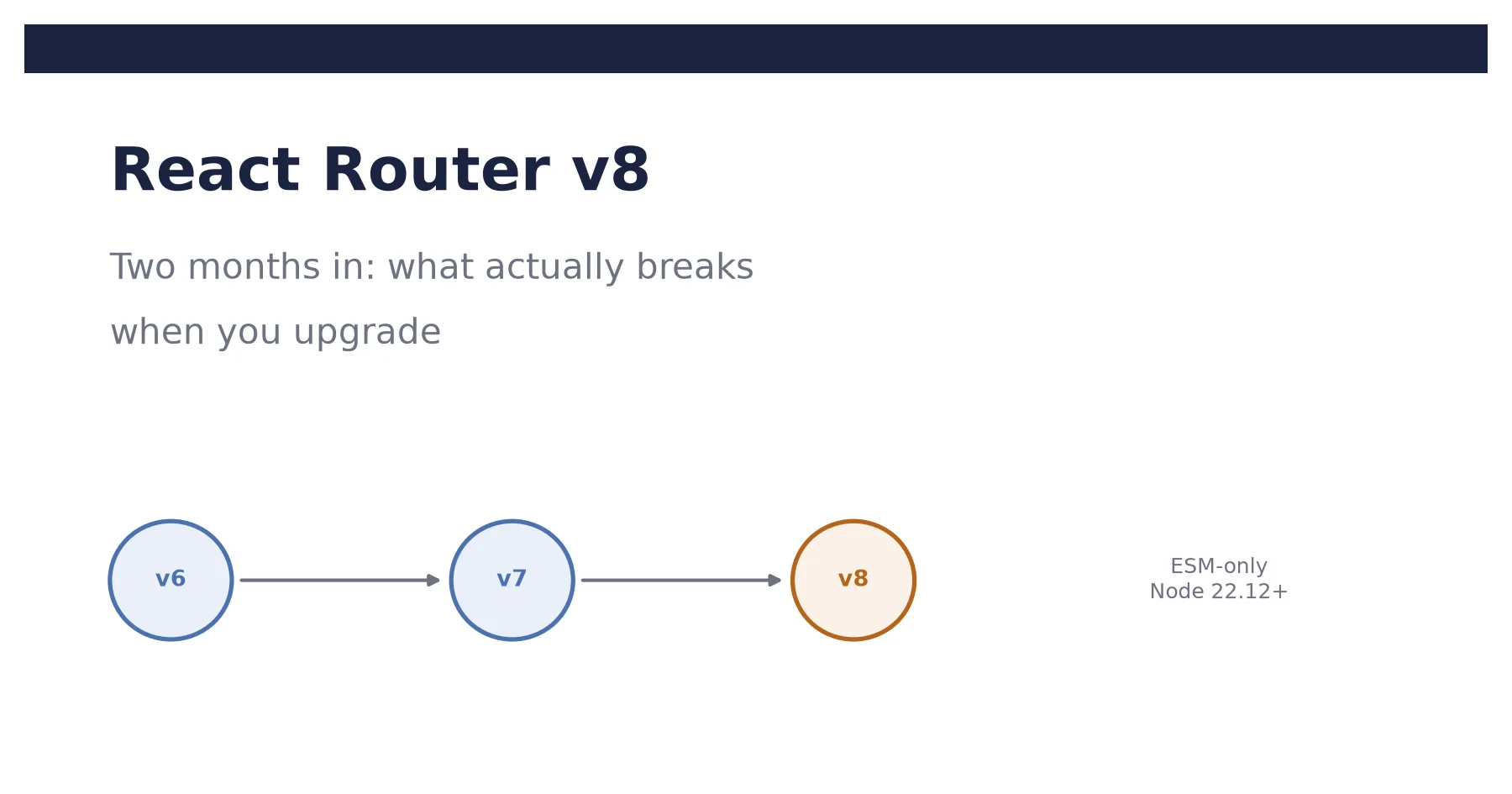
P.20React Router v8 shipped as a deliberately boring release. What the version bump requires, what the codemod handles, and the three things that catch teams.
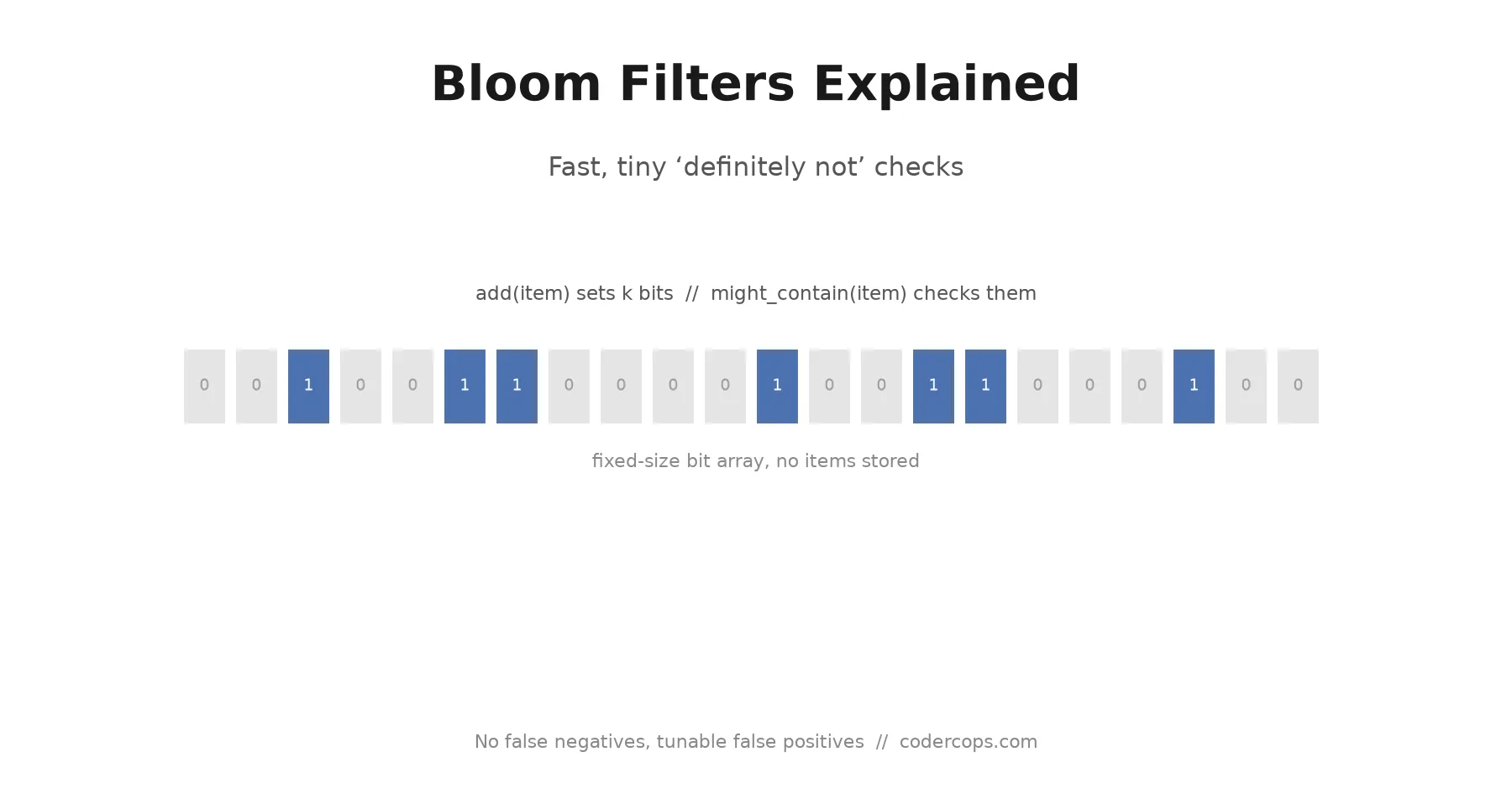
P.21A Bloom filter answers one question in almost no memory: is this definitely absent, or possibly present. How it works, and why false positives are a feature.
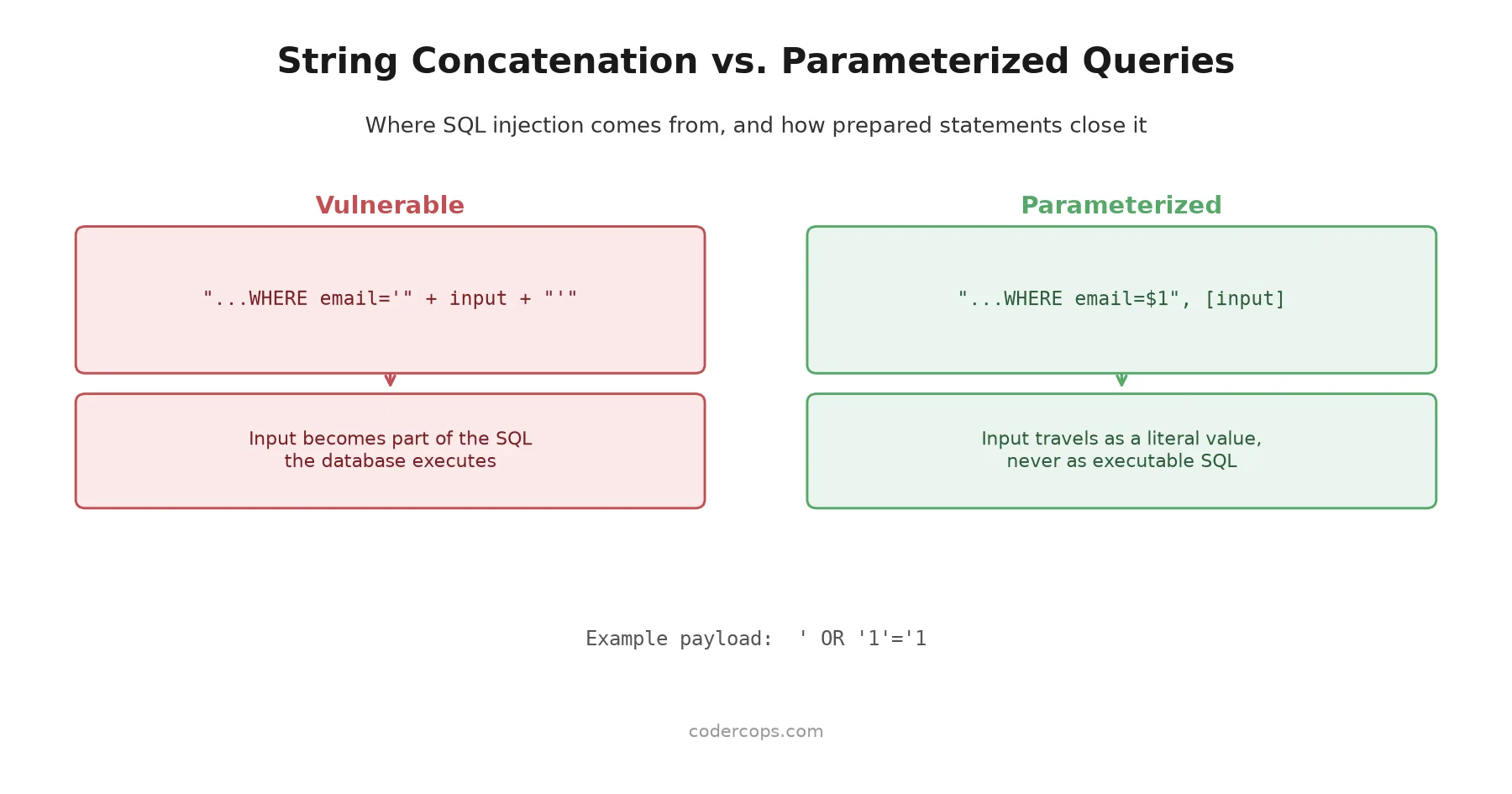
P.22SQL injection still lands CVSS 10.0 bugs in 2026. How parameterized queries stop it, where ORMs quietly reintroduce it, and how to verify your own code.
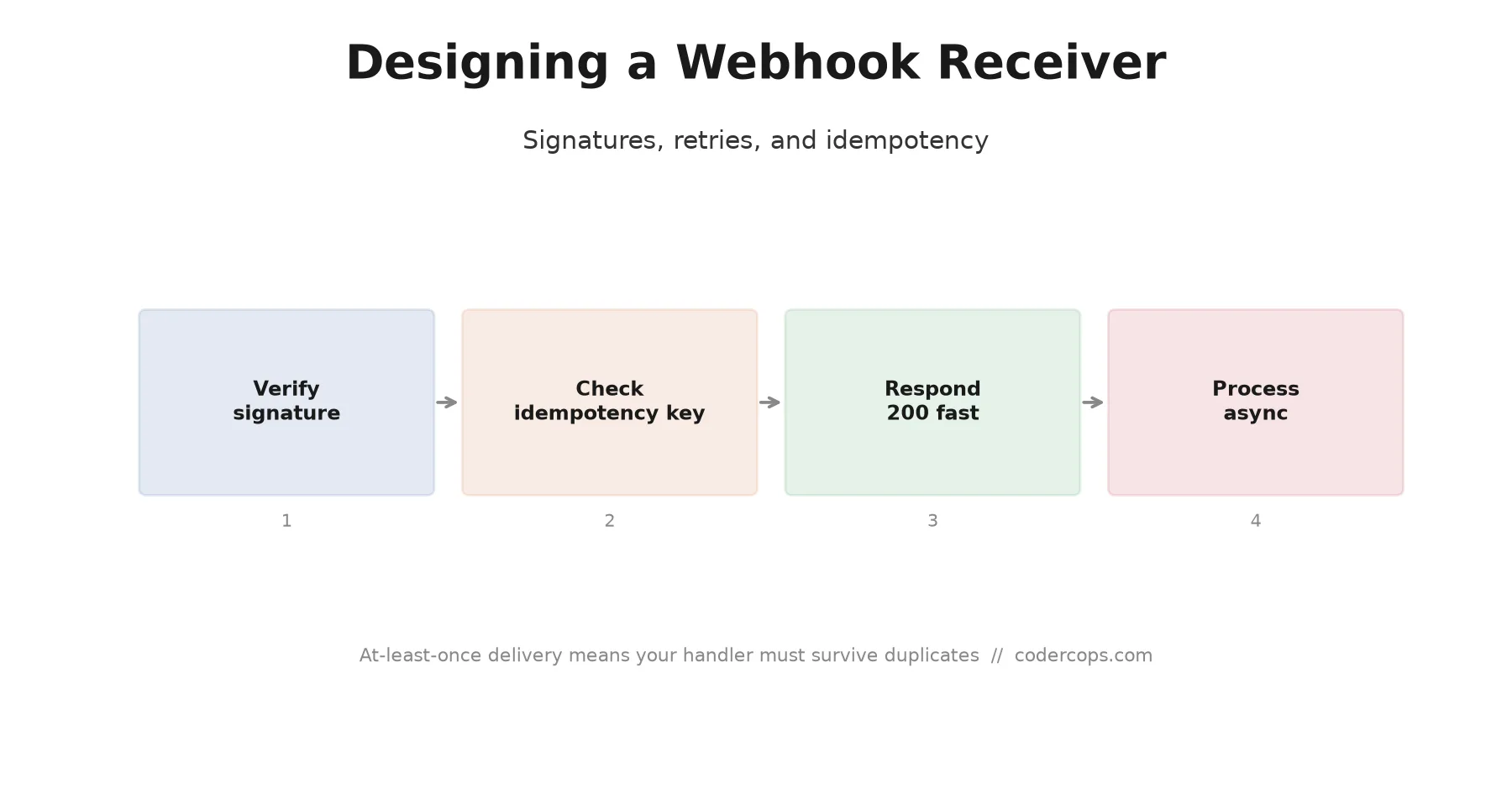
P.23A webhook receiver has to trust a request it can't control the timing, order, or count of. Verifying signatures, handling retries, surviving delivery chaos.
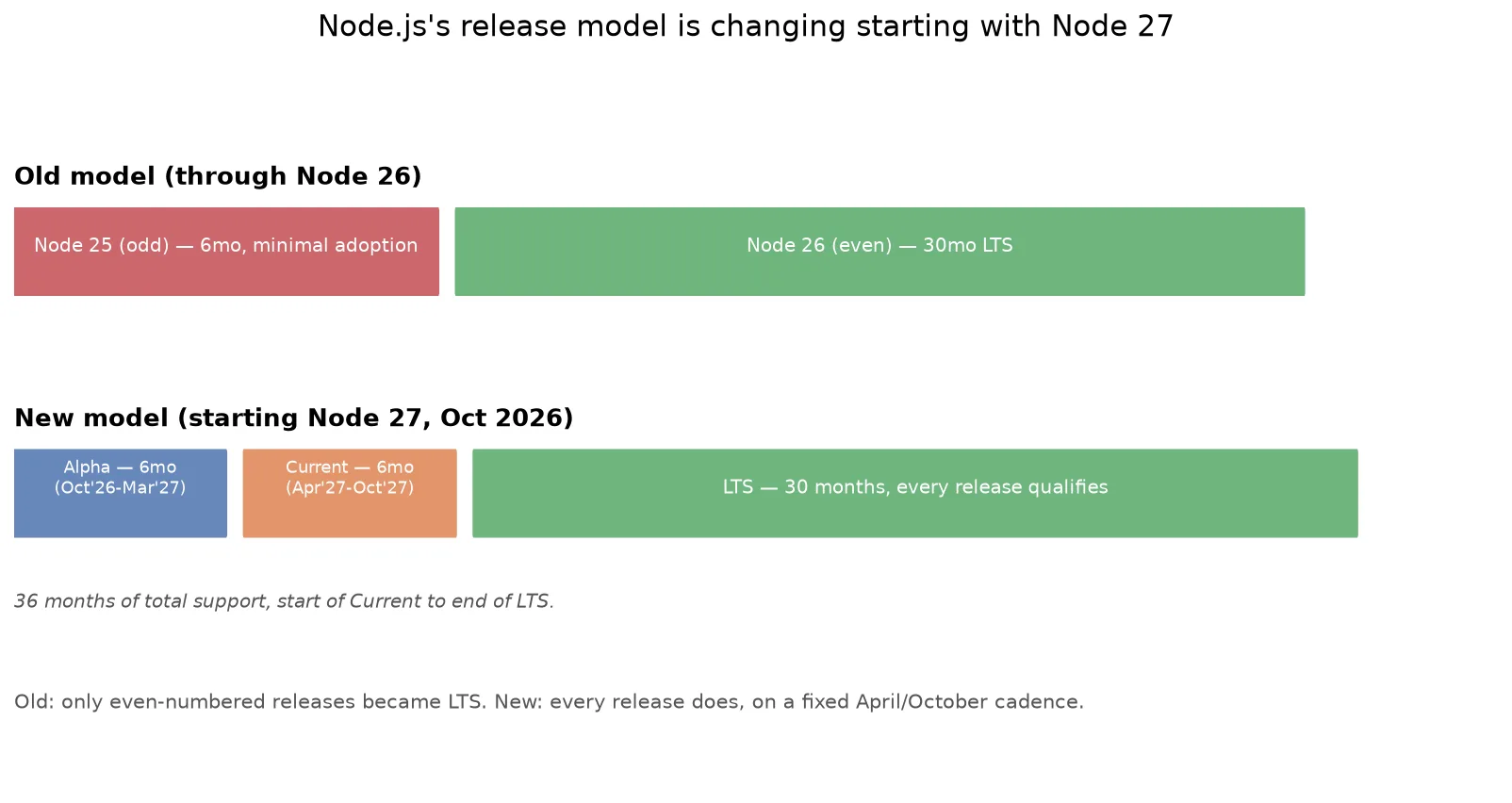
P.24From Node.js 27 in October 2026, Node drops the odd/even model for one major a year, and every release becomes LTS. What changes, and how to plan for it.
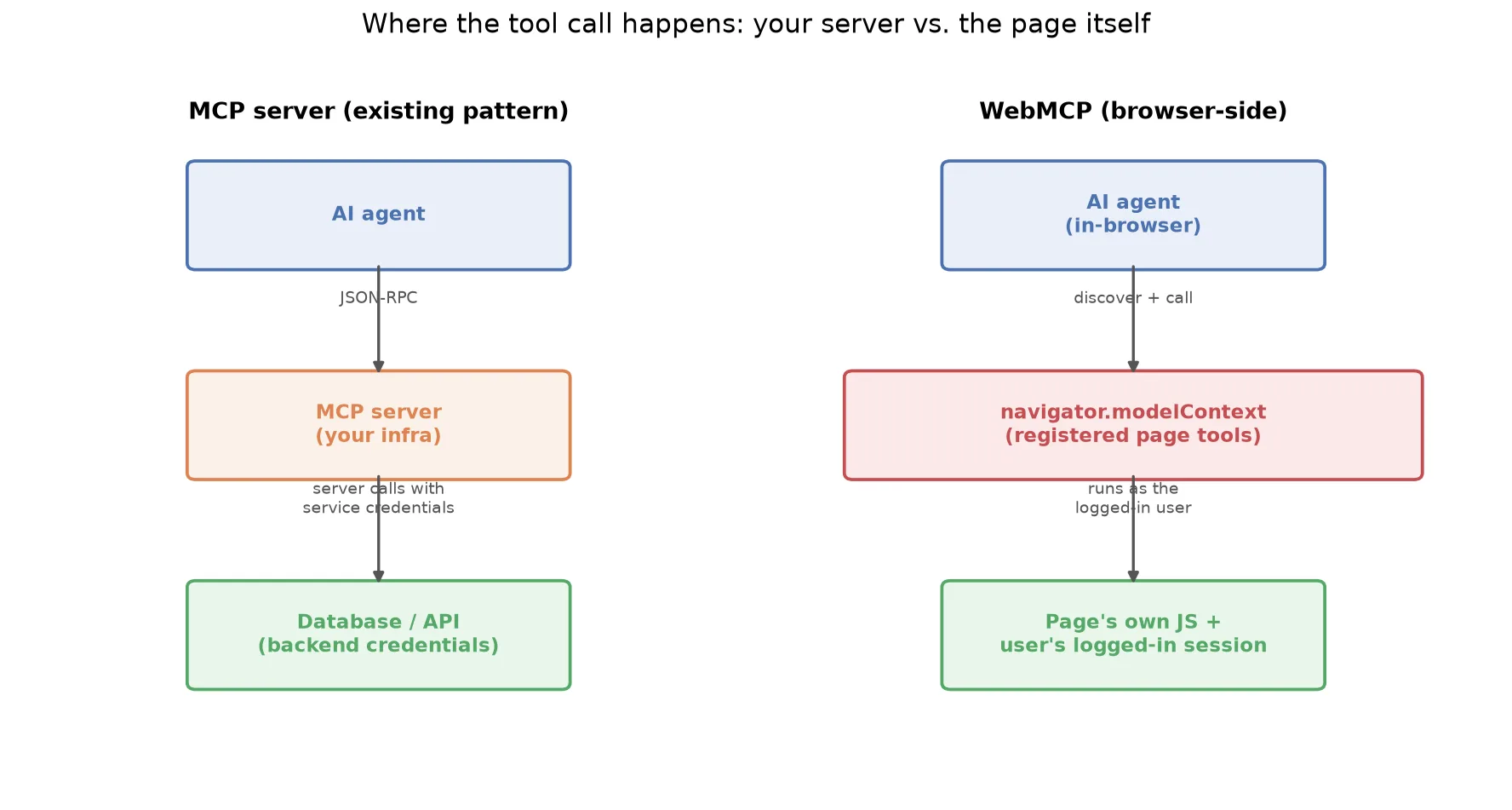
P.25WebMCP is a W3C proposal letting a page register JavaScript functions as tools an agent calls in-browser, no server MCP. How it works, and where it breaks.
74% of tag hubs were noindexed and in the sitemap anyway, 85% of titles broke the share card, and Search Console reported 0 indexed pages on 35k impressions.
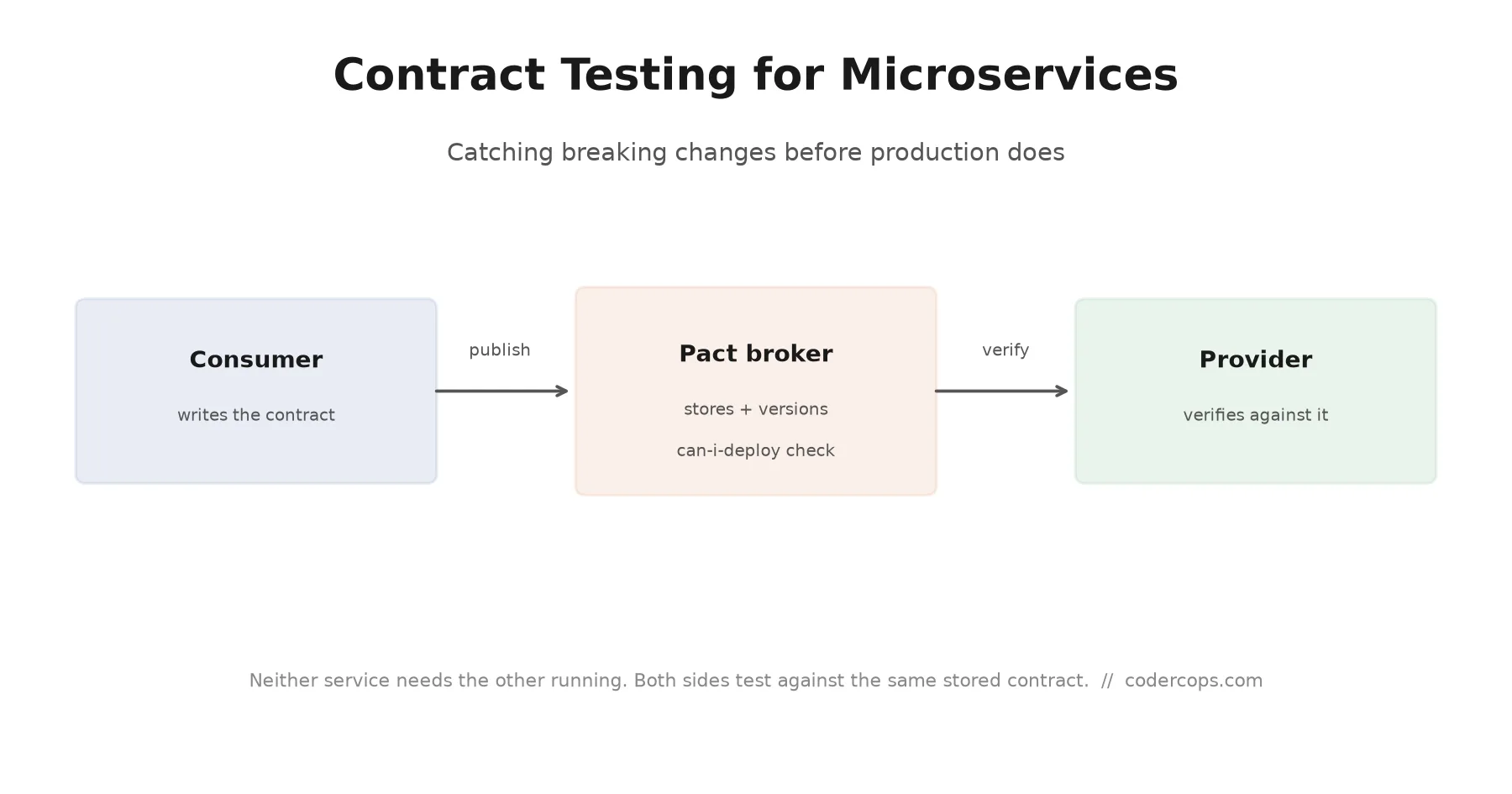
P.27Integration tests that boot every dependency are slow and flaky. Contract testing checks that consumer and provider agree on a shape without either running.
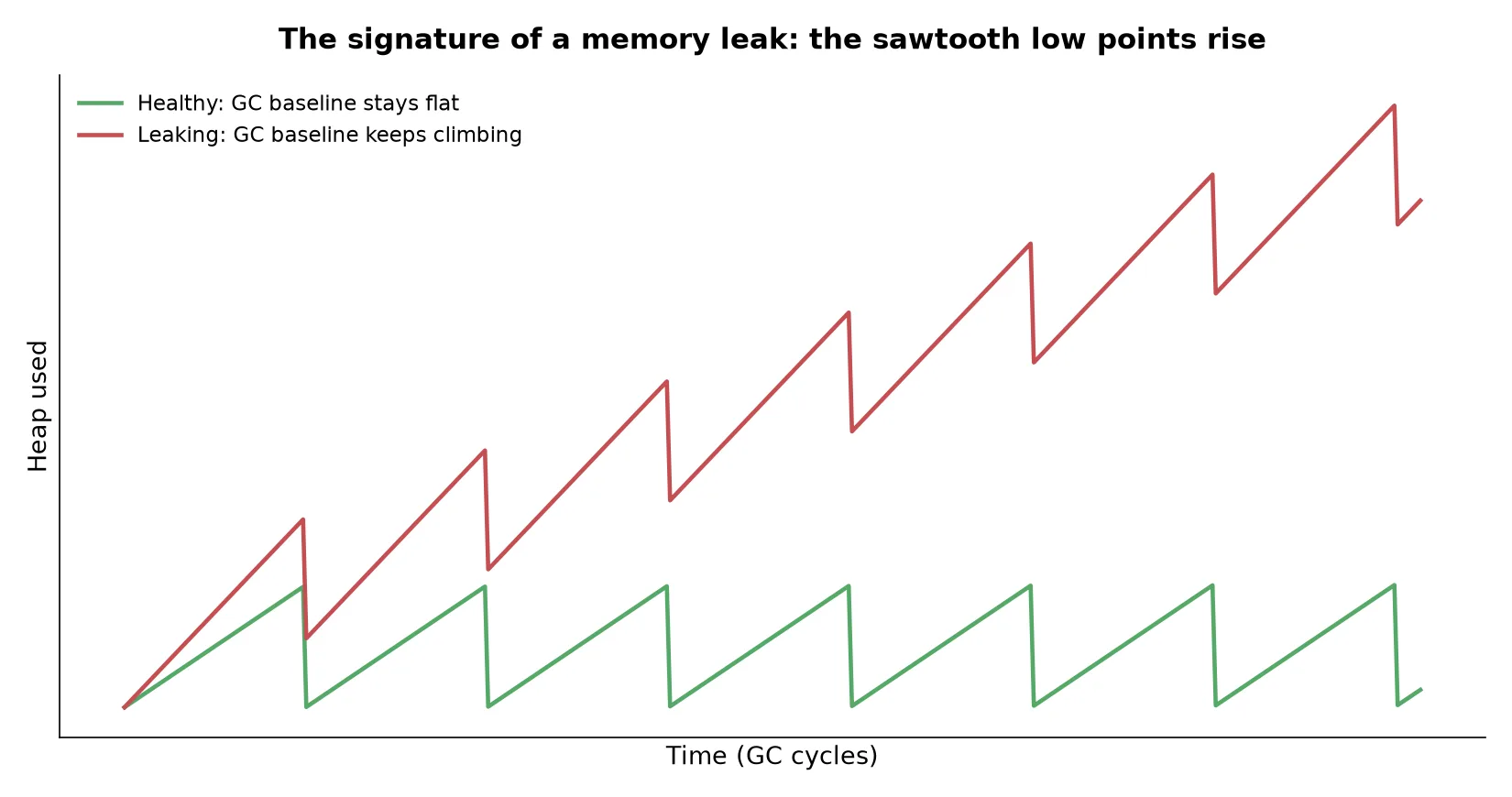
P.28Your Node process climbs until it's OOM-killed and restarting buys hours. The actual workflow: heap snapshot diffing, retainer paths, and the fast tools.
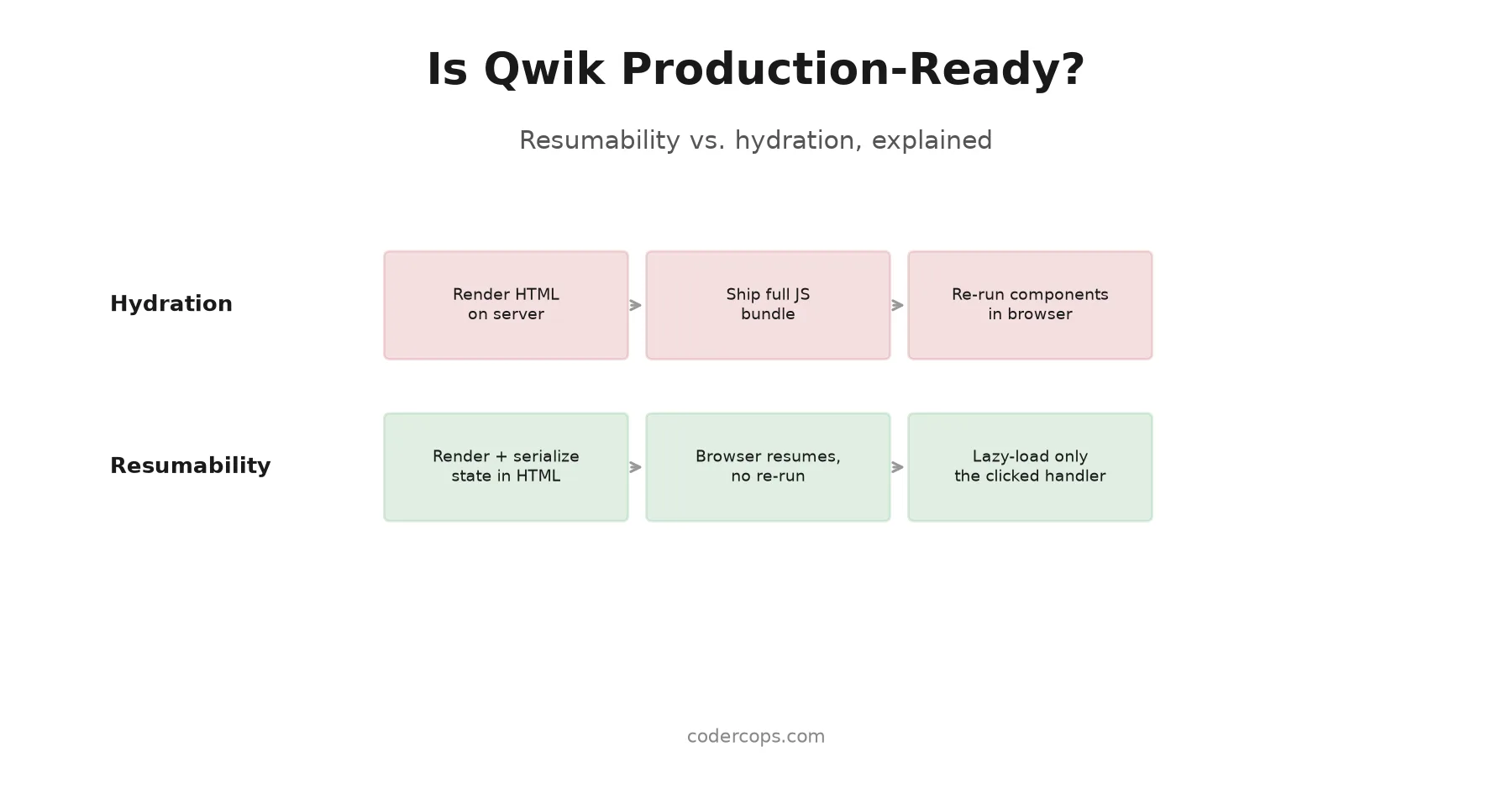
P.29Qwik skips hydration instead of optimizing it. How resumability actually works, what Qwik 2.0 changed, and the honest tradeoffs before you ship on it.
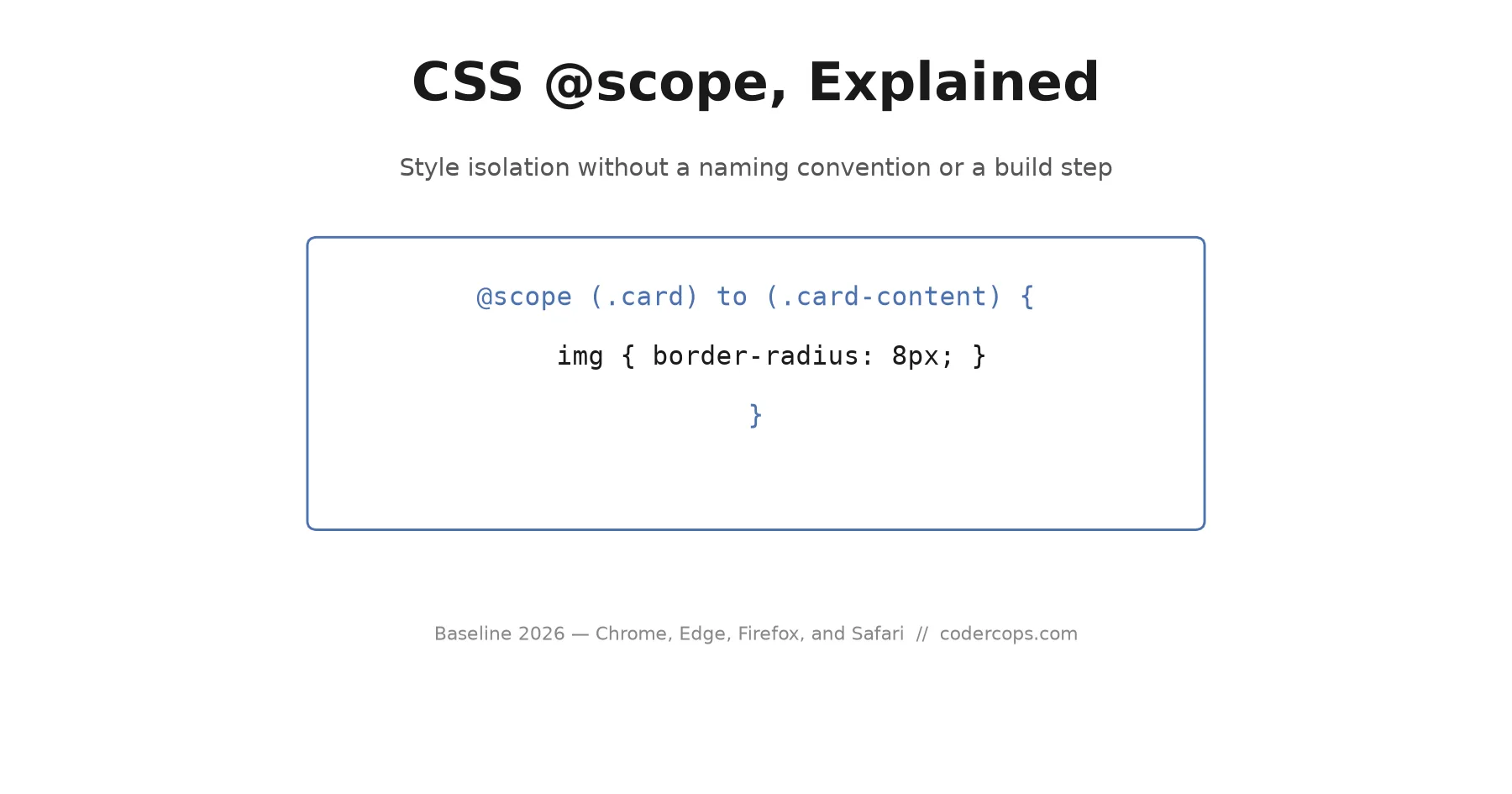
P.30@scope applies CSS only inside part of the DOM, with a lower bound that excludes nested components. No BEM, no Shadow DOM. Syntax and where it falls short.
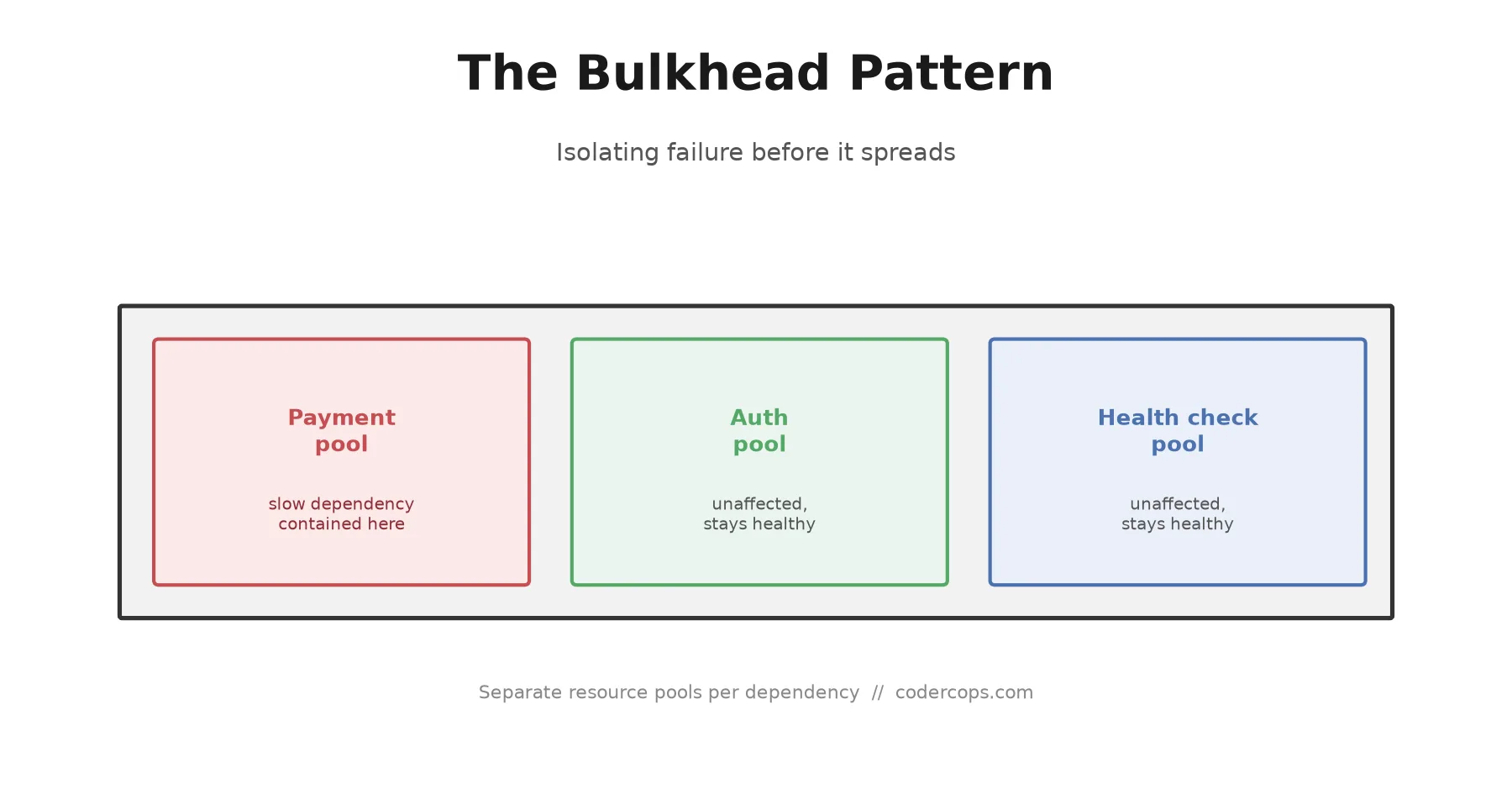
P.31A circuit breaker stops calls to a failed service. A bulkhead stops a merely slow one from eating every thread and starving the rest of your app.
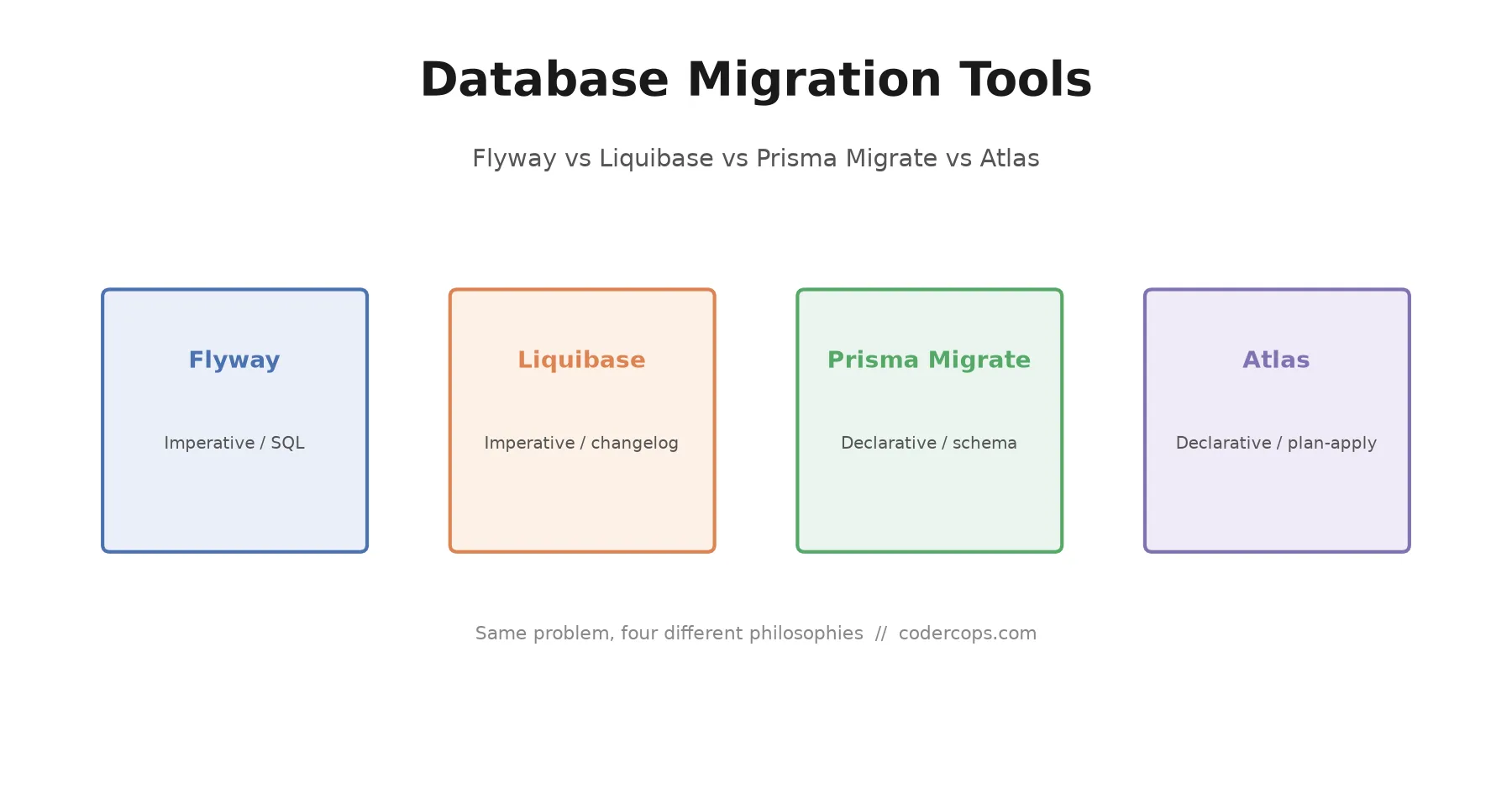
P.32Four philosophies for one problem: moving a schema from what it is to what it should be, safely, in a team. How they differ and which fits your stack.
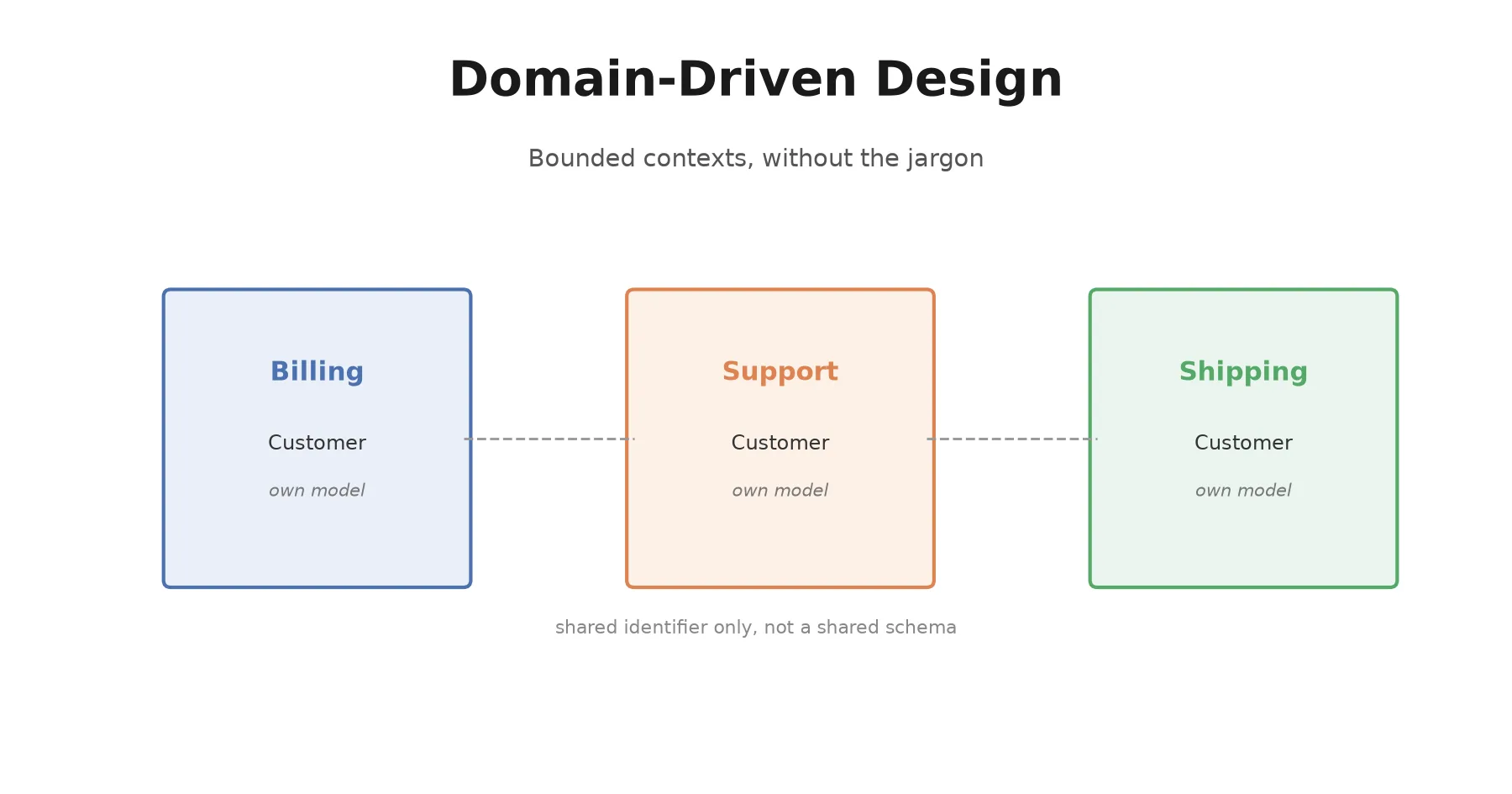
P.33DDD has a reputation for ceremony that scares teams off before they see the idea. The idea is simple and solves a real problem. What it is, and when to use it.
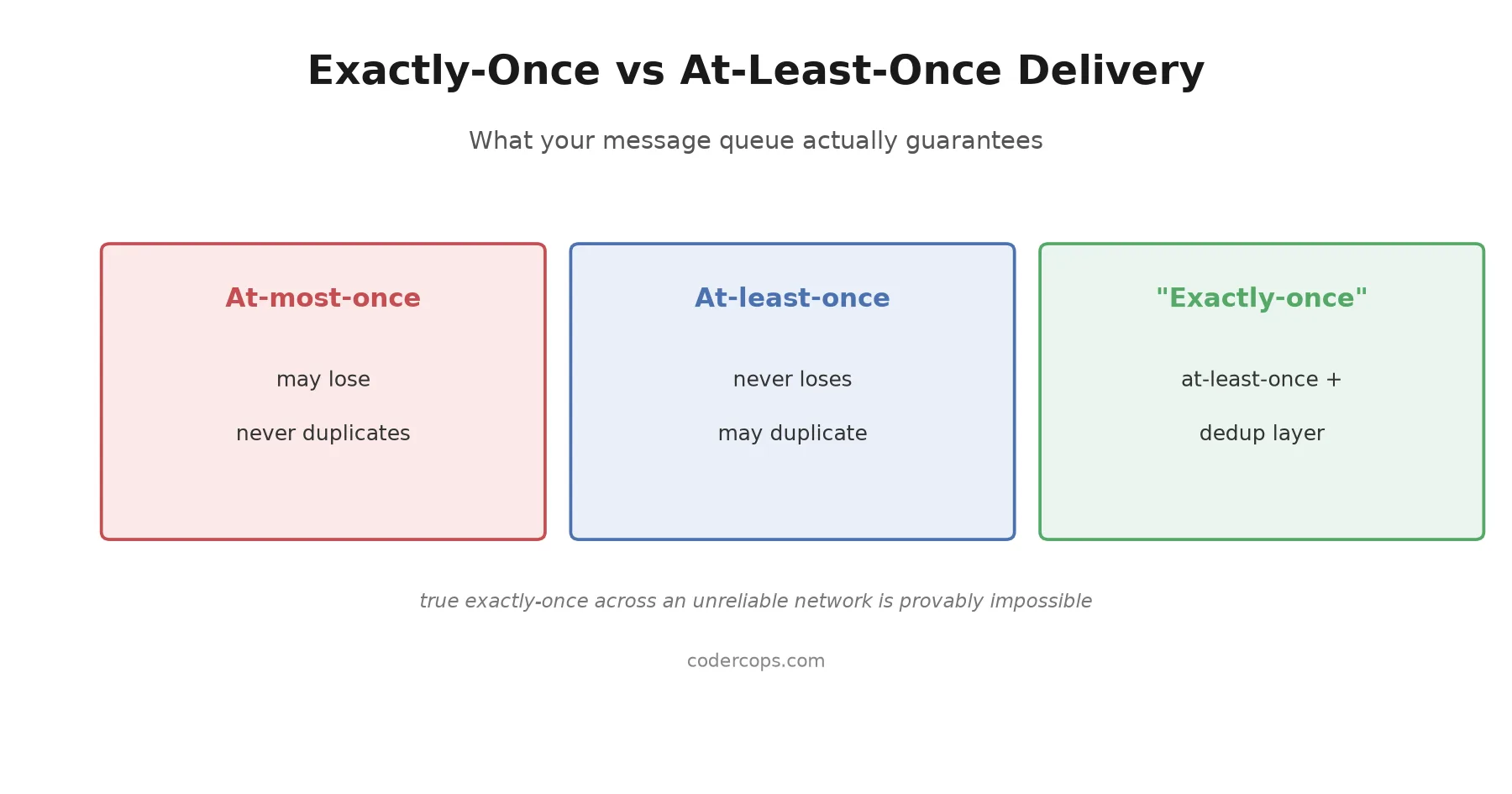
P.34Almost every queue advertising exactly-once actually gives you at-least-once plus a way to make your handler idempotent. The real distinction, and why.
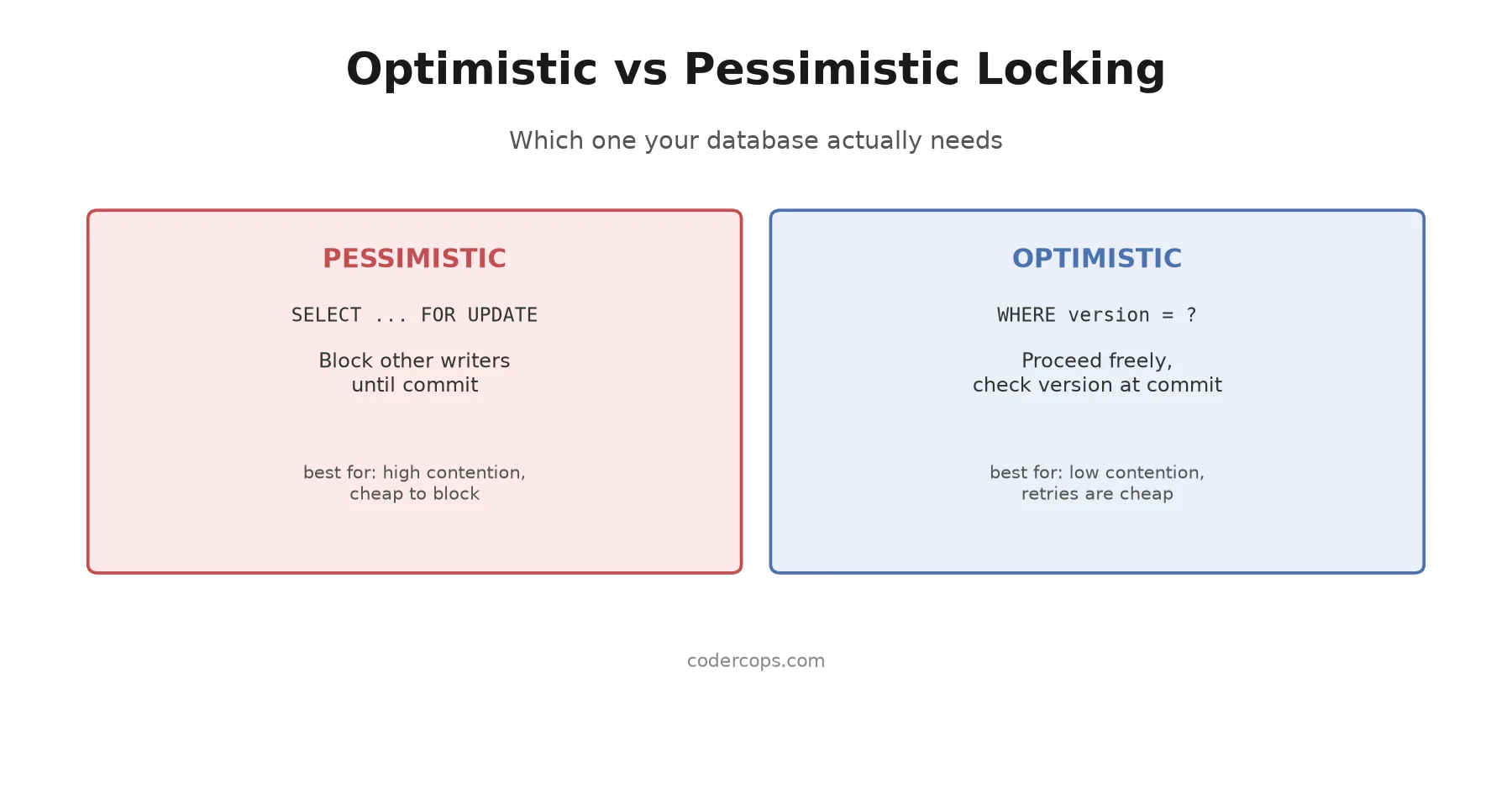
P.35Pessimistic locking stops one request from starting; optimistic lets both run and catches the conflict at the end. How each works, with SQL, and how to pick.
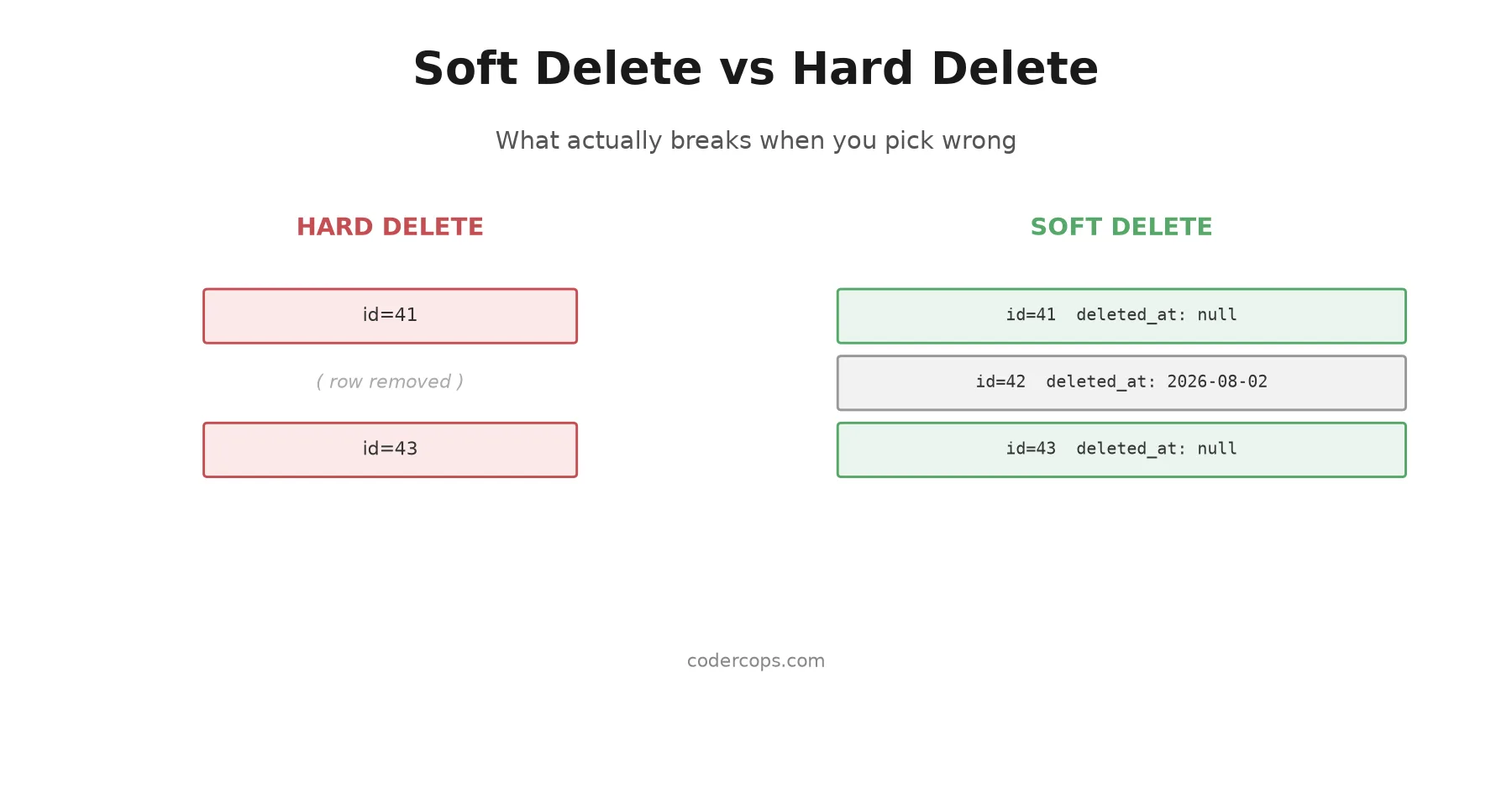
P.36Soft delete sounds like the safe default, but it quietly breaks unique constraints, foreign keys, and query performance unless you design for it up front.
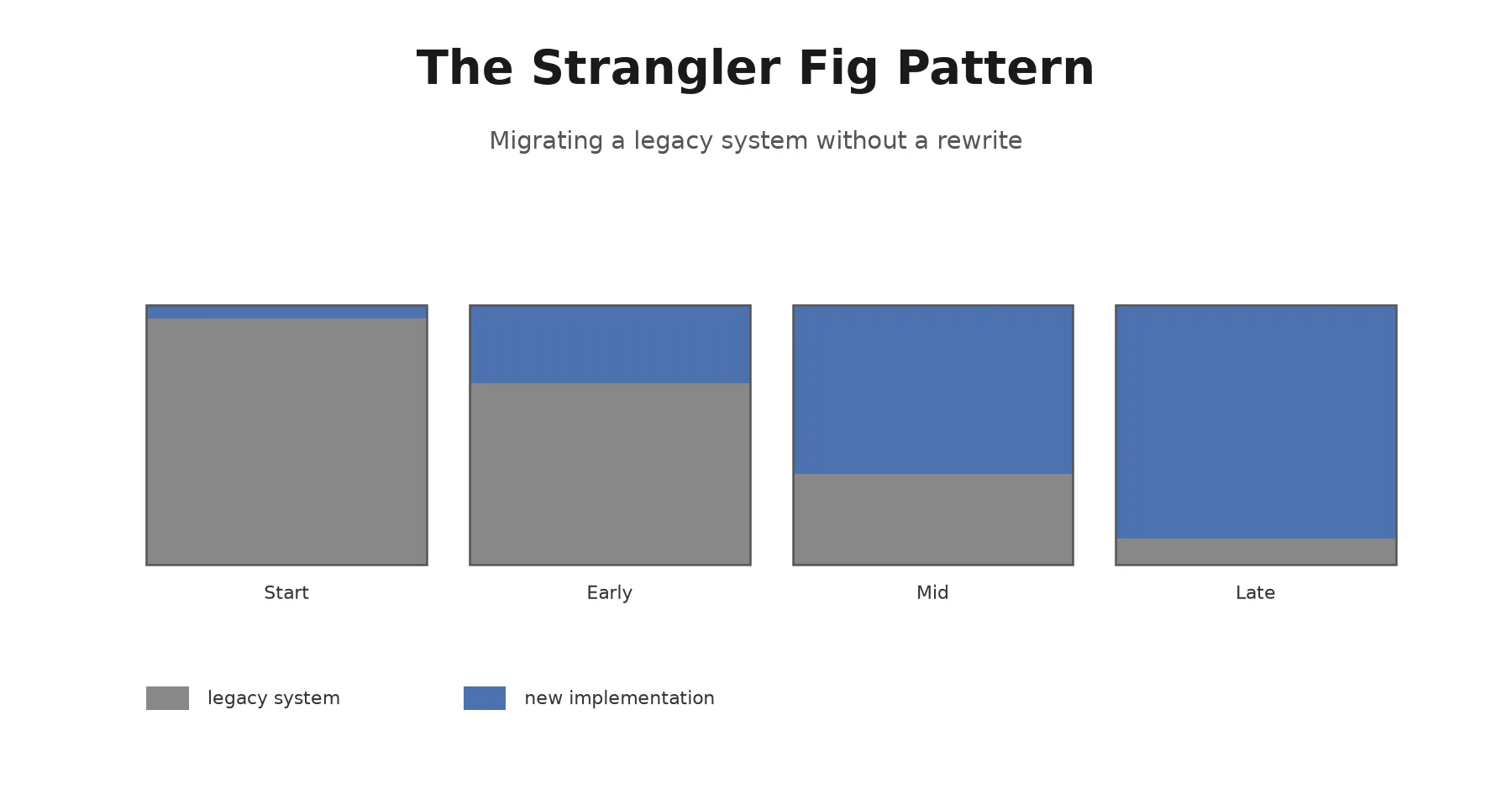
P.37Full rewrites fail because the business can't stand still for two years, not because the new code is bad. How the strangler fig moves traffic piece by piece.
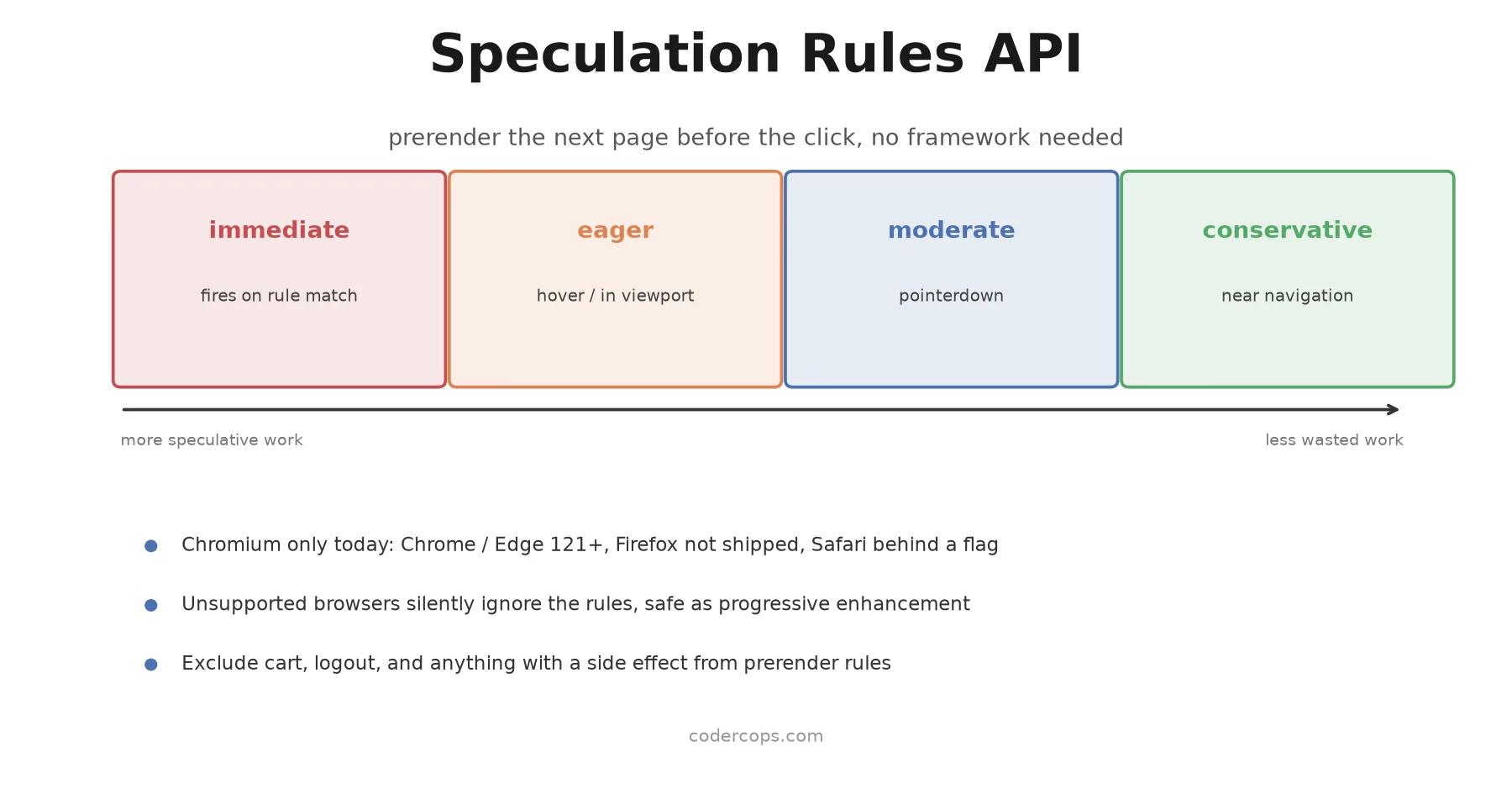
P.38Chrome and Edge can prerender the next page before a user clicks, with no SPA rewrite. How the Speculation Rules API works, what it wastes, and shipping it.
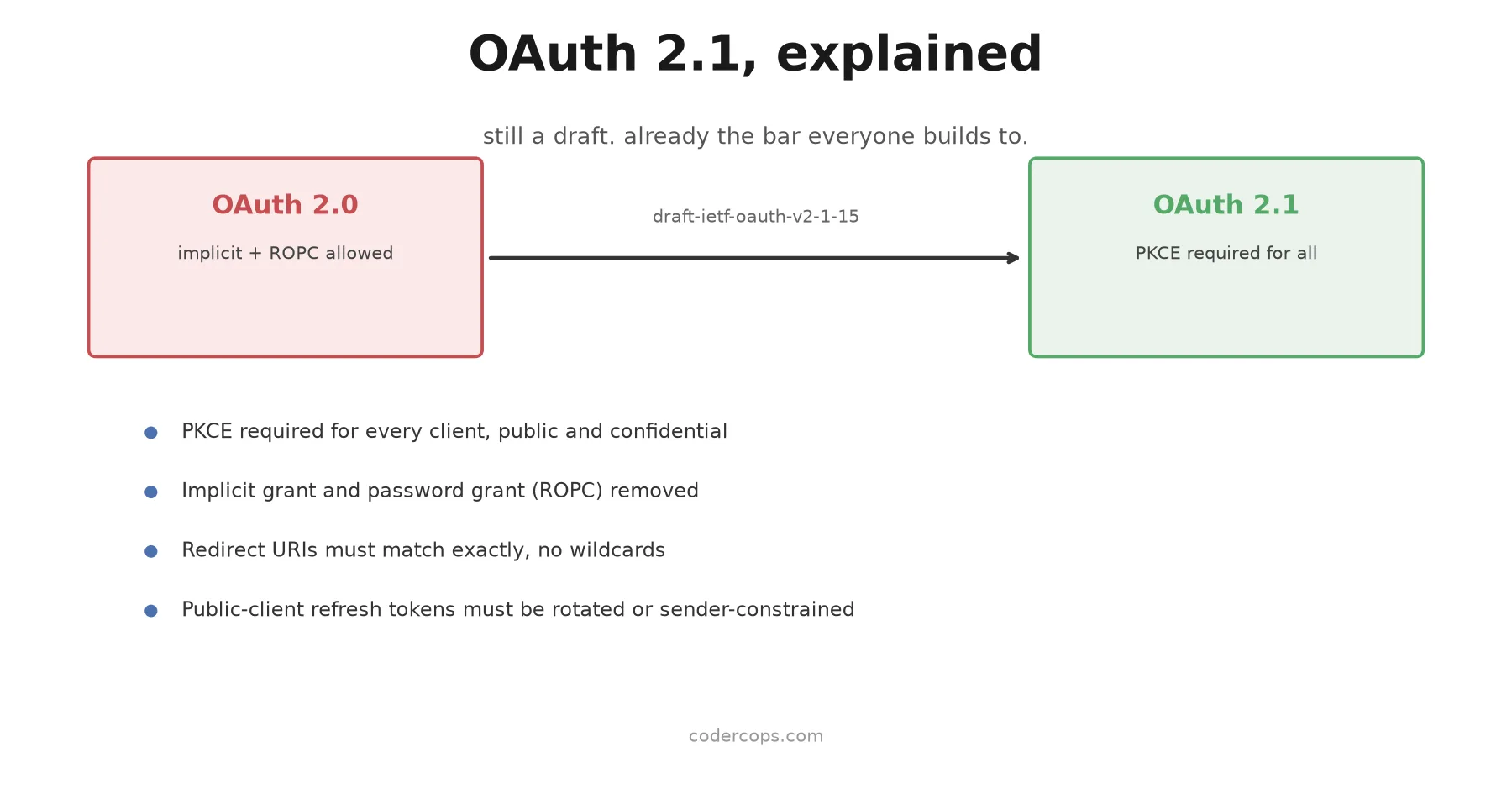
P.39OAuth 2.1 is still an IETF draft, but most providers enforce it already. What changed from 2.0, plus a checklist for auditing your own implementation.
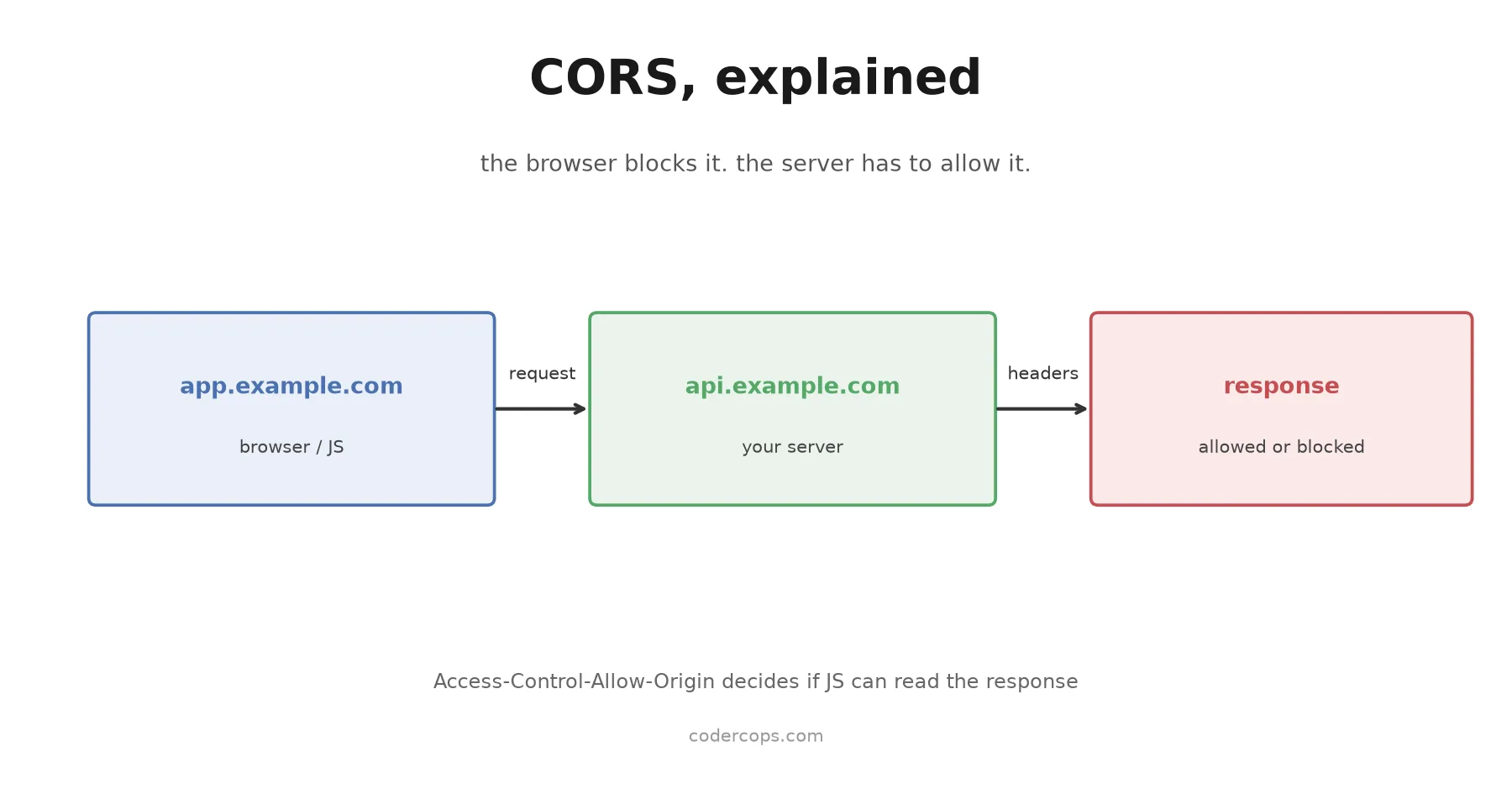
P.40No Access-Control-Allow-Origin is the most Googled web error for a reason. What CORS is, why the browser enforces it, and how to configure it properly.
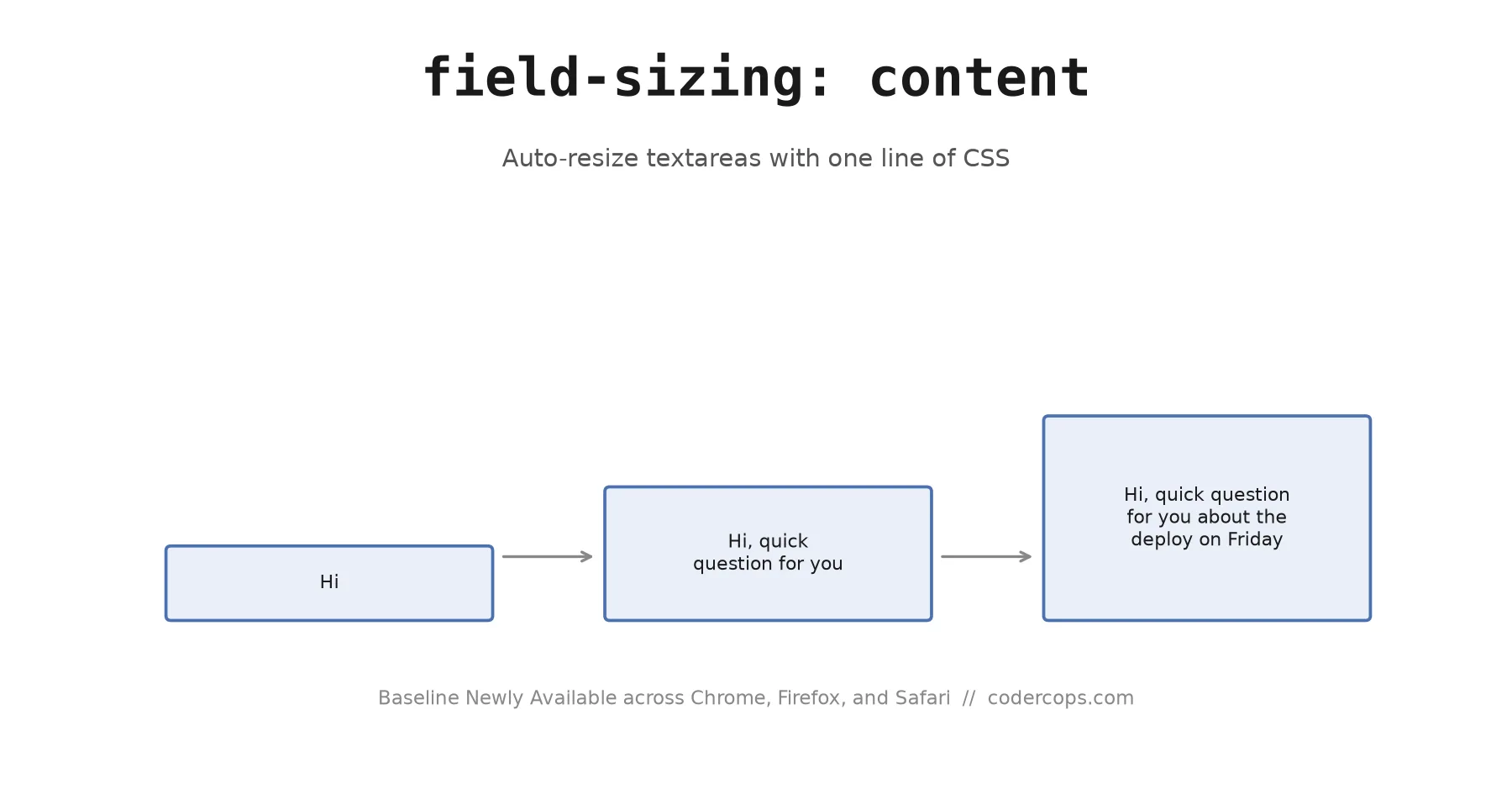
P.41field-sizing: content reached Baseline in June 2026. The one line of CSS that replaces the scrollHeight hack for auto-growing textareas, and where it stops.
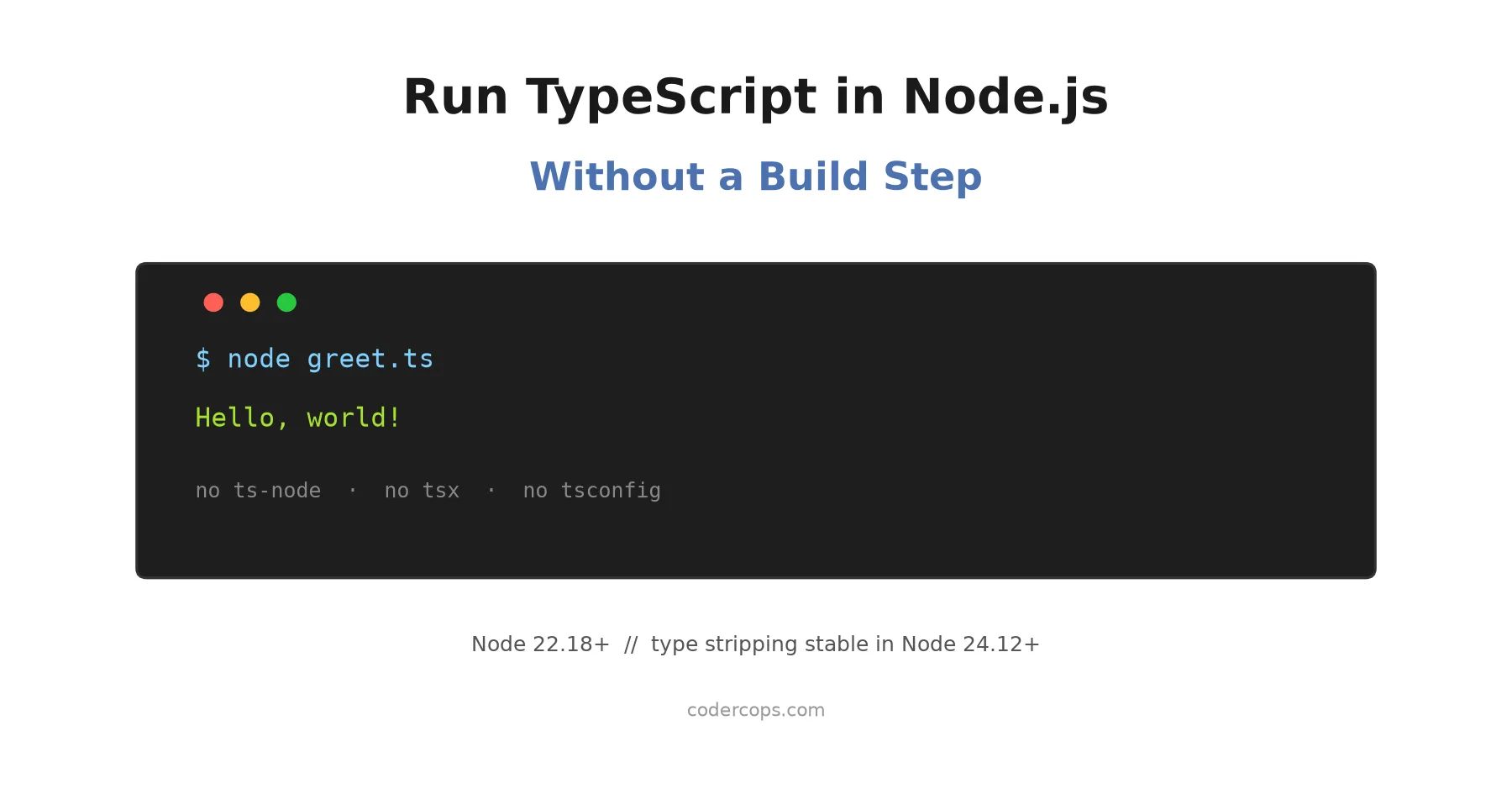
P.42Node.js 24 made type stripping stable and on by default: node file.ts just runs. What that buys you, what syntax it can't handle, and when you compile.
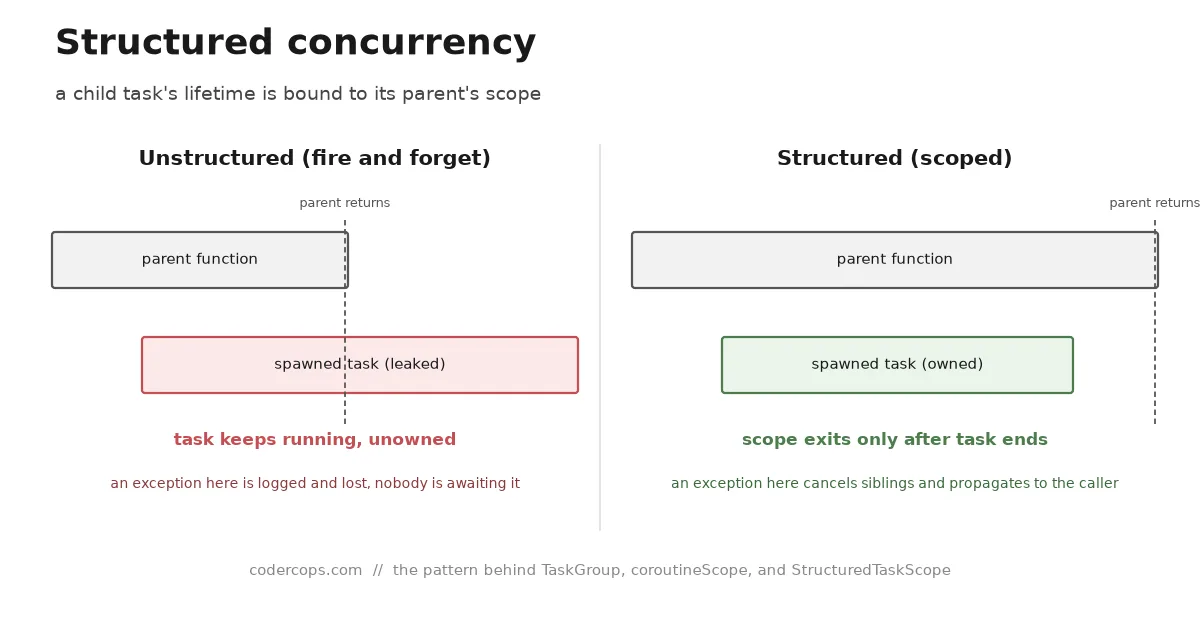
P.43A background task that outlives the function that spawned it is a real production bug. How structured concurrency fixes it in Python, Kotlin, and Swift.
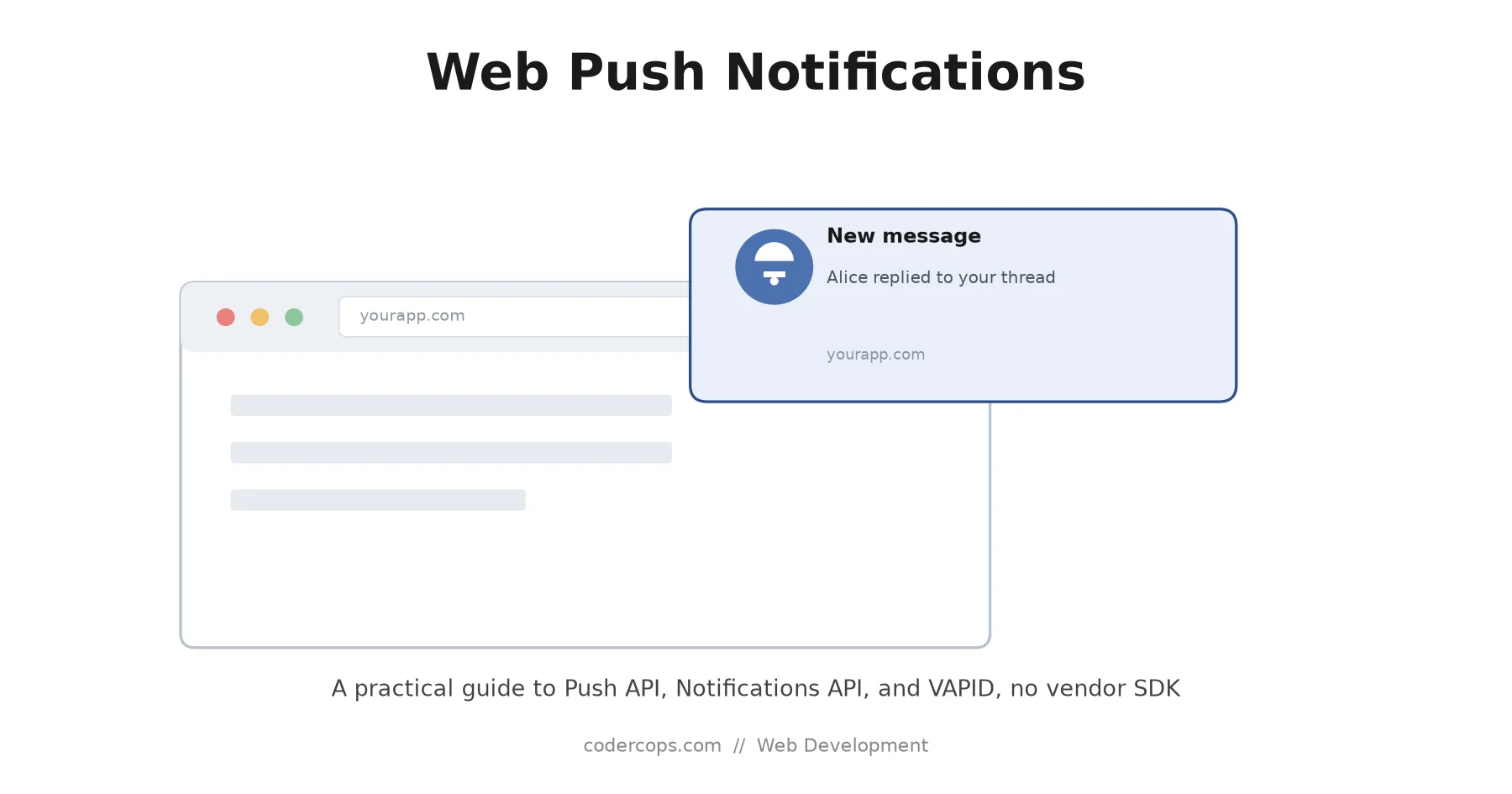
P.44Build browser push yourself with the Push API, Notifications API, and a service worker. No OneSignal, no Firebase. The full setup, VAPID keys included.
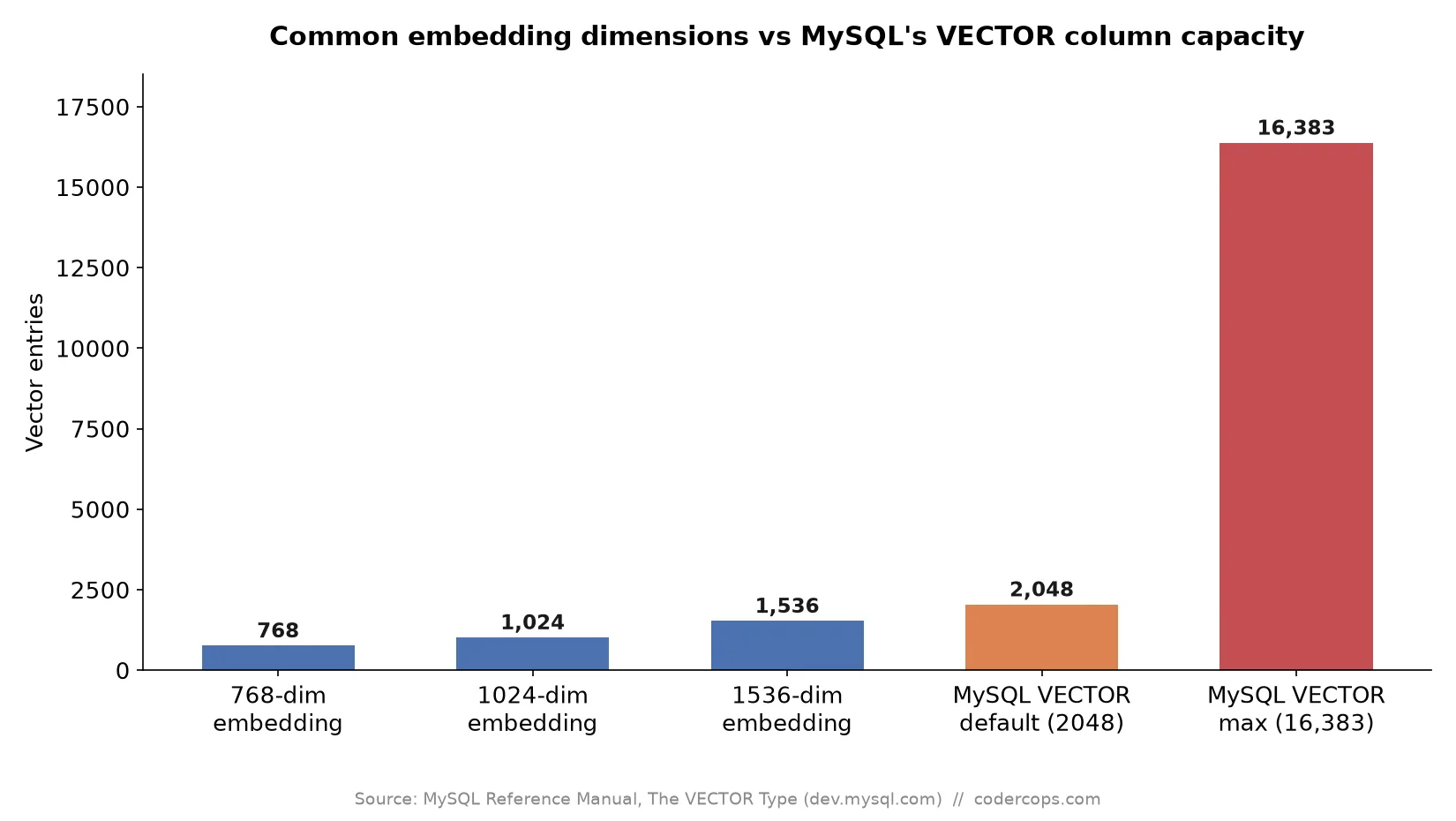
P.45MySQL 9 shipped a native VECTOR type and distance functions, no extension needed. How it compares to Postgres plus pgvector for real semantic search.
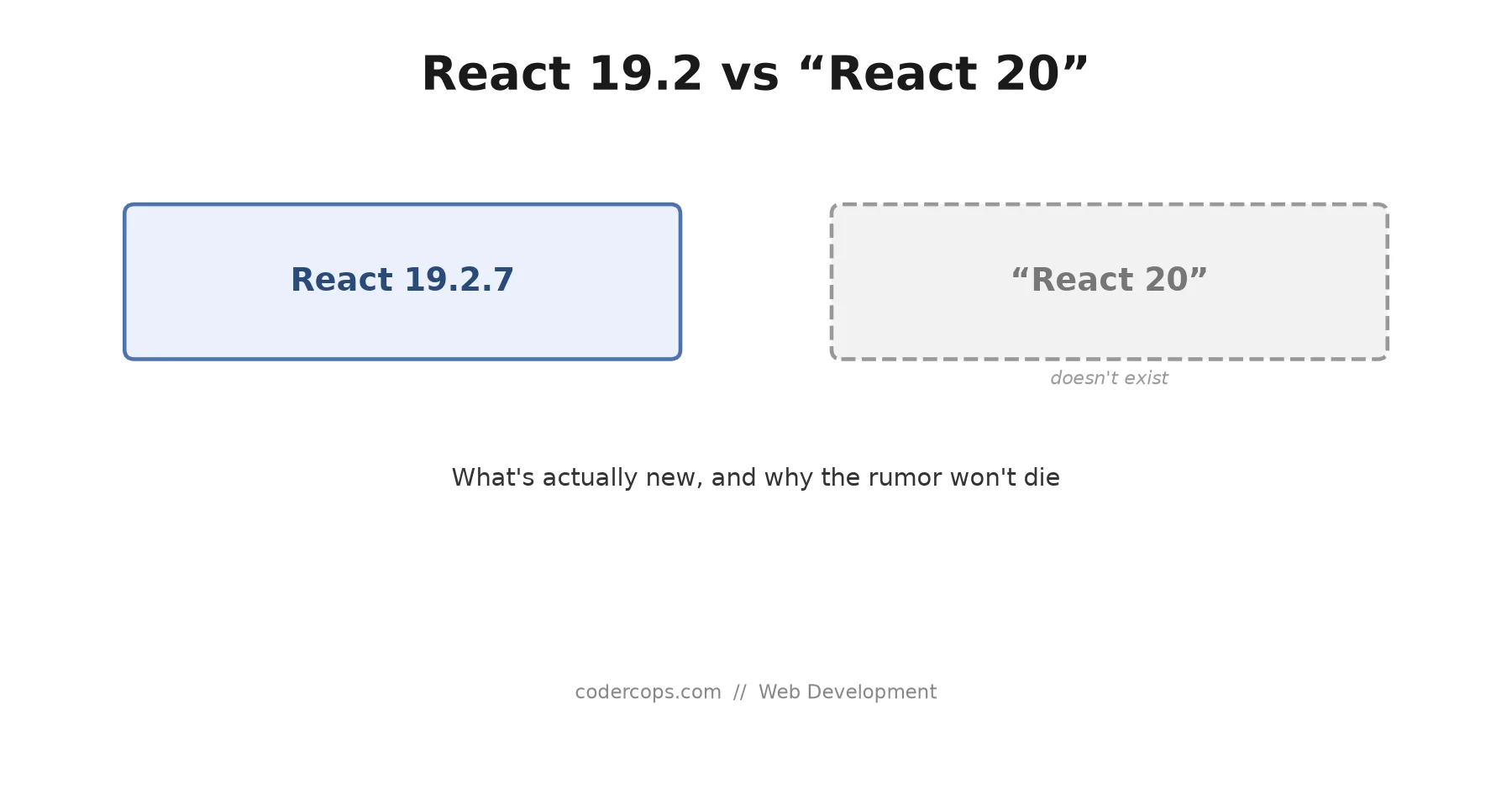
P.46Searches for React 20 keep climbing, but the latest release is 19.2.7. What actually shipped in the 19.2 line, including useEffectEvent, and why.
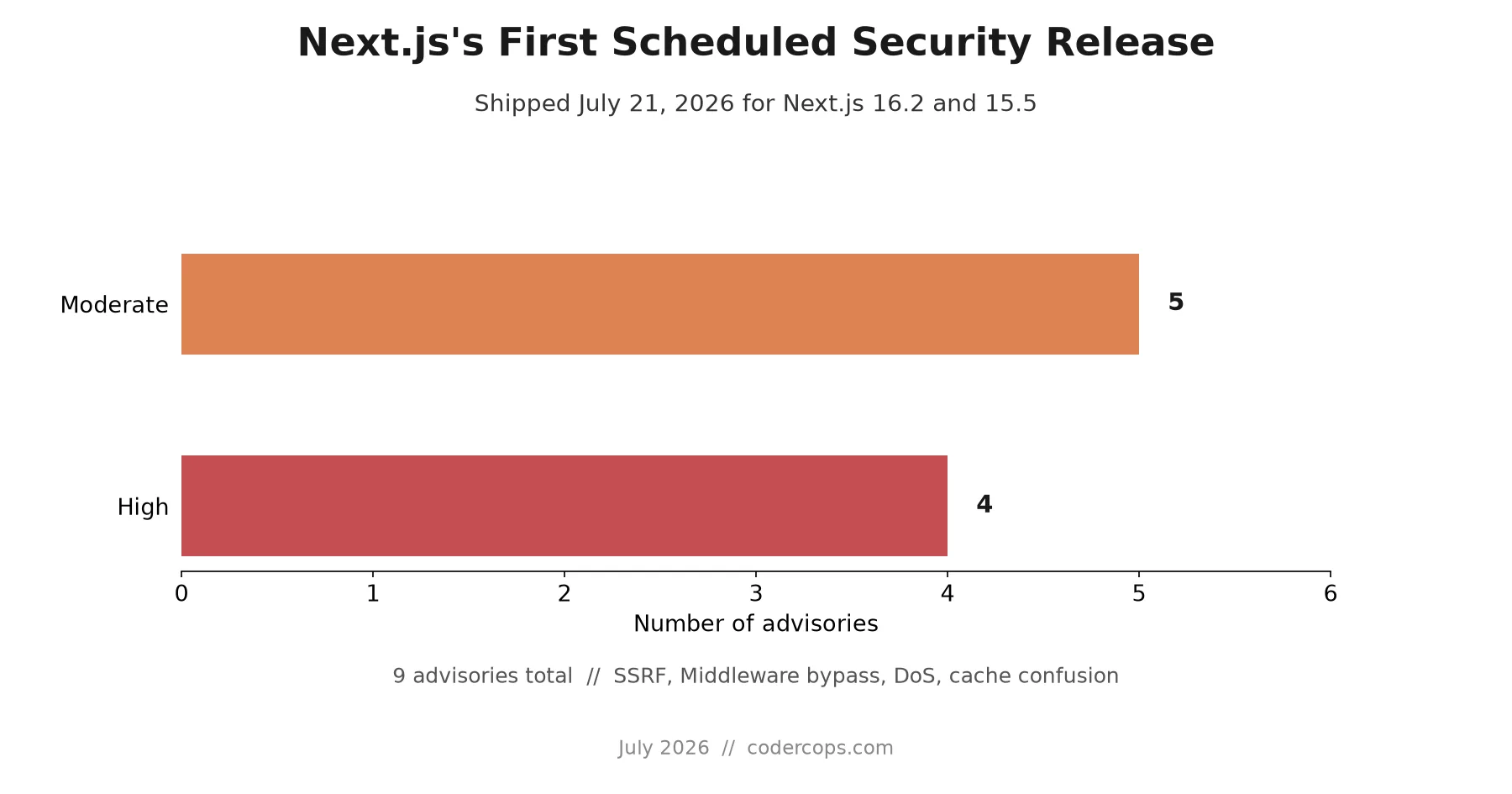
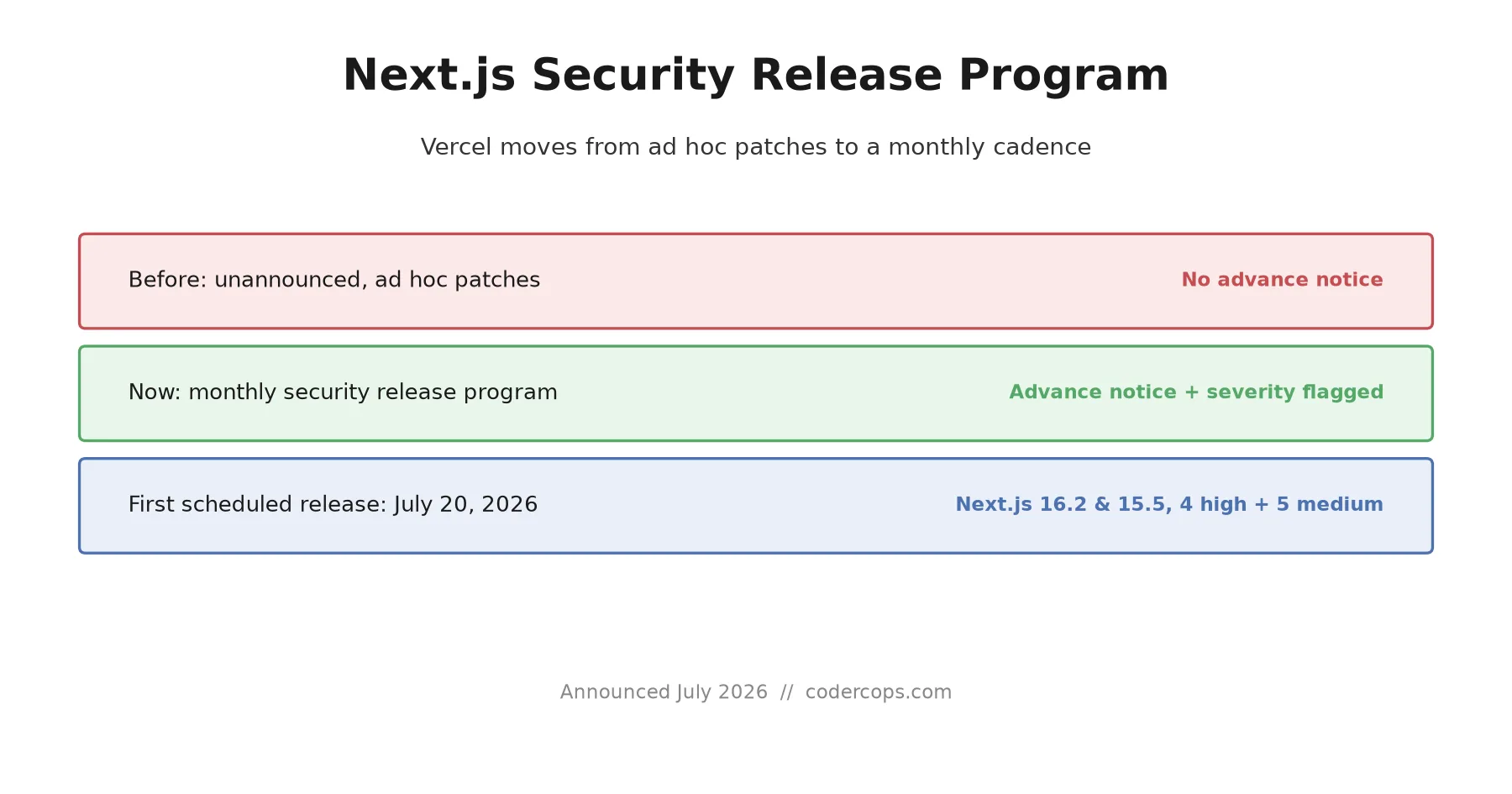
P.47Vercel's first monthly Next.js security release shipped July 21 with 4 high and 5 medium advisories. What they cover, and why Server Actions keep appearing.
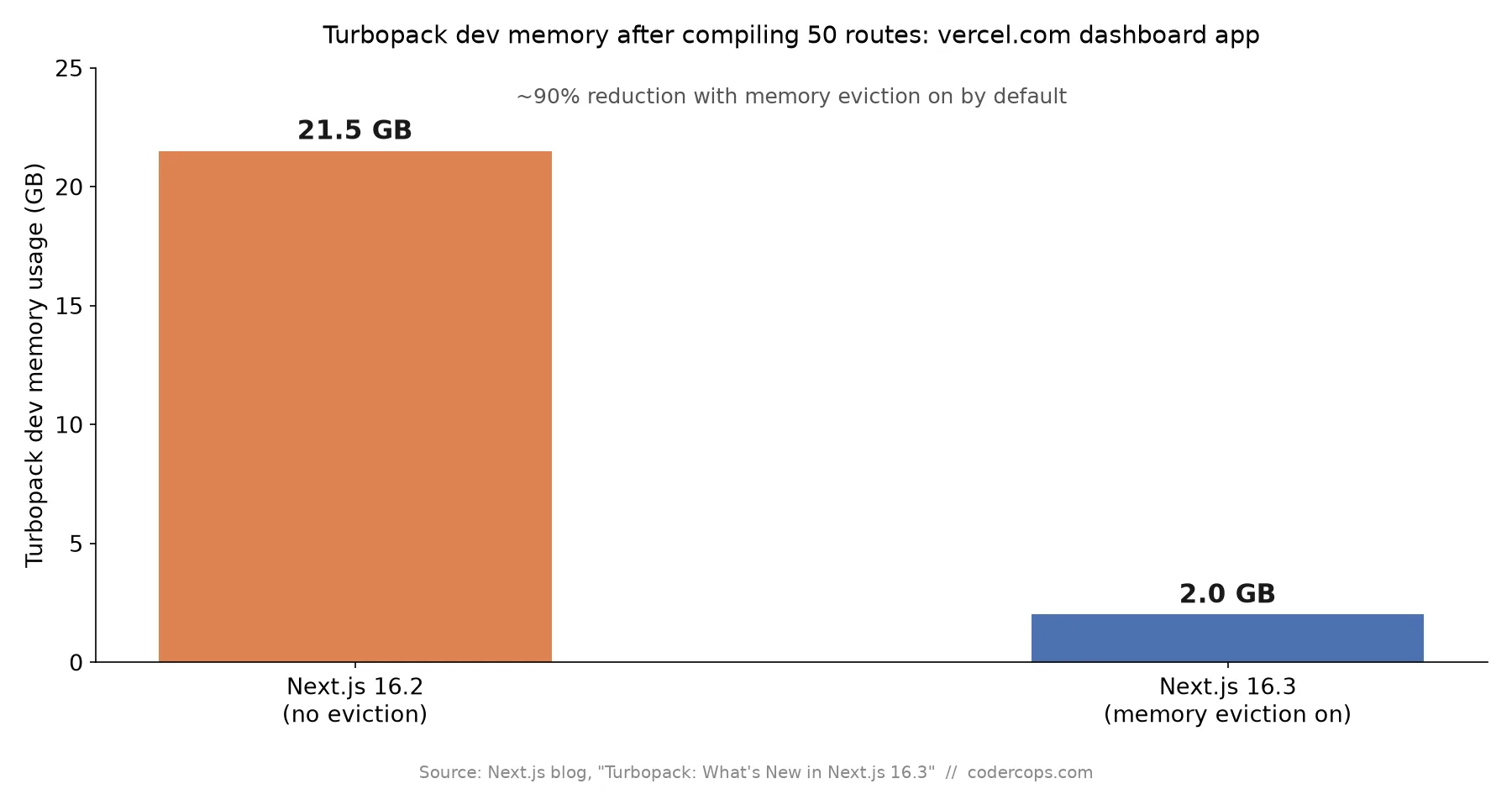
P.48Next.js 16.3 cuts Turbopack dev memory roughly 90% on large apps, extends the disk cache to next build, and ships a native Rust React Compiler.
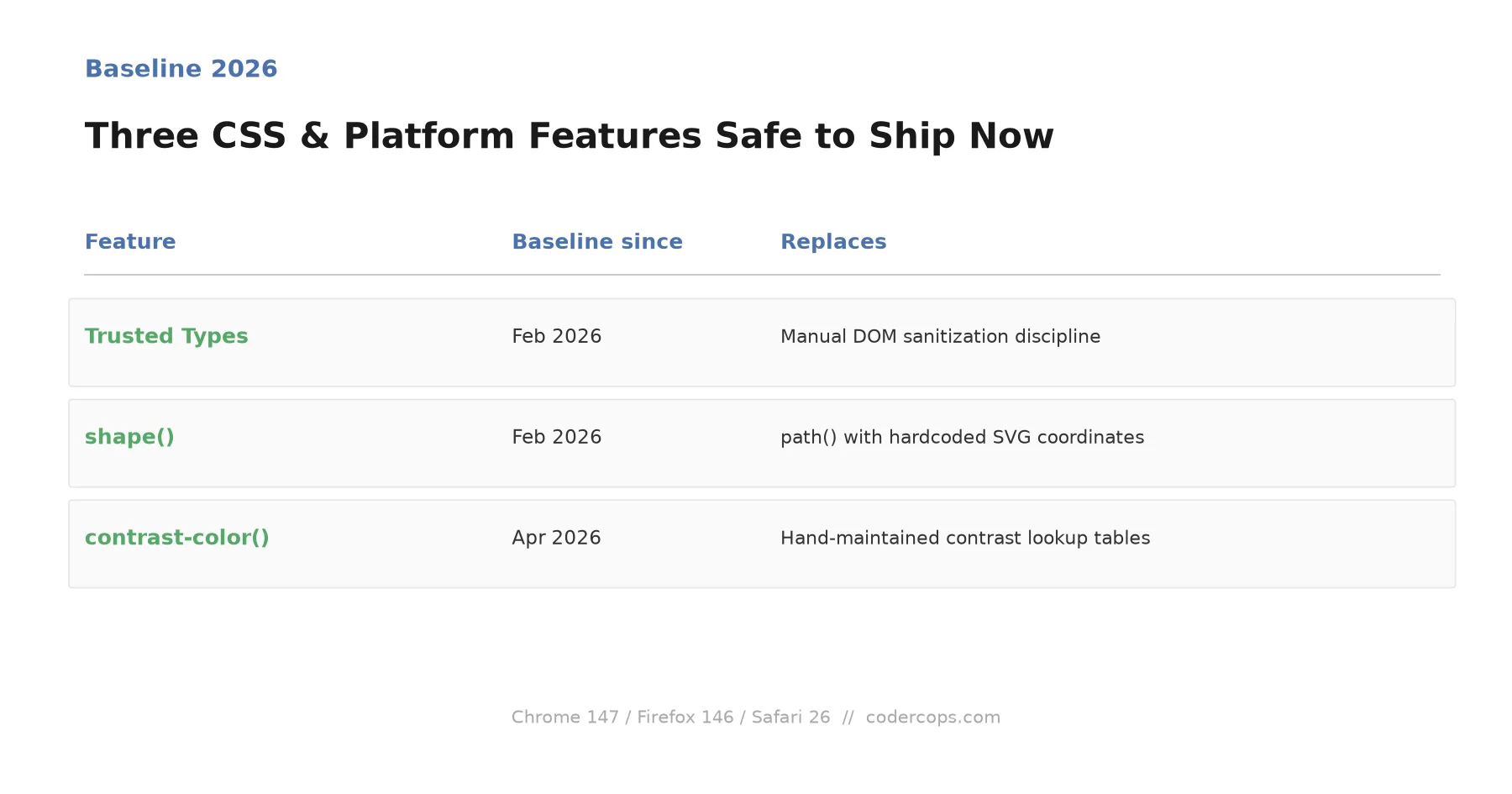
P.49Trusted Types, shape(), and contrast-color() all reached Baseline in early 2026. What each replaces, with working code, and what newly available means.
P.50After a 13-CVE surprise release in May, Vercel moved Next.js to a monthly, pre-announced security cadence. What it promises, and how to plan upgrades.
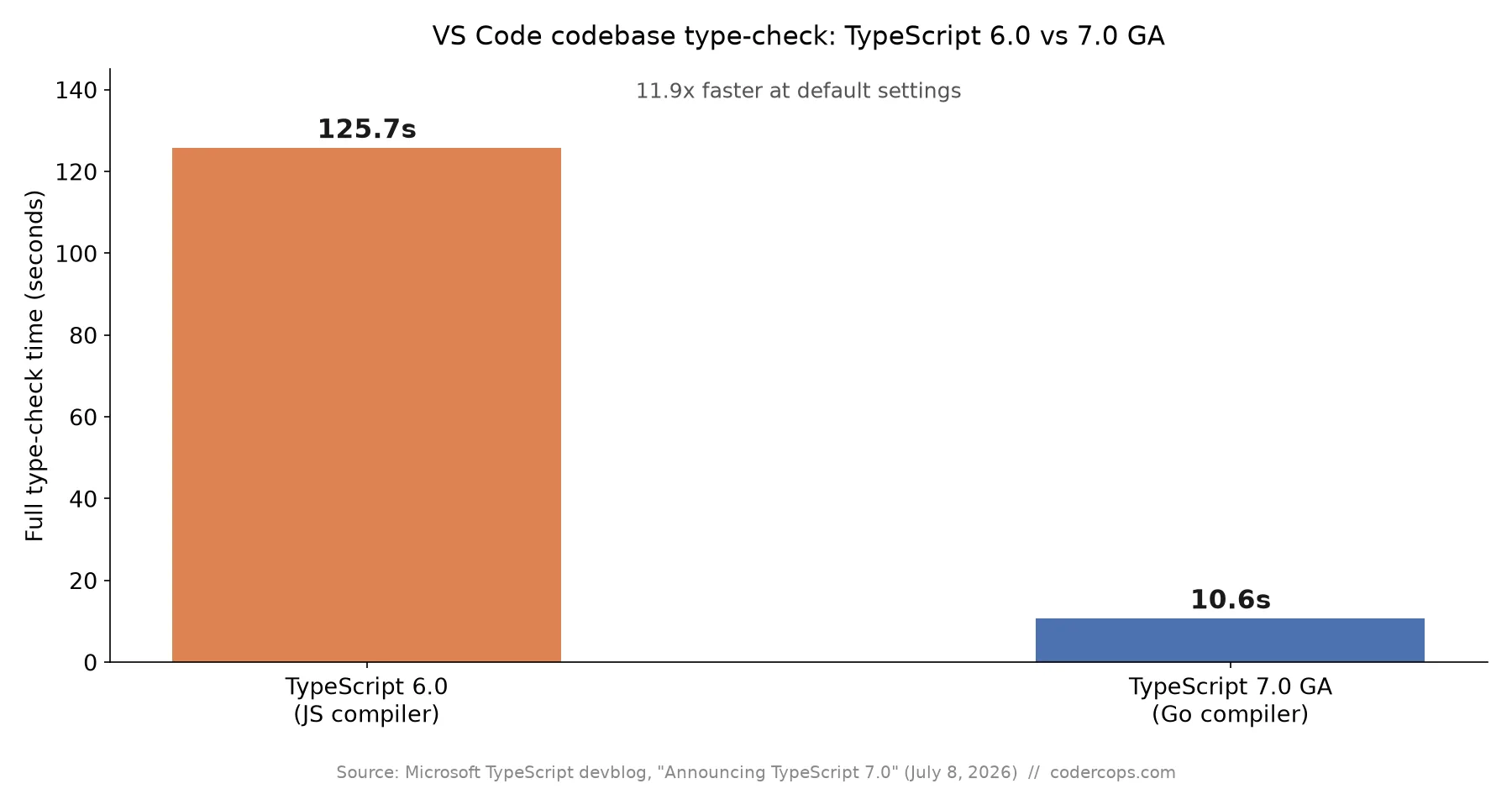
P.51TypeScript 7.0 hit GA on July 8, three weeks after the RC. The real GA benchmark, what strict mode locks in, and why Astro and Vue projects should wait.
P.52Temporal hit Stage 4 and ships unflagged in Chrome 144, Firefox 139, and Node 26. Migrating common Date patterns to PlainDate, ZonedDateTime, and Duration.
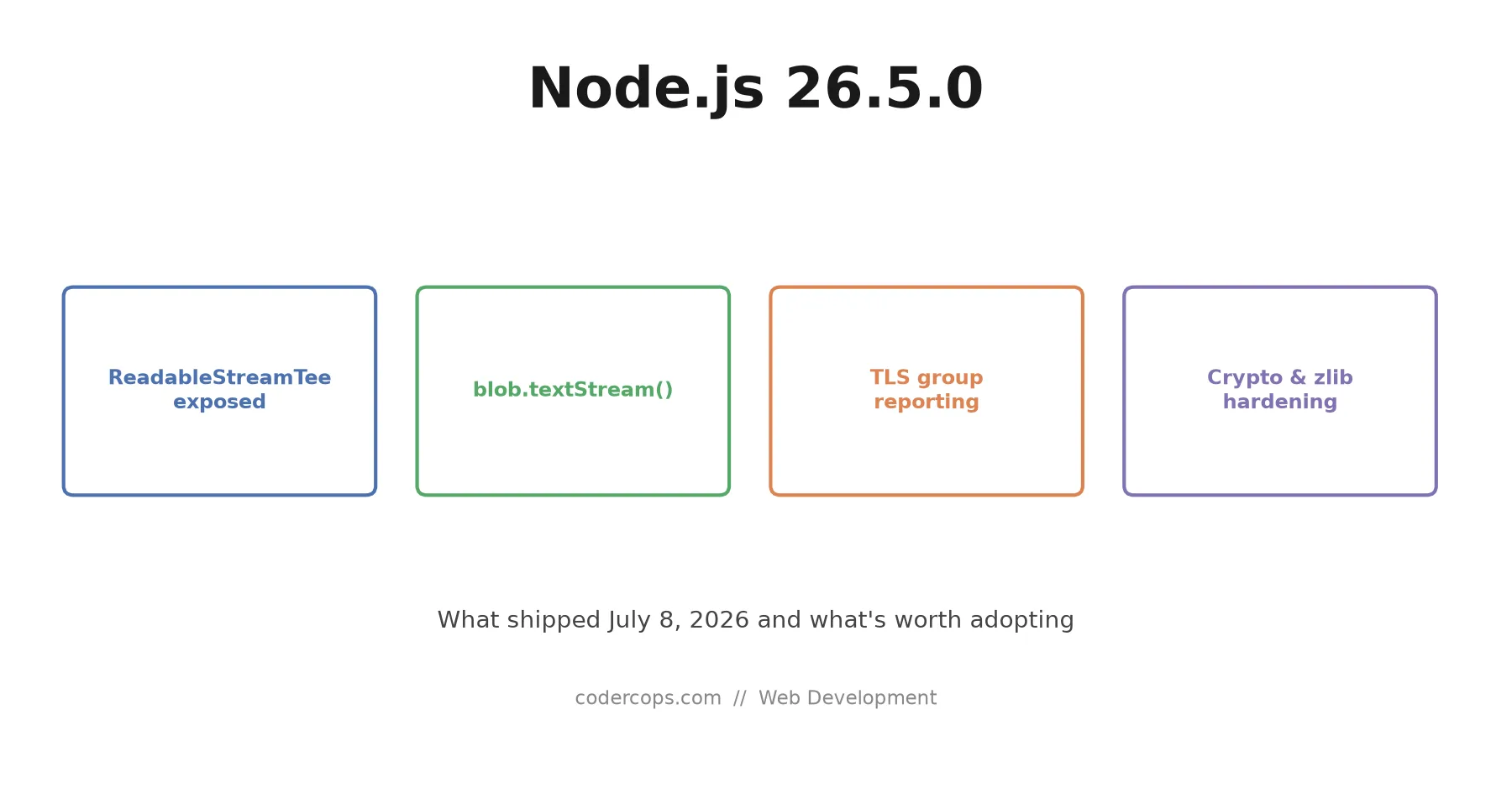
P.53Node.js 26.5.0 exposed ReadableStreamTee, added streaming Blob text reads and TLS group reporting, plus crypto hardening. What's worth adopting now.
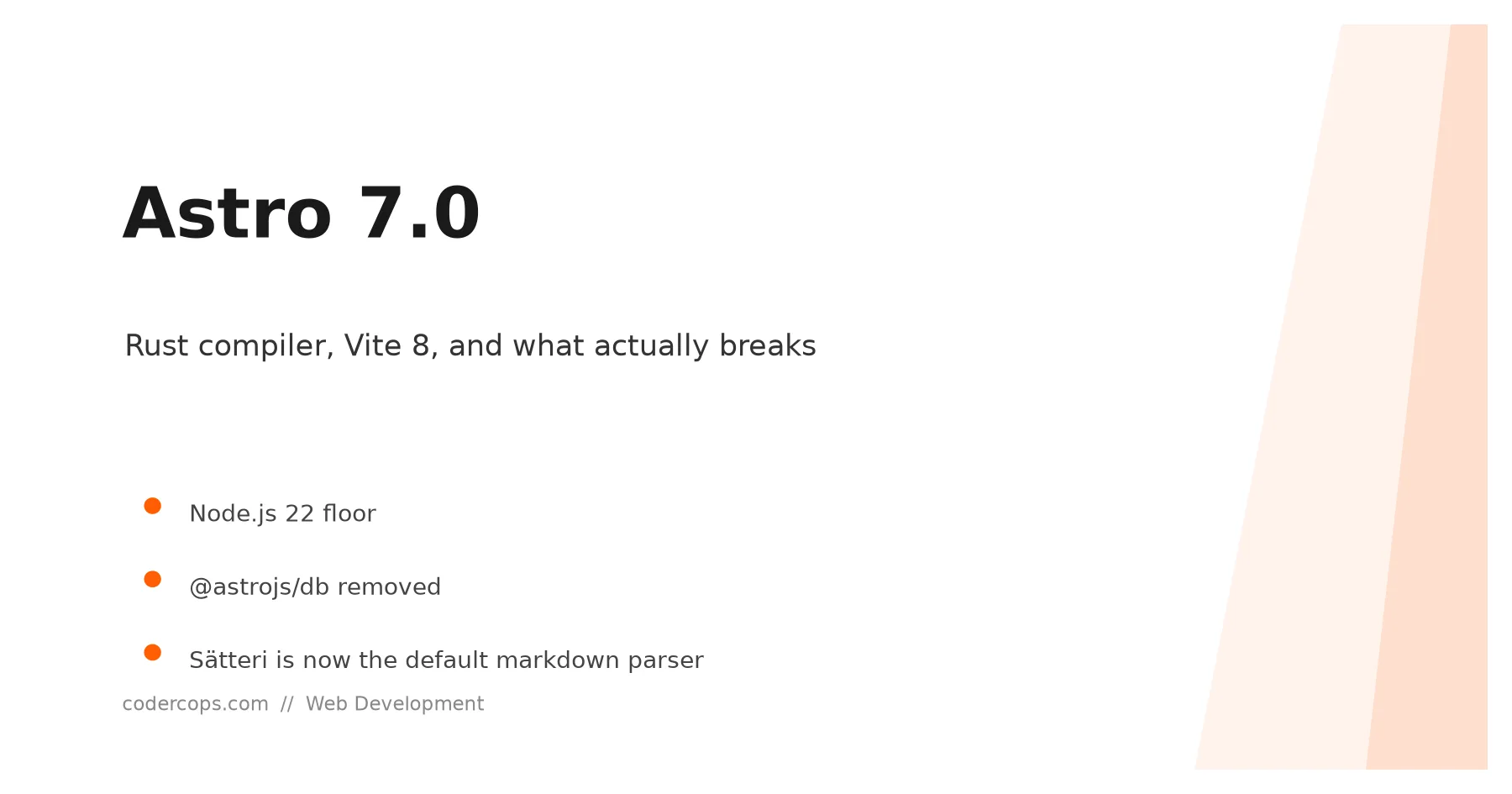
P.54Astro 7.0 rewrote its compiler in Rust, jumped to Vite 8, and switched markdown parsers by default. What changed, what was removed, and how to upgrade.
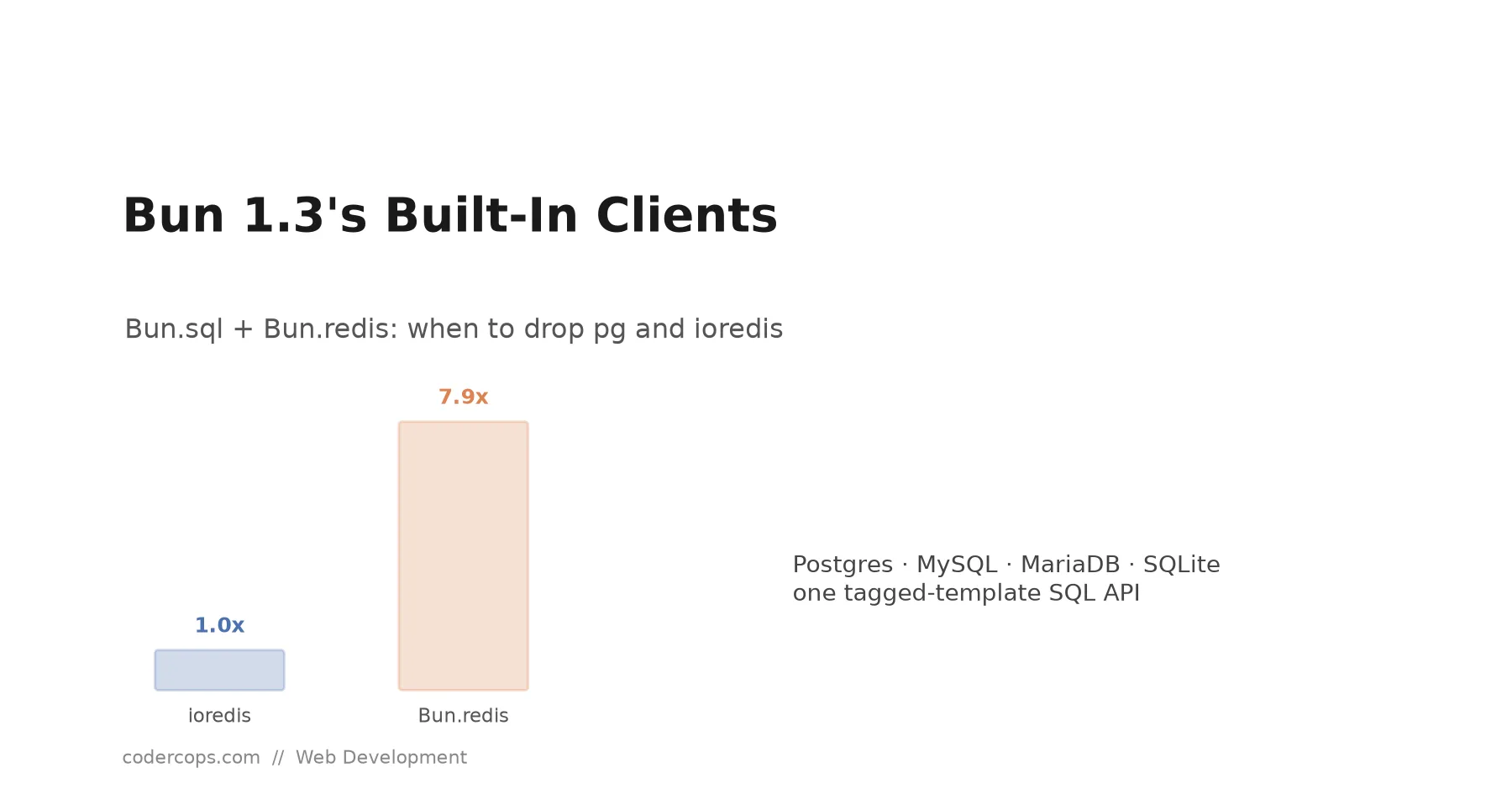
P.55Bun 1.3 ships Bun.sql for Postgres, MySQL, MariaDB, and SQLite, plus a Redis client it claims is 7.9x faster than ioredis. When switching is worth it.
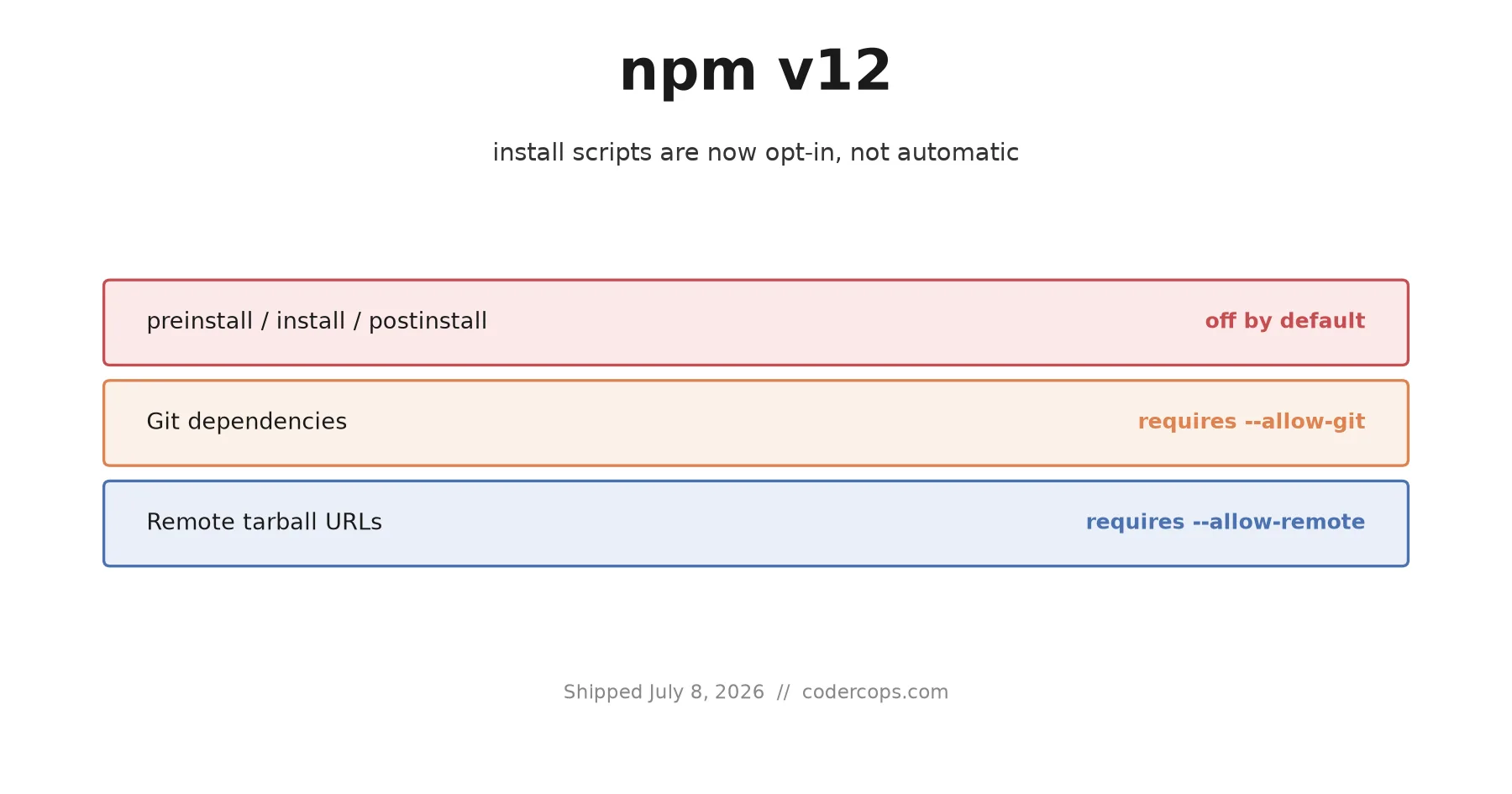
P.56npm v12 blocks preinstall, install, and postinstall scripts, Git dependencies, and remote tarballs unless allowed. What breaks, and how to migrate.
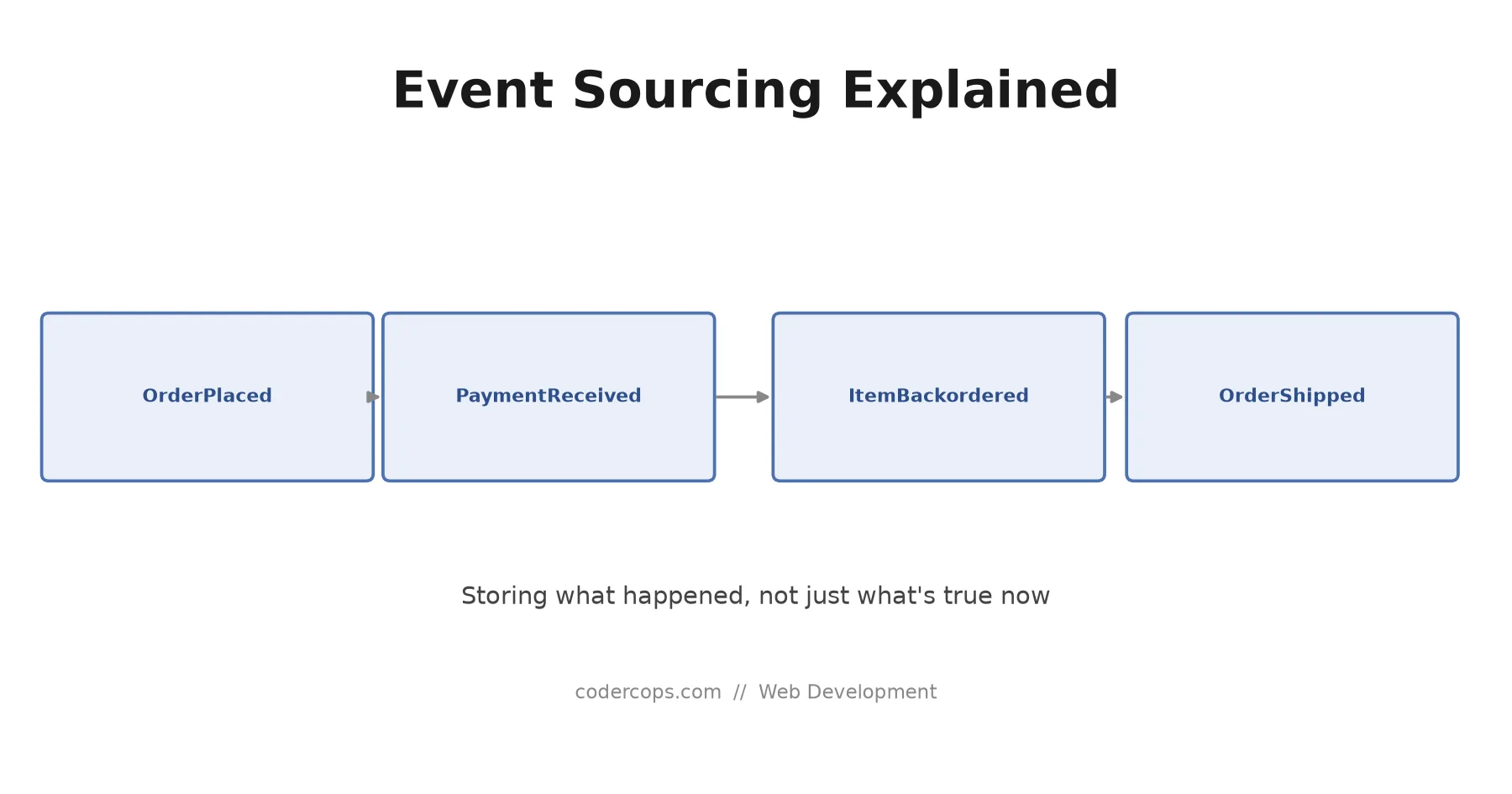
P.57Event sourcing stores every change as an immutable event and replays them for current state. What that buys, and the operational cost most systems skip.
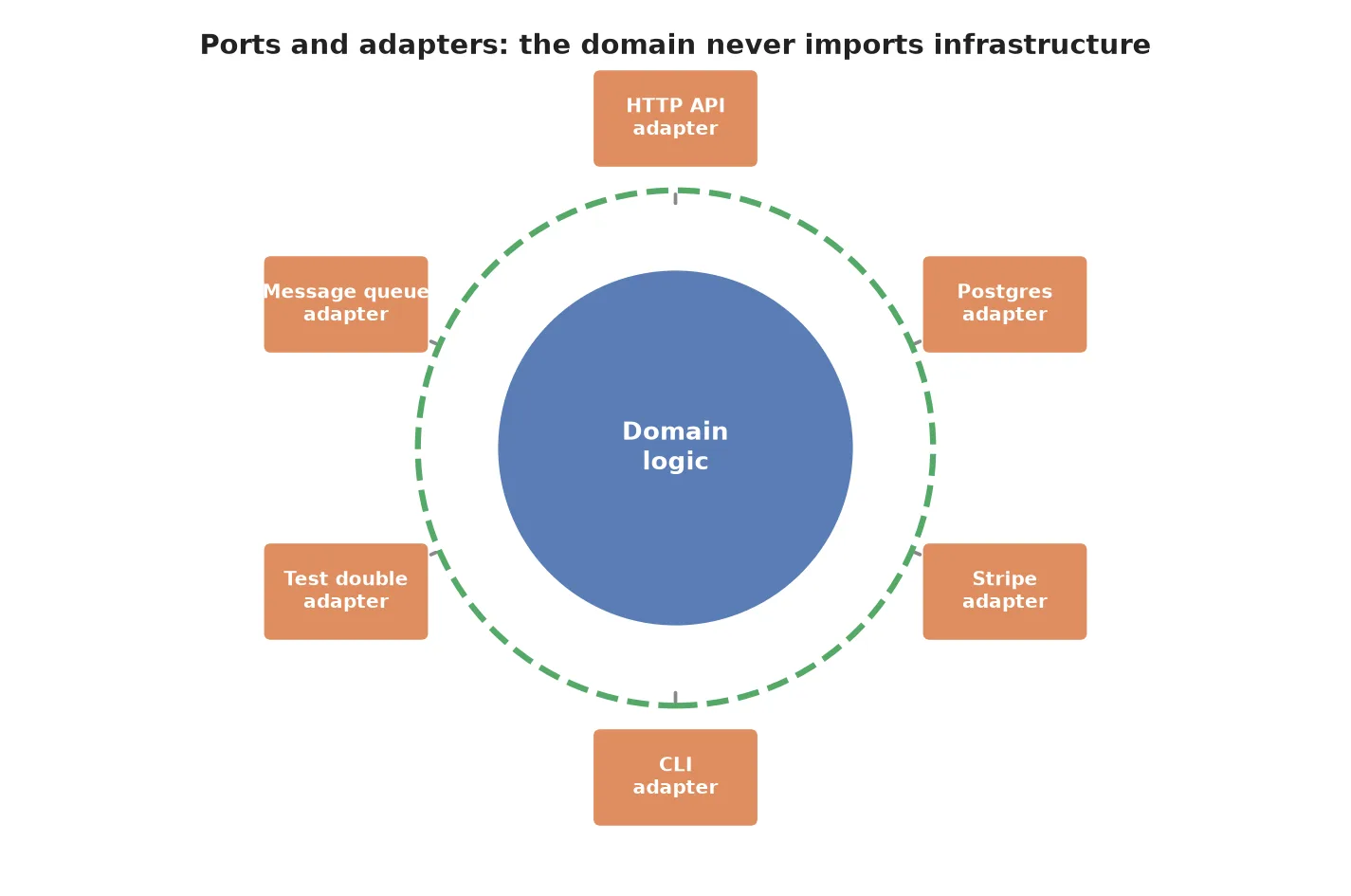
P.58Hexagonal architecture stops business logic importing your database driver or payment SDK. How it works, a working example, and when you don't need it.
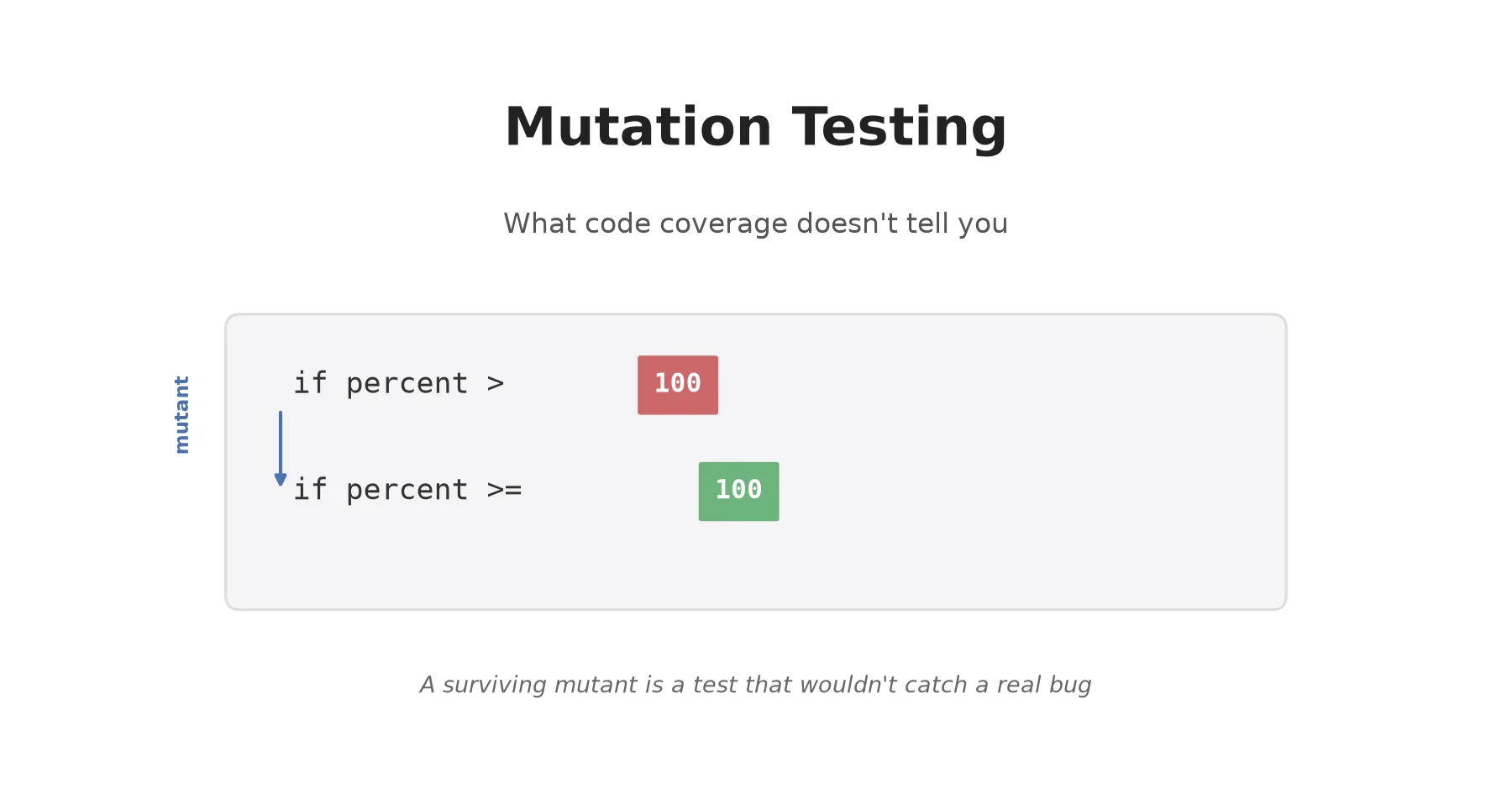
P.59Full coverage means every line ran, not that your tests would notice it breaking. How mutation testing answers that, with Stryker and mutmut.
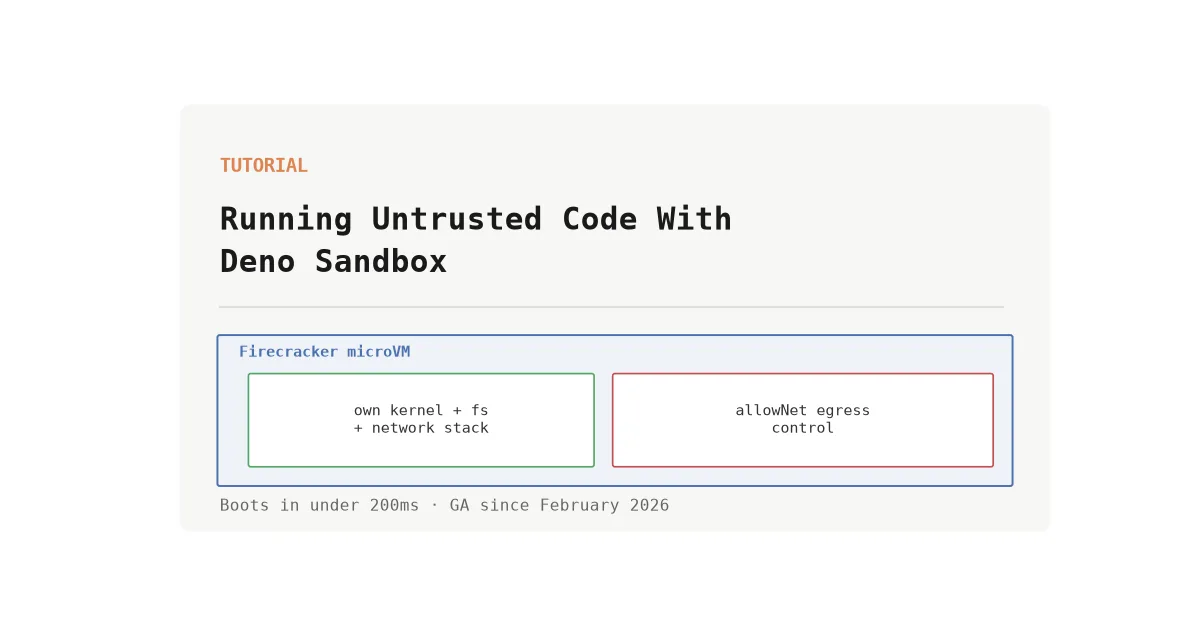
P.60Deno Sandbox spins up isolated Firecracker microVMs in under 200ms for running code you don't trust, AI-agent output included. Here's how it works and a working example.
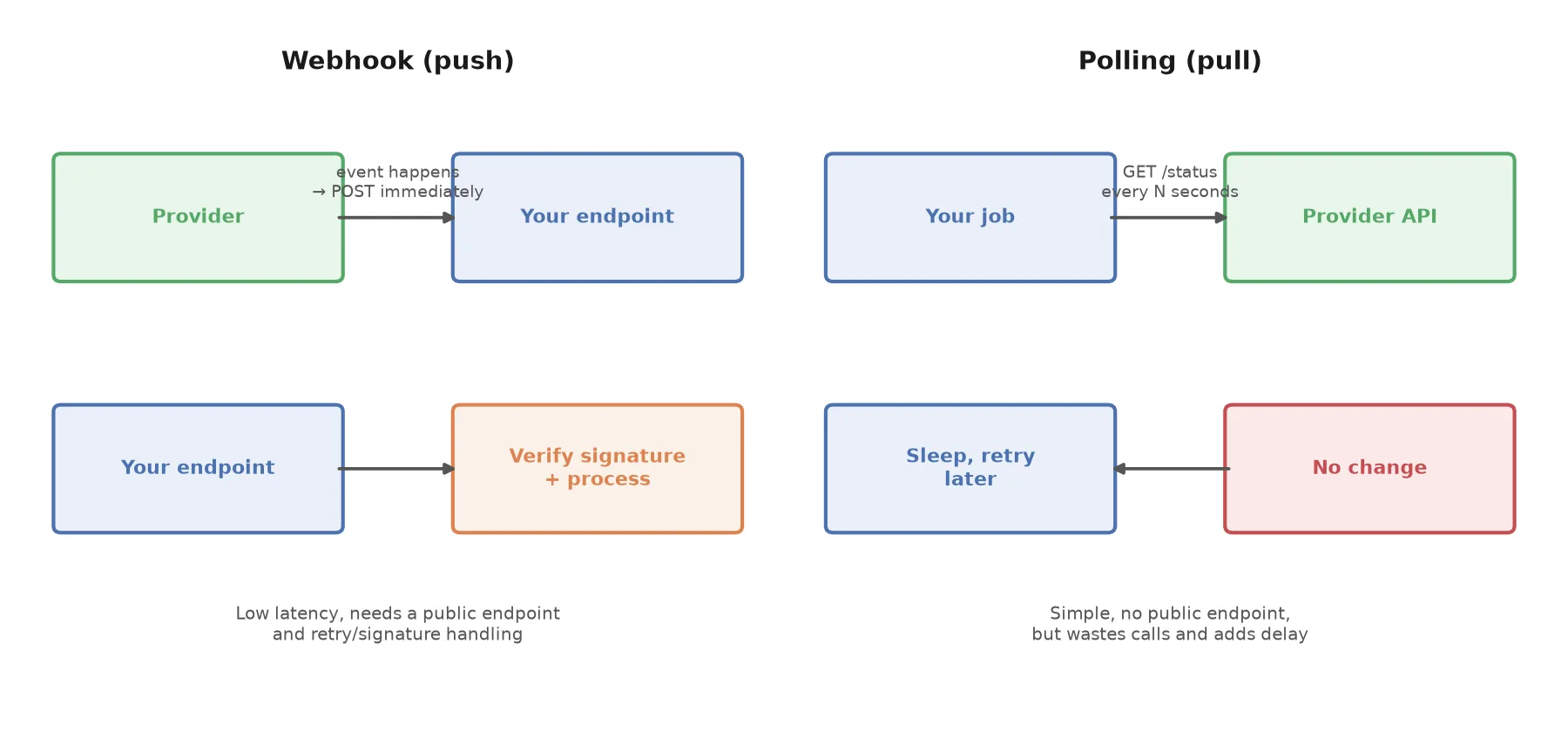
P.61Webhooks push the moment something happens; polling asks repeatedly. How to decide, with code for both, and the hybrid most production systems land on.
P.62All three move messages between services, but answer different questions about delivery, replay, and who reads what. The decision, and the failure modes.
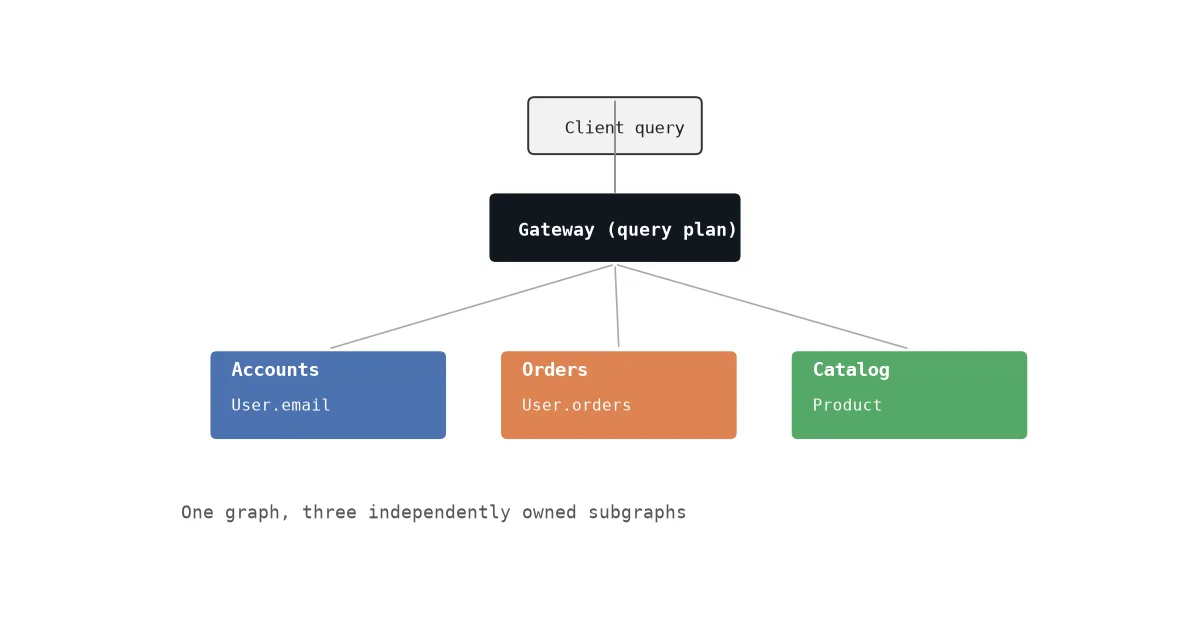
P.63A single GraphQL schema works until several teams own different parts of the data. What federation solves, how Apollo composes subgraphs, and the cost.
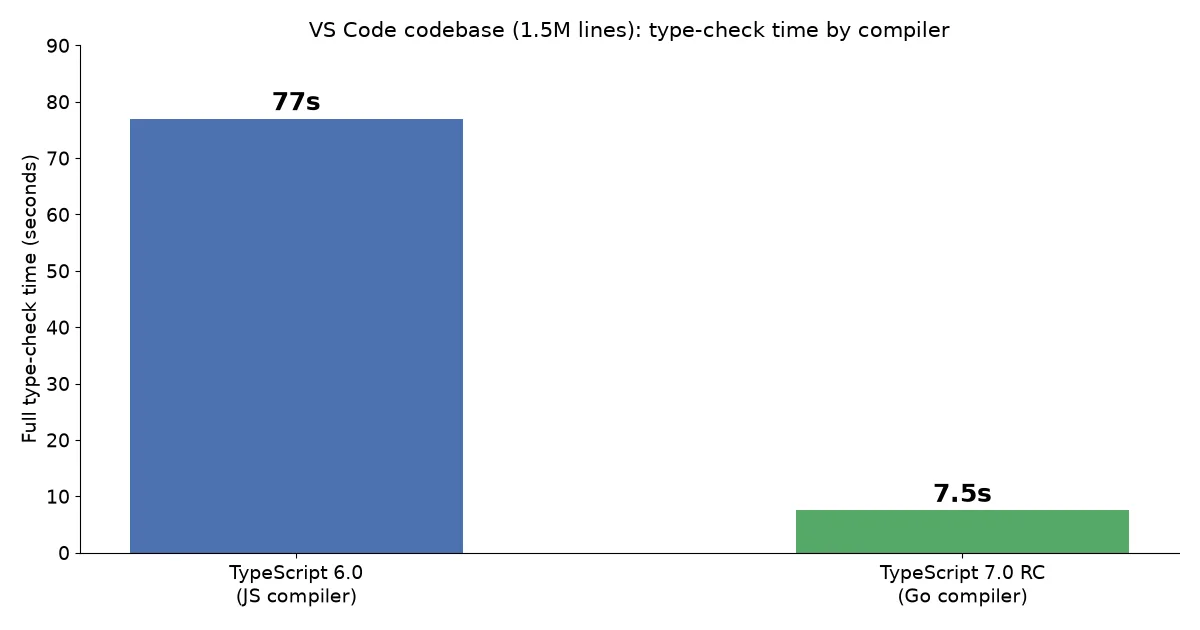
P.64TypeScript 7.0's release candidate landed June 18, 2026 with GA about a month out. What's new since beta, real VS Code benchmarks, and a migration checklist.
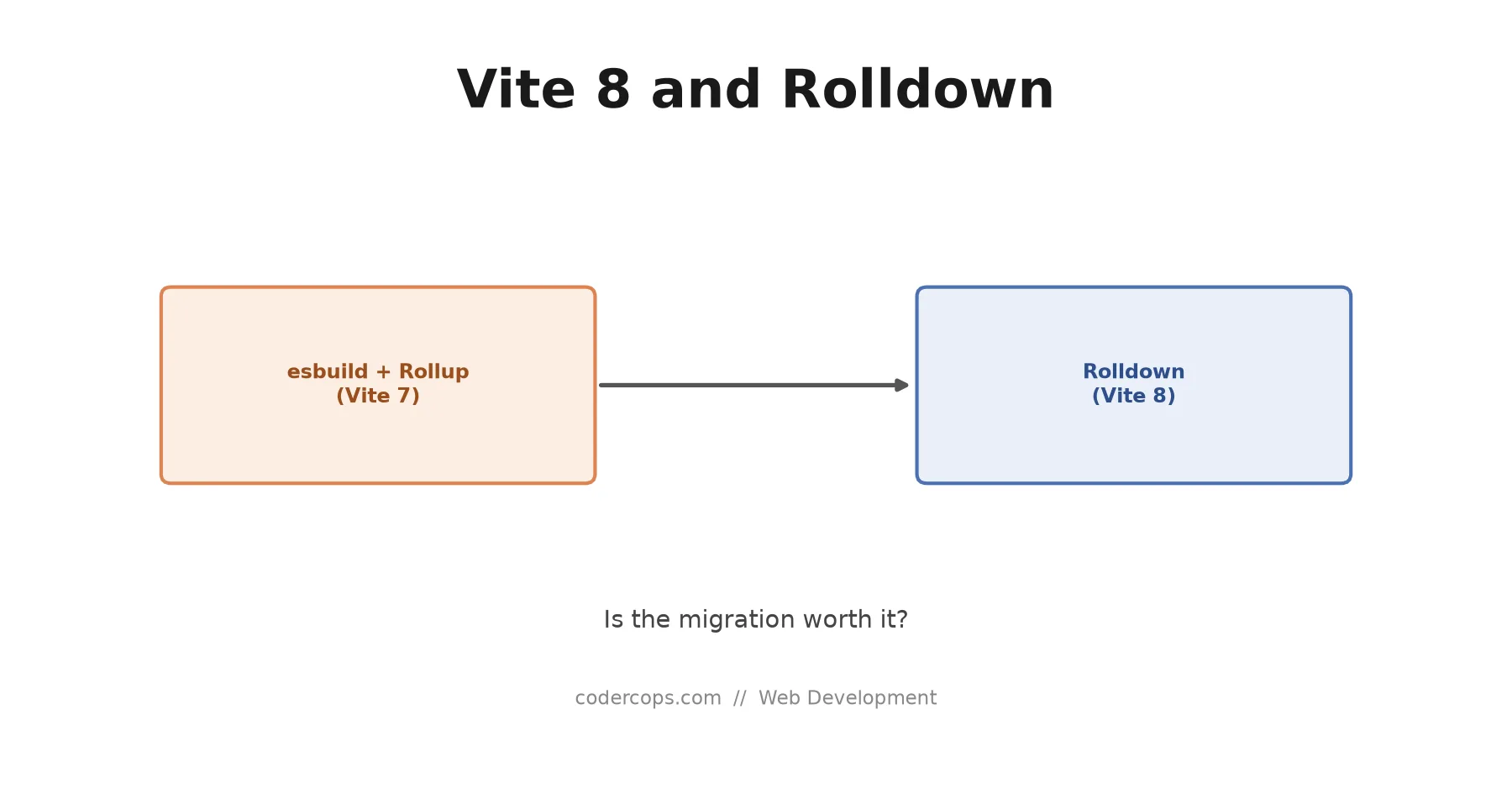
P.65Vite 8 replaced its dual esbuild and Rollup setup with Rolldown, a Rust bundler, by default. What changed, the real build times, and whether migrating pays.
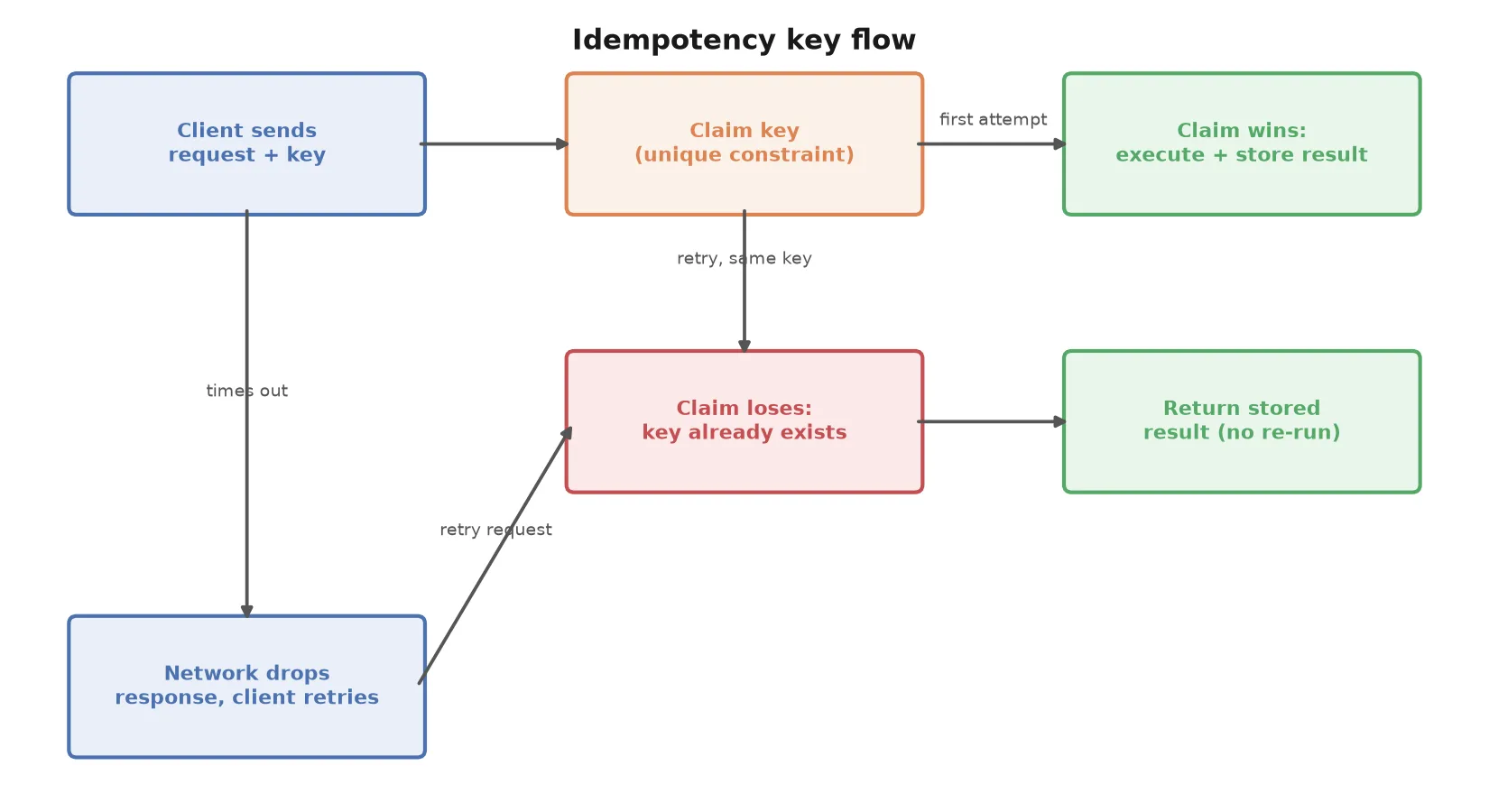
P.66Idempotency keys let a client retry a request that may have already succeeded, without double-charging a card. The pattern, in Postgres and in Redis.
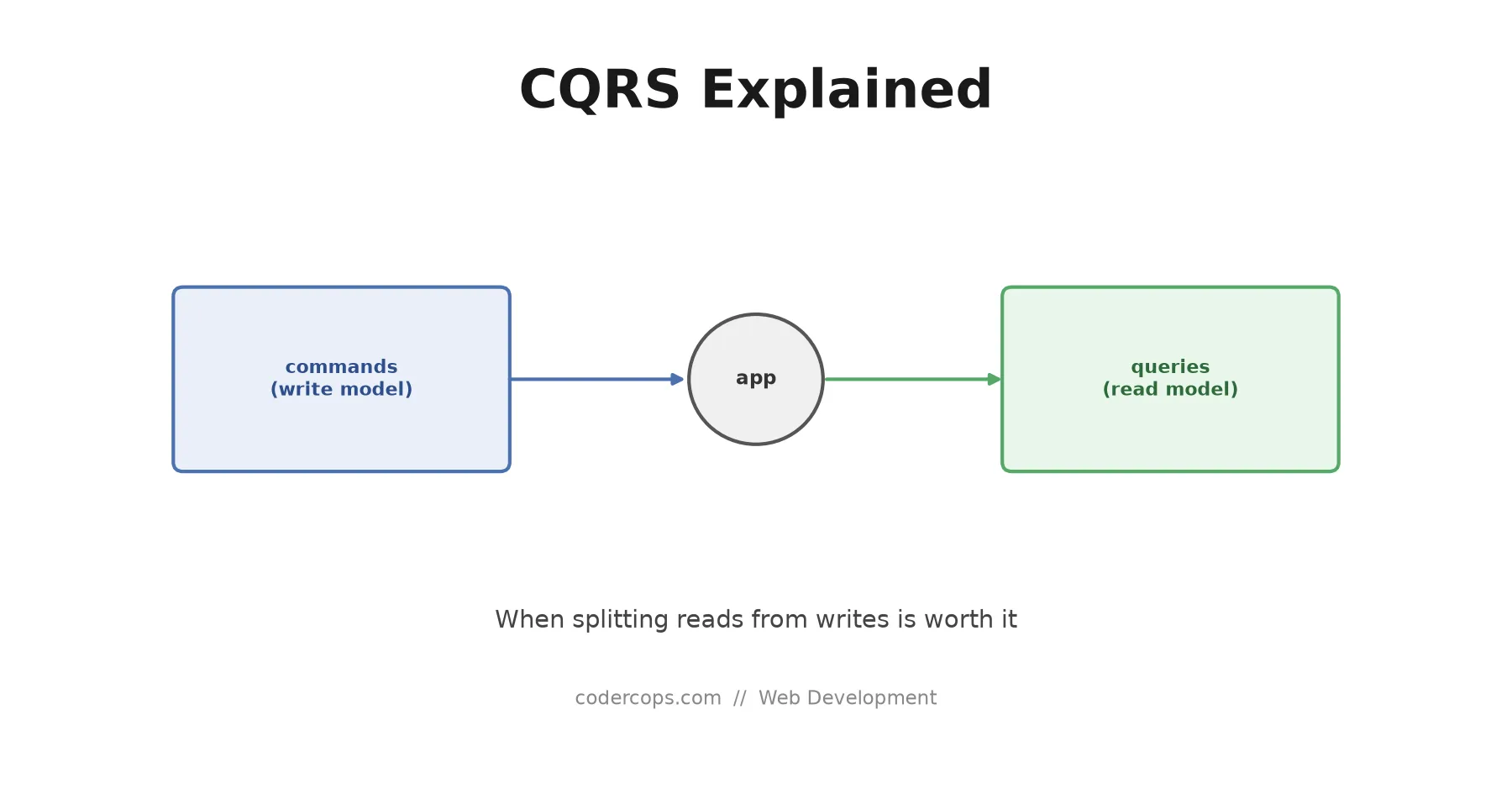
P.67CQRS separates the path that changes data from the path that reads it. It solves real problems and is heavily over-applied. When it earns its complexity.
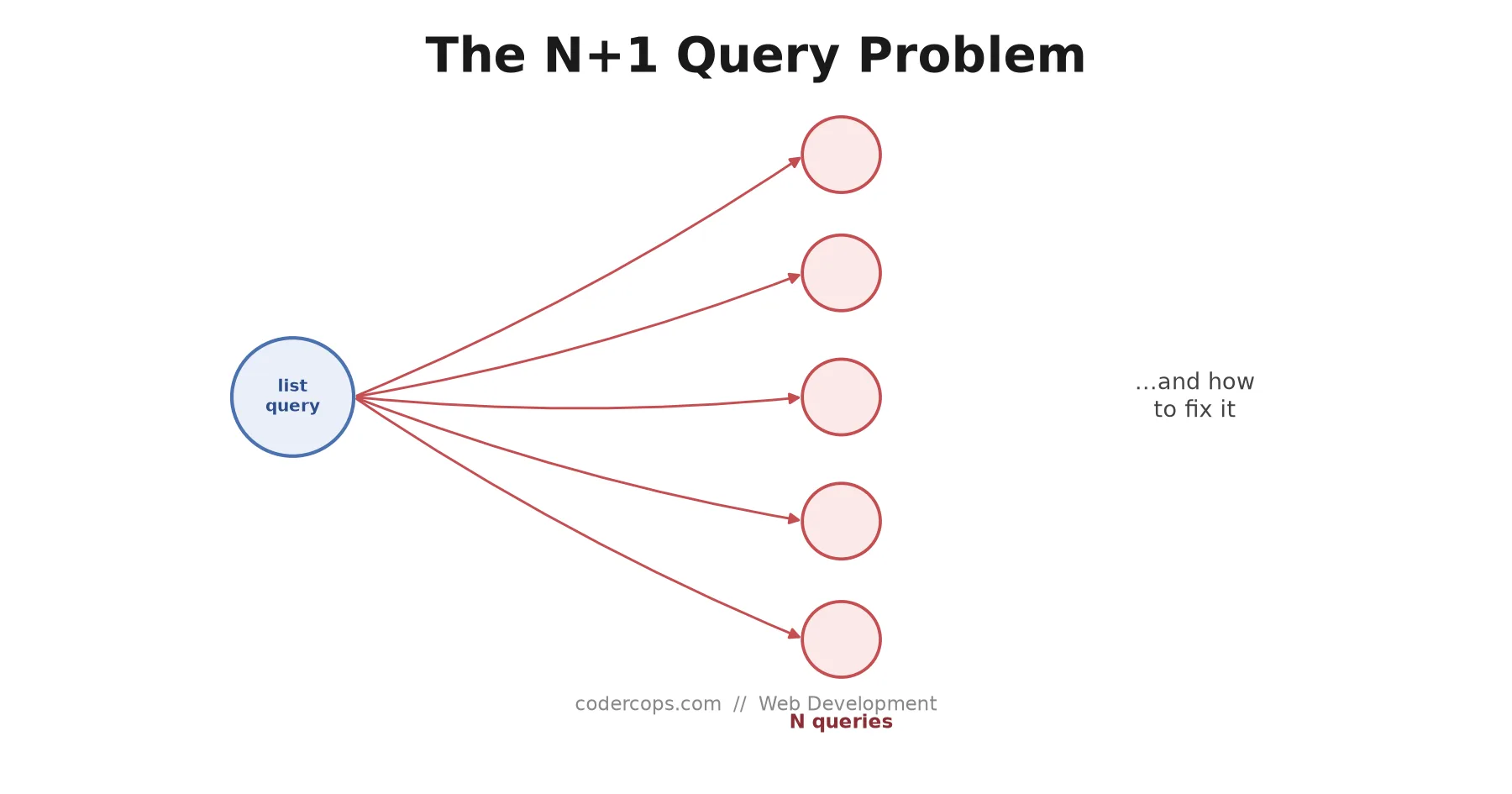
P.68An N+1 bug turns one page load into hundreds of round trips. What causes it, how to spot it in Django, Rails, and Prisma, and the eager-loading fixes.
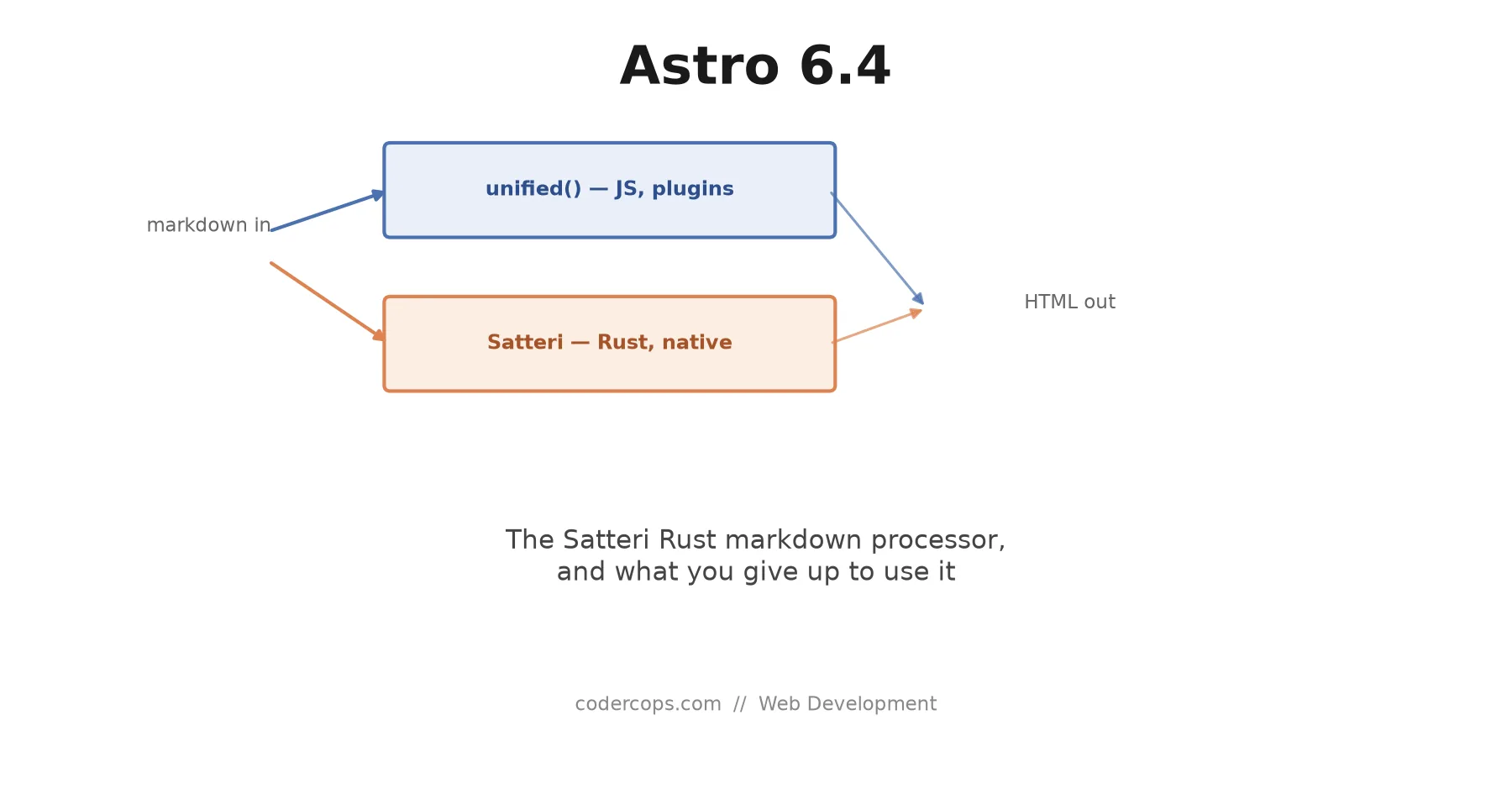
P.69Astro 6.4 ships a pluggable markdown pipeline and Sätteri, a Rust processor that speeds up content-heavy builds. It can't run your remark plugins yet.
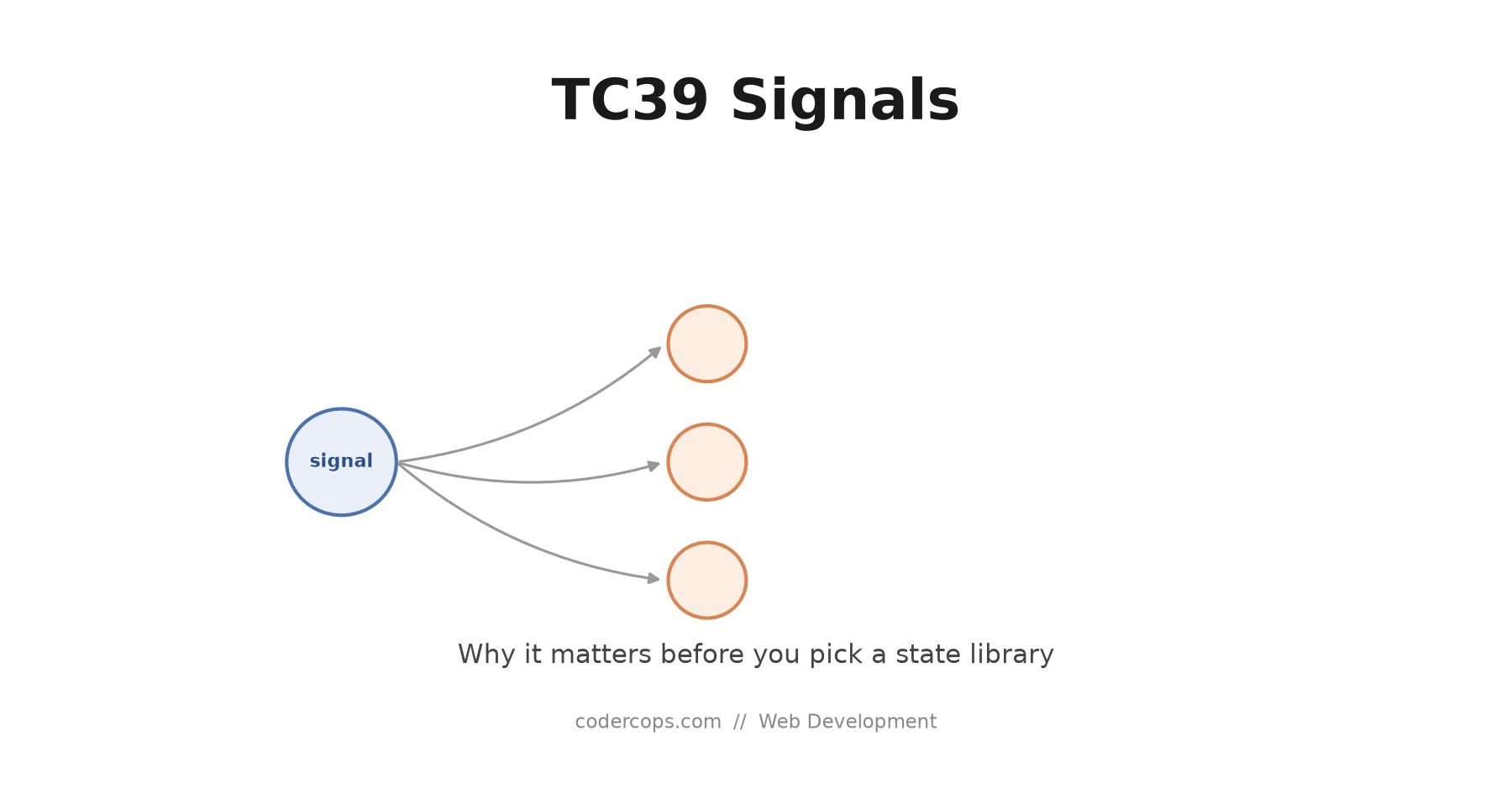
P.70TC39 is standardizing signals, the reactive pattern already inside Vue, Solid, Angular, and Preact. Years from browsers, but it changes what to build on.
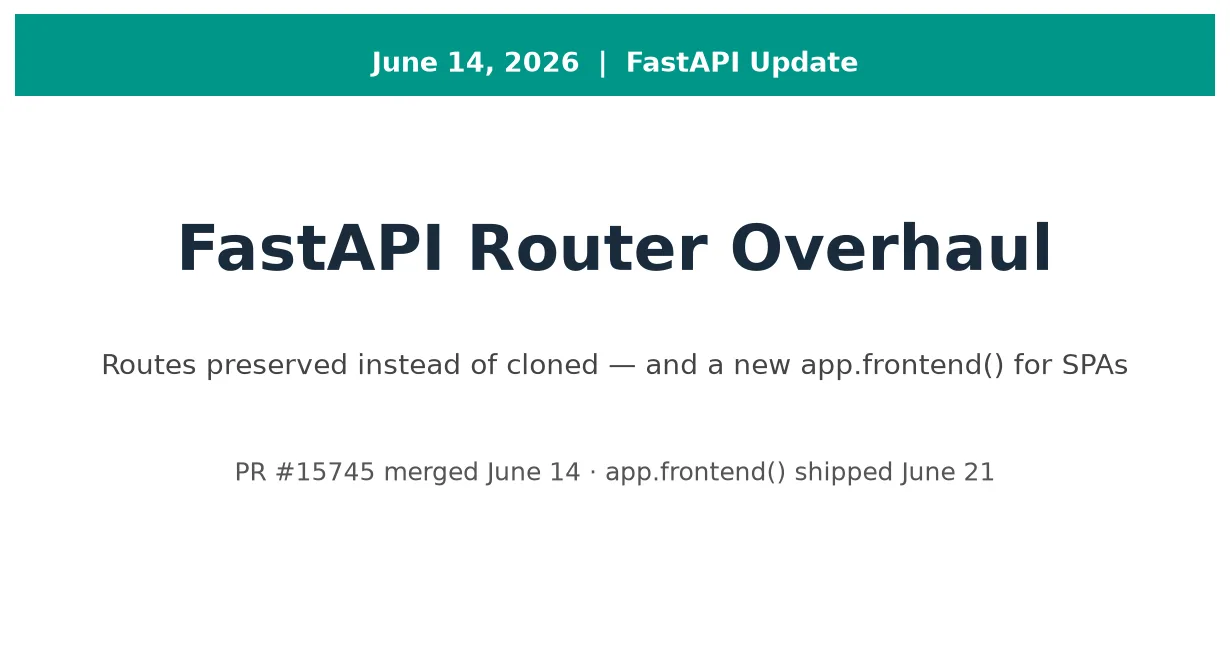
P.71FastAPI's June 2026 refactor preserves routes instead of cloning them, makes dynamic registration work, and adds app.frontend() for serving SPAs.

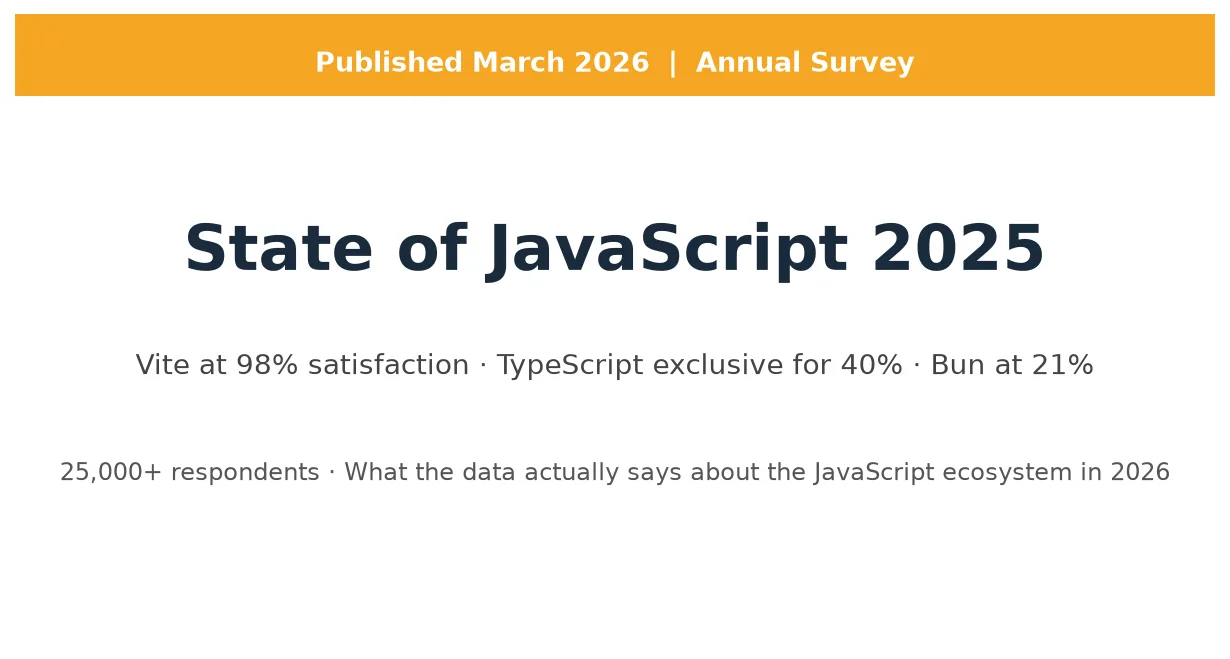
P.7225,000+ responses, and the picture is consolidation, not churn. Vite at 98% satisfaction, TypeScript exclusive for 40%, React dominant but contested.
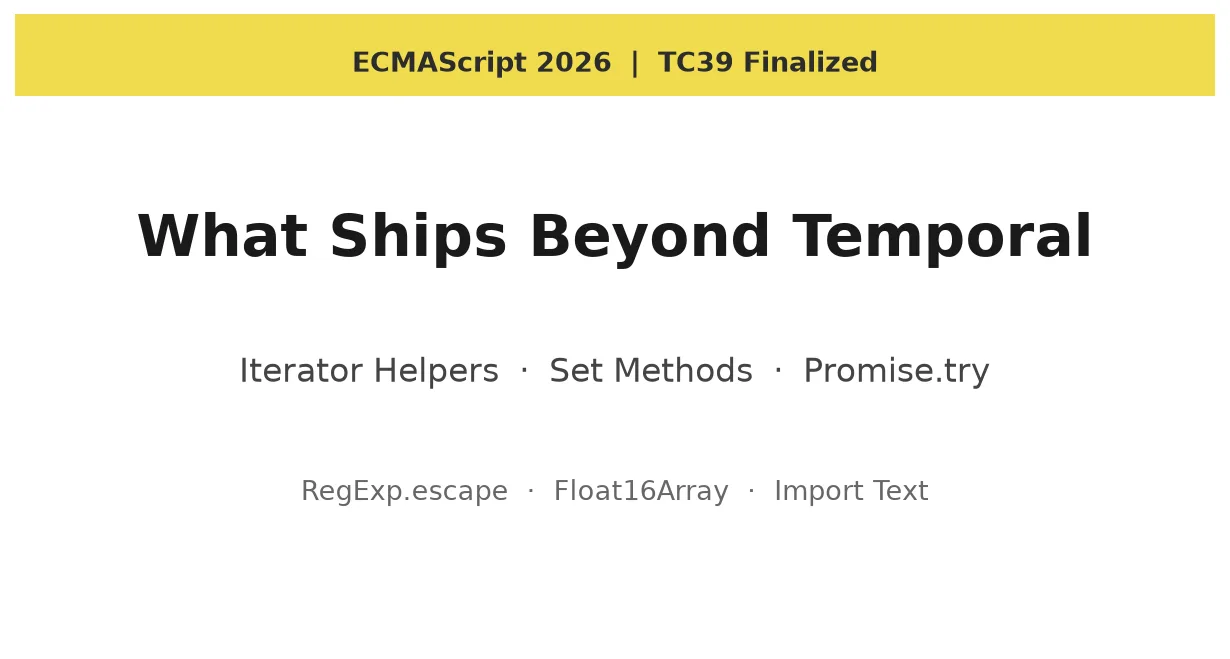
P.73TC39 finalised eight proposals for ES2026. Temporal gets the headlines, but Iterator Helpers, Set methods, Promise.try, and RegExp.escape matter too.
P.74Node.js patched 12 CVEs across v22, v24, and v26 on June 18. Two are auth bypasses, and undici's queue poisoning can hand back the wrong response.
P.75Deno 2.9 ships deno desktop, turning any web project into a native app with no Electron boilerplate. What it's for, and when to stay on Tauri instead.
P.76Next.js 16.3 preview added Instant Navigations, giving server-rendered apps the snappy feel of a client-side SPA. What changed, and when to use it.
All three frameworks matured and all three make different tradeoffs. The four questions we use with clients, and why there's no universally right answer.
P.78TanStack Start hit 1.x stable and is closing on Next.js in downloads. An honest comparison: what each is good at, where each falls short, how to decide.
Phoenix LiveView is production-ready for real-time web applications. Here is what it enables, where it fits, and why teams choosing it are not making an exotic choice.
Both tools keep your dependencies current automatically. Here is how they actually differ, where each one breaks down, and which to choose based on your team's setup.
Laravel 12 is a different framework from the one people picture when they dismiss PHP. The stack, the tooling, and when a team should actually reach for it.
Svelte 5's runes replaced magic variable tracking with explicit reactive primitives. A year into production: what changed, what improved, what surprised.
Playwright dominates scraping now, but tooling is the easy part. A practical guide to scraping that works, and the legal lines to know before you ship.
Expo Router brings file-based routing to React Native, the pattern web developers know from Next.js. Here's how it works and where the friction lives.
While the ecosystem chased Bun, Deno, and edge runtimes, Fastify stayed the production choice for high-throughput Node APIs. Why it still holds up.
Phoenix LiveView builds real-time, interactive UIs with server-side Elixir and minimal JavaScript, patching the DOM over a WebSocket connection.
Pydantic v2's Rust core made validation 5-50x faster, but the model redesign is what changes how you structure validation logic for real APIs.
Python asyncio fails in production from hidden blocking calls, CPU-bound work stalling the event loop, and cancellation bugs most tutorials skip.
SolidJS is not React with a different syntax. It compiles to real DOM operations, skips the virtual DOM entirely, and has a different mental model for reactivity. Here's what that means in practice.
Three.js makes WebGL usable. React Three Fiber makes Three.js feel like React. The fastest path to interactive 3D on the web, and how to use it.
TanStack Router brings full TypeScript inference to URL params, search params, and loader data. Here's what that looks like in practice and when it's worth adopting.
Images are the single biggest factor in Largest Contentful Paint for most sites. AVIF has widespread browser support now. Here's the optimization stack worth using and how to implement it.

XState v5 ships a rewritten API that's smaller and easier to read than v4. Here's how state machines help in production UI, and what the migration looks like.
Cursor's rules system encodes your team's architecture, naming, and coding standards into the AI's context, so every engineer gets consistent suggestions.
Alpine.js adds dropdowns, modals, tabs and form behaviour straight in your HTML, with no build step and no framework. When that's exactly right.
Deno 2 ships with full Node.js compatibility, npm support, and a revised standard library. Here's what that means for teams evaluating it as a serious Node alternative.
TypeScript 5.0 replaced experimentalDecorators with the TC39 Stage 3 proposal: different syntax, more capable, now the standard way to write decorators.
CSS @layer lets you set explicit priority between your reset, base, components, and utilities. Here's how cascade layers work in production stylesheets.
ElysiaJS gives Bun APIs fast routing, TypeBox validation, and type inference that reaches the client with no codegen step. How it works and when to pick it.
Redux is overkill for most React apps: Zustand and Jotai cover most state needs with far less boilerplate. Here is when to use each and how they actually work.
An ADR captures why a technical choice was made, not just what. One page per decision, stored in the repo. Here's the format and how to make it stick.
ESLint 9 made flat config the default and deprecated .eslintrc. Here's what changed, why it's better, and how to migrate without breaking your setup.
Git hooks enforced by Lefthook, Husky, or lint-staged can stop broken code, style violations, and type errors before they reach your CI pipeline. Here's how to build a hook setup that teams actually keep.
Choosing between react-i18next, next-intl, and Lingui comes down to your framework: next-intl for Next.js App Router, react-i18next elsewhere.
Most background job solutions require you to run and monitor a Redis instance, manage worker processes, and wire up your own retry logic. Inngest skips all of that. Here's how it works and when it's the right call.
Three real authentication options for Next.js apps, with different trade-offs on control, cost, and setup time. Here's what each one actually involves.
Rails 8 replaces Redis, Memcached, and Node with Solid Queue, Solid Cache, Solid Cable, and Kamal 2, so a single server and database can run production.
Bruno stores API collections as plain .bru text files in your git repo, no account or cloud sync needed. Here's how it compares to Postman and why teams switch.
Git worktrees give you multiple branches checked out in separate directories at once. No stashing, no context switching, no losing your place.
Three headless CMS platforms used by agencies, three different bets on where content management is going. Here's how Sanity, Payload, and Contentful actually compare when you're building for clients.
Three viable paths to cross-platform mobile in 2026. Which one makes sense depends on your team, your deadlines, and how much of the device you actually need.
Command-line tools are underrated as developer products, and TypeScript makes them maintainable. Parsing, prompts, output, errors, and distribution.
The Date object has been broken for 30 years. Temporal is its replacement, now shipping in browsers and Node.js. Here's what actually changed and how to use it.
Most slow queries come from a small set of fixable problems: missing indexes, N+1 patterns, and over-fetching. This is the practical diagnostic and fix guide.
Storybook 8 is faster and easier to configure than it was. More useful is the workflow shift: building in isolation makes components genuinely decoupled.
NestJS is Express with structure imposed: modules, dependency injection, decorators. When that pays for its learning curve, and when it does not.
AI tools write code fast. TDD asks you to slow down and write tests first. These two impulses seem to be in tension. Here's how they actually work together.
WebGPU is now in Chrome, Firefox, and Safari: a general-purpose GPU compute layer, not just graphics, for ML inference, image processing, and simulation.
Structured commit messages unlock automatic changelogs, version bumps, and release notes. The full setup, from commitlint hooks to shipping in CI.
Three different approaches to styling a web application — Tailwind, CSS Modules, and CSS-in-JS libraries — and the team contexts where each one actually makes sense.
Manifest V3 changed how Chrome extensions work. Here's what actually matters for developers building extensions today: service workers, declarativeNetRequest, and the gotchas nobody warns you about.
Local-first means your app works offline and syncs when connected. The technology (CRDTs and sync engines) is mature enough to use. The question is whether your use case actually needs it.
Three animation options dominate web development right now: CSS, Framer Motion, and GSAP. Here's how to pick the right one for your project and why the native platform is better than you might expect.
The View Transitions API and scroll-driven animations are now baseline in every major browser. Here's what they replace and working code for both.
Sanity, Contentful, Strapi and Payload compared on the criteria that decide it: who edits the content, where it's hosted, and whether schema lives in git.
Row Level Security moves data isolation into the database where it belongs. Here's how to set it up for a multi-tenant SaaS, handle common edge cases, and avoid the traps that break it.
Go has real strengths for backend API work, and some persistent limitations. Here's what teams actually gain and give up when they choose it over Node.js or Python for web APIs.
A hands-on comparison of Typesense, Meilisearch, and Algolia for production SaaS search: self-hosting, performance, pricing, and real implementation patterns.
The decisions behind fast, accessible, maintainable web apps in 2026: Core Web Vitals thresholds, where the performance wins are, and what to test.
Building SaaS billing on Stripe means handling subscription plans, the Meter API for usage-based pricing, webhook reliability, and the Customer Portal.
Zod is the standard for runtime type validation in TypeScript: one schema drives API contracts, form validation, and environment variables across your stack.
A Playwright E2E suite that scales reuses auth state across tests, follows a folder structure built for growth, and configures CI to isolate real flakiness.
Stripe's API now covers far more than checkout. This breaks down which Stripe products agencies actually need, which are overkill, and where teams get burned.
Media queries ask 'how wide is the viewport?' Container queries ask 'how wide is my parent?' That shift changes how you think about reusable components.
If your design system needs to work in React, Vue, and a legacy jQuery app simultaneously, Web Components are the only native answer. Lit makes them practical to write.
The implicit flow is dead and tutorials still teach it. How authorization code flow with PKCE works, where tokens belong, and where SPA auth goes wrong.
Google's crawler runs JavaScript, but on a delay and with different limits than a browser. Here's where JS app SEO actually breaks, and how to test for it.
PWAs got a second wind once iOS 16.4 enabled push notifications and iOS 17 improved install flow. The gap between PWA and native is now narrow enough to matter.
TypeScript leaves errors untyped by default. Effect TS fixes that with typed failures, dependency injection, and structured concurrency.
Vuex was Vue's state library for years, and Pinia replaced it as the official recommendation. How Pinia works, and where it fits in a Vue 3 app.
Hono started as a tiny router for Cloudflare Workers and became the default for edge APIs. What it does well, and why "runs everywhere" actually holds.
Interaction to Next Paint replaced First Input Delay in 2024, and most sites still haven't caught up. INP is harder to optimize because it measures every interaction, not just the first one.
Client state is easy. Server state, which lives on a backend and changes on its own, is where React apps make a mess. TanStack Query handles it cleanly.
Position one element relative to another in pure CSS. No Popper.js, no positioning logic, no recalculation on scroll. How anchor positioning works.
gRPC has been available for years but many teams default to REST without thinking through the tradeoffs. Here's how gRPC works, where it fits, and where it doesn't.
k6 is a load testing tool with JavaScript scripting and CI integration. Writing meaningful tests, reading the results, and catching regressions early.
Tauri 2.0 added iOS and Android while keeping tiny binaries, a Rust backend, and the OS webview instead of a bundled Chromium. How it works, and when.
shadcn/ui is now the default starting point for React UIs. Here's what it actually is, why copy-paste beats npm install, and how to use it without accumulating a mess.
Caching is high-leverage and consistently misunderstood. How Cache-Control and ETags actually work, why stale content happens, and how to design for it.
URL versioning, header versioning, and content negotiation compared with real code. Here's how to pick one and retire old versions without stranding clients.
Running totals, rankings, moving averages, and lag comparisons without application loops or self-joins. How window functions actually work, in Postgres.
Drizzle is the TypeScript-first alternative to Prisma: schema in TS, migrations in SQL, no query engine binary. How it works, and when to pick it.
Tailwind v4 moves configuration from JavaScript to CSS, drops the content array, and ships a faster engine. Here's what the breaking changes actually mean for a real project migration.
Biome is a Rust-based toolchain that replaces ESLint and Prettier with one fast binary for linting, formatting, and imports. Here is what migrating looks like.
OpenAPI-first API development means writing the spec before code, then generating server types, request validation, and client SDKs from it.
Not every real-time feature needs WebSockets. Server-Sent Events handle most push scenarios with far less complexity. Here's how to choose, and what each approach looks like in actual code.
Every public API needs rate limiting, but the algorithm you choose shapes the user experience and the failure modes. Here's how each approach works and when to use it.
Playwright E2E tests break because of fragile selectors, shared test state, or overly broad scope, not the tool itself. Fix those and tests survive UI changes.
HTTP/3 is in production at every major CDN and supported by all modern browsers. Whether it actually helps your application depends on factors most guides don't explain.
Video calls, live collaboration, real-time audio — features clients want more than ever. WebRTC makes them possible, but the gap between a working demo and a production deployment is wider than the documentation suggests. Here's what that gap looks like.
A small-business marketing site runs $5,000-$20,000 with a US agency, or $3,000-$8,000 with a strong in-region partner. Why quotes vary so much.
Five different things people mean by 'update' (content, dependencies, performance, design, full rebuild) and how often each should actually happen.
When proximity actually matters, when it doesn't, and how to evaluate local agencies without falling for the 'we have an office in your city' theatre.
How to choose a B2B website agency that can support long buying cycles, multiple stakeholders, and demand generation outcomes.
Yes, AI can build full-stack apps in 2026, but not production-ready ones. We tested Bolt.new, Lovable, Replit Agent, and v0 and found security gaps in each.
A practical Denver website design agency guide covering local fit, process maturity, pricing expectations, and performance-first delivery.
A practical framework for selecting an ecommerce website development agency, with checkout UX, speed, mobile conversion, and platform trade-offs.
How to choose a website development agency in the USA with clear evaluation criteria, pricing models, red flags, and ROI-focused decision checkpoints.
A practical guide to selecting a website optimization agency and building a 30/60/90-day roadmap across Core Web Vitals, UX, analytics, and conversion.
Bun hits 52K req/sec, Deno 2 achieves full npm compatibility, and Node.js remains the enterprise standard. A practical comparison with benchmarks, code examples, and migration guides.
WASI 0.3 dropped in February 2026 with native async I/O, stream types, and full socket support. Here's why this changes everything for server-side WebAssembly.
Astro 6 beta ships CSP nonce support, declarative web components, improved server islands, and Vite 7. We break down the architecture decisions and tradeoffs.
Learn how to migrate to Next.js 16 with Turbopack as the default bundler, React Compiler integration, and cache components. Step-by-step guide with code examples.
Svelte 5.49 runes and SvelteKit remote functions transform server-client communication. A practical guide with migration stories, code examples, and React comparisons.
TypeScript 6 beta rewrites the compiler in Go, delivering 10x faster builds. We analyze benchmarks, ecosystem impact, editor support, and the migration path from TS 5.8.
WASI 0.3 adds native async I/O, stream types, and full socket support to WebAssembly, finally making Wasm viable for production server workloads.
Running a tech studio from India means timezone overlap windows, payment friction, and an India-discount bias, plus real talent and cost advantages.
Async Django is production-ready in 2026, but landmines still exist. Four real projects, benchmarks, and a framework for deciding when async actually helps.
We migrated three production projects from Celery to Django's new Tasks framework. Two went smoothly. One was a disaster. Here is everything we learned.
We rebuilt a React SPA as a Django + HTMX app. 847KB of JavaScript became 48KB. Here is every pattern, rough edge, and performance win from the migration.
Most DRF vs FastAPI comparisons are written by people who only use one. We ship both in production. Here is what actually matters and when to choose each.
We built Colleatz, a food delivery platform on Next.js, FastAPI, and MongoDB, cutting menu load time to under 200ms and cart abandonment to 22%.
Micro-frontends work when 4+ teams need independent deploys and fail when performance is the priority. We cover Module Federation 2.0 and real tradeoffs.
A deep dive into how we built codercops.com with Astro 5 SSR, Supabase as a CMS, Git-based content, and Edge Functions. Architecture decisions and lessons learned.
Step-by-step tutorial to build a live-updating analytics dashboard using Supabase Realtime subscriptions, Astro SSR, and D3.js charts. Full code included.
How we built a Git-to-Supabase content pipeline with SHA-256 delta sync, Edge Functions, and GitHub Actions. Full architecture and code walkthrough.
Trunk-based, Git Flow, GitHub Flow — we have tried them all. Here is the simple Git workflow that works for teams under 10 and the mistakes to avoid.
How we built a Web3 platform for creators to register, protect, and monetize intellectual property using Ethereum smart contracts, IPFS storage, and AI-powered content tools. 12,500+ IP assets registered.
We have built production apps with all three. Here is an honest comparison of Next.js 15, Astro 5, and Remix covering performance, DX, and when to use each.
Our curated list of npm packages that make it into every CODERCOPS project. Each one battle-tested across 30+ production apps with alternatives we considered.
Server components have gone from React experiment to cross-framework standard. Here is how they work in React, Vue, Astro, and Svelte — and what changes for your apps.
CSS has changed more in the last 2 years than the previous 10. Here is what is production-ready, what to adopt now, and what you can stop using.
These 5 VS Code extensions eliminated 3 separate tools from my workflow. Each one with setup tips, settings tweaks, and why it beats the alternatives.
From concept to launch: building a 24/7 anonymous mental wellness platform with AI-powered listener matching, real-time encrypted chat, and affordable therapy access using Next.js, Django, and Azure.
Vue 3.6's Vapor Mode compiles templates straight to DOM operations, skipping the virtual DOM entirely. We break down the benchmarks and the real tradeoffs.
Angular 21 ships signals-based reactivity and zoneless change detection by default. Here's what changed, the real benchmarks, and who should care.
The low-code market will hit $264B by 2032, but that does not mean every app should be built on Bubble or Retool. Here is a framework for knowing when low-code saves you money and when it costs you everything.
Data centers consume 2-3% of global electricity and that number is climbing fast. Green software engineering is no longer a nice-to-have -- it is becoming a regulatory and commercial requirement.
The European Commission's Digital Omnibus proposal rewrites key GDPR provisions for the first time in eight years. We break down every change that matters for development teams shipping products in the EU.
Anders Hejlsberg announced the Go-based TypeScript compiler in March 2025. With TypeScript 7.0 on track for mid-2026, early benchmarks show 10x faster type-checking. We unpack what this means for your projects.
Vite started as a dev server experiment by Evan You. In 2026, it is the default build tool for nearly every major framework. We trace how it won, what the modern JS toolchain looks like, and where Webpack fits now.
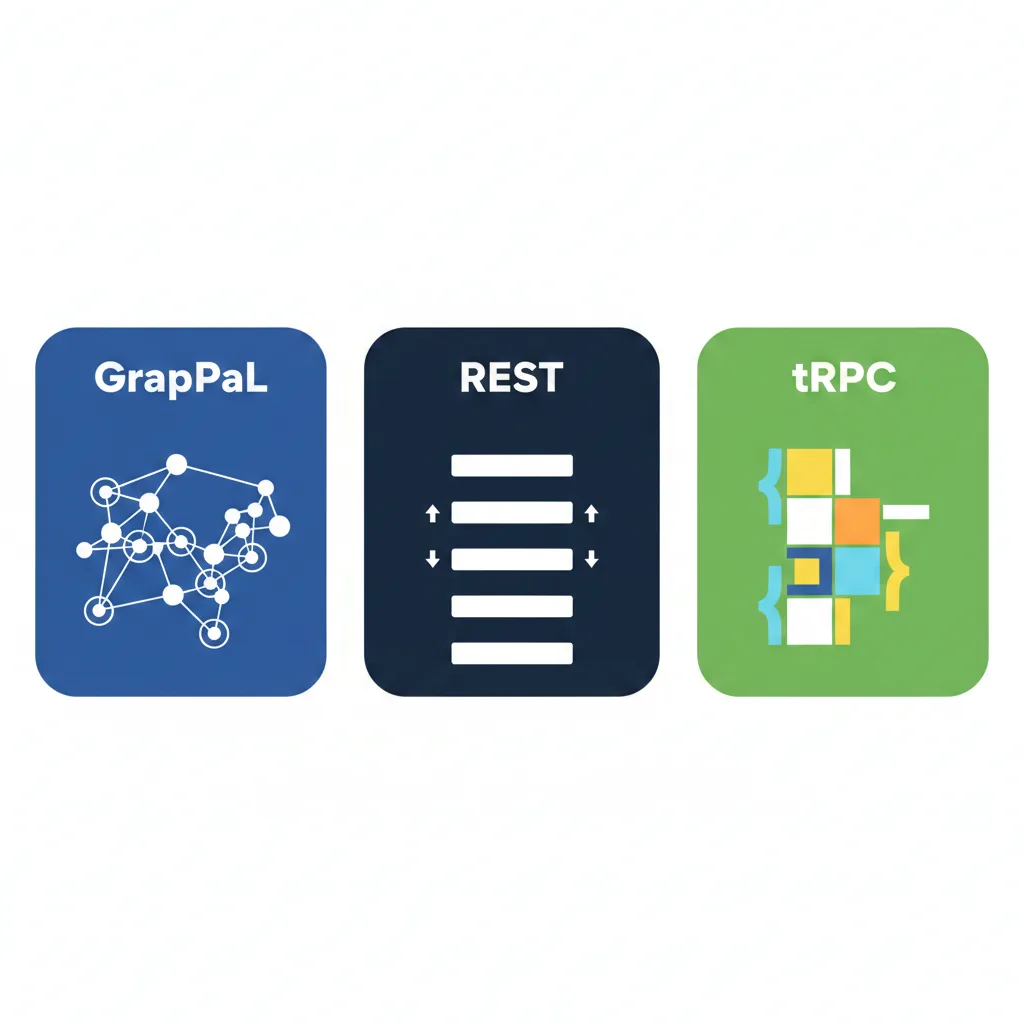
P.202The GraphQL vs REST debate is over: they solve different problems. Here's how to choose between REST, GraphQL, tRPC, and gRPC for your use case.
Cloudflare acquired The Astro Technology Company on Jan 16, 2026, keeping Astro free, open-source, and MIT-licensed. Here's what it means for developers.
P.204The database landscape is consolidating around Postgres while SQLite finds new life at the edge. Meanwhile, vector databases have become essential infrastructure for AI applications.
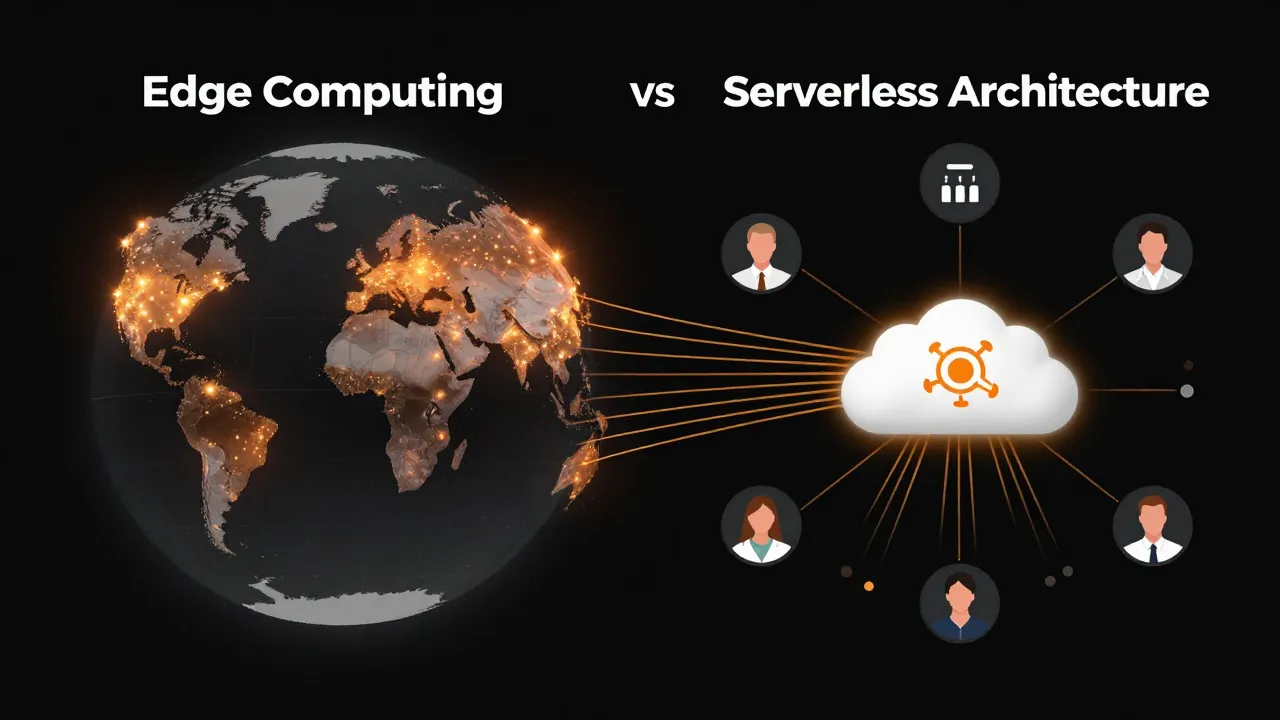
P.205Cloudflare Workers, Vercel Edge, and Deno Deploy compete with AWS Lambda. Here's how to choose the right compute model for your workload.
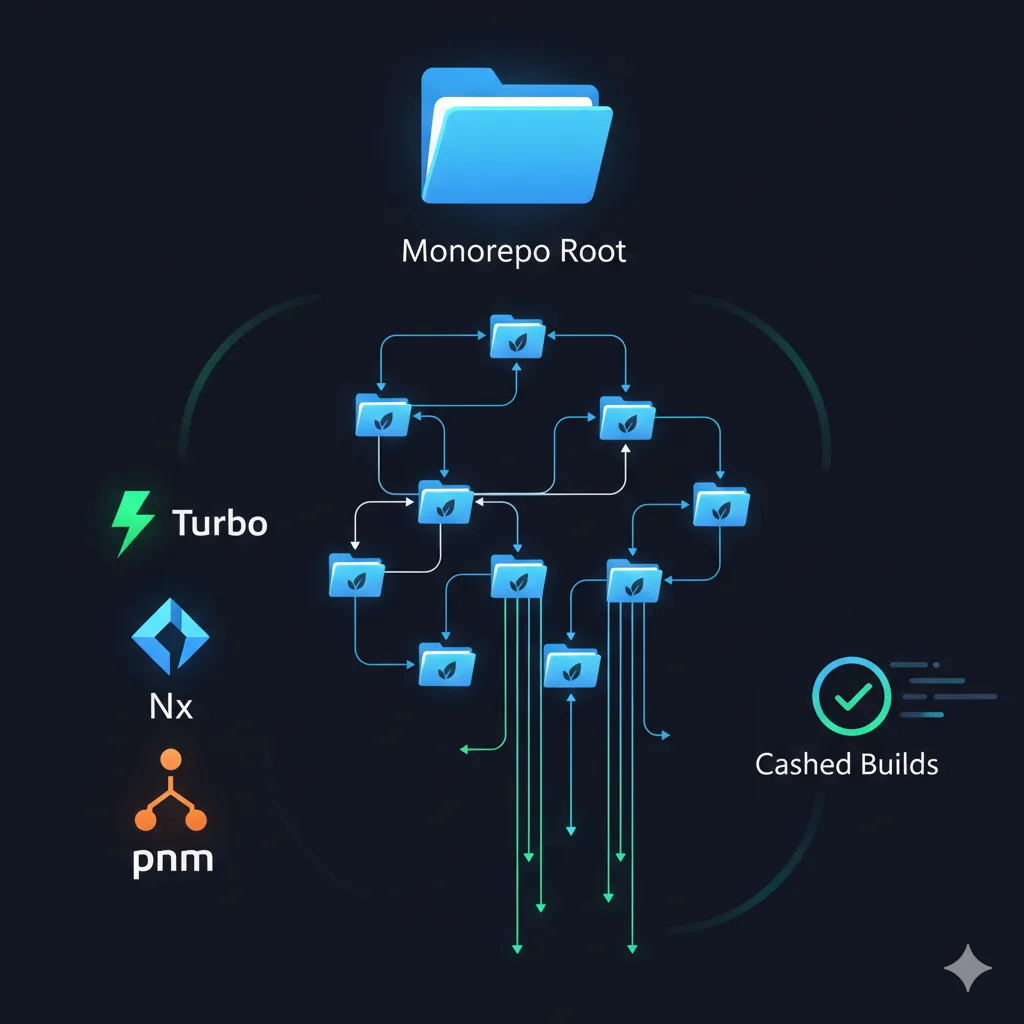
P.206Monorepos are mainstream, but choosing between Turborepo, Nx, and pnpm workspaces is confusing. Here's a practical guide to picking the right tool for your team.
Remix 3 drops React for a Preact fork and web-standards-first architecture. Here's why this matters, what it means for React developers, and whether the post-React era is truly upon us.
P.208Every codebase carries technical debt; the difference is whether you manage it intentionally. Here is how to identify, prioritize, and pay it down.
P.209WebAssembly is no longer just a browser technology. Server-side WASM, the component model, and WASI are reshaping how software gets built and deployed.
Astro 6 Beta adds first-class Cloudflare Workers support, a redesigned dev server, stable live collections, and CSP. Here is how to migrate from Astro 5.
jQuery 4.0 shipped January 17, 2026, its first major version in a decade, and it still runs 77% of JS-powered websites. Here's what's new and who should upgrade.
Vercel raised $300M at a $9.3B valuation to scale its AI Cloud platform and V0 development agent. We analyze what the funding means, how V0 is reshaping development workflows, and the competitive landscape.
Most agencies disappear after deployment. Here is our exact 90-day post-launch process — from day-one monitoring to month-three handoff — with the checklists, tools, and escalation paths we use for every project.
An honest 2026 comparison of top web development agencies: specialties, tech stacks, pricing, and ideal client fit, so you can pick the right partner.
Choosing a web development agency comes down to portfolio fit, technical depth, process, and references, not price. Covers red flags and key questions to ask.
How we split our agency website into two repos — one for code, one for content — and why this architecture scales better than a monolith. With our exact Git submodule setup, GitHub Actions validation, and content workflow.
Choosing a modern web app stack means weighing Next.js vs Astro vs Remix, SQL vs NoSQL, and Vercel vs AWS against your project's actual priorities, not trends.
A CVSS 10.0 pre-auth RCE in React Server Components was exploited within two days of disclosure. Here's the patch guidance and what changed.
From $800 landing pages to $500K enterprise platforms — here's the real breakdown of web development costs in 2026, with pricing by project type, region, and technology stack.
30% of companies mandate 5-day RTO, 87% of candidates want remote, and office occupancy sits near 50%. What the data says against the headlines.
Before we write a single line of code, we run a structured discovery call. Here are the exact 7 questions we ask, why each one matters, and how the answers shape every project decision that follows.
India has 50,000+ IT service providers. Most are mediocre. Here's an honest insider's guide to identifying the great ones — from portfolio evaluation to contract negotiation, with specific warning signs.
India's digital public infrastructure is the most ambitious in the world — UPI, Aadhaar, DigiLocker, ONDC. Here's where the next wave of GovTech opportunities lies for agencies and startups.
We build client work in Next.js daily and chose Astro 5 for our own site. The bundle numbers, the build times, and where Next.js is still the right call.
Real pricing data for MVP development across 6 regions, with hourly rates, project costs, and quality comparisons. Plus a framework for choosing the right geography for your startup.
A detailed breakdown of what goes into a conversion-optimized landing page at different price points — from $800 starter pages to $2,500 premium builds. With real conversion benchmarks and examples.
Astro powers our site, Vercel deploys it, Airtable runs our CRM, and Satori generates OG images. Here is every tool in our stack and why we picked each one.
Learn the 5 SOLID principles of clean code through real-world analogies, humor, and simple examples. No PhD required - just common sense and a sense of humor.
From AI-first development to meta-frameworks dominance, discover the key trends shaping web development in 2026 and how to stay ahead of the curve.
React 19 shipped Server Components, Actions, a built-in compiler, and new hooks like useOptimistic and use(). Here's what changed and how to migrate.
TypeScript 5.8 brings improved type checking, direct Node.js execution, and better JavaScript interoperability. Here's everything developers need to know.
Master Next.js App Router with this comprehensive guide covering Server Components, Partial Pre-rendering, typed routes, and the latest features in Next.js 15 and 16.
A deep dive into edge computing platforms, comparing Cloudflare Workers, Vercel Edge Functions, and Netlify Edge. Learn when to use each and how to optimize for the edge.
Microsoft, Google, and Amazon are migrating critical systems to Rust. Learn why Rust is becoming the default choice for systems programming and how to get started.
From supply chain attacks to AI-powered threats, learn the essential security practices every developer must know in 2026 to build secure applications.
A design system is a shared language between design and engineering, not a component library. How to start one, what to build first, and how to keep it alive.
Step-by-step guide to configuring a complete full-stack development environment with Python, Django backend, and React frontend.