Business · Risk Management
Deepfake CEO Fraud Is a 2026 Business Risk: The Verification Protocol That Actually Stops It
A voice clone needs three seconds of audio and can authorize a wire transfer over the phone. Here's what deepfake executive fraud actually costs companies in 2026, and the callback protocol that closes the specific gap it exploits.

Anurag Verma
5 min read
Sponsored
A wire transfer request that sounds exactly like your CFO, on a phone number that looks right, using phrasing your CFO actually uses, is not proof it came from your CFO. It’s proof someone had three seconds of audio and knew who to call. That’s the entire premise of deepfake executive fraud, and in 2026 it has moved from a novelty security-conference demo to a documented, expensive, ordinary business risk.
What it actually costs
The FBI’s 2025 Internet Crime Report logged more than 22,000 complaints involving AI-related fraud, with combined reported losses exceeding $893 million. Congressional researchers studying the same data estimate that fewer than 5% of voice clone fraud victims ever file a report, usually because the loss falls below a threshold worth the paperwork, or because nobody wants to explain internally how a phone call led to a six-figure transfer. Whatever the real total is, the reported number is a floor, not a ceiling.
The 2026 cases aren’t hypothetical. In January, a Swiss business owner in the canton of Schwyz authorized several million Swiss francs in transfers across a series of phone calls from an AI-cloned voice impersonating someone he trusted as a business partner. European regulators have started responding directly: the Bank of Italy issued a public alert this year after deepfakes circulated impersonating Governor Fabio Panetta, and similar warnings have gone out from institutions across the EU about AI-generated audio and video of named public officials.
Why the old instincts don’t work anymore
Most fraud-awareness training still teaches people to listen for tells: an odd pause, a flat affect, background noise that doesn’t match the claimed location. Those tells are disappearing. A usable voice clone can be built from as little as three seconds of source audio, and for anyone in a public-facing executive role, that’s not a hard sample to find. A single earnings call, a conference keynote clip on YouTube, a podcast appearance, a all-hands recording someone uploaded internally, any of these gives an attacker more than enough raw material.
Video hasn’t stayed safe either. In the case most people cite when this topic comes up, a finance employee at the engineering firm Arup joined a video call in early 2024 with people who appeared to be the company’s CFO and several other senior colleagues. Every one of them was a real-time deepfake. By the end of the call, the employee had authorized transfers totaling roughly $25 million. That case predates 2026, but the reason it still matters is what it proves: “I saw their face and it looked right” stopped being a valid verification method years before most companies updated their internal processes to reflect it.
The protocol that actually closes the gap
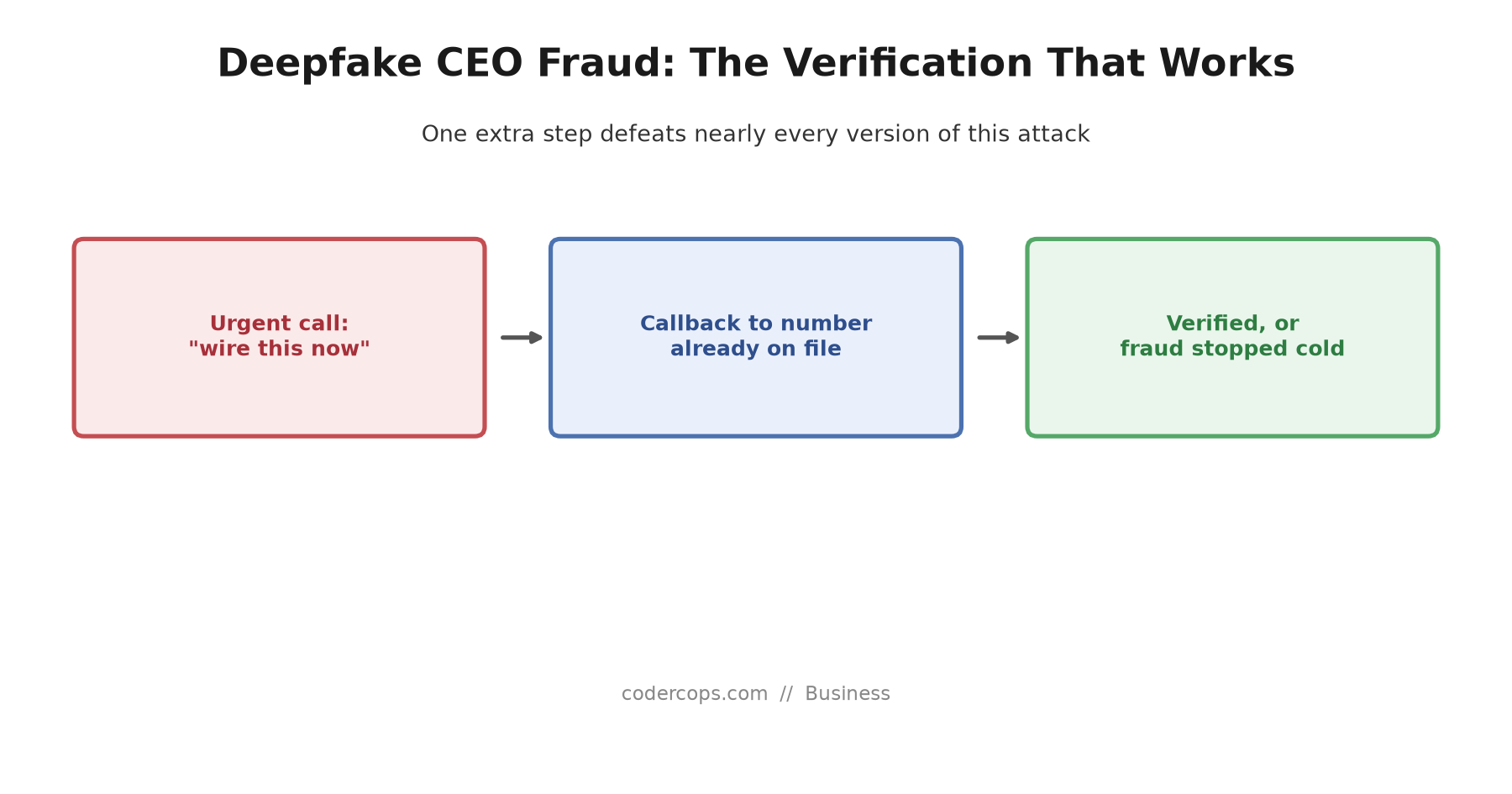
None of this requires exotic detection technology, and betting on detection tools alone is a losing race against models that keep improving. The fix that actually works is procedural, and it’s specific:
- Any request to move money, share credentials, or bypass a normal approval step gets a callback, not a reply on the same channel. Call the person back on a number your organization already had on file before this conversation started, never a number given to you during the call, in a text, or in an email signature attached to the request itself.
- Set a dollar threshold below which this rule can be waived, and enforce it without exceptions above that line. “The CEO sounded rushed and said not to bother with the callback” is precisely the scenario this rule exists to defeat. Urgency and authority are the two levers every version of this fraud pulls.
- Separate the request channel from the verification channel entirely. If the request came by phone, verify by a pre-established Slack or internal messaging thread with someone who already knows the requester, not a second phone call, and not a reply to the same email chain.
- Establish a verbal or written code phrase for high-value approvals, changed periodically, known only inside the organization. It sounds low-tech because it is, and that’s exactly why it still works against a synthetic voice or face: the attacker has no way to generate the phrase from public audio no matter how convincing the impersonation is otherwise.
- Treat “we already talked about this on a call” as insufficient sign-off for anything above the threshold. Require the callback confirmation to exist as its own step, logged separately, even when it feels redundant with a conversation that already happened.
None of this is complicated engineering. It’s the same logic behind requiring a second, out-of-band confirmation for any high-privilege action, the same reasoning that led most security-conscious teams to stop trusting a single email for password resets years ago. The technology behind the fraud got dramatically better in the last two years. The fix did not need to.
If your organization handles client funds, vendor payments, or any approval chain where a single call or video meeting can authorize a transfer, this is worth a policy review this quarter, not after an incident forces one. It sits alongside the same category of risk we cover in deepfake job candidates infiltrating hiring pipelines, a related but distinct problem: one targets who gets hired, this one targets who gets paid. Both exploit the same gap, a process built on the assumption that a voice or a face on a screen is sufficient proof of identity. If you want a second set of eyes on where that assumption is still baked into your approval chain, that’s a conversation worth having with us directly.
Frequently asked questions
- How much audio does it actually take to clone someone's voice convincingly?
- As little as three seconds, according to voice-cloning security researchers, though most real-world attacks use longer samples pulled from earnings calls, conference talks, podcast interviews, or social media video, all of which are trivial to find for anyone in a public-facing executive role. The bar for a usable clone has dropped every year; it is no longer meaningfully higher than the bar for finding a few seconds of someone talking on the internet.
- Is this actually happening, or is it mostly a hypothetical risk?
- It's happening at scale. The FBI's 2025 Internet Crime Report recorded more than 22,000 complaints involving AI-related fraud with combined losses over $893 million, and that's widely considered an undercount since researchers estimate fewer than 5% of voice clone fraud victims file a report at all, often out of embarrassment or because the loss falls under a threshold companies don't publicly disclose. Documented 2026 cases include a Swiss business owner who authorized several million francs in transfers after calls from a cloned voice impersonating a trusted partner, and European regulators, including the Bank of Italy, issuing public alerts about deepfakes of named officials.
- What's the one change that actually stops this?
- A callback to a number you already had on file before the call started, not a number given to you during the call or in the message asking for the transfer. This single step defeats the overwhelming majority of voice and video impersonation fraud, because it forces the attacker to also compromise the real phone line or device, a much harder problem than cloning a voice. It has to be a policy applied without exception above a defined dollar threshold, not a judgment call left to whoever answers the phone that day.
- Can I trust a video call now that deepfake video is realistic too?
- Not as your only verification for a high-value request. The most cited 2024 case, engineering firm Arup, involved a finance employee who joined a video call where every other participant, including someone appearing to be the CFO, was a real-time deepfake; the company authorized roughly $25 million in transfers as a result. Seeing a face on a call used to be a strong signal. It no longer is, and any approval process still treating video presence as sufficient verification is relying on an assumption that stopped being safe.
Sources
Sponsored
More from this category
More from Business
 R.01
R.01 How to Hire a Game Developer in 2026: Unity, Unreal, and the Screen That Actually Works
 R.02
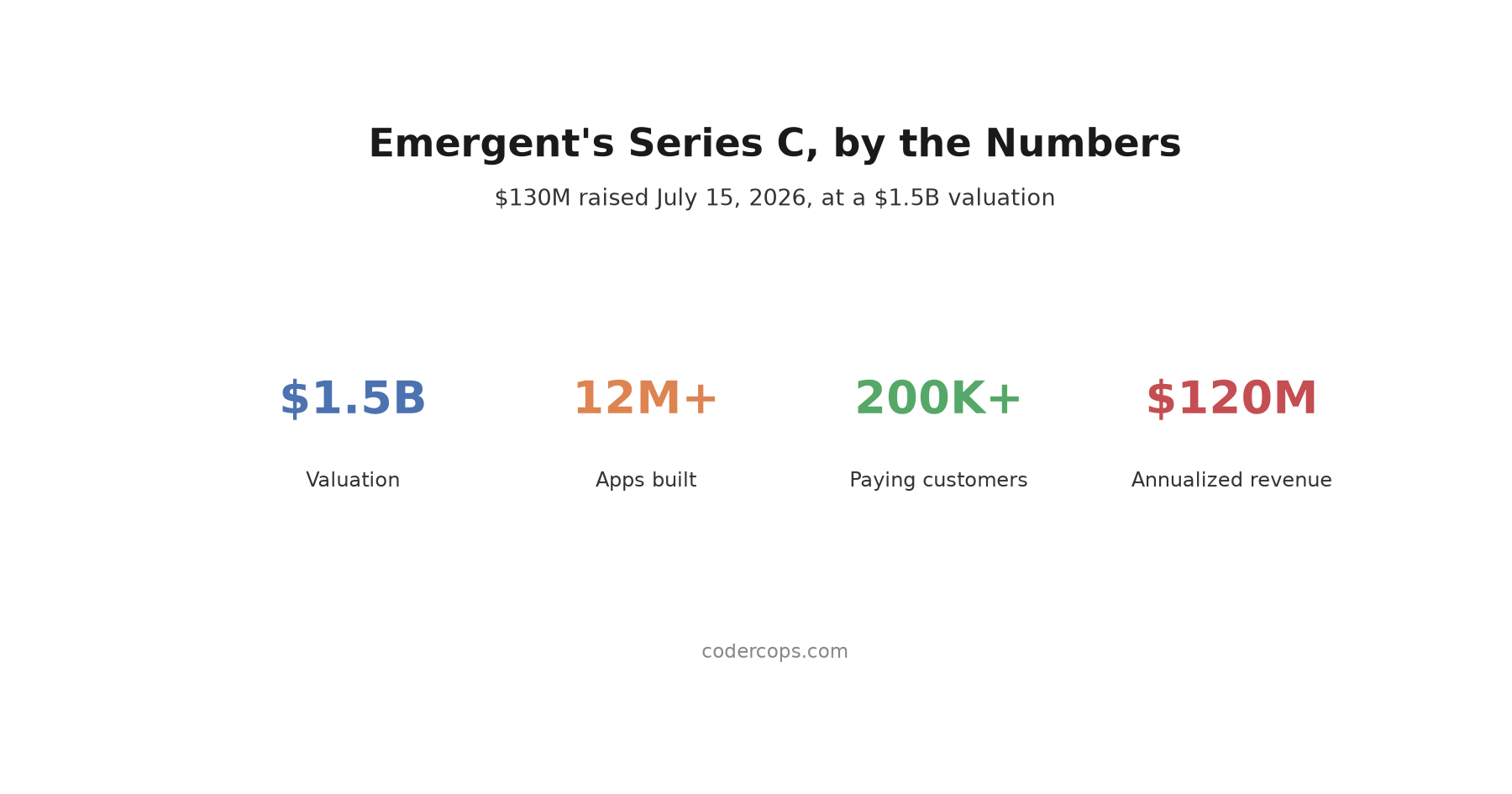
R.02 Emergent Hit a $1.5B Valuation Building Apps From Prompts. What That Means for Agencies
 R.03
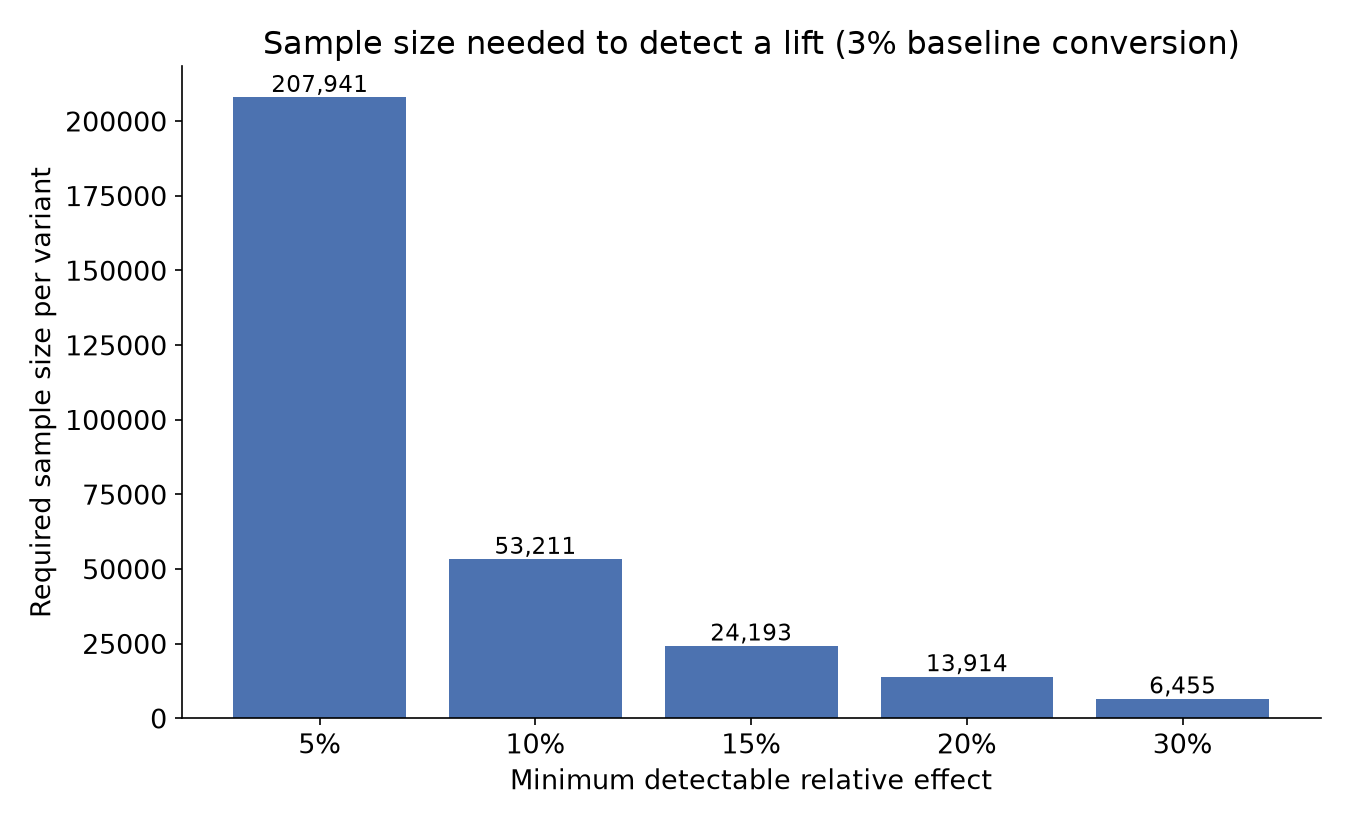
R.03 A/B Testing Statistical Significance: How Long to Actually Run a Test
Sponsored
Discussion
Join the conversation.
Comments are powered by GitHub Discussions. Sign in with your GitHub account to leave a comment.
Sponsored