Cybersecurity · Compliance
The EU Cyber Resilience Act's September 11 Deadline: What Software Teams Need Ready
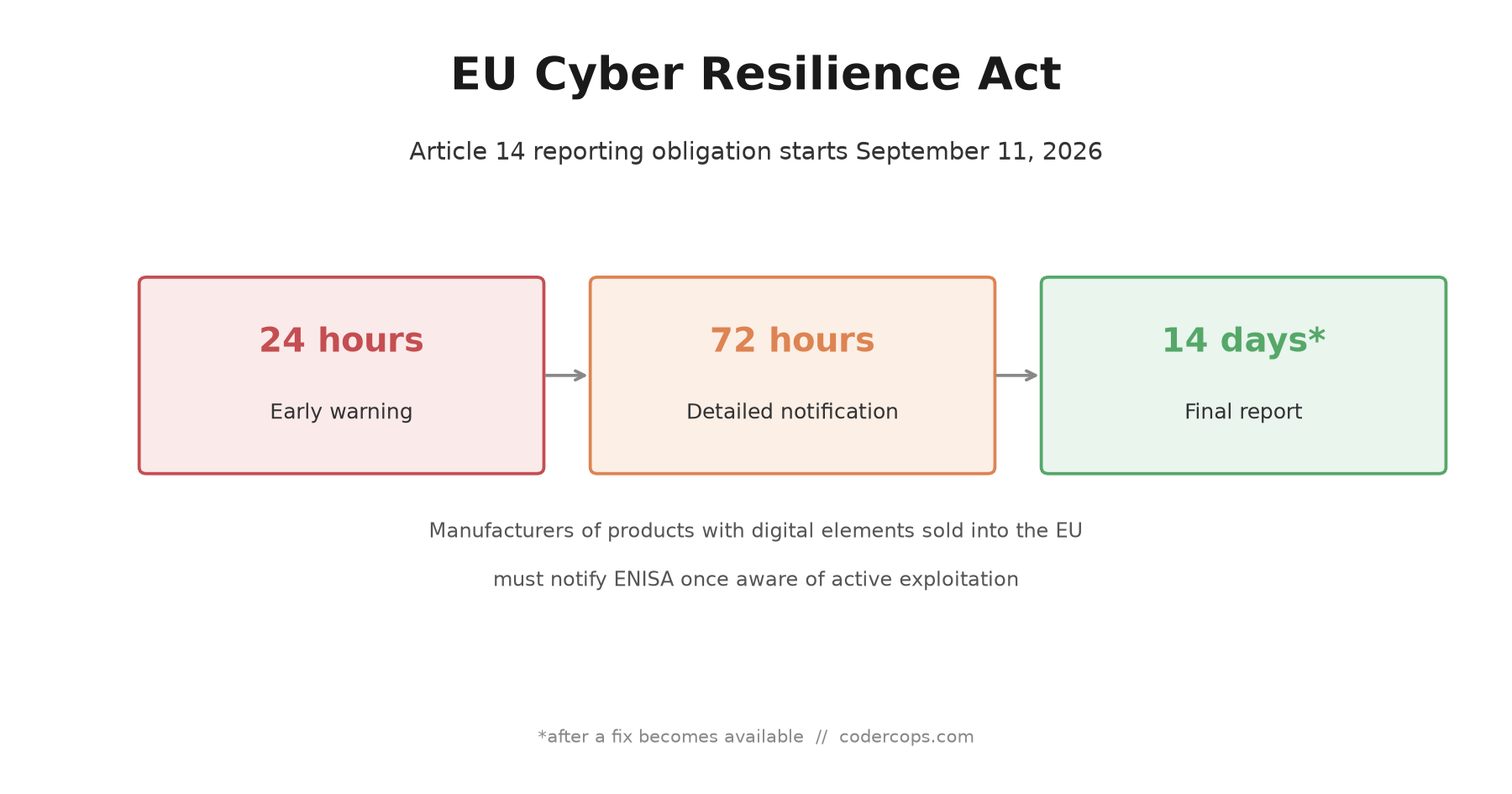
From September 11, 2026, anyone selling a product with digital elements into the EU has 24 hours to report an actively exploited vulnerability to ENISA. Here's who's actually in scope, what the reporting timeline looks like, and what to have ready.

Anurag Verma
5 min read
Sponsored
If any product your company ships touches the EU market and has a network connection of any kind, you have a new 24-hour clock starting September 11, 2026. That’s when Article 14 of the EU Cyber Resilience Act goes live: the obligation to report an actively exploited vulnerability to European regulators within a day of finding out about it.
This isn’t a distant compliance horizon. It’s five weeks away as of this writing, and the scope is wider than “we sell hardware in Germany, this must be about IoT devices.”
Who counts as a manufacturer here
The CRA’s term is “manufacturer,” but read it as “anyone who places a product with digital elements on the EU market.” That covers hardware with a network connection, obviously, but also software packages, firmware, operating systems, and developer libraries distributed commercially. If a component you build gets installed on a customer’s infrastructure in the EU, whether it’s a physical device or a library pulled in via a package manager, you’re likely in scope.
Where the line actually sits: pure SaaS, a cloud service with nothing installed on the customer’s side, generally falls outside this specific reporting obligation. The distinction the regulation draws is between a product placed on the market and a service delivered remotely. That said, plenty of “SaaS” products ship an agent, an SDK, or an on-prem connector alongside the hosted piece, and that installed component can pull the whole offering back into scope. If your architecture includes anything a customer runs on their own infrastructure, don’t assume the SaaS label exempts you without checking.
The reporting clock
Once you know a vulnerability in your product is being actively exploited, or you’ve had a severe security incident affecting it, three deadlines start running, all filed through ENISA’s Single Reporting Platform, simultaneously to ENISA and to your designated coordinating CSIRT:
| Stage | Deadline | What’s required |
|---|---|---|
| Early warning | 24 hours | Confirm the issue exists and is being exploited; minimal detail is acceptable at this stage |
| Detailed notification | 72 hours | Fuller technical detail: what’s affected, how it’s being exploited, initial mitigation guidance |
| Final report | 14 days after a fix is available | Full writeup once remediation exists |
The 24-hour window is the one that actually changes how a team operates. Most incident response processes are built around getting a fix out fast; this adds a parallel obligation to tell a regulator you’re aware of the problem before you’ve necessarily finished understanding it. That means the report-drafting step needs to be something your team can start same-day, not something that waits for the postmortem.
What “severe incident” means beyond active exploitation
Active exploitation is the clearer trigger, something is happening in the wild, right now, against your product. “Severe incident” is broader and covers security incidents affecting your product that have a significant impact, even without confirmed active exploitation of a specific CVE. If your team already runs a severity classification for incident response, a P1 outage or breach with a defined response clock, that’s the natural place to also flag “does this trigger a CRA reporting obligation,” rather than building a second, separate decision tree nobody remembers exists until it’s needed.
The cost of getting this wrong
Fines for breaching the CRA’s core obligations, including the reporting requirement, run up to 15 million euros or 2.5% of a company’s total worldwide annual turnover, whichever figure is higher. That ceiling puts this well past the territory of a compliance checkbox a five-person engineering team can defer. It’s also worth noting that September 11 is a reporting deadline, not the finish line for the regulation as a whole; broader requirements around SBOMs and technical documentation phase in on a longer timeline running through December 11, 2027. Getting the reporting process working now buys you a real trial run before the rest of the CRA’s obligations land.
What to actually do before September 11
Three things, in order. First, get a straight answer on whether anything you sell into the EU counts as a product with digital elements, hardware, software, firmware, or a commercially distributed library all qualify, and don’t let “we’re mostly SaaS” be the whole answer if any component gets installed on a customer’s side. Second, name an owner for the 24-hour clock: a specific person or on-call rotation who gets paged the moment a report of active exploitation comes in, with authority to file the early warning without waiting for a full committee sign-off. Third, and most overlooked, make sure you’d actually detect active exploitation of your product in the first place. A reporting deadline is meaningless against a vulnerability nobody noticed was being used.
Five weeks is enough time to get the first two of those genuinely solid. The third one is an ongoing security posture question, not a September 11 checkbox, and it’s the one worth starting on today regardless of the regulatory deadline attached to it.
Frequently asked questions
- What exactly happens on September 11, 2026?
- Article 14 of the EU Cyber Resilience Act becomes enforceable. From that date, any manufacturer of a product with digital elements sold into the EU must notify ENISA and the relevant national CSIRT within 24 hours of becoming aware that a vulnerability in their product is being actively exploited, or that a severe security incident has affected the product.
- Does this apply to a US company that just has EU customers?
- Yes. The CRA applies based on where the product is made available, not where the manufacturer is headquartered or where the product is built. If your software, firmware, or developer library is sold or distributed to customers in the EU, you're in scope regardless of your company's location.
- Does a SaaS product have to comply?
- Generally not under this specific reporting obligation. Pure services, cloud software with nothing installed on the customer's infrastructure, are treated differently from products with digital elements. But the line gets thinner if your SaaS ships an installable agent, SDK, or on-prem component alongside the hosted service; that component can bring the whole offering into scope.
- What has to be reported, exactly?
- Two categories: a vulnerability in your product that's being actively exploited in the wild, and a severe incident affecting the security of your product. The report goes through ENISA's Single Reporting Platform, simultaneously to ENISA and to the CSIRT designated as coordinator, and follows a fixed cadence: an early warning within 24 hours, a fuller notification within 72 hours, and a final report within 14 days of a fix shipping.
- What should a small engineering team actually do before September 11?
- Confirm whether any product you sell into the EU counts as a product with digital elements, identify who inside the company owns the 24-hour clock once a vulnerability report comes in, and make sure you'd actually notice active exploitation in the first place. A reporting obligation you can't act on because nobody's watching for exploitation attempts is the same as not having one.
Sources
Sponsored
More from this category
More from Cybersecurity
 R.01
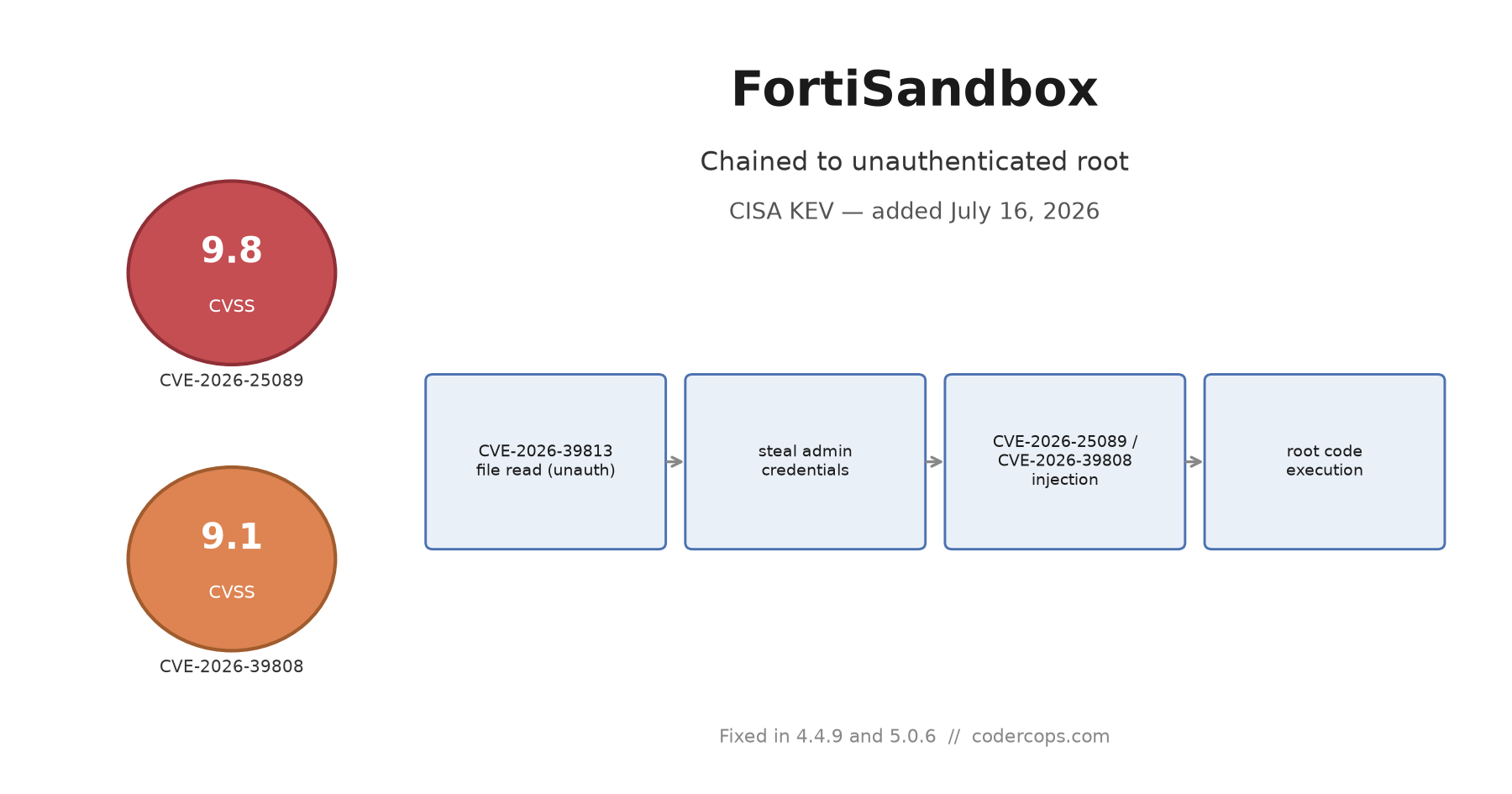
R.01 CVE-2026-25089 and CVE-2026-39808: The FortiSandbox Chain That Reaches Unauthenticated Root
 R.02
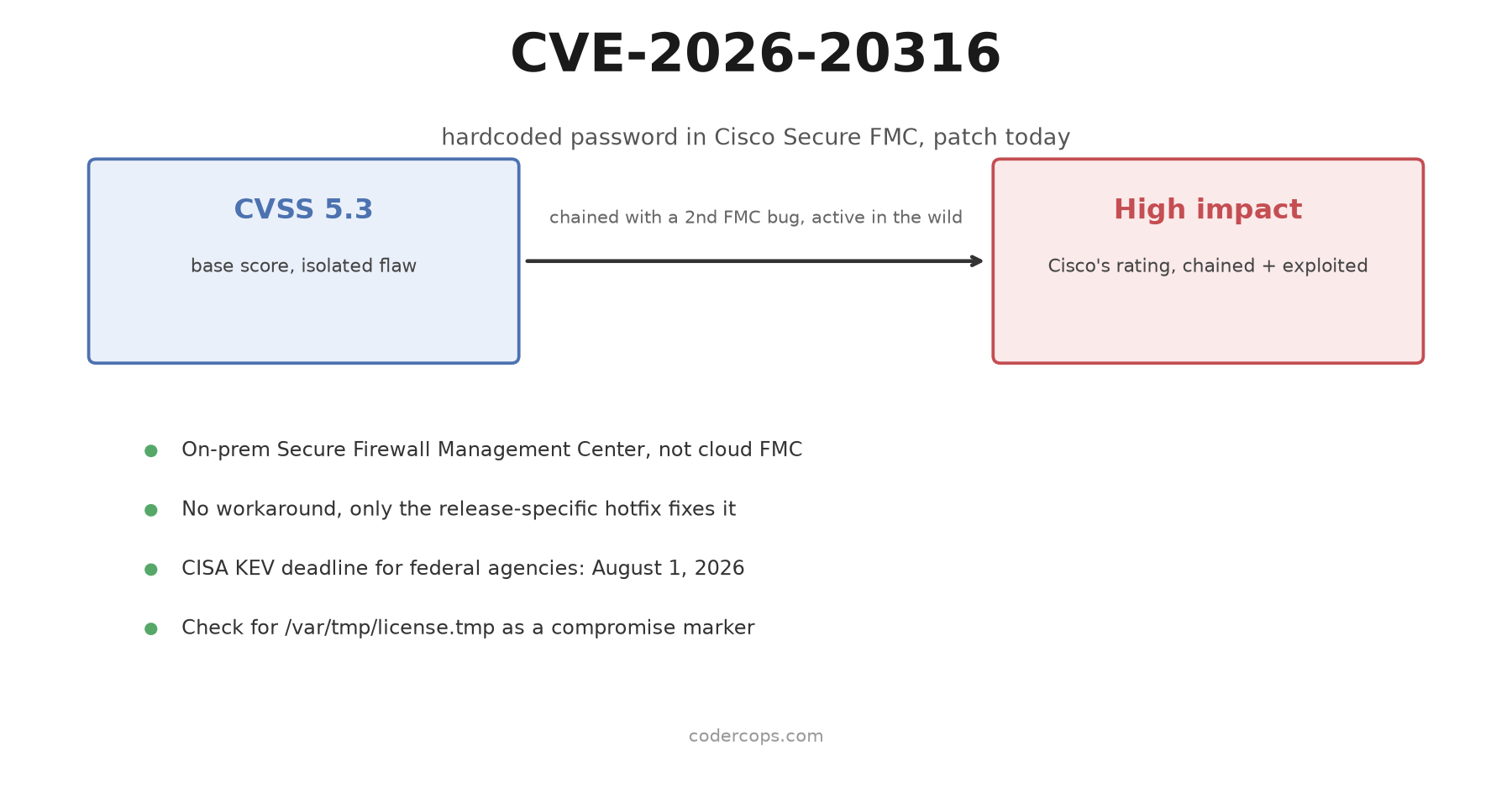
R.02 CVE-2026-20316: The Cisco Secure FMC Hardcoded Password CISA Wants Patched Today
 R.03
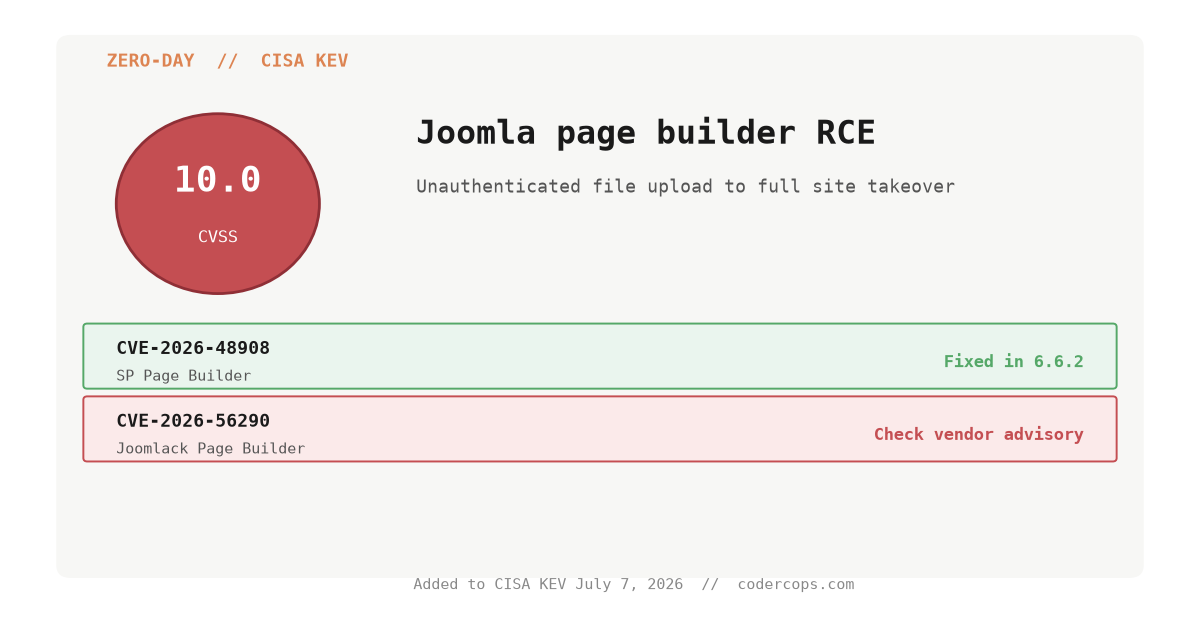
R.03 CVE-2026-48908: SP Page Builder Zero-Day Hits Joomla Sites Hard
Sponsored
Discussion
Join the conversation.
Comments are powered by GitHub Discussions. Sign in with your GitHub account to leave a comment.
Sponsored