Business · Hiring
How to Structure Your First Engineering Team in 2026: Roles, Ratios, and Sequencing
The order you hire your first 10 engineers matters more than the total headcount. Here is how to sequence the hires, what ratios work, and the common mistakes that slow teams down before they start.

Anurag Verma
7 min read

Sponsored
The conversation about team structure usually happens too late. Companies focus on individual hiring decisions — who to hire for this role, what to pay, how to run the interview — without stepping back to think about the team as a system. Then they hit 15 engineers and realize they have a team that does not quite work: too many juniors, nobody owns the architecture, deployments are a manual process, and the tech lead is too busy to code.
The sequence and composition of the first 10 hires shapes the next two years of engineering velocity more than any individual decision after that. Here is how to think about it.
The most common early team mistakes
Too many juniors, too fast: Junior engineers are cheaper per seat. They are not cheaper per unit of work delivered, especially in the first year. A team of five juniors with one senior produces less working software than a team of three mid-level engineers with one senior, costs roughly the same in total comp, and creates far more coordination overhead and rework. The illusion of “we are hiring fast” masks slower actual progress.
This does not mean avoid junior hires. It means senior-anchor first, then fill the team with the appropriate mid/junior mix once the architecture is stable and the code review infrastructure exists.
DevOps as an afterthought: The most predictable pattern in early-stage engineering teams: developers set up their own servers, skip proper CI/CD, and deploy manually because “we’re moving fast.” Then the team hits eight engineers and deploys are taking two hours and breaking production. Hiring a platform/DevOps engineer to fix the mess costs twice as much as hiring one to prevent it, because they spend their first six months unwinding technical debt instead of building forward.
The right time to hire your first platform engineer is when developers start spending more than 30 minutes per week on deployment and infrastructure tasks that could be automated. That is usually earlier than founders expect.
The manager-too-early trap: Many startups promote a senior engineer to “Engineering Manager” at 10–15 engineers because that is what companies are supposed to do at that size. What they usually need at that size is not a manager — it is a tech lead. A tech lead still writes code, owns the technical direction and architecture decisions, and runs code reviews. A manager does 1:1s, career development, and headcount planning. Those are different jobs. Promoting your best senior engineer into a pure management role at 10 engineers usually means you lose your best engineer and get a mediocre manager.
Hiring for skills you need next year: Startups often write job descriptions for the team they imagine having in two years. “Must have experience scaling to 100M users.” If you have 10,000 users, this requirement filters out the developers who are best at going from 0 to 100,000 — often the same person does not excel at both stages.
The hiring sequence that works
This is not a prescription for every company. Product types, founder backgrounds, and funding levels all change the specifics. But this sequence works well often enough to be the default:
Hire 1: Senior generalist backend engineer. This person can build end-to-end, owns the initial architecture, sets the code review and testing culture, and can fill gaps across the stack. They are the load-bearing wall of the early engineering team. The wrong hire at this stage costs six to twelve months.
If the founders are technical, the first external engineering hire can be a strong mid-level engineer paired with a founder who provides technical direction. But someone needs to own the architecture from the start.
Hire 2: Fills the senior generalist’s biggest gap. If hire 1 is backend-heavy and the product needs serious frontend work, hire a strong frontend engineer. If hire 1 is full-stack but the infrastructure is getting complicated, consider a DevOps-focused hire early. Do not hire a second person who overlaps with hire 1 unless the workload genuinely demands it.
Hire 3: First mid-level engineer. By the time hire 3 arrives, the architecture should be stable enough to onboard someone without constant senior direction. Hiring junior at this stage is a mistake in most product teams — they will need more guidance than the senior can provide while also building.
Hire 4: First QA/test engineer, or first platform engineer, depending on what is breaking first. Most teams need QA before they need platform at this point. If the test coverage is already reasonable because your senior engineers cared about it, push for platform instead.
Hires 5–8: Specialize into the product’s structure. By this point, you probably know whether you need mobile, a data layer, stronger security practices, or frontend depth. Hire into the actual gaps, not the theoretical ones.
Hire 9–10: Consider team structure before adding headcount. At 8–10 engineers, the question is not just who to hire next. It is how the team divides into smaller working units. Feature teams? Platform and product split? A frontend/backend split? Adding more people to an undifferentiated team at this size creates coordination overhead that slows you down. The team structure decision should come before the hire, not after.
What to look for in the first senior hire
The first senior engineering hire is the most consequential external hire most startups make. The wrong person in this seat means re-architecture at six engineers, culture repair at ten, and possibly replacing the hire at twelve. Here is what to test for specifically:
System design judgment, not just knowledge: Ask them to design a system they have not built before. “How would you design a real-time notification system for a 100k user product?” You are not testing whether their design is optimal. You are testing how they decompose the problem, what questions they ask, what trade-offs they flag without prompting.
Code review communication: Ask to see a code review they have given. How they explain a problem in code is how they will train the engineers who join after them. Clear, educational reviews that explain why, not just what — that is the culture you are starting.
Willingness to do boring things: Senior engineers who only want to work on interesting architecture problems become bottlenecks in early teams. Ask them about the most boring thing they have built recently and how they approached it.
The external partnership option
For companies that need to move fast without the risk of a bad first hire, working with a development agency for the first 6–12 months is a genuine alternative to building an in-house team from scratch. The agency provides the senior technical oversight and execution without the long-term headcount commitment during the period of highest uncertainty.
The trade-off is cost and knowledge transfer: you are paying more per hour than a full-time hire, and the agency team does not have the same product context over time. For well-scoped early phases — building the MVP, the initial backend, the CI/CD infrastructure — the trade-off often works in favor of the agency.
For a full breakdown of the hiring models and their cost structures, the guide to what it actually costs to hire a developer in 2026 covers the numbers across FTE, freelance, and agency.
Practical guidance by company stage
Pre-product-market fit (1–5 engineers): Minimize specialization. Everyone touches everything. Hire for adaptability and technical breadth first. The architecture will change; the team needs to change with it.
Early scaling (5–15 engineers): Start introducing specialization where the product has stabilized. Consider splitting into a platform team and a product team when you hit 12+ engineers and platform work is bottlenecking product velocity.
Growth stage (15–30 engineers): Engineering management becomes a real need at this scale. The tech lead role may need to split into tech lead (technical direction) and engineering manager (people and process). Your hiring now needs to fill specific, well-defined gaps — not general headcount.
Thinking about structure before you need it means you make the structure decision once, deliberately. Thinking about it after means you make it reactively, usually in response to a problem that took months to notice.
Frequently asked questions
- How many engineers should a startup hire before raising a Series A?
- There is no universal answer, but the pattern that works well is 2–5 engineers at seed (including technical founders if any), enough to ship an MVP and early product iterations, with a first external senior hire as early as possible. By Series A, companies typically need 5–12 engineers to hit growth targets, though the shape varies enormously by product type.
- What is the right ratio of senior to junior engineers?
- A sustainable ratio for a growing product team is roughly one senior for every two to three mid-level engineers. Going beyond that — four or five juniors to one senior — creates a mentorship and code review bottleneck that slows the whole team. Going the other way, all seniors, is expensive but usually outperforms the junior-heavy configuration in velocity for the first year.
- When should we hire our first full-time QA engineer?
- When your test coverage is low enough that you discover bugs in production regularly, and your developers are spending more than 20–30% of their time investigating and fixing production issues. For most product teams, this is around the third or fourth engineering hire. It is almost always later than it should be.
- Should our first engineering hire be a generalist or a specialist?
- A generalist, almost always. Your first engineering hire needs to make progress across the stack while your product requirements are still changing. A specialist hired too early often creates bottlenecks — if your first hire is a frontend specialist and you need backend work, you are blocked. Hire for breadth first, then for depth as the product stabilizes.
Sponsored
More from this category
More from Business
 R.01
R.01 How to Hire a Game Developer in 2026: Unity, Unreal, and the Screen That Actually Works
 R.02
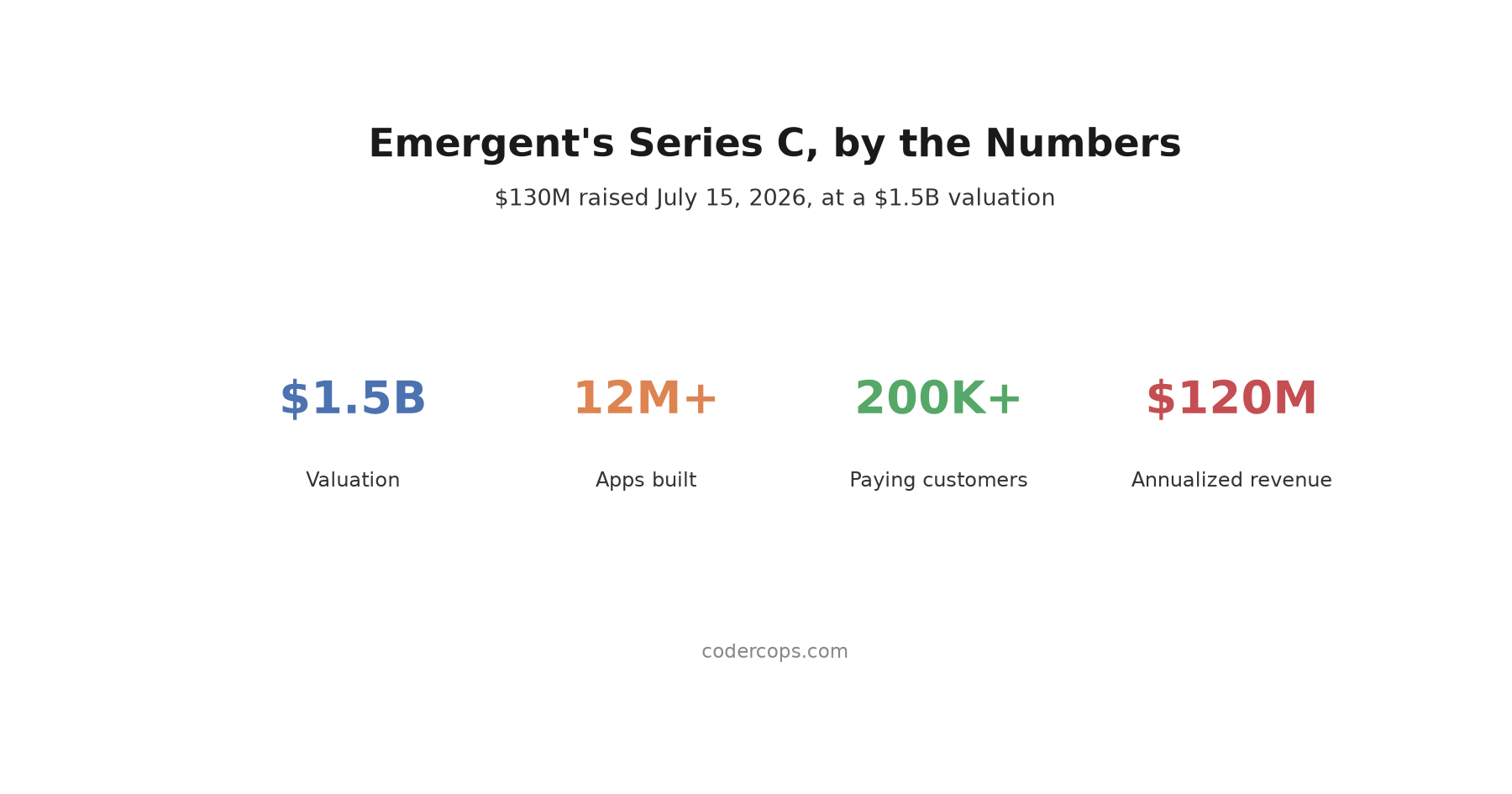
R.02 Emergent Hit a $1.5B Valuation Building Apps From Prompts. What That Means for Agencies
 R.03
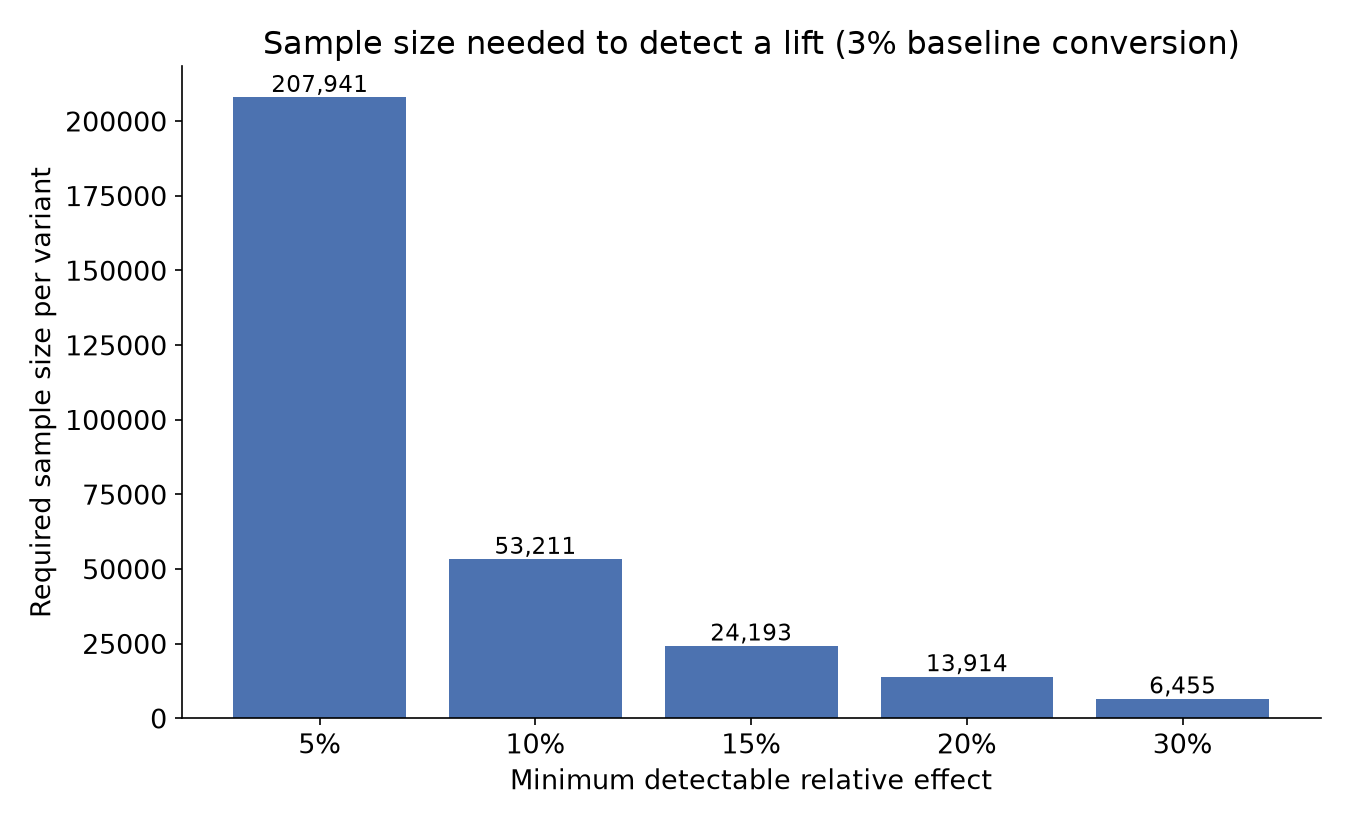
R.03 A/B Testing Statistical Significance: How Long to Actually Run a Test
Sponsored
Discussion
Join the conversation.
Comments are powered by GitHub Discussions. Sign in with your GitHub account to leave a comment.
Sponsored