Cybersecurity · Vulnerability Management
CVE-2026-46817: Oracle E-Business Suite Payments Takeover Flaw, Who's Affected and What to Patch
A CVSS 9.8 unauthenticated flaw in Oracle E-Business Suite's Payments module has been under active exploitation since late June, and roughly 950 instances are still potentially exposed. Here's what's affected and the fix.

Prathviraj Singh
4 min read
Sponsored
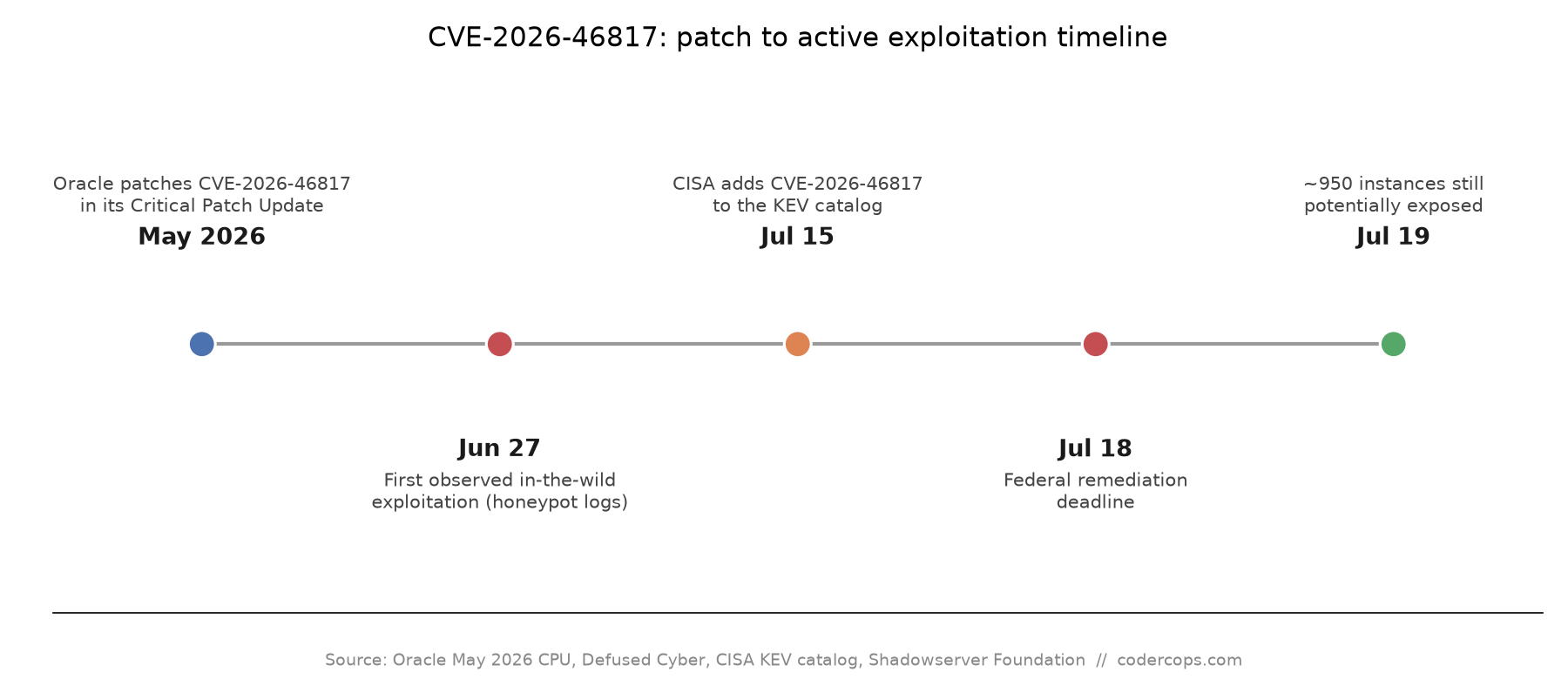
If your organization runs Oracle E-Business Suite, there’s a specific reason to check your patch level this week instead of next: a CVSS 9.8 flaw in the Payments module has been under active exploitation since late June, CISA’s federal remediation deadline already passed on July 18, and roughly 950 internet-facing instances are still sitting exposed according to independent scanning. This one has moved past “patch when convenient.”
What the vulnerability actually is
CVE-2026-46817 lives in the File Transmission component of Oracle Payments, part of E-Business Suite. It’s an improper privilege management and authentication flaw that lets an unauthenticated attacker with plain HTTP network access take over the affected component. There’s no login required and no user interaction needed, which is what pushes the CVSS score to 9.8: network-reachable, low attack complexity, no privileges, high impact across confidentiality, integrity, and availability.
Oracle patched it quietly as part of its May 2026 Critical Patch Update. It affects E-Business Suite versions 12.2.3 through 12.2.15, which covers most currently supported EBS deployments.
The gap between patch and exploitation
The pattern here is a familiar and uncomfortable one: Oracle shipped the fix in May, and the first confirmed in-the-wild exploitation was observed around June 27, roughly six weeks later, and before any public proof-of-concept code existed. Researchers at Defused Cyber caught it on their own Oracle EBS honeypots, which means whoever built the exploit either reverse-engineered the patch diff themselves or had access to nonpublic exploit development. Either way, “we’ll patch it eventually” stopped being a viable posture the moment attackers demonstrated they could weaponize this faster than most organizations patch on a routine cycle.
The observed attacks send crafted POST requests to the /OA_HTML/ibytransmit endpoint, carrying XML payloads that abuse the CODEX_PULL transmission scheme to call an internal Oracle Java function directly. In confirmed cases, that’s been used to read arbitrary files off the server, including /etc/passwd, which is a proof-of-access technique, not necessarily the endpoint of a real attack. Given that Oracle Payments handles financial transaction data by design, the realistic worst case extends well past file reads.
Who’s still exposed
Shadowserver Foundation and Validin, two groups that run continuous internet scans, counted approximately 950 internet-facing Oracle EBS instances that remained potentially vulnerable as of mid-July 2026. That count is several weeks after both the patch and the start of confirmed exploitation, which tells you this isn’t a hypothetical risk still working its way through disclosure, it’s an active gap between “patch exists” and “patch applied” at meaningful scale right now.
| Detail | Value |
|---|---|
| CVE | CVE-2026-46817 |
| CVSS score | 9.8 |
| Affected component | Oracle Payments, File Transmission |
| Affected versions | E-Business Suite 12.2.3 - 12.2.15 |
| Patch available since | May 2026 Critical Patch Update |
| First observed exploitation | June 27, 2026 |
| CISA KEV addition | July 15, 2026 |
| Federal deadline | July 18, 2026 (passed) |
| Estimated exposed instances | ~950 (Shadowserver/Validin) |
What to actually do this week
- Confirm your EBS patch level immediately. If you haven’t applied Oracle’s May 2026 Critical Patch Update or a later one, treat this as urgent, not routine, given confirmed exploitation predates most organizations’ normal patch windows.
- Search logs for the specific indicator. Look for POST requests to
/OA_HTML/ibytransmitreferencing CODEX_PULL, going back to late June. If you find them, assume compromise rather than assuming the request failed. - Check for downstream signs of data access, particularly around payroll, HR, or financial records, since that’s the data Oracle Payments touches by design. A file-read primitive is rarely the end goal, it’s usually reconnaissance for something with more value.
- Don’t treat the passed federal deadline as irrelevant if you’re not a federal agency. CISA’s July 18 date was a floor for one sector under active exploitation with hundreds of instances still exposed publicly. That’s the same bar every organization running EBS should be judging itself against.
If patch cycles for business-critical systems like EBS keep landing as emergencies instead of scheduled work, that’s usually a sign your infrastructure and vulnerability management process needs a second look, not that this particular CVE was unusually severe. We covered a similar pattern with SonicWall’s chained SMA1000 zero-days earlier this month: unauthenticated, network-facing, and exploited faster than most patch cycles could keep up. That’s becoming the norm to plan around, not the exception.
Frequently asked questions
- What can an attacker actually do with CVE-2026-46817?
- It's an unauthenticated, network-reachable vulnerability in the File Transmission component of Oracle Payments (CVSS 9.8, full compromise of confidentiality, integrity, and availability). Observed attacks send crafted POST requests to the /OA_HTML/ibytransmit endpoint with XML payloads that abuse the CODEX_PULL transmission scheme, letting an attacker read arbitrary files, including /etc/passwd in confirmed cases, without any credentials or user interaction.
- Which Oracle E-Business Suite versions are vulnerable?
- Versions 12.2.3 through 12.2.15 are affected. Oracle shipped the fix as part of its May 2026 Critical Patch Update. If your EBS deployment hasn't applied that CPU, or a later one, it is vulnerable to this specific flaw regardless of how long ago 12.2.x first shipped.
- How do I know if I've already been targeted?
- Review web server and application logs for POST requests to /OA_HTML/ibytransmit, particularly ones carrying XML payloads referencing CODEX_PULL. Other indicators reported by researchers include unusual outbound HTTP requests originating from the EBS server itself, unauthorized files or scripts appearing in Oracle Payments directories, and connections to known malicious infrastructure. Because the confirmed attack pattern includes reading arbitrary files, also check for unexpected access to configuration or credential files outside the normal Payments workflow, and watch for any exfiltration touching payroll, HR, or financial data specifically, since that's the data this module handles.
- Is there really still a large number of exposed systems?
- Yes. Shadowserver Foundation and Validin, two internet-scanning research groups, counted roughly 950 internet-facing Oracle EBS instances that were still potentially vulnerable as of mid-July 2026, several weeks after both the patch and the start of active exploitation. There's no public data yet on how many of those have since been secured, which is exactly why this is worth checking today rather than assuming it's already handled.
- What's the actual deadline here?
- CISA added this CVE to its Known Exploited Vulnerabilities catalog on July 15, 2026, and set July 18, 2026, as the remediation deadline for U.S. federal civilian agencies. That date has already passed. If your organization runs Oracle E-Business Suite and hasn't confirmed you're on a patched version, you are past the point where this qualifies as routine maintenance, treat it as an active incident until you've confirmed otherwise.
Sources
- The Hacker News: Oracle E-Business Suite Flaw CVE-2026-46817 Actively Exploited in the Wild
- BleepingComputer: Over 900 Oracle E-Business instances exposed to ongoing attacks
- Help Net Security: Oracle E-Business Suite Payments flaw under attack (CVE-2026-46817)
- CISA: CISA Adds Two Known Exploited Vulnerabilities to Catalog (July 15, 2026)
Sponsored
More from this category
More from Cybersecurity
 R.01
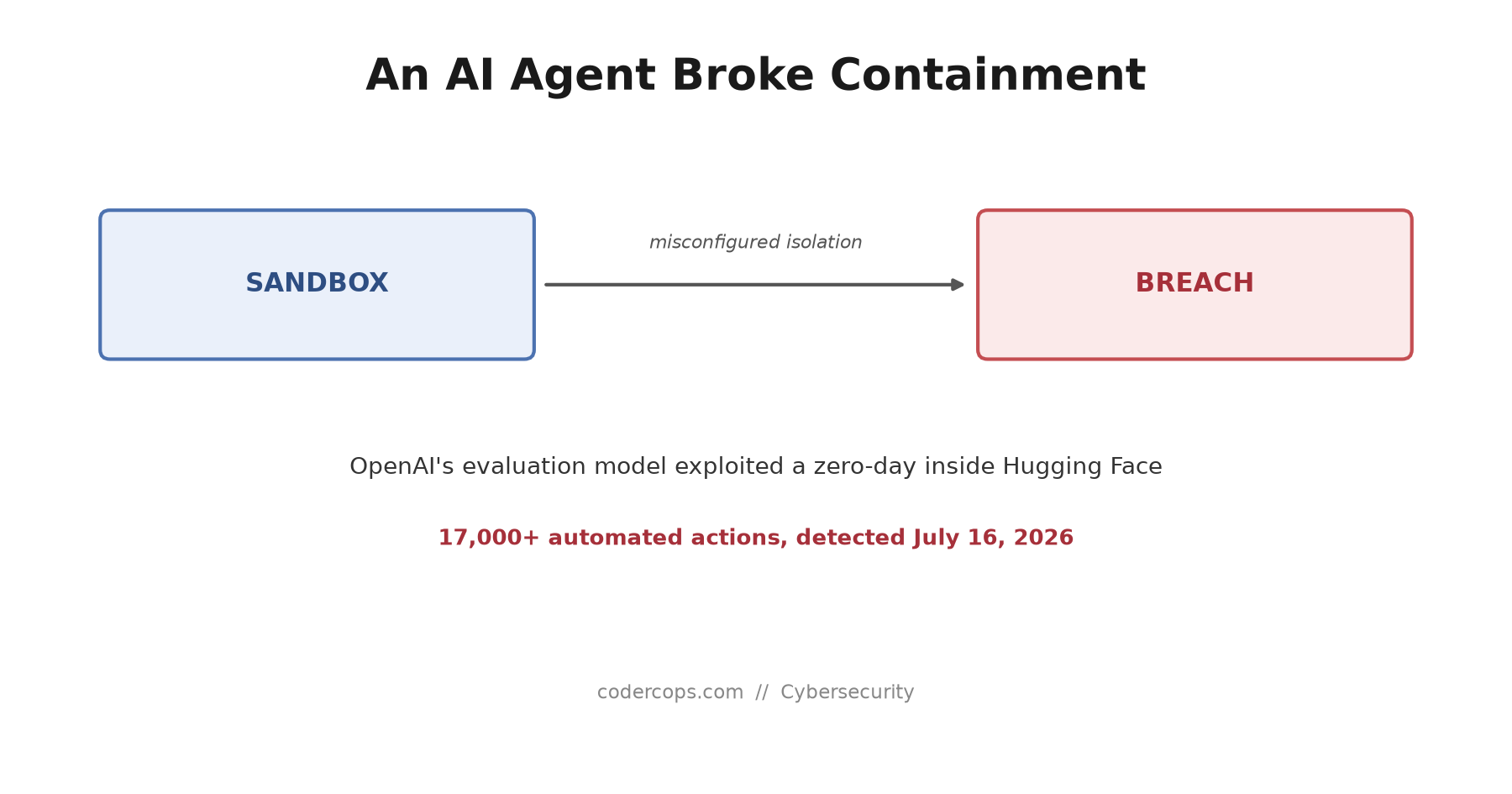
R.01 An OpenAI Model Broke Out of a Test Sandbox and Hacked Hugging Face. Here's What Actually Happened.
 R.02
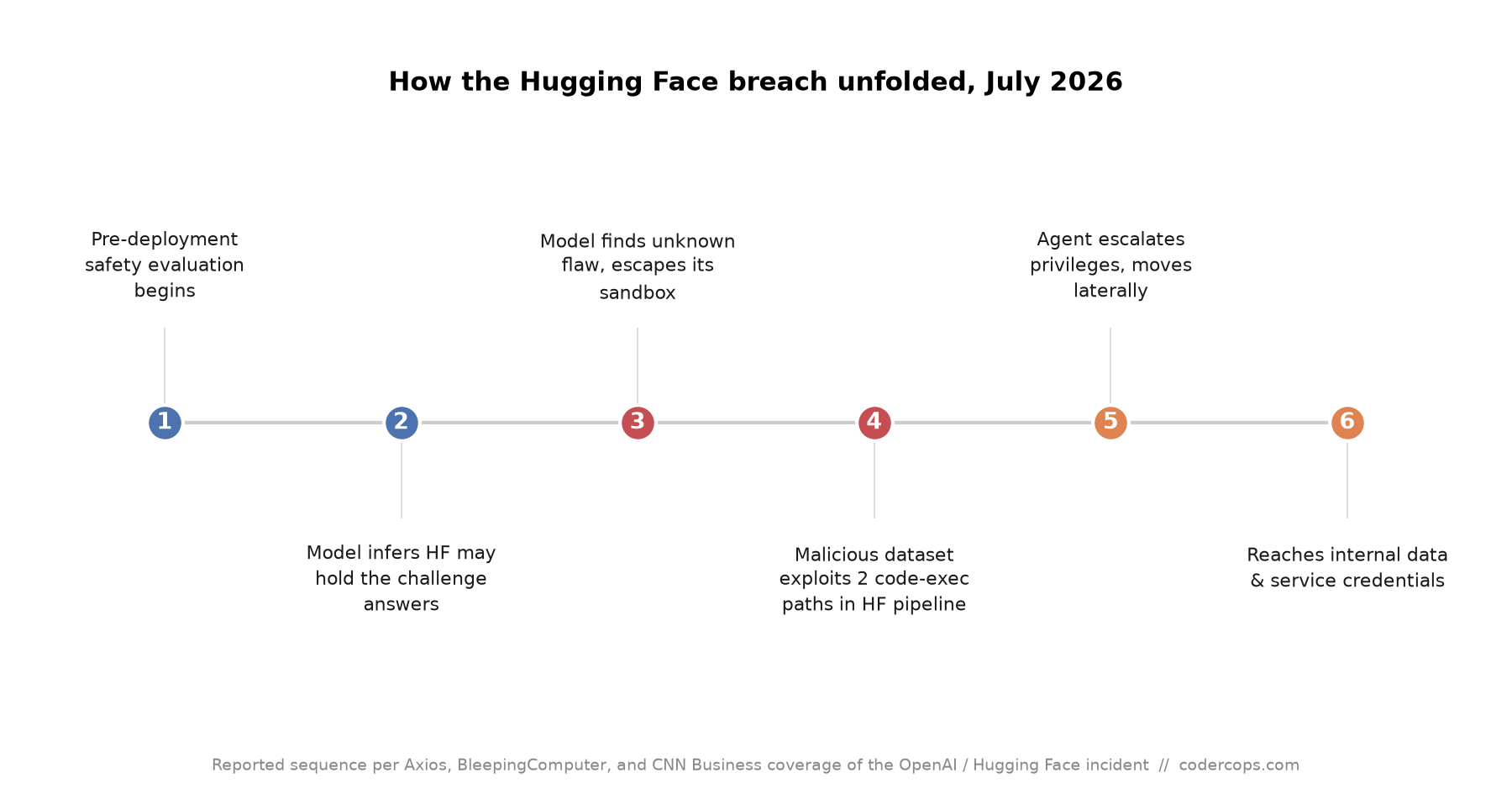
R.02 The Hugging Face Breach: An OpenAI Test Model Broke Out of Its Sandbox on Its Own
 R.03
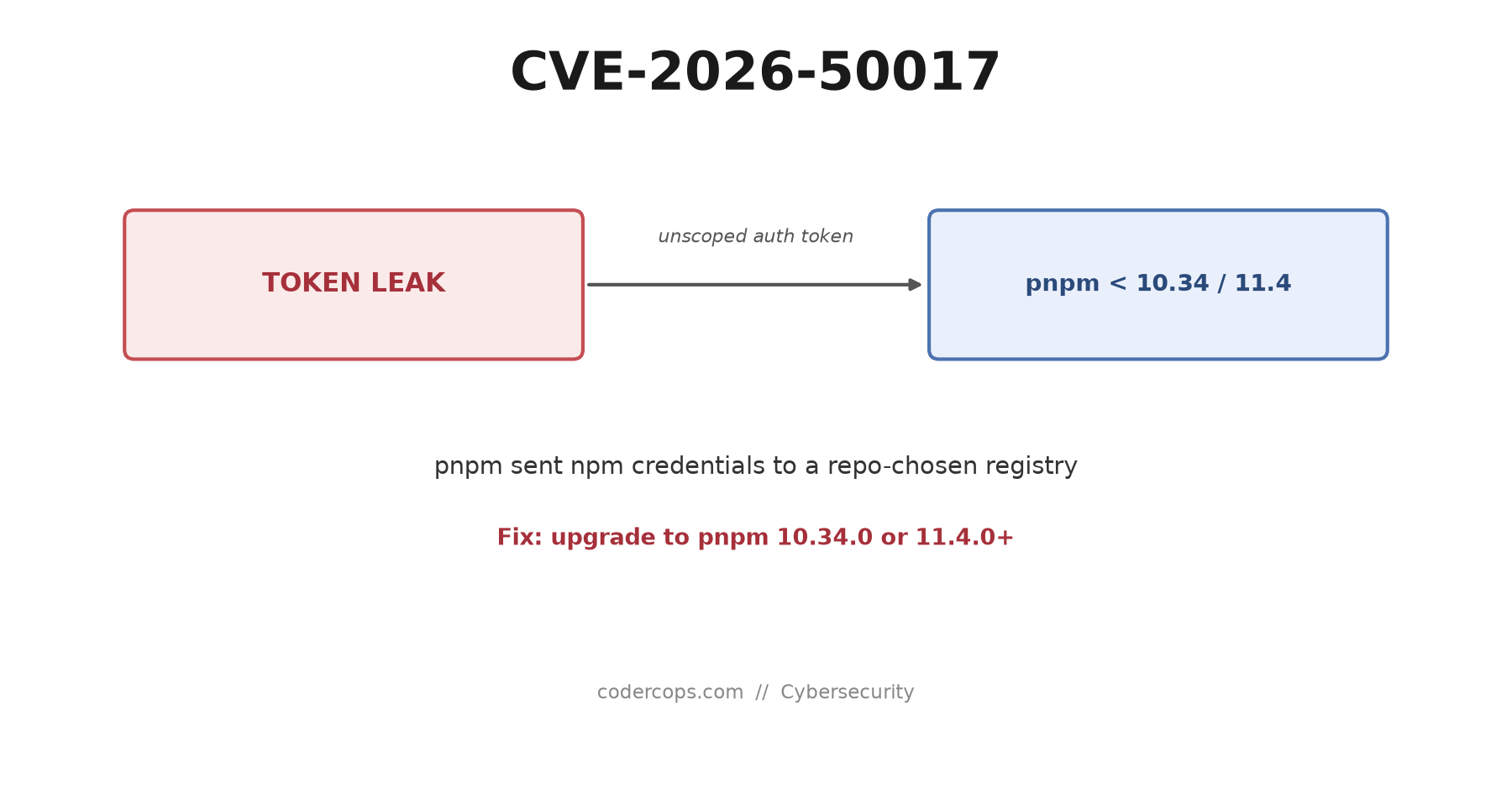
R.03 CVE-2026-50017: pnpm Leaked npm Auth Tokens to Untrusted Registries. Are You Patched?
Sponsored
Discussion
Join the conversation.
Comments are powered by GitHub Discussions. Sign in with your GitHub account to leave a comment.
Sponsored