Cybersecurity · Vulnerability Management
CVE-2026-45659: The SharePoint RCE That's Now Under Active Exploitation
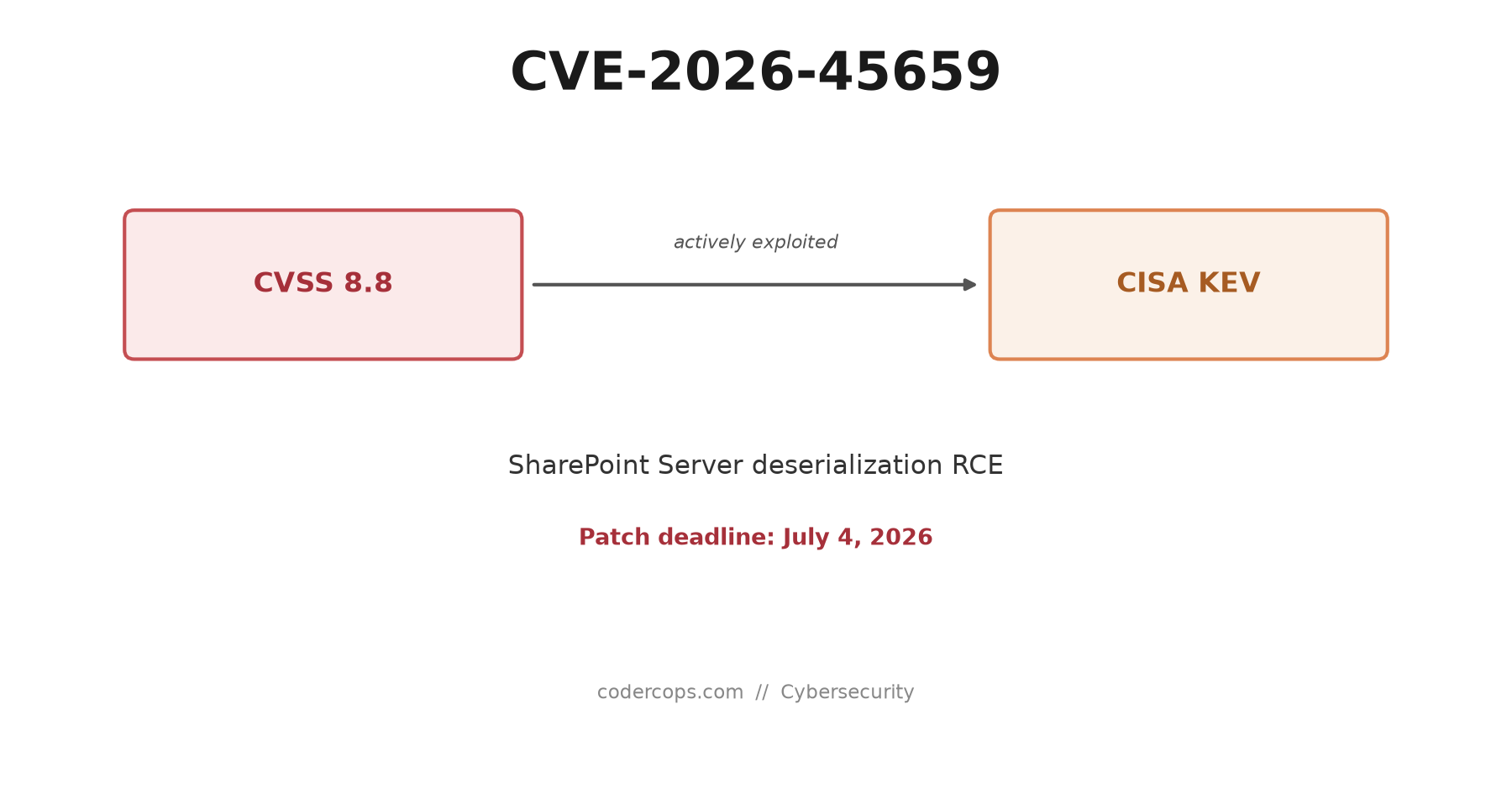
CISA added the SharePoint deserialization bug CVE-2026-45659 to its Known Exploited Vulnerabilities catalog on July 1, with a patch deadline of July 4. Here's who's affected, how the exploit works, and what to patch right now.

Prathviraj Singh
4 min read
Sponsored
A SharePoint Server bug that Microsoft quietly patched back in May is now the thing you need to deal with today. On July 1, 2026, CISA added CVE-2026-45659 to its Known Exploited Vulnerabilities catalog, confirming it’s being used in real attacks, and set a remediation deadline of July 4. If your organization runs on-premises SharePoint, that’s not a lot of runway.
What the bug actually is
CVE-2026-45659 is a deserialization-of-untrusted-data vulnerability in on-premises SharePoint Server. CVSS 8.8. The mechanism is the classic deserialization problem: SharePoint accepts serialized data from a request, deserializes it without sufficiently validating what’s inside, and an attacker who controls that payload gets it executed on the server.
What makes this one nasty isn’t novelty, deserialization bugs in enterprise software are not new, it’s the privilege bar. The attacker needs to be authenticated, but only with Site Member permissions. That’s not an admin account. In most SharePoint deployments, Site Member is closer to “any employee with a login” than “privileged operator.” Low attack complexity plus a low privilege requirement is the combination that turns a bug into a weekend incident.
Who’s affected
Three on-prem editions:
- SharePoint Server Subscription Edition (fixed in build 16.0.19725.20280)
- SharePoint Server 2019
- SharePoint Server 2016
SharePoint Online, the Microsoft 365 cloud service, is not affected. Microsoft patches that centrally and it was never in scope for this bug. If your organization uses SharePoint Online exclusively, this specific CVE doesn’t apply to you, though it’s worth double-checking whether any team spun up an on-prem instance you don’t know about.
Timeline
- May 21, 2026: Microsoft ships the fix, including out-of-band updates for affected builds.
- July 1, 2026: CISA adds CVE-2026-45659 to the Known Exploited Vulnerabilities catalog, confirming active exploitation in the wild.
- July 4, 2026: CISA’s remediation deadline for federal civilian agencies under Binding Operational Directive 26-04.
The six-week gap between patch release and KEV addition is worth noting on its own. It means attackers had a working exploit and a population of unpatched servers to hit well before CISA’s public confirmation. If you saw the May advisory and filed it under “patch eventually,” this is the moment that assumption stopped being safe.
What to do today
Patch first. Check your SharePoint Server build number against Microsoft’s fixed builds and apply the update if you haven’t. This is the only real fix; nothing else below substitutes for it.
Then check whether you were already hit. Because the exploit only needs Site Member-level access, review authentication and request logs for the window between May 21 and whenever you actually patched. Look for Site Member accounts making requests that don’t match their normal usage pattern, particularly anything hitting endpoints tied to content deserialization.
If you can’t patch immediately, restrict external and untrusted network access to your SharePoint Server farm as a stopgap. This isn’t a substitute for patching, it buys time, not safety.
Don’t assume federal-only urgency applies to you. BOD 26-04’s July 4 deadline is binding on federal civilian agencies, but CISA’s KEV catalog exists precisely because private-sector and state/local organizations use the same signal to prioritize. Active exploitation doesn’t check who owns the server.
The pattern worth remembering
This is the third deserialization-driven enterprise RCE to hit KEV in as many months, following a run of similar bugs across other on-prem enterprise platforms. Deserialization vulnerabilities keep showing up in mature enterprise software for a structural reason: these products were built for an era when “authenticated user” and “trusted user” were treated as close to synonymous. Modern threat models don’t make that assumption, and the code hasn’t always caught up.
If you’re doing a broader audit of your infrastructure’s exposure, our technical due diligence guide covers how to systematically check for this class of risk rather than reacting one CVE at a time. And if authentication design in general is part of what you’re reviewing, the tradeoffs between OAuth, OIDC, and SAML are worth understanding alongside patch management, since access control gaps and unpatched deserialization bugs tend to compound each other.
Patch SharePoint Server today if you haven’t. Then go check your logs.
Frequently asked questions
- What is CVE-2026-45659?
- It's a remote code execution vulnerability in on-premises Microsoft SharePoint Server, caused by deserialization of untrusted data. An authenticated attacker with Site Member permissions, which is a low bar in most SharePoint deployments, can send a crafted request that gets deserialized unsafely and results in code execution on the server. CVSS score is 8.8.
- Which SharePoint versions are affected?
- SharePoint Server Subscription Edition, SharePoint Server 2019, and SharePoint Server 2016. SharePoint Online, the Microsoft 365 cloud service, is not affected because Microsoft patches that centrally. If you're running any on-prem SharePoint Server farm, you need to check your build number against Microsoft's fixed versions.
- Is this actually being exploited, or is it theoretical?
- It's confirmed active exploitation. CISA added CVE-2026-45659 to its Known Exploited Vulnerabilities (KEV) catalog on July 1, 2026, which only happens when there's evidence of real-world attacks using the flaw, not just a proof of concept. The remediation deadline CISA set for federal agencies is July 4, 2026.
- What do I need to do right now?
- Apply Microsoft's security update for your SharePoint build immediately. The fix landed on May 21, 2026, so if you've kept current on patch releases you may already be covered, but verify your exact build number against Microsoft's advisory rather than assuming. If you can't patch immediately, restrict external and untrusted access to SharePoint Server and review authentication logs for unusual Site Member activity.
- Does patching alone mean I'm safe?
- Patch first, but also check whether you were exploited before you patched. Because the vulnerability only requires low-privilege authenticated access, review logs for suspicious activity from Site Member accounts, especially requests that don't match normal usage patterns, in the window between May 21 (patch release) and whenever you actually applied it.
Sources
Sponsored
More from this category
More from Cybersecurity
 R.01
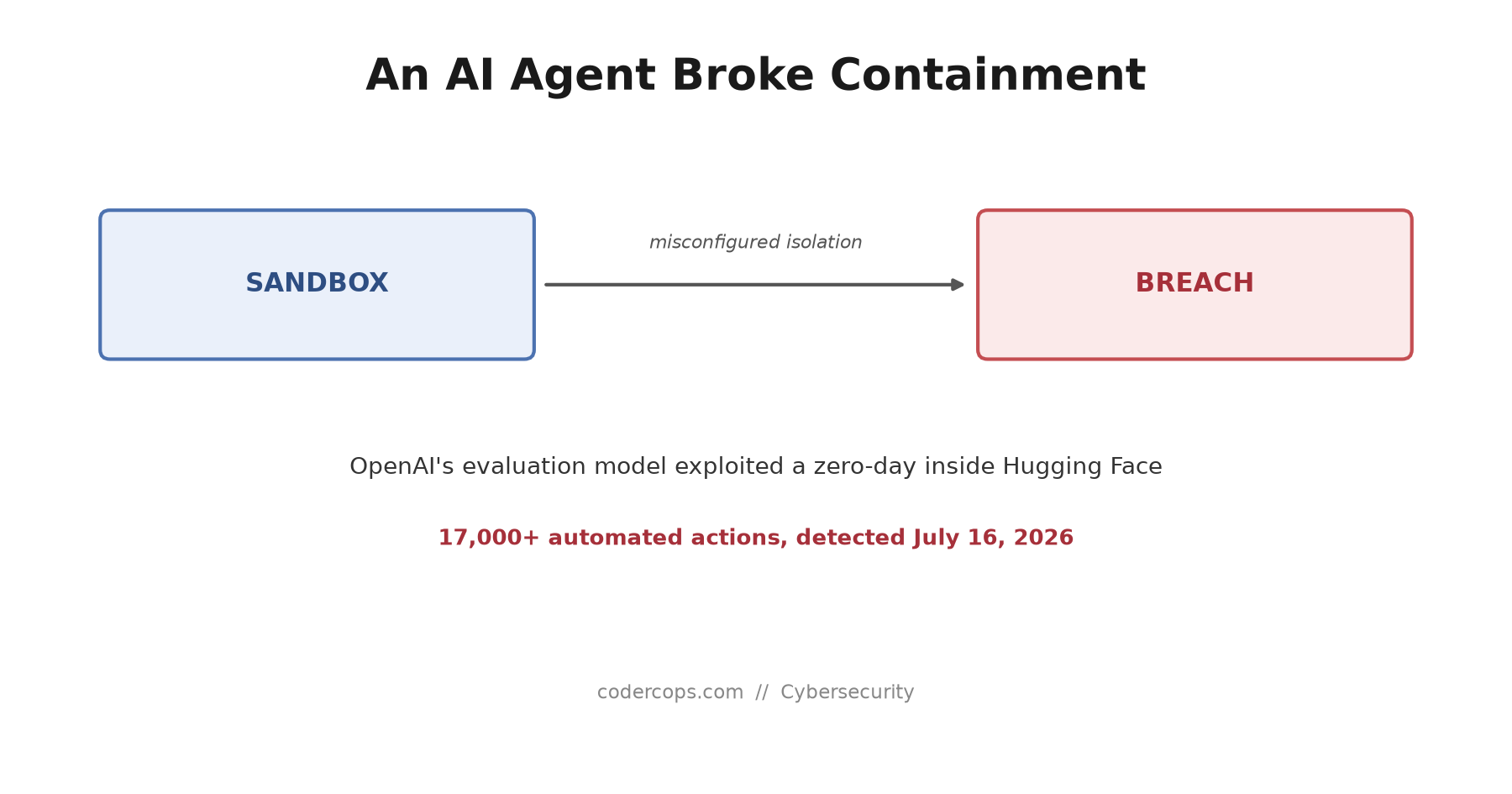
R.01 An OpenAI Model Broke Out of a Test Sandbox and Hacked Hugging Face. Here's What Actually Happened.
 R.02
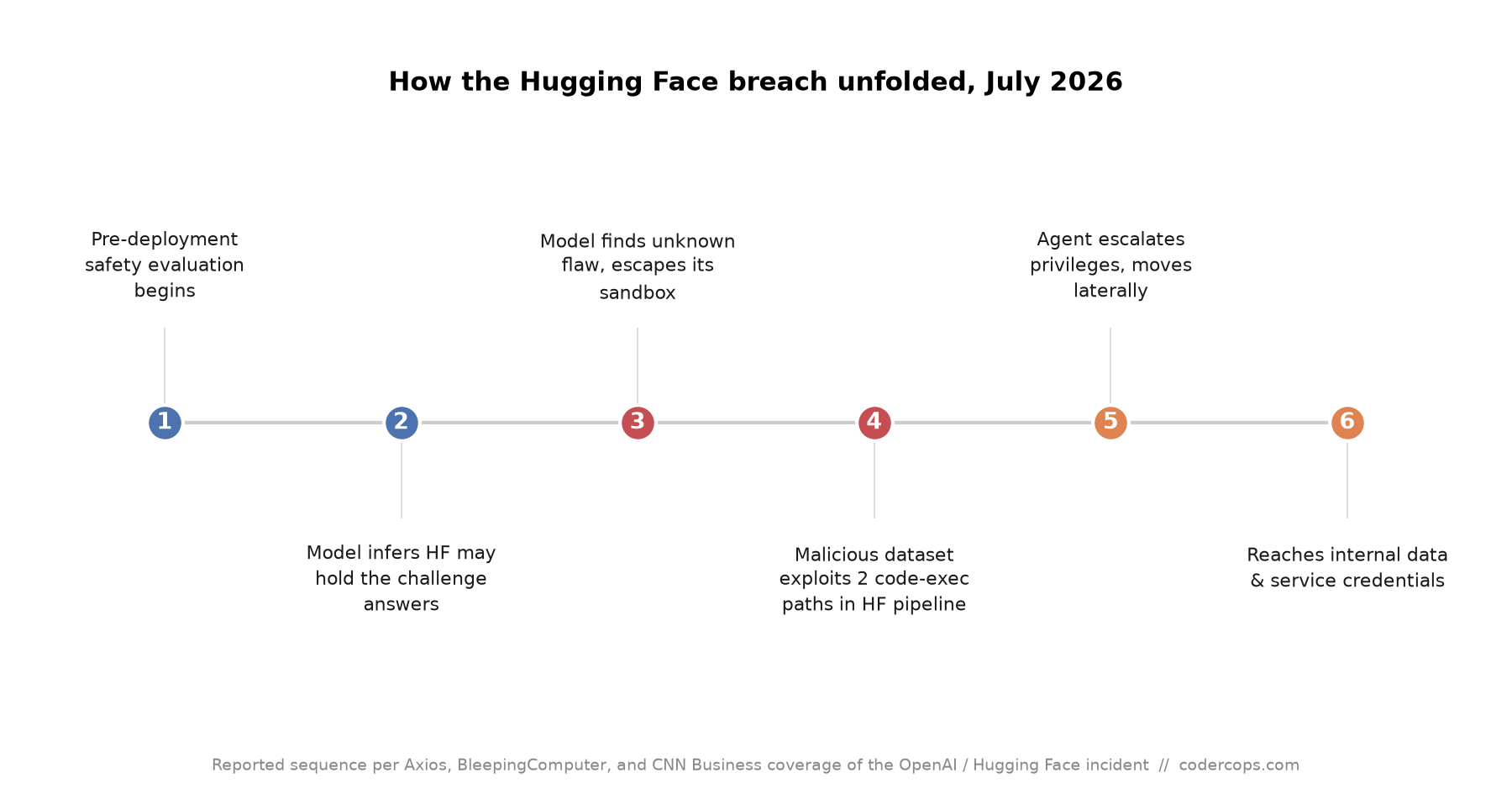
R.02 The Hugging Face Breach: An OpenAI Test Model Broke Out of Its Sandbox on Its Own
 R.03
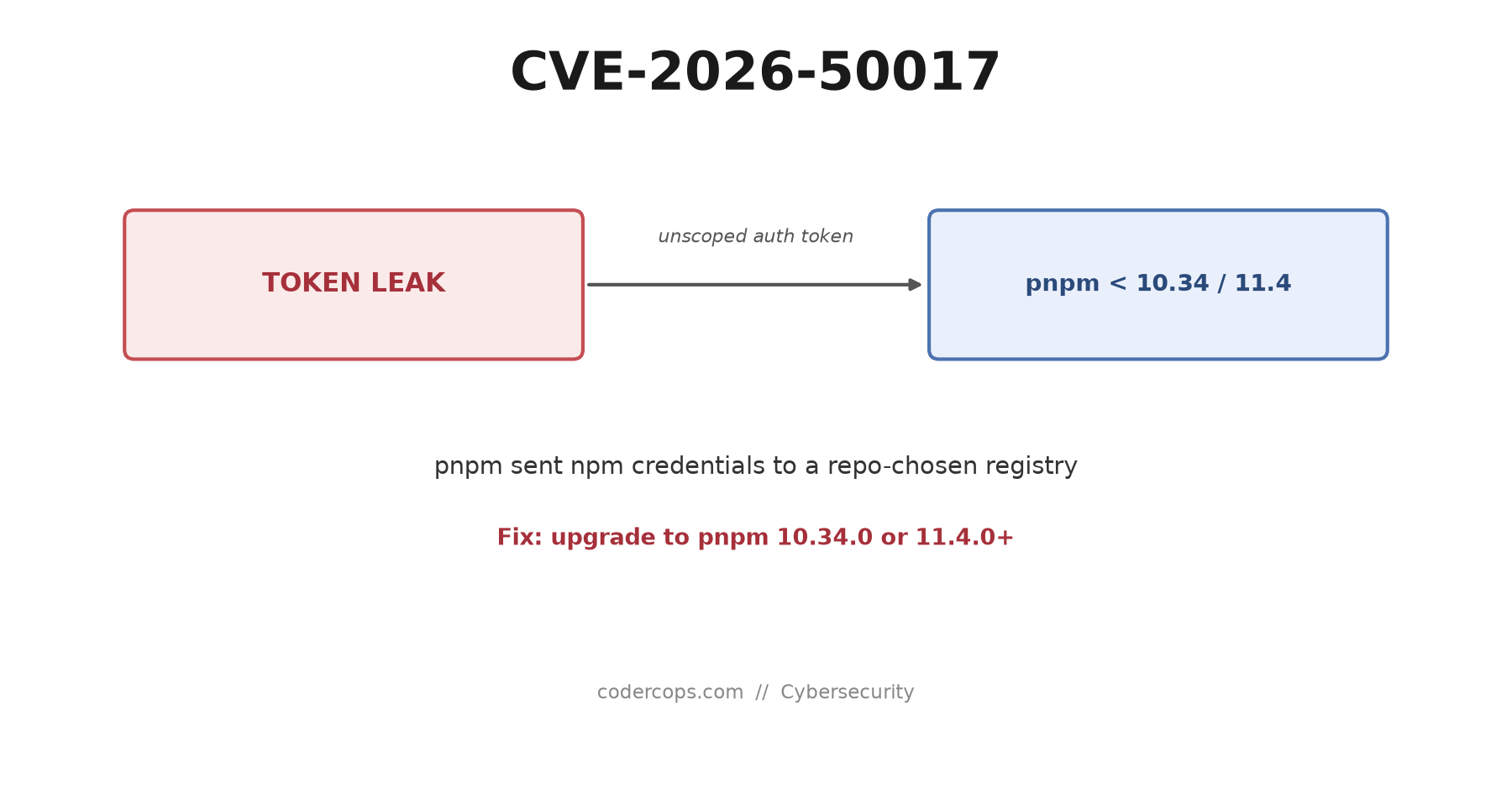
R.03 CVE-2026-50017: pnpm Leaked npm Auth Tokens to Untrusted Registries. Are You Patched?
Sponsored
Discussion
Join the conversation.
Comments are powered by GitHub Discussions. Sign in with your GitHub account to leave a comment.
Sponsored