Web Development · Frontend
CSS Cascade Layers: Fix Specificity Wars for Good
CSS @layer lets you set explicit priority between your reset, base, components, and utilities. Here's how cascade layers work in production stylesheets.

Anurag Verma
6 min read

Sponsored
CSS specificity bugs follow a pattern. You import a third-party component library. Its styles conflict with yours. You add !important. Three months later, you’re writing !important to override a previous !important, and no one on the team can explain why anything works anymore.
The root problem: the CSS cascade resolves conflicts based on specificity and source order, but there’s no way to declare which stylesheets should win by default. A utility class and a component style with equal specificity resolve by whichever appears later in the file, not usually what you intended, and not easy to control.
CSS @layer adds the missing piece: explicit ordering between groups of styles. A style in a lower-priority layer loses to a style in a higher-priority layer, regardless of selector specificity. That one rule is what makes specificity wars preventable rather than something you manage reactively.
Browser support is universal as of 2023 (Chrome 99, Firefox 97, Safari 15.4). This is not an experimental feature.
How cascade layers work
You declare layer names once, at the top of a stylesheet, in the order you want them to win: @layer reset, base, design-system, utilities;. That single line fixes the priority order for every style assigned to those layers anywhere in the codebase. A style in utilities always beats a style in design-system, no matter which selector is more specific, because layer order is checked before specificity is ever evaluated.
@layer reset, base, design-system, utilities;Then assign styles to layers:
@layer reset {
  *, *::before, *::after {
    box-sizing: border-box;
    margin: 0;
    padding: 0;
  }
}

@layer base {
  body {
    font-family: system-ui, sans-serif;
    line-height: 1.5;
    color: #1a1a1a;
  }

  a {
    color: inherit;
    text-decoration: underline;
  }
}

@layer design-system {
  .btn {
    display: inline-flex;
    align-items: center;
    padding: 0.5rem 1rem;
    border-radius: 0.375rem;
    font-weight: 500;
    background-color: #3b82f6;
    color: white;
  }
}

@layer utilities {
  .text-sm { font-size: 0.875rem; }
  .font-bold { font-weight: 700; }
  .bg-red-500 { background-color: #ef4444; }
}
Any style in utilities wins over design-system, which wins over base, which wins over reset. This holds regardless of selector specificity. A .btn selector in design-system loses to a single class in utilities even though they have the same specificity score.
One important rule about unlayered styles: styles placed outside any @layer block win over all layered styles. If you have unlayered CSS in your project, those declarations will beat everything in your layers. This is useful for incremental adoption, existing styles you haven’t migrated yet still win, so you can move code into layers gradually without breaking things.
Handling Third-Party Libraries
The most practical immediate use: wrap third-party styles in a low-priority layer so your styles can override them without fighting specificity.
@layer reset, third-party, base, components, utilities;

@import url("./node_modules/some-library/dist/styles.css") layer(third-party);
Now any style you write in components or utilities overrides the library’s styles, even if the library uses higher-specificity selectors internally. You stop needing !important to override third-party components, because the layer ordering handles it.
For CSS imported in JavaScript (common in React projects), the layer assignment depends on where the CSS file is loaded. If you control the file, wrap its contents in an @layer block. If you don’t control it, create a wrapper file that imports it into a layer.
With Tailwind CSS
Tailwind v4 has native cascade layer support. Tailwind’s generated utilities land in the utilities layer by default, and base styles go into base. You can position your custom layers relative to Tailwind’s:
/* app.css */
@import "tailwindcss";

@layer reset, base, tailwind-base, components, tailwind-utilities, overrides;

/* Custom components sit above Tailwind's base but below utilities */
@layer components {
  .card {
    background-color: white;
    border-radius: 0.5rem;
    padding: 1.5rem;
    box-shadow: 0 1px 3px rgba(0, 0, 0, 0.1);
  }
}

/* Overrides beat everything */
@layer overrides {
  .dashboard-card {
    padding: 2rem;
  }
}
In Tailwind v3, you could use @layer manually, but the integration required more coordination. In v4, layers are part of how Tailwind manages style precedence out of the box, one of several changes covered in our Tailwind v4 migration guide.
Nesting Layers
Layers can be nested for more granular control within a category:
@layer components {
  @layer buttons {
    .btn { /* ... */ }
    .btn-primary { /* ... */ }
  }

  @layer forms {
    .input { /* ... */ }
    .select { /* ... */ }
  }
}
A nested layer’s full name is components.buttons. The ordering within components determines which sub-layer wins when there’s a conflict between buttons and forms. The outer layer order still applies when comparing components against utilities.
In Component Frameworks
For frameworks with component-scoped styles (CSS Modules, Vue <style scoped>, styled-components), the global specificity problem mostly doesn’t apply because styles are already isolated per component. CSS @layer is most useful in global CSS, resets, design tokens, utility classes, and shared stylesheets that multiple components reference.
For CSS Modules, you can use @layer inside a module file. The layer name is local to that file unless you’re using :global, which would make it part of the global layer registry.
Migrating an Existing Stylesheet
If your existing CSS has specificity problems, you can adopt layers without a full rewrite:
- Add a
@layerdeclaration at the top with your intended ordering. - Move your reset styles into
@layer reset { }. - Leave everything else outside layers, unlayered styles still win over layered ones, so nothing breaks.
- Move styles into appropriate layers as you touch each section.
This approach avoids a big-bang migration. You get the benefits of layers in the parts of your CSS you move, while the rest stays unchanged. Teams that move code into layers tend to discover specificity bugs they didn’t know they had, styles that were accidentally overriding each other through source order rather than intent.
When Layers Add More Than They’re Worth
For small projects with a single CSS file and no third-party style conflicts, @layer adds structural overhead without solving a real problem. The upfront cost is low, but if you’re not fighting specificity, the benefit doesn’t show up.
Layers are most valuable when:
- You’re combining your own styles with one or more third-party component libraries
- You’re building a design system that other projects consume
- Your team has already spent time debugging “why is this class not working” specificity issues
- You’re using a utility-first framework alongside custom component styles
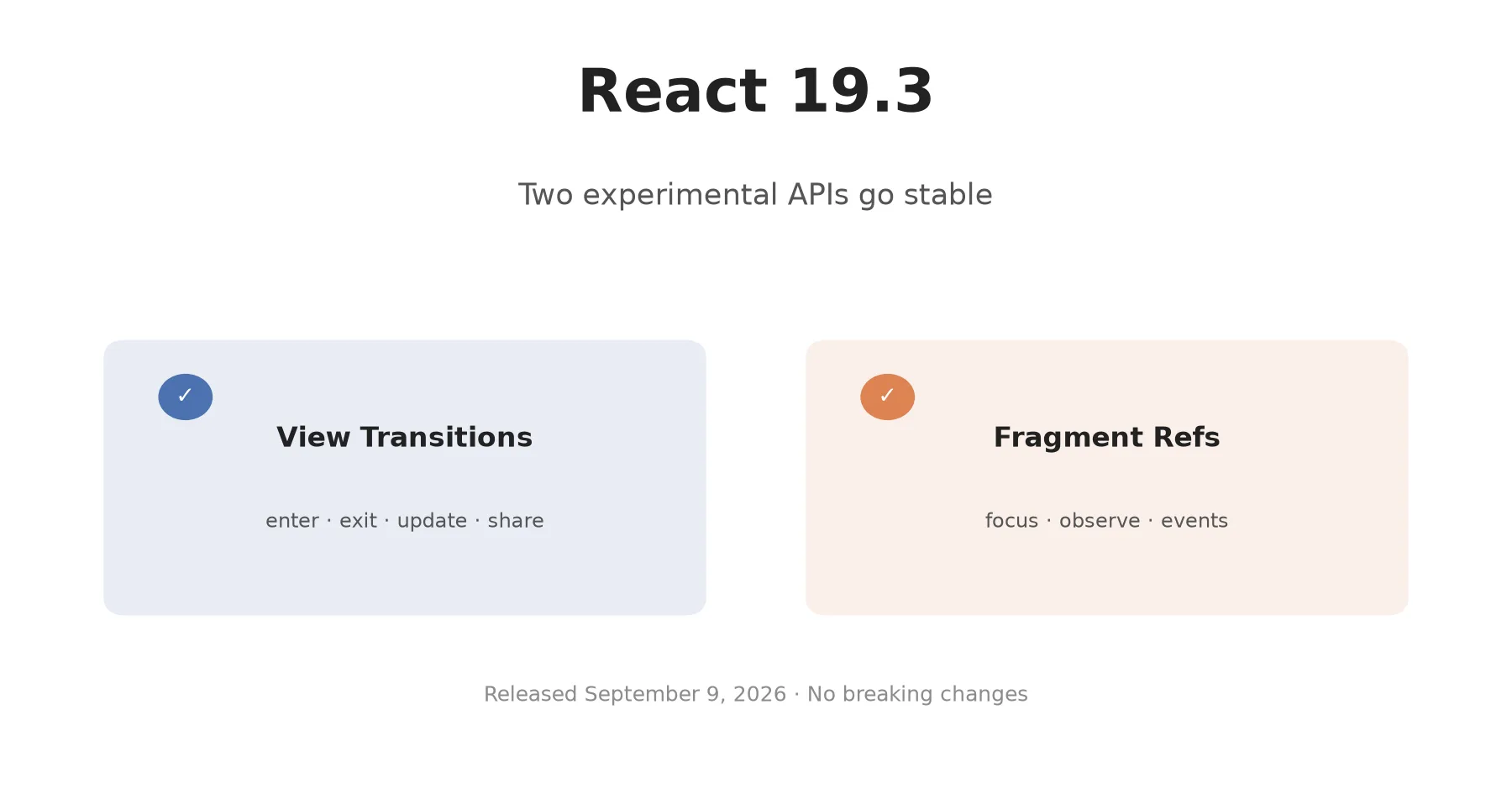
Cascade layers don’t replace the specificity rules, they add a step that runs before specificity is evaluated. Once a style is in a lower-priority layer, its specificity doesn’t matter relative to higher-priority layers. That’s the mechanism. Once you see it clearly, the behavior is predictable, and specificity conflicts become something you design around rather than debug after the fact, the same shift in mindset that made View Transitions and scroll-driven animations worth adopting as native CSS instead of reaching for a library by reflex.
Frequently asked questions
- What does CSS @layer actually do?
- @layer lets you declare named groups of styles with an explicit priority order. A style in a layer declared later always beats a style in an earlier layer, even if the earlier layer's selector has higher specificity. It solves the problem of two equally-specific rules resolving by source order instead of intent.
- Do unlayered styles win or lose against layered styles?
- Unlayered styles always win over anything inside a layer, regardless of layer priority. This is deliberate: it lets you adopt cascade layers incrementally, moving code into layers section by section, without breaking styles you haven't migrated yet.
- Is CSS @layer supported in all major browsers?
- Yes, since 2023: Chrome 99, Firefox 97, and Safari 15.4 all support it, which by 2026 covers effectively all production traffic. There's no polyfill consideration or feature-detection needed for typical projects.
- How do cascade layers work with Tailwind CSS?
- Tailwind v4 has native @layer support: generated utilities land in a utilities layer and base styles in a base layer by default. You declare your own layers relative to Tailwind's in your stylesheet's @layer statement, giving you control over whether your custom components override Tailwind's utilities or the reverse.
Sponsored
More from this category
More from Web Development
Sponsored
Discussion
Join the conversation.
Comments are powered by GitHub Discussions. Sign in with your GitHub account to leave a comment.
Sponsored