P.01How to Hire a Founding Engineer in 2026
A founding engineer isn't your first senior hire with better equity. Here's how to screen for the generalist, high-ambiguity skill set the role actually needs.
Tag
23 articles tagged #Recruiting.
P.01A founding engineer isn't your first senior hire with better equity. Here's how to screen for the generalist, high-ambiguity skill set the role actually needs.
P.02Algorithm puzzles score memorization, not the job. Here's the five-dimension rubric we use to screen developers on what they'll actually do at work.
P.03A staff engineer is scoped by impact across teams, not seniority. Here is how to screen for that instead of promoting your best senior engineer.
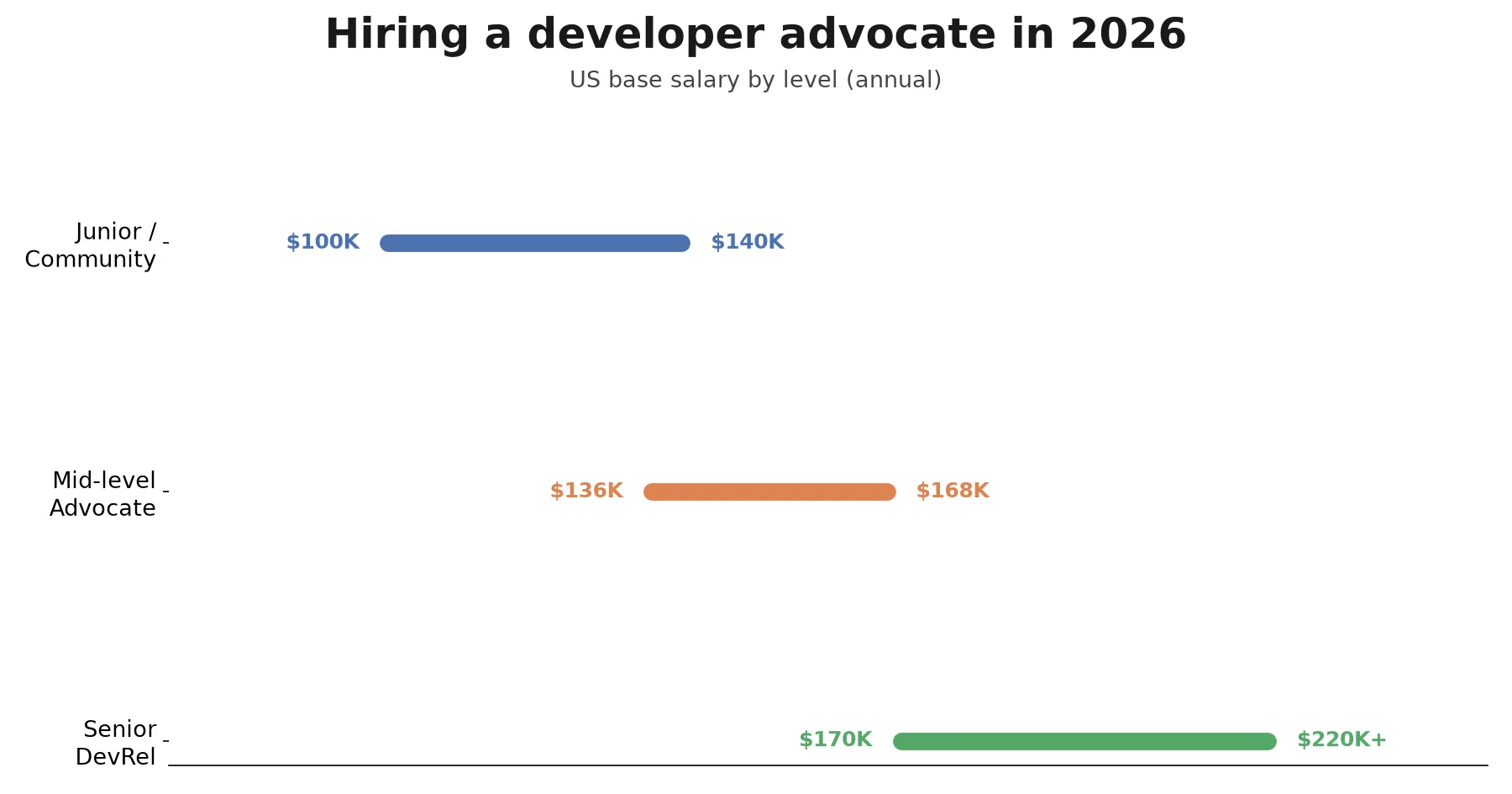
P.04A DevRel posting draws speakers, content marketers, and ex-engineers who miss coding. How to work out which your product needs, what to test, what it costs.
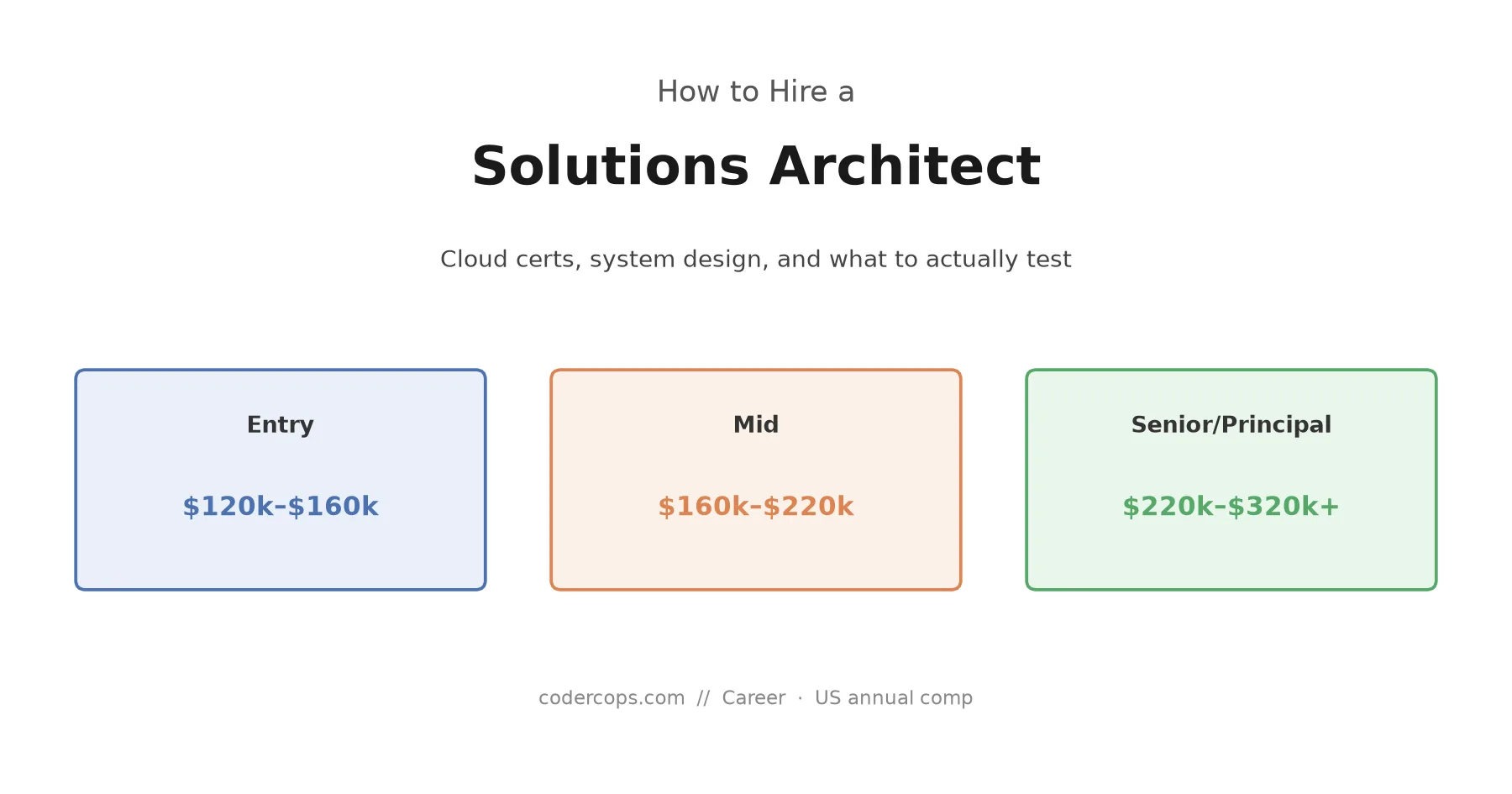
P.05A solutions architect posting attracts cloud generalists, ex-consultants, and people who haven't shipped in years. How to tell them apart, and what to test.
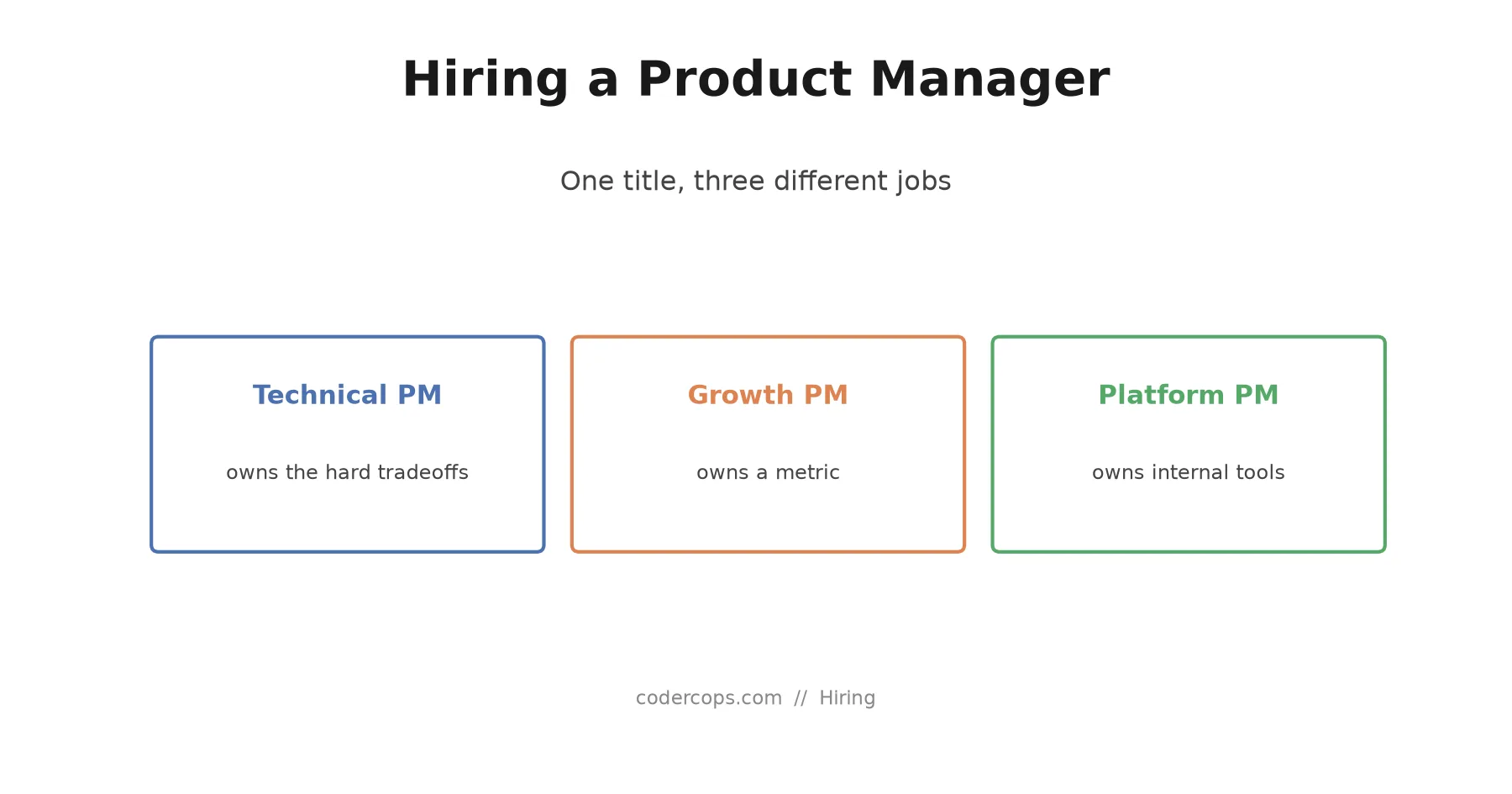
P.06PM job descriptions read identically across companies. The actual job doesn't. Which of the three real PM jobs you're hiring for, and what the role costs.
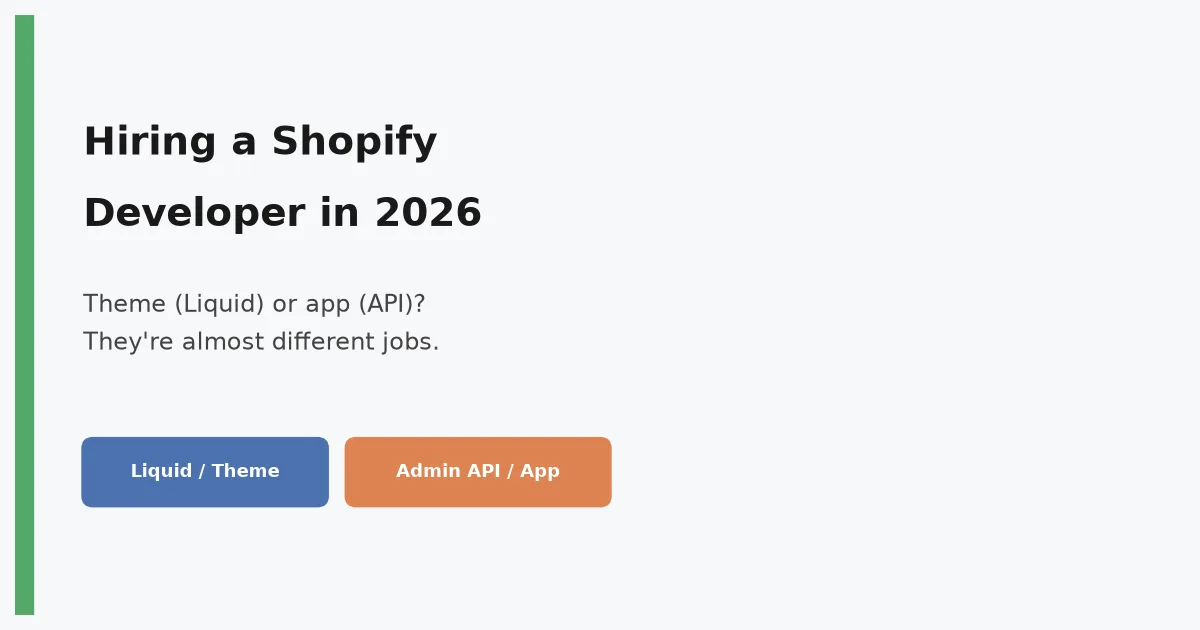
P.07Shopify hiring split into two jobs, theme customization and app or headless work, that share a platform and little else. How to tell which one you need.
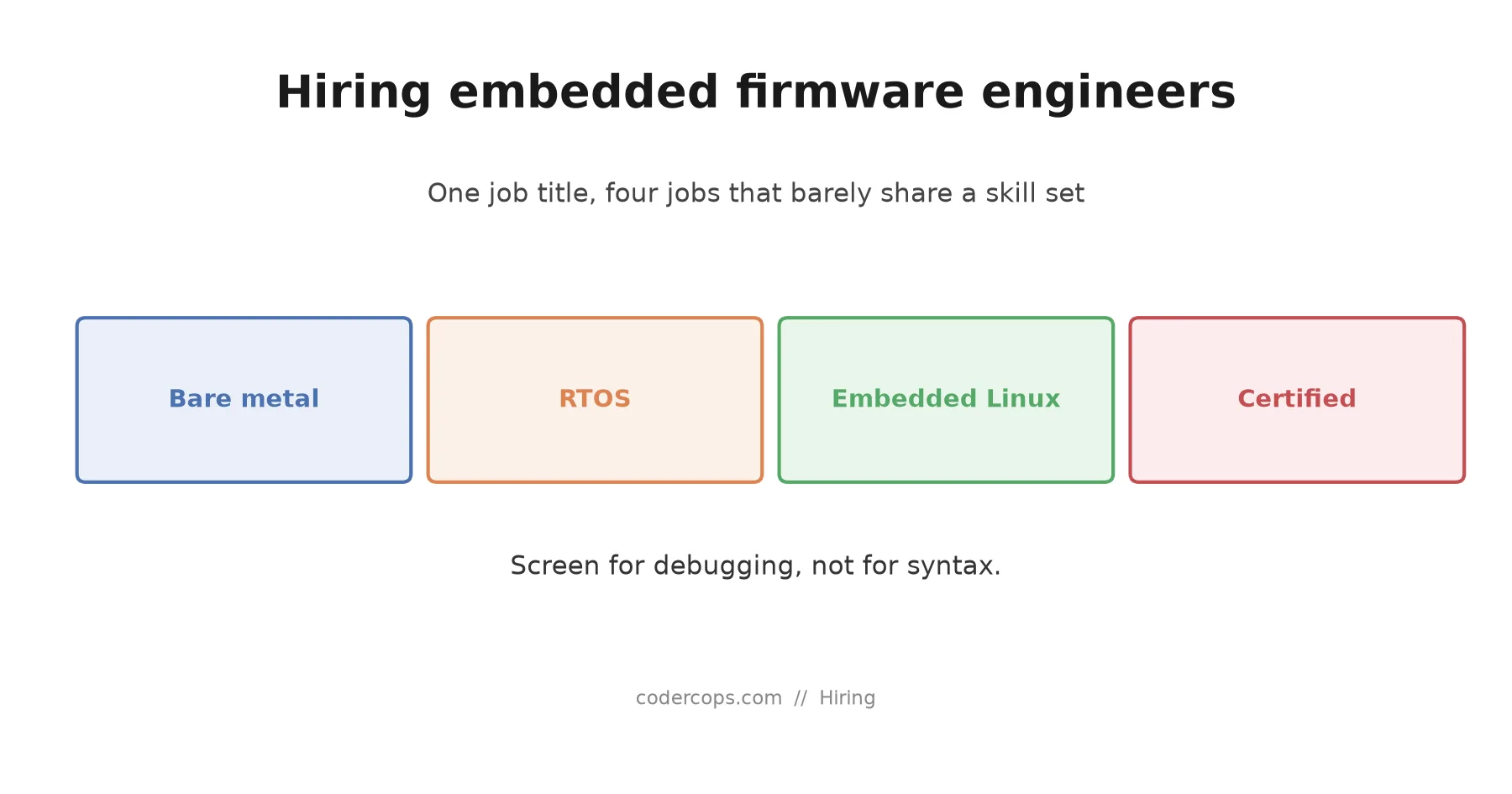
P.08Firmware hiring fails differently from web hiring. The pool is small, the specialisms don't transfer, and the usual coding screen tells you almost nothing.
Braintrust's pitch is that talent keeps 100% and the fee sits with the client. That changes the incentives in ways worth understanding before you decide it is cheaper.
Andela suits companies adding sustained engineering capacity across timezones. If your need is smaller or shorter, the enterprise shape works against you.
Turing is built for long, full-time-equivalent remote engagements matched by an algorithm. What that suits, and where to look when the shape is wrong.
Looking for an Arc.dev alternative to hire vetted remote developers? What Arc.dev does well, where it leaves work on your plate, and how the options compare.
Gun.io is strong for senior US-timezone freelancers, but it isn't the only way to hire vetted developers. The real alternatives, and how to choose between them.
Looking for a Lemon.io alternative to hire vetted developers? Where Lemon.io fits, where it doesn't, and how to choose for the role you're actually filling.
Upwork is the biggest freelance marketplace, but the vetting is on you. An honest look at Upwork alternatives for developers and how to pick the right one.
P.16Cloud architect is a badly misused title. How to define the role, screen for real judgment, and avoid hiring a certification collection by mistake.
Security engineer covers five genuinely different jobs. How to define the one you need, run a screen that tests real skill, and dodge the usual mistakes.
The product designer role consolidated in 2026. How to write the job post, read portfolios honestly, and screen for designers who can actually ship.
Both formats have real problems, and AI made take-homes worse. What each predicts, where each fails, and the hybrid that beats either one on its own.
Android changed more in three years than the prior decade. How to tell who builds modern Compose apps from who learned it in 2019 and stopped there.
Python spans AI, data, backend, and DevOps, so the title says little. How to define the role, screen for real ability, and avoid a costly mismatch.
Everyone says their developers are vetted. Almost nobody says what that means. What real vetting looks like, the screen we run, and the red flags to catch.
Want Toptal-level vetting without the premium? Marketplaces, agencies and AI-screened shortlists cost less and still vet developers. What each trades off.