Business · Hiring
Braintrust Alternatives in 2026: What the No-Fee Model Actually Costs You
Braintrust's pitch is that talent keeps 100% and the fee sits with the client. That changes the incentives in ways worth understanding before you decide it is cheaper.

Anurag Verma
7 min read

Sponsored
Braintrust’s distinguishing feature is its fee model: talent keeps 100% of their rate, and the network’s fee sits with the client rather than being taken out of what the engineer earns.
That is a real structural difference and it is worth understanding properly, because it is usually discussed as though it were a discount. It is not a discount. It is a different answer to the question of who pays.
What the model actually changes
Every talent network pays for four things: sourcing, screening, replacement risk when a placement fails, and the contracting and payment layer. Those cost money regardless of who is billed for them.
A network that takes nothing from the engineer has to recover all of it from the client. So the fee did not disappear, it moved. Whether your total is lower depends on the rate the engineer sets, and that rate is no longer being compressed by a platform cut.
There is a second, quieter consequence. A network earning less per placement has less to spend on screening each candidate. That is arithmetic rather than criticism, and it points at where your own effort will go.
The advantage that is genuinely real
Incentive alignment, and it matters more than it sounds.
The quiet failure mode of high-markup networks is that engineers resent the cut and route around the platform: the relationship moves off-platform after the first engagement, or the strongest people never join because the economics are poor. You end up selecting for people who tolerate a large fee rather than people who are good.
A model where talent keeps their full rate does not have that leak. You are more likely to be talking to someone who wants to be there, and less likely to be quietly steered off-platform two months in.
What that means for your process
You should expect to do more of the evaluation.
That is fine if you are technical, or have someone who is. It is a problem if you chose a network specifically so somebody else would make the judgement. In that case the premium networks are honest about what they sell and it is worth paying for.
The practical version: budget a thirty-minute screen per shortlisted candidate, and write it before you start looking. One real problem from your own domain, identical for everyone, testing how they think rather than whether they produce perfect code under observation.
Where else to look
If you want the judgement made for you: Toptal is the premium managed end, and the markup buys screening depth and a replacement guarantee.
If you want to browse a curated pool yourself: Arc suits technical buyers who want control of the decision.
If you want senior contractors for high-stakes work: Gun.io skews experienced and relationship-led.
If you want speed on a contract role: Lemon.io moves in days.
If the need is a long embedded seat: Turing is built for that shape rather than for projects.
If you can evaluate quickly and want the floor price: an open marketplace remains cheapest, with all the filtering that implies. Covered in Upwork alternatives.
The options side by side
Deliberately no rates in this table. Published rates move constantly and depend on stack, seniority and region, so any number here would be wrong within a quarter and wrong for your role today. What does not move is the shape of each model, and that is what should decide your choice.
| Model | Best for | Watch out for | |
|---|---|---|---|
| Braintrust | Fee on the client, talent keeps 100% | Teams who can screen and want engaged candidates | Less platform revenue per placement means lighter vetting |
| Toptal | Premium managed network | Non-technical buyers | High markup, screening not shown |
| Arc | Curated marketplace | Technical buyers who want to choose | You still run the process |
| Gun.io | Senior contract network | Work where being wrong is expensive | Overkill for well-specified tasks |
| Lemon.io | Contract-first, fast | Someone competent working this week | Lighter screen |
| Turing | Long remote engagements | A full-time-equivalent seat | Short work fights the model |
| Upwork | Open marketplace | Small specified work you can check | All filtering is yours |
| Agency or studio | Outcome delivery | A scoped result by a date | You are buying management |
How to compare fee models without fooling yourself
Compare total engagement cost, and put your own hours in it at whatever you think they are worth.
A network charging 20% that removes a day of shortlisting and screening may be cheaper than one charging nothing that hands that day back to you, depending entirely on what your day costs. Neither is being dishonest. The work simply has to happen somewhere.
The line item people leave out is always their own time, which is why the cheapest-looking option so often is not.
What actually predicts the outcome
Not the fee structure. Three other things:
Screening depth, and who does it. Either the network does it properly or you do. If neither does, the model does not matter.
Timezone overlap. Four hours is the number that keeps coming up. Below it, every ambiguity costs a full day, and the first month is nothing but ambiguities.
How tightly you scope the first two weeks. A real, small, shippable piece of work with a definition of done that needs no conversation to interpret. It tells you more than any interview and it limits the damage when the fit is wrong.
Fee structure decides who pays. Those three decide who ships.
We built codercops around showing the screen rather than the badge, so read that as an interested view. The part that holds regardless: whatever you are paying and whoever you are paying it to, ask to see what was tested. A vendor who can describe their screen precisely has one. A vendor who answers in adjectives does not.
What to verify about any network’s claims
Every network on this page makes claims that sound checkable and mostly are not. Four that are worth pressing on, whatever the fee model.
“Top 1% / 3% / 5% of applicants.” Of applicants to what? A percentage of a self-selected applicant pool is not a percentage of engineers. It tells you how selective the funnel is, not how good the output is, and a network that attracts weaker applicants can advertise a smaller percentage while placing worse people. Ask what the screen tests instead.
“Vetted.” The only useful follow-up is: what did you test, and can I see it? A network with a real process can describe the exercise and what a good answer looks like. A network without one answers in adjectives.
“Replacement guarantee.” Ask who decides it is not working, how quickly the replacement arrives, and who pays for the ramp-up you already funded. The answer separates a policy from a sentence on a pricing page.
“Matched in 48 hours.” Matched to what standard? Speed is easy to achieve by lowering the bar, and every network can hit any speed number if the pool is large and the filter is loose. Ask how many candidates you see and how many they considered.
None of these is a reason to distrust a network. They are the questions that distinguish the ones that have thought about their own product from the ones repeating category language, and the answers take ten minutes to collect.
Frequently asked questions
- Is Braintrust actually cheaper?
- It is differently priced rather than simply cheaper. Talent keeps their full rate and the fee sits with the client, so the money moves rather than disappearing. Whether your total is lower depends on the rate the engineer sets, which is not constrained by a platform cut.
- What does a no-fee-to-talent model change about vetting?
- A network earning less per placement has less to spend on screening each candidate. That is not a criticism, it is arithmetic. Expect to carry more of the evaluation yourself, and price that time into the comparison.
- What is the real advantage of talent keeping 100%?
- Incentive alignment. Engineers who keep their full rate engage more readily and have less reason to take a relationship off-platform, which is the quiet failure mode of high-markup networks. You are more likely to be talking to people who want to be there.
- How should I compare fee models honestly?
- Total engagement cost, including your own hours. Every model pays for sourcing, screening, replacement risk and payments somewhere. A lower visible fee usually means one of those moved onto you, and your time is the line item people leave out.
- Does the fee model predict engagement quality?
- No. Screening depth, timezone overlap and how tightly you scope the first two weeks predict it. Fee structure decides who pays, not who ships.
Sources
Sponsored
More from this category
More from Business
 R.01
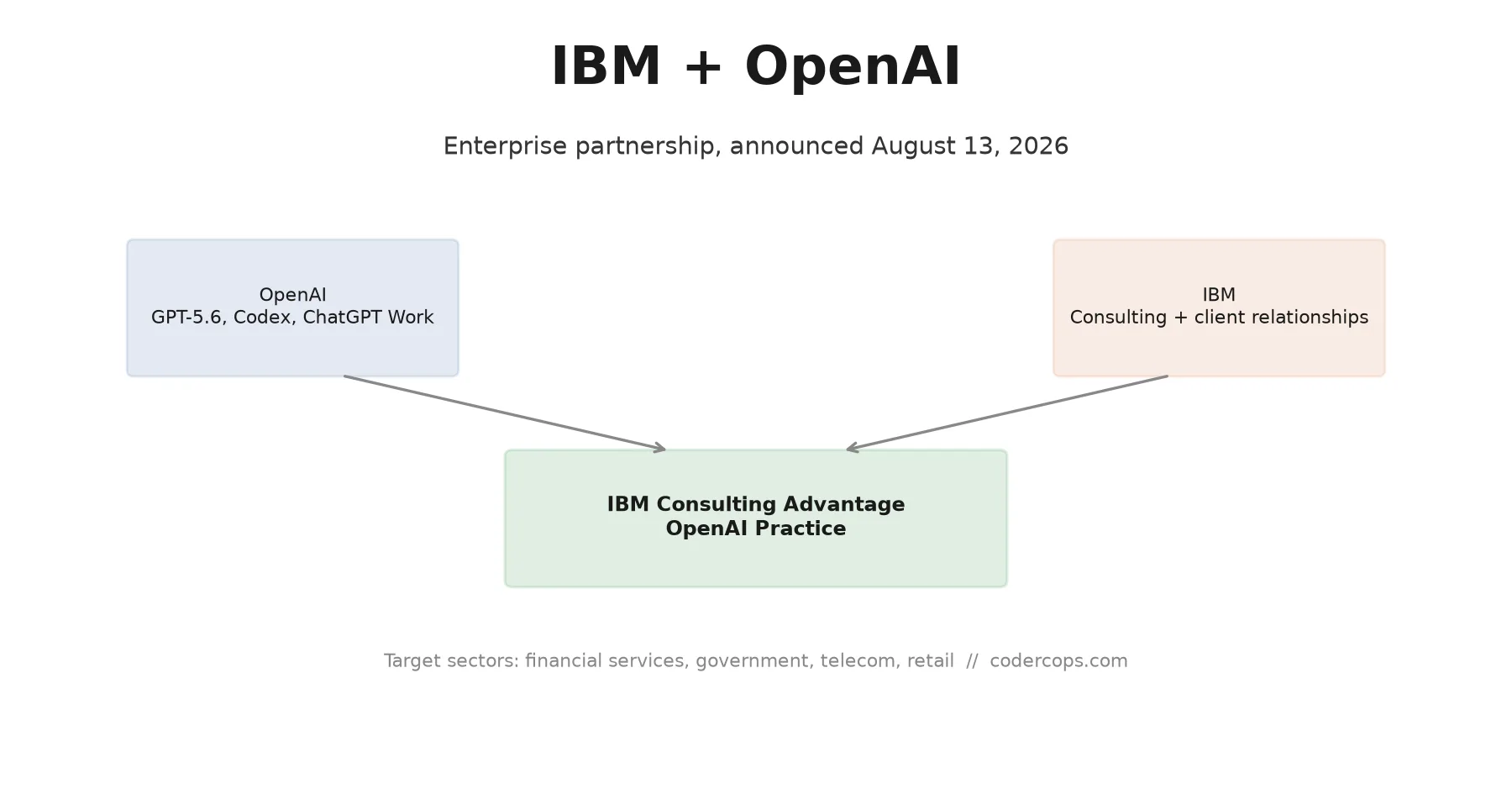
R.01 IBM and OpenAI's Enterprise Deal: What It Means Beyond the Press Release
 R.02
R.02 Arc.dev Alternatives in 2026: When a Curated Marketplace Is and Isn't the Answer
 R.03
R.03 Gun.io Alternatives in 2026: Hiring Senior Contractors Without Overpaying for Vetting
Sponsored
Discussion
Join the conversation.
Comments are powered by GitHub Discussions. Sign in with your GitHub account to leave a comment.
Sponsored