Cybersecurity · Supply Chain Security
CVE-2026-82329: JFrog Artifactory Admin Bypass
A phantom join key in JFrog Artifactory's auth service let attackers forge admin tokens days after disclosure. Affected versions, what to check, and the patch.

Prathviraj Singh
6 min read
Sponsored
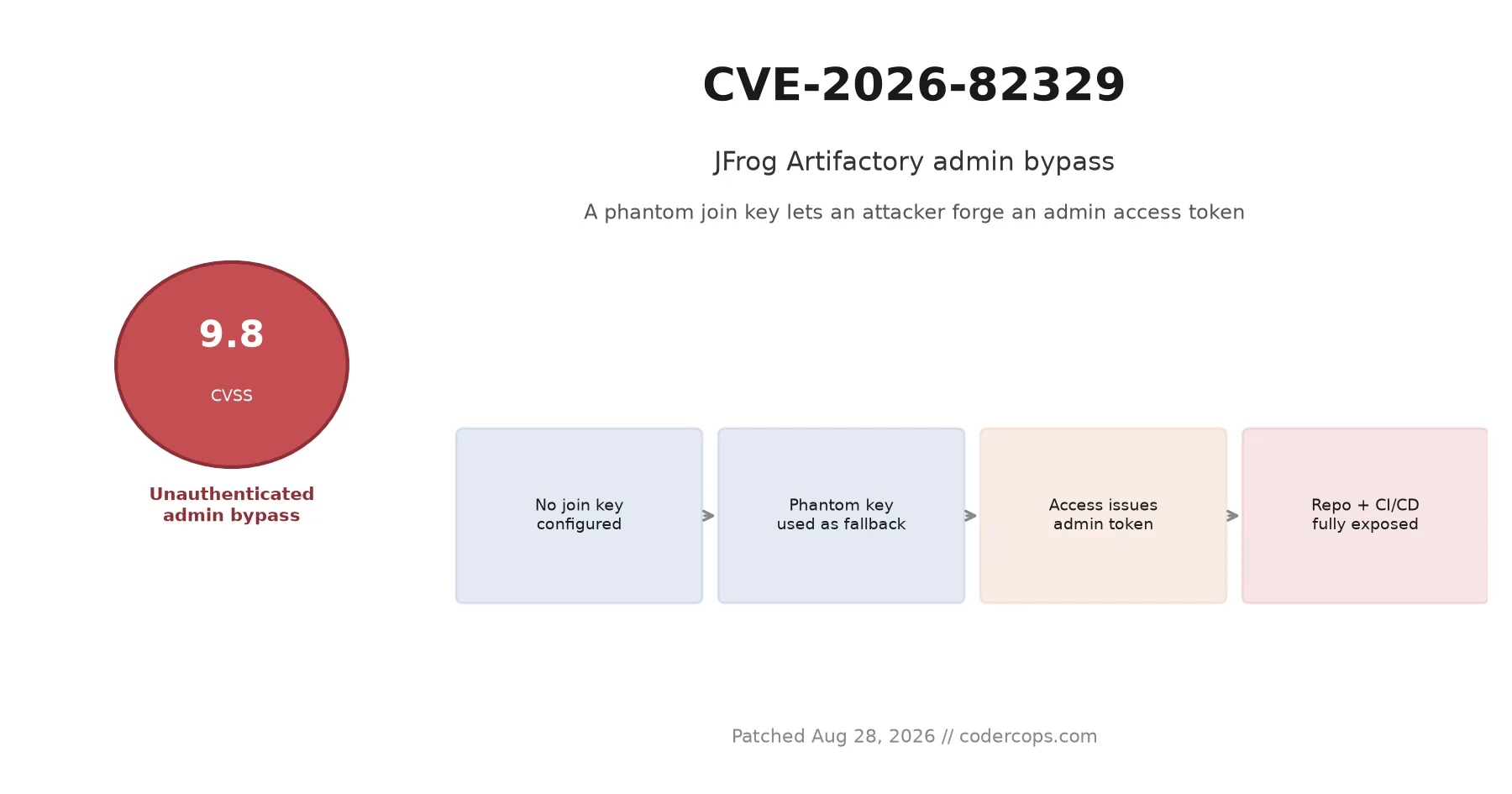
CVE-2026-82329 lets an unauthenticated attacker mint themselves an administrator token on a self-managed JFrog Artifactory instance, no password, no session, nothing but network access to the server. JFrog patched it on August 28. watchTowr says active exploitation started within three or four days. If your Artifactory instance is self-managed and you haven’t confirmed you’re on a patched build, that gap is the thing to close today, not this sprint.
What broke, mechanically
Artifactory relies on a companion service called JFrog Access to handle authentication and permission checks. Access, in turn, expects every instance to have a join key, a shared secret that lets it verify a request is really coming from a trusted piece of the same deployment rather than from anyone who found the API.
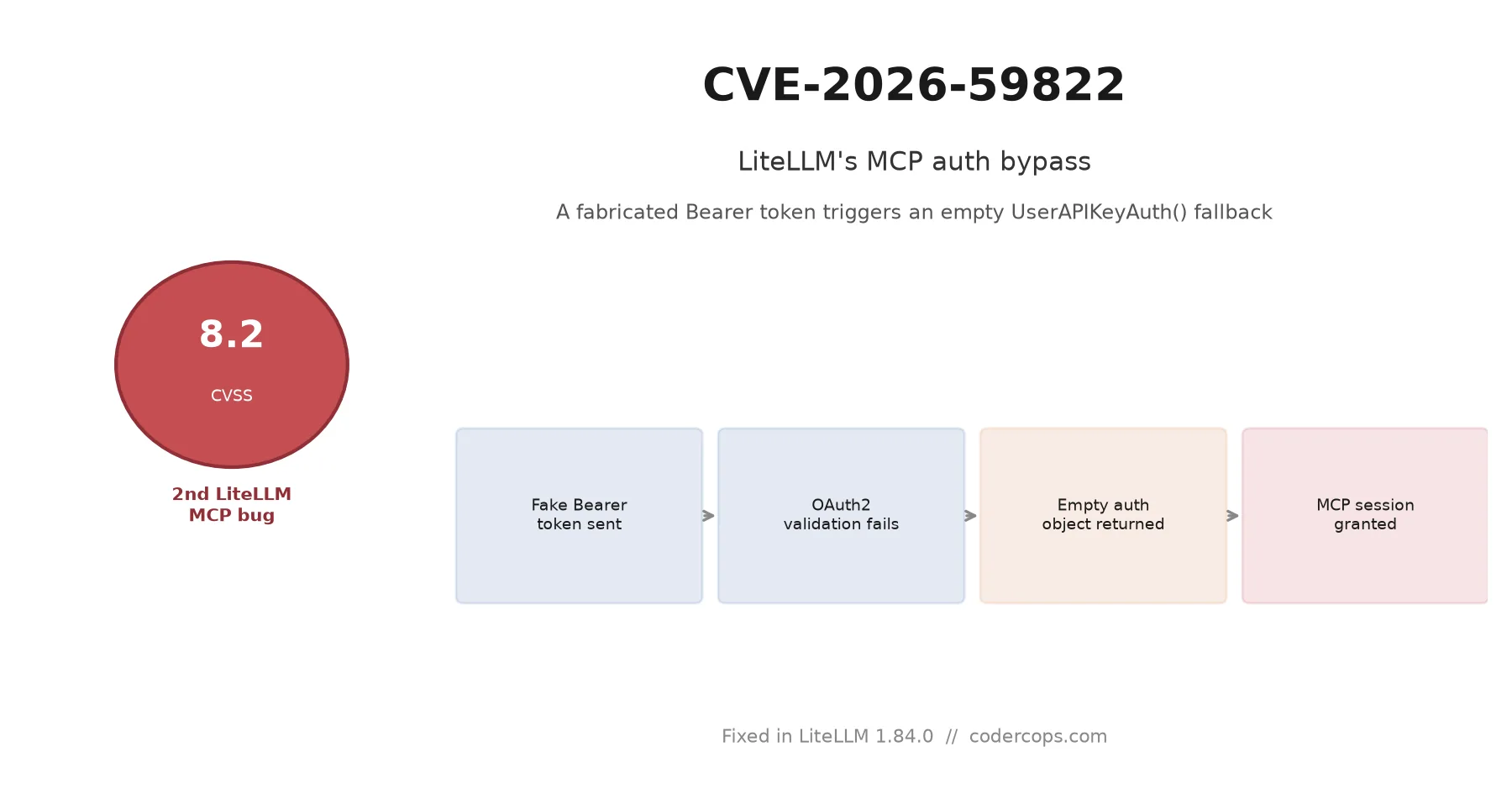
The bug: an instance that was never given an explicit join key doesn’t reject the resulting request. It falls back to a predictable placeholder value instead. Anyone who knows that placeholder can present it and have Access hand back a token as if they were a trusted internal caller, and that token comes back scoped as an administrator. No credentials were checked, because from Access’s point of view, none were required. It’s the same failure pattern as CVE-2026-59822 in LiteLLM two weeks ago: not a missing check, but a fallback path that quietly hands out a valid-looking credential when it should refuse.
CVSS rates it 9.8. That’s an accurate score for once. There’s no privilege escalation step, no chained bug, no social engineering. Network access to the instance is the entire prerequisite. watchTowr’s writeup on the exploitation timeline is worth reading directly if you run Artifactory; it’s the source for most of the attacker-behavior detail below.
Who this hits
JFrog Cloud customers are out of scope. JFrog patches its own hosted instances, so there’s nothing to do on that side. Everyone else, meaning any self-managed Artifactory running on AWS, Azure, another cloud provider, or bare metal, is the affected population, and it’s a big one. Artifactory isn’t a nice-to-have dev tool; it’s the repository that sits between “developer pushes code” and “CI/CD pulls a dependency or ships a build artifact” at a huge number of organizations. It’s the kind of infrastructure that gets stood up once, configured by whoever set up the pipeline three years ago, and then left alone because it works.
That’s exactly the profile of a system that never gets an explicit join key set. Default configuration isn’t a rare misconfiguration here, it’s closer to the common case, which is part of why watchTowr’s read on the exploitation curve is unsettling: from patch release to real-world attacks in three to four days, against production infrastructure that most security teams don’t put on the same patch-Tuesday cadence as their OS or browser fleet.
What an attacker does with it
An admin token isn’t the payoff, it’s the starting point. From that access, watchTowr and other researchers have observed:
- Enumerating users, groups, and federated access relationships, the reconnaissance step
- Reading every artifact the instance stores, including anything not meant to be public
- Modifying security configuration and permissions
- Altering or replacing build artifacts, which is the scenario that should worry anyone running CI/CD against a compromised repository
That last point is why one commentator’s blunt framing stuck: Artifactory hosts binaries, so a working exploit here is close to an RCE bomb aimed at everything downstream of it. If your build pipeline pulls a dependency from a compromised Artifactory instance and trusts what it gets back, you’ve just handed an attacker a foothold in every system that consumes that build. This is the same supply-chain shape as the npm worm that moved through the keyv/cacheable package chain earlier this year, just with the trust boundary moved one layer down, from a public registry to the private one your own team runs.
Patching and cleanup
Upgrade to the fixed build for your branch:
| Branch | Fixed version |
|---|---|
| 7.111.x | 7.111.21 |
| 7.117.x | 7.117.28 |
| 7.125.x | 7.125.20 |
| 7.133.x | 7.133.29 |
| 7.146.x | 7.146.38 |
| 7.161.x | 7.161.20 |
Check your running version against JFrog’s advisory before assuming a recent-looking build number is safe; the vulnerable range runs across most of the 7.1xx line up to those exact patch points.
Patching stops new tokens from being forged. It does nothing about tokens an attacker already has. Treat every admin-scoped token that existed before you patched as suspect:
# List active access tokens (requires an admin session on the patched instance)
curl -s -H "Authorization: Bearer $ADMIN_TOKEN" \
  https://your-artifactory-host/access/api/v1/tokens | jq '.tokens[] | {token_id, subject, issued_at}'
Cross-reference issued_at and subject against what your team actually did. A token nobody remembers creating is one to revoke immediately, not investigate at leisure. Then set an explicit join key rather than trusting the instance to have generated one sensibly, since that’s the exact condition this bug depends on.
The pattern worth internalizing
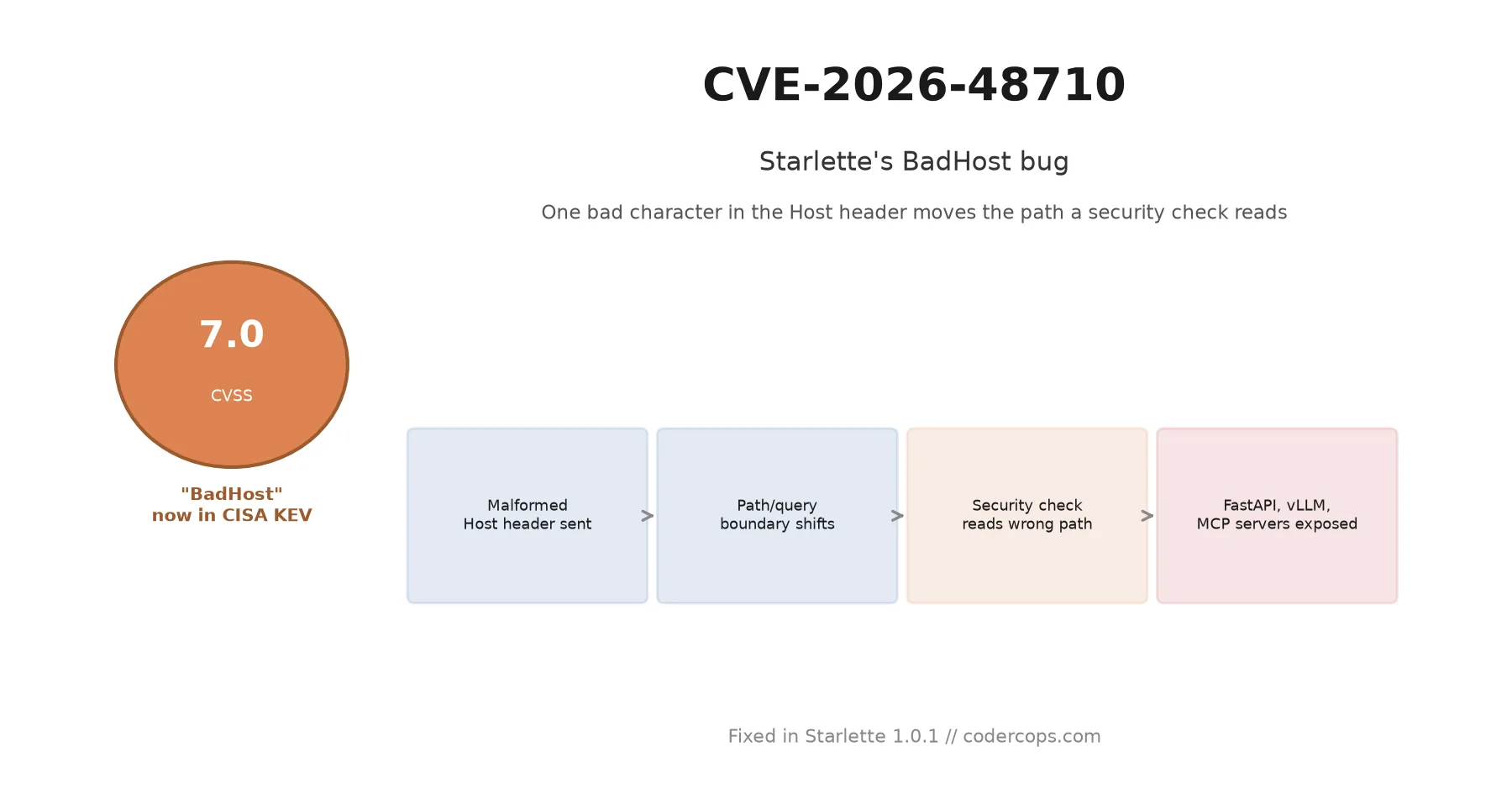
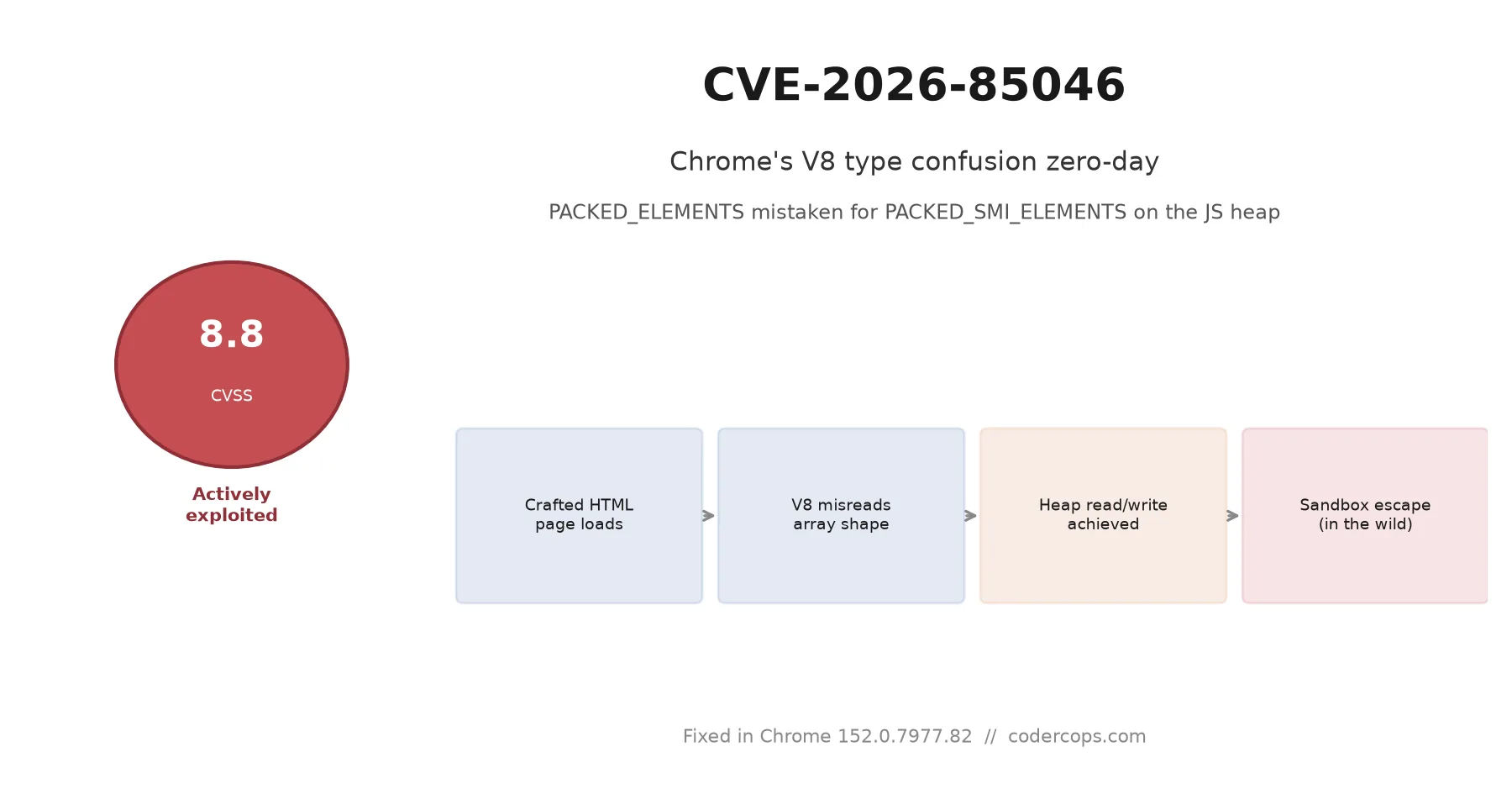
This bug shipped in the same CISA batch as fresh CVEs in Starlette, Kestra, SonicWall’s SMA1000 line, and LiteLLM’s second MCP auth bypass this year. Four unrelated products, four different root causes, one common shape: an authentication fallback that was supposed to fail closed and instead failed open. That’s not a coincidence of timing so much as a reminder that “authentication working” and “authentication code reviewed for its failure path” are different claims, and most security review still spends more time on the former.
If your organization runs self-hosted developer infrastructure, Artifactory, an LLM gateway, an internal package registry, anything that sits between your team and your build pipeline, this is a good week to ask not just “are we patched” but “when did we last explicitly configure the auth secrets these tools assume exist,” because the gap between assumed-configured and actually-configured is precisely where CVE-2026-82329 lived. Teams evaluating that exposure across their own infrastructure is the kind of review our engineering team runs before a client’s supply chain becomes someone else’s headline.
Frequently asked questions
- What does CVE-2026-82329 actually let an attacker do?
- Under Artifactory's default configuration, an unauthenticated attacker with network access to a self-managed instance can generate an administrator-level access token without ever presenting valid credentials. From there they can read and modify every artifact the server holds, enumerate users and groups, alter security configuration, and push new binaries, meaning they can potentially replace a legitimate build artifact with a malicious one.
- Am I affected?
- If you run JFrog Cloud, no action is needed on your side. If you run a self-managed Artifactory instance, on AWS, Azure, another cloud, or on-premises, and you never explicitly rotated the instance's join key away from its default, you're affected regardless of version, until you're on the patched build for your branch.
- What is a 'join key' and why does a missing one matter?
- The join key is the shared secret JFrog Access uses to authenticate requests between an Artifactory instance and its own internal services. An instance that never had one explicitly configured falls back to a predictable placeholder instead of refusing the request outright. An attacker who knows that fallback value can use it to have the Access service issue them a token as if they were the instance's own trusted service, which is functionally the same as an admin login with no password check.
- How do I know if I've already been hit?
- Check Artifactory's access log for token-generation events that don't correspond to a real admin logging in, and look for any admin-scoped token whose creation time you can't attribute to a person on your team. watchTowr's telemetry shows attackers using forged tokens mainly to enumerate users, groups, and federated access relationships first, reconnaissance before deciding whether to go further, so a forged token sitting quietly in your logs is a plausible early sign.
- Does upgrading Artifactory revoke tokens an attacker already forged?
- No. The patch closes the code path that let an attacker generate a token without credentials, but any token already issued keeps working until it expires or you revoke it. After patching, audit and revoke admin tokens you can't account for, and rotate the join key explicitly rather than relying on Artifactory to have one implicitly set.
Sources
Sponsored
More from this category
More from Cybersecurity
Sponsored
Discussion
Join the conversation.
Comments are powered by GitHub Discussions. Sign in with your GitHub account to leave a comment.
Sponsored