Cybersecurity · Vulnerability Management
CVE-2026-63077: TeamCity's Unauthenticated RCE Just Landed on CISA's KEV List
A deserialization flaw in TeamCity's agent polling protocol lets an attacker with no credentials run commands as the build server. CISA confirmed active exploitation on August 5. Here's what's affected and how to patch it.

Prathviraj Singh
5 min read
Sponsored
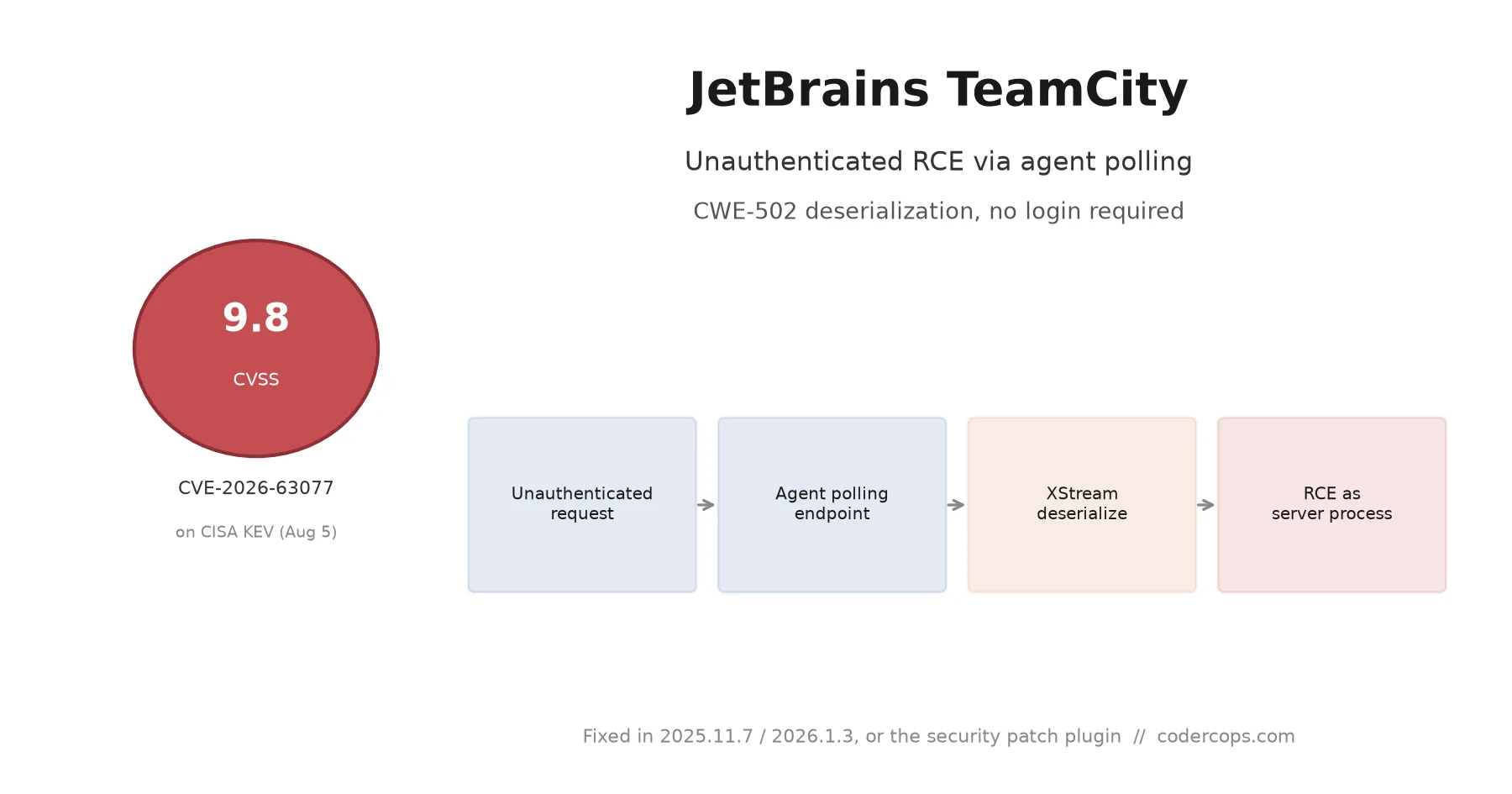
If you run TeamCity On-Premises and haven’t patched since late July, stop reading and go check your version number. CVE-2026-63077 lets anyone who can reach your build server over HTTP run commands as the TeamCity process, no login required, and CISA confirmed on August 5 that it’s being actively exploited.
What the bug actually is
TeamCity’s agent polling protocol is how build agents check in with the server: register, ask for work, report status. That channel uses XStream to deserialize the data agents send. To stop an attacker from abusing that deserialization, TeamCity is supposed to enforce an allowlist that restricts which Java classes the server will actually instantiate from incoming data.
The allowlist was built wrong. Instead of replacing XStream’s default permissions with a tight, TeamCity-specific list, the fix added TeamCity’s protocol classes on top of the defaults and left the defaults in place. XStream’s stock permissions include a known gadget chain, a sequence of otherwise-innocuous classes that, chained together during deserialization, let an attacker execute arbitrary code. That gadget chain was still reachable through the agent polling endpoint, and that endpoint doesn’t require authentication, because agents haven’t registered yet when they first poll.
Put together: an attacker with network access to the server sends a crafted payload to an endpoint that exists specifically to serve unauthenticated agents, and gets command execution with the privileges of the TeamCity server process. CVSS 9.8. No login, no user interaction, no social engineering.
Why this one is worse than the average CI/CD bug
A compromised build server isn’t just a compromised server. TeamCity typically holds source code access, deployment credentials, signing keys, and artifact repository tokens, and it sits in the path between “developer pushes code” and “code runs in production.” An attacker with server-process privileges can read those secrets, tamper with build artifacts before they’re signed, or inject malicious steps into pipelines that look identical to legitimate ones in the TeamCity UI.
That’s the same class of risk we walked through with the Langflow unauthenticated RCE chain a few weeks ago: the tools that sit closest to your deploy pipeline are the highest-value targets precisely because compromising them compromises everything downstream. This is a different vendor and a different bug class, but the blast radius reasoning is identical. If your CI server is public-facing, or reachable from a network segment broader than “engineers who need it,” this jumps the queue ahead of whatever else is in your patch backlog this week.
Worth separating from JetBrains’s other recent CVEs, too. The Hub and YouTrack bugs we covered in July were account-takeover and privilege-escalation flaws in different products entirely. This is a distinct vulnerability, in TeamCity specifically, in a different component (the agent protocol, not authentication), and it’s the one currently on CISA’s KEV list.
Who’s affected
TeamCity On-Premises, versions before 2025.11.7 and before 2026.1.3. TeamCity Cloud is not affected, according to JetBrains. If you’re not sure which deployment model you’re running, check with your infrastructure team before assuming you’re in the clear.
The practical exposure question is simpler than the CVE description makes it sound: can an unauthenticated request reach your TeamCity server’s agent polling endpoint from outside your trust boundary? If the server is internet-facing at all, or reachable from any network segment you wouldn’t call fully trusted, you’re exposed regardless of how your internal auth is configured, because this bug lives before authentication happens.
How to patch it
Two paths, depending on where you are:
On 2025.x or 2026.x already. Upgrade to 2025.11.7 or 2026.1.3. Both releases have been verified to close the deserialization path.
On an older supported release (2017.1 and up). JetBrains published a security patch plugin that closes the hole without requiring a full version upgrade first. Install that immediately, then plan the version upgrade on your normal schedule rather than treating them as one blocking task.
Either way, don’t stop at the version bump. If your server was internet-facing before you patched, treat it as a potential compromise until you’ve checked logs: unexpected process spawns, outbound connections the build process wouldn’t normally make, and any pipeline steps that don’t match your source-controlled build configuration. Rotate credentials the TeamCity server had access to (deployment keys, signing certificates, artifact repository tokens) if there’s any ambiguity about whether it was exposed during the vulnerable window.
The pattern to actually fix
This is the second time in as many months a CI/CD tool has shipped an unauthenticated RCE in a component that exists specifically to talk to unauthenticated parties, whether that’s build agents checking in or webhook receivers accepting external calls. Those endpoints get less security review than login-gated ones because “nobody’s authenticated yet” reads as lower risk, when it’s actually the opposite: it’s the part of your attack surface an attacker doesn’t need credentials to reach at all.
If you’re running TeamCity, Jenkins, GitLab CI, or anything else that orchestrates your build pipeline, put “what does this tool expose without authentication” on your next security review agenda, not just “is it patched.” Patching CVE-2026-63077 closes this specific hole. It doesn’t tell you whether the next one is already sitting in a different unauthenticated endpoint on the same server. Teams that treat CI infrastructure with the same scrutiny as production, rather than as internal tooling, catch these before CISA does. If you want a second set of eyes on your build pipeline’s exposure, our team has run this kind of infrastructure audit for clients running exactly this stack.
Frequently asked questions
- What is CVE-2026-63077?
- An unauthenticated remote code execution vulnerability in JetBrains TeamCity On-Premises, CVSS 9.8. It lives in the agent polling protocol, the channel build agents use to check in with the server, and lets an attacker with network access to the server execute operating system commands without any credentials.
- Is TeamCity Cloud affected?
- No. JetBrains states the vulnerability is specific to TeamCity On-Premises. If you run TeamCity Cloud, this particular bug doesn't apply to you, though it's still worth confirming with JetBrains directly if you're unsure which deployment model you're on.
- How does the exploit actually work?
- The agent polling protocol uses XStream to deserialize data from build agents. The server is supposed to restrict which Java classes it will deserialize through an allowlist, but the allowlist was built by adding TeamCity's own protocol classes on top of XStream's default permissions instead of replacing them. That left a usable gadget chain in the defaults, and an attacker can send a crafted payload to the polling endpoint with no authentication and no agent registration required.
- Which versions are patched?
- TeamCity 2025.11.7 and 2026.1.3 both fix the flaw. If you're on an older supported release going back to 2017.1, JetBrains has published a security patch plugin you can install without doing a full version upgrade first.
- How do I know if I've already been hit?
- Check TeamCity server logs and OS-level process logs around the time the server's build process spawned unexpected child processes or outbound connections it wouldn't normally make. Because TeamCity orchestrates build pipelines, credentials, and artifact publication, treat a suspected compromise as a full incident: rotate every secret the server had access to, not just the TeamCity admin password.
Sources
Sponsored
More from this category
More from Cybersecurity
 R.01
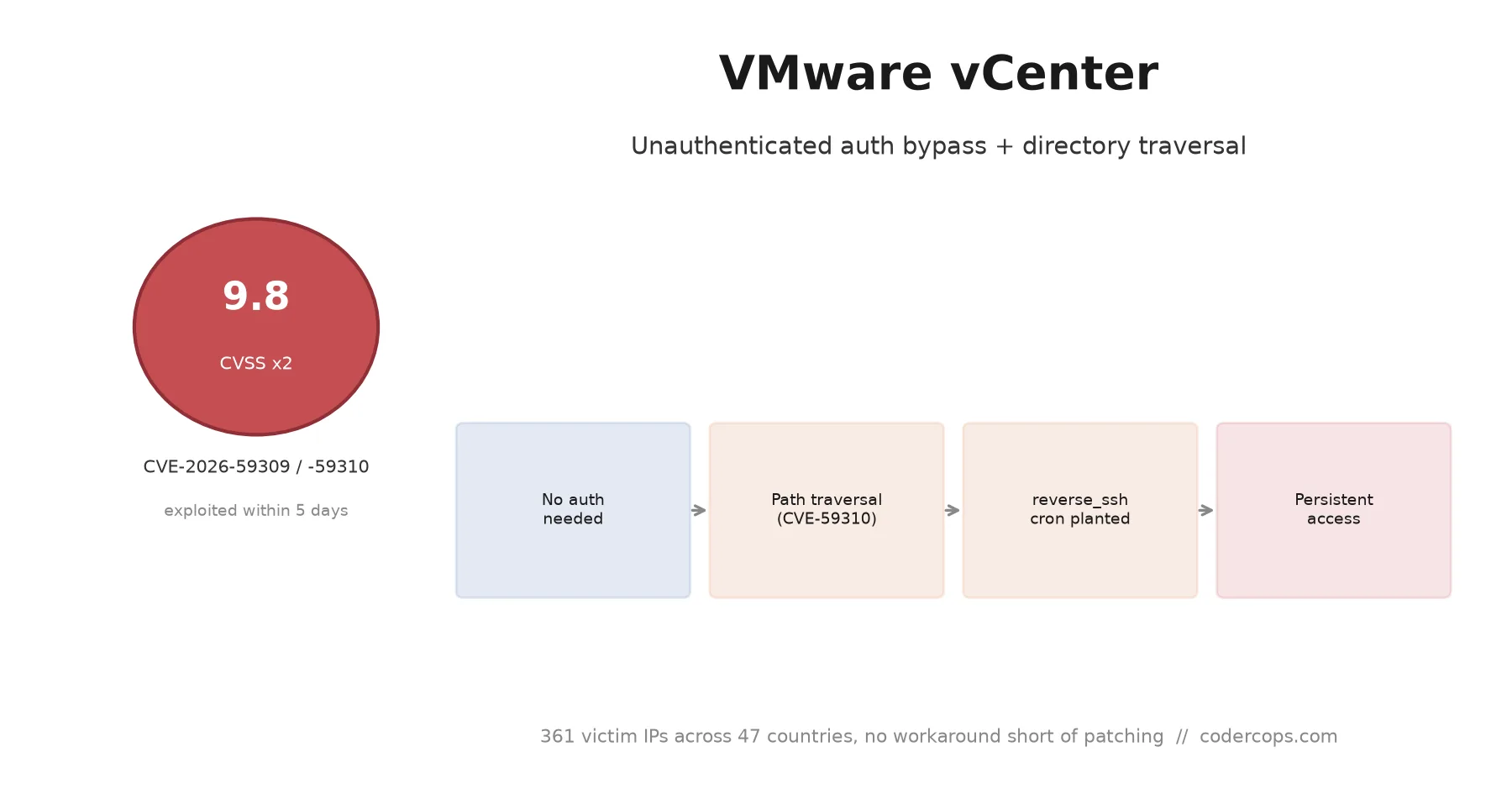
R.01 CVE-2026-59309 and 59310: VMware vCenter Bugs Attackers Hit in Five Days
 R.02
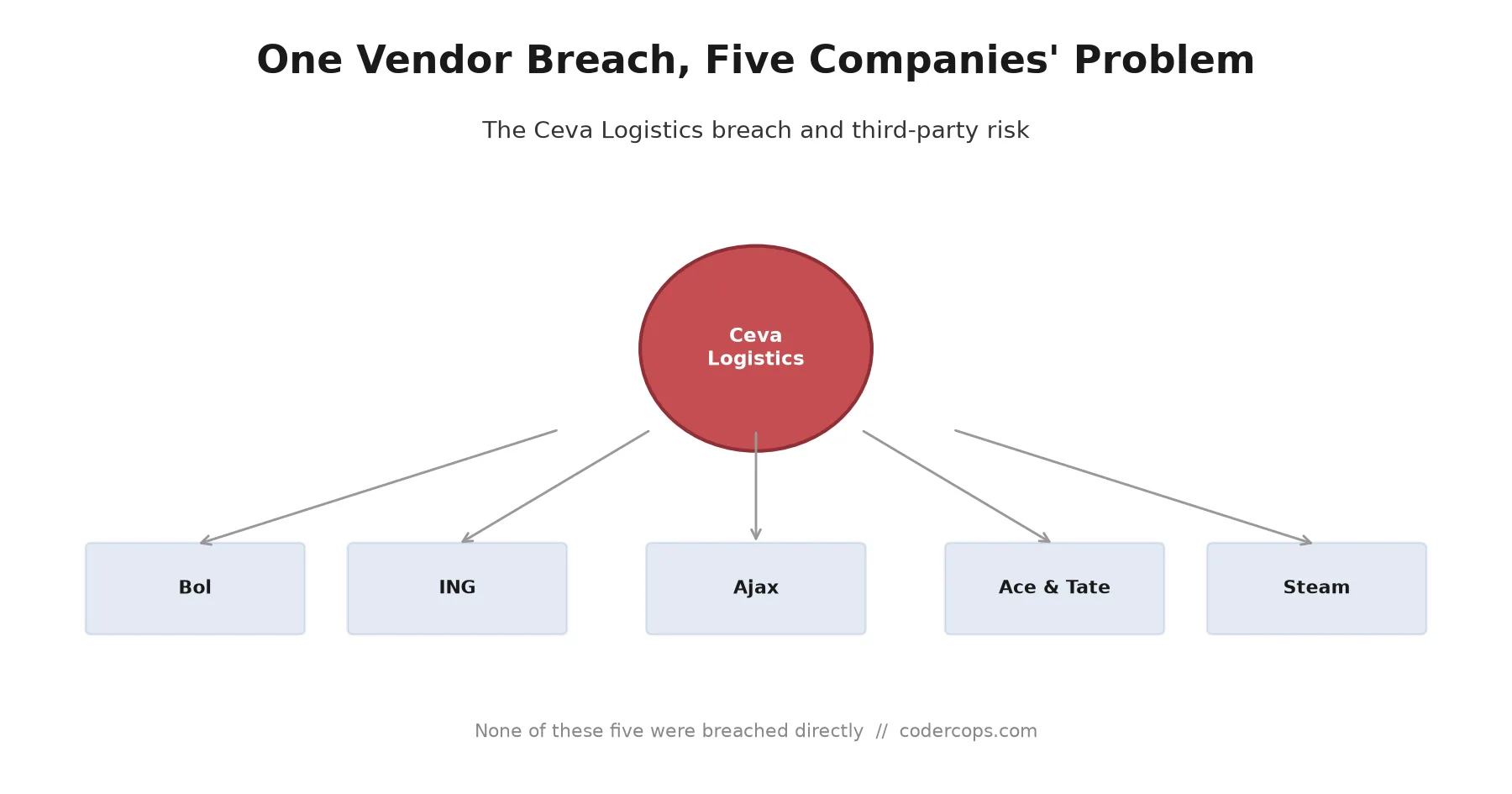
R.02 The Ceva Logistics Breach Shows Why Your Vendor's Vendor Is Your Problem
 R.03
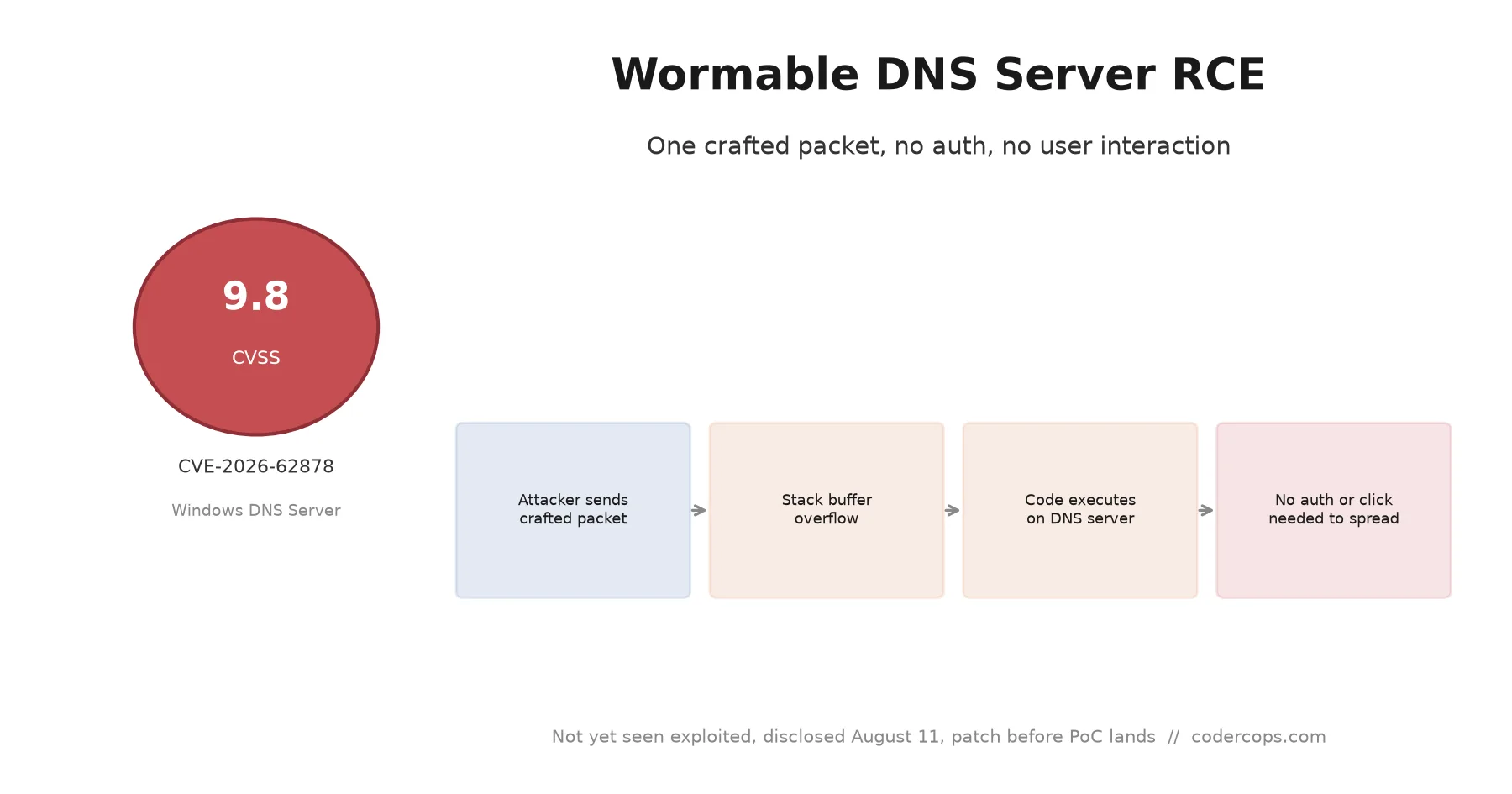
R.03 CVE-2026-62878: The Wormable Windows DNS Server Bug You Need to Patch Now
Sponsored
Discussion
Join the conversation.
Comments are powered by GitHub Discussions. Sign in with your GitHub account to leave a comment.
Sponsored