Cybersecurity · AI Security
OpenAI's GPT-5.6-Cyber Is Built to Hack. Here's What That Means for Your Threat Model
OpenAI shipped a model tuned for exploit development and vulnerability research, gated behind a two-tier access program. It changes the baseline for how fast attackers can move, whether or not your team ever touches it.

Shashikant Gupta
5 min read
Sponsored
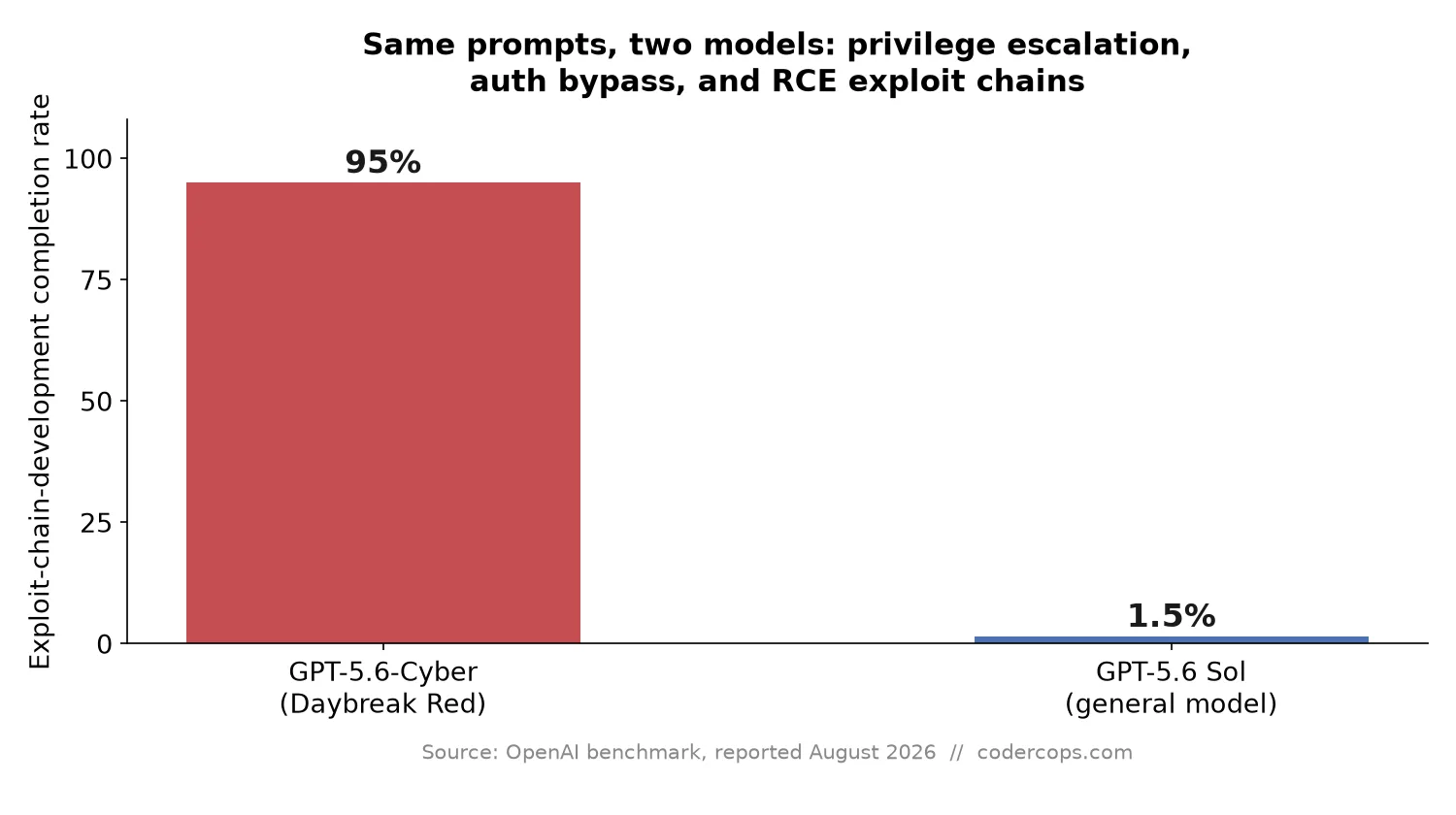
OpenAI spent the last two years telling security teams that its models refuse to help build exploits. On August 10, it shipped one whose entire job is building exploits. GPT-5.6-Cyber is not a jailbroken version of an existing model or a research demo. It’s a released, gated, paid product, and the number that should get your attention isn’t the model name, it’s the completion rate: 95% on tasks like privilege escalation and authentication bypass chains, against 1.5% for the general-purpose model released the same week.
What actually shipped
GPT-5.6-Cyber arrived alongside a restructured access program called Daybreak, split into two tiers. Daybreak Blue gives vetted defenders access to GPT-5.6 Sol, OpenAI’s standard model, with some safety guardrails relaxed specifically for defensive work: secure-code review, vulnerability triage, malware analysis, incident response. Daybreak Red goes further and unlocks GPT-5.6-Cyber itself, built for the offensive side of the same coin, exploit chain development, zero-day research, and attack validation.
Getting into Daybreak Red isn’t a signup form. OpenAI requires identity verification, account security controls, ongoing monitoring, and legal attestations about intended use, and starting September 1, 2026, every individual Daybreak account, Blue or Red, needs a hardware security key. Named early partners span both consultancies doing security assessments for clients (Accenture, IBM, Capgemini, EY, KPMG, PwC, NCC Group, SpecterOps) and vendors building it into their own products (Palo Alto Networks, CrowdStrike, Cisco, Sophos, Akamai, Fortinet, Cloudflare). Pricing sits well above the standard model too, at $12.50 per million input tokens and $75 per million output tokens against $5 and $30 for GPT-5.6 Sol, which functions as its own soft access control.
The number that matters
OpenAI’s benchmark isn’t marketing fluff dressed as a stat. A 95% completion rate on exploit-chain-development prompts, versus 1.5% for the general model on the same prompts, is a claim about a specific, testable capability: given a known vulnerability class, can the model actually produce a working exploit path rather than a plausible-sounding non-answer. OpenAI backs the number with real findings, two previously unknown bugs in Chrome’s V8 engine that chain into a sandbox escape (patched by Google as CVE-2026-15903), five vulnerabilities in a major mobile OS, three critical database flaws, and more than 400 privilege-escalation issues in a widely used kernel.
Those are legitimate defensive wins when the model is in the hands of a vetted research team. But the underlying fact, that this level of automated exploit chaining is now achievable and demonstrated, doesn’t stay contained to the people with Daybreak Red access. It sets a new public floor for what’s technically possible, and every well-funded attacker group is now working from the assumption that this floor exists, whether or not they have OpenAI’s specific model.
What this means if you’re not doing offensive security
Most engineering teams will never touch GPT-5.6-Cyber and don’t need to. The relevant question isn’t “should we get access,” it’s “does our patch cadence still make sense in a world where this exists.” If your team is still working from an assumption that a newly disclosed CVE gives you a few quiet weeks before a working exploit shows up, that assumption was already fraying before this release. It doesn’t get sturdier now.
The practical response looks like the boring fundamentals, just with less slack: prioritize anything CISA has already added to its Known Exploited Vulnerabilities catalog over your general patch backlog, keep dependency and container scanning running continuously rather than on a monthly cadence, and treat “this vulnerability is obscure enough that nobody will bother writing an exploit for it” as a much weaker excuse than it used to be. A model that turns exploit-chain construction into a 95%-completion-rate task doesn’t need the attacker to be a specialist anymore, and that changes which vulnerabilities are actually low-risk in practice.
The defensive use case is real too
It’s worth separating the headline (an AI model built to hack) from the actual shape of the release, which is closer to a controlled-access research and red-teaming tool than an autonomous weapon. Daybreak Blue in particular is aimed at exactly the AI-assisted vulnerability testing work more security teams should already be doing: finding your own gaps before an attacker does, faster than a fully manual process allows. If your organization runs any kind of internal red-teaming or vulnerability research function, this class of tool is worth evaluating on its merits, separate from the discourse about what it means that OpenAI built it at all.
Either way, the release itself is the signal. Automated exploit development just got faster and more reliable, in a demonstrated, benchmarked way. Plan your patch and detection timelines around that being true now, not around when it eventually affects you directly. If you want a second opinion on whether your current vulnerability response cadence is actually keeping pace, our team runs exactly this kind of assessment for engineering organizations.
Frequently asked questions
- What is GPT-5.6-Cyber?
- A specialized OpenAI model built for offensive security work: developing exploits, finding vulnerabilities, and validating attack chains. It's part of OpenAI's Daybreak program and sits behind stricter access controls than OpenAI's general-purpose models.
- Who can actually use it?
- Access requires acceptance into Daybreak Red, which OpenAI gates with identity verification, account security requirements, ongoing monitoring, and legal attestations about approved use. OpenAI has named early access partners including large consultancies (Accenture, IBM, Capgemini, EY, KPMG, PwC) and security vendors (Palo Alto Networks, CrowdStrike, Cisco, Fortinet). It is not broadly available.
- Does this mean attackers now have an AI hacking tool?
- Not directly, since GPT-5.6-Cyber itself is access-gated and monitored. But the underlying capability, that a model can chain multiple flaws into a working exploit at a 95% completion rate on tasks a general model completes 1.5% of the time, is now demonstrated and public knowledge. That raises the practical ceiling for what any well-resourced attacker, with or without this specific model, can automate.
- What should a normal engineering team actually do about this?
- Nothing changes about your fundamentals: patch known CVEs faster, especially ones already on CISA's KEV list, keep dependency scanning current, and don't treat 'this is obscure' as a reason to deprioritize a fix. What does change is the assumption underneath your timeline. If exploit development for a disclosed vulnerability can now be automated in hours instead of days, the gap between a CVE going public and a working exploit existing keeps shrinking, so your patch window shrinks with it.
Sources
Sponsored
More from this category
More from Cybersecurity
 R.01
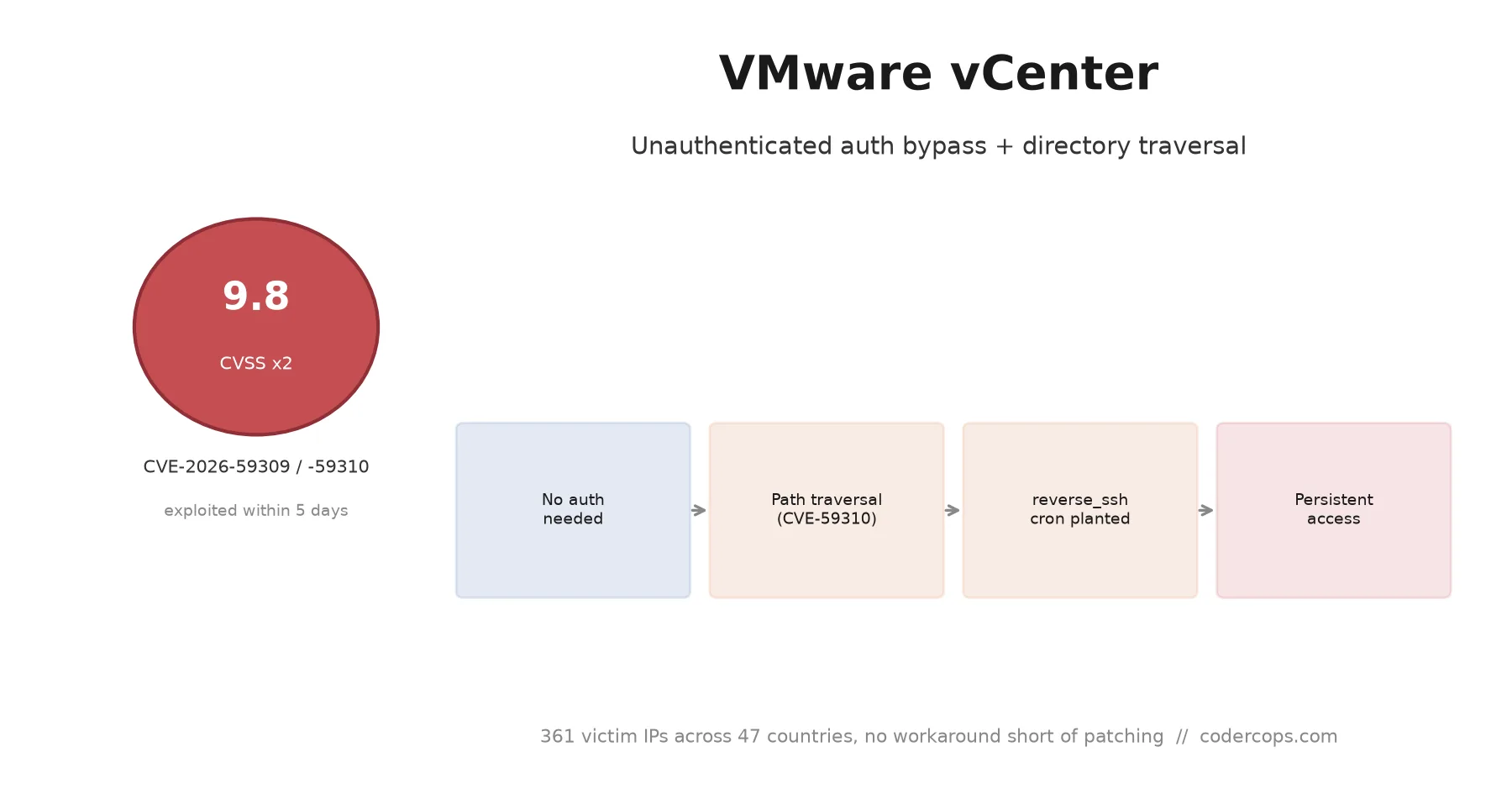
R.01 CVE-2026-59309 and 59310: VMware vCenter Bugs Attackers Hit in Five Days
 R.02
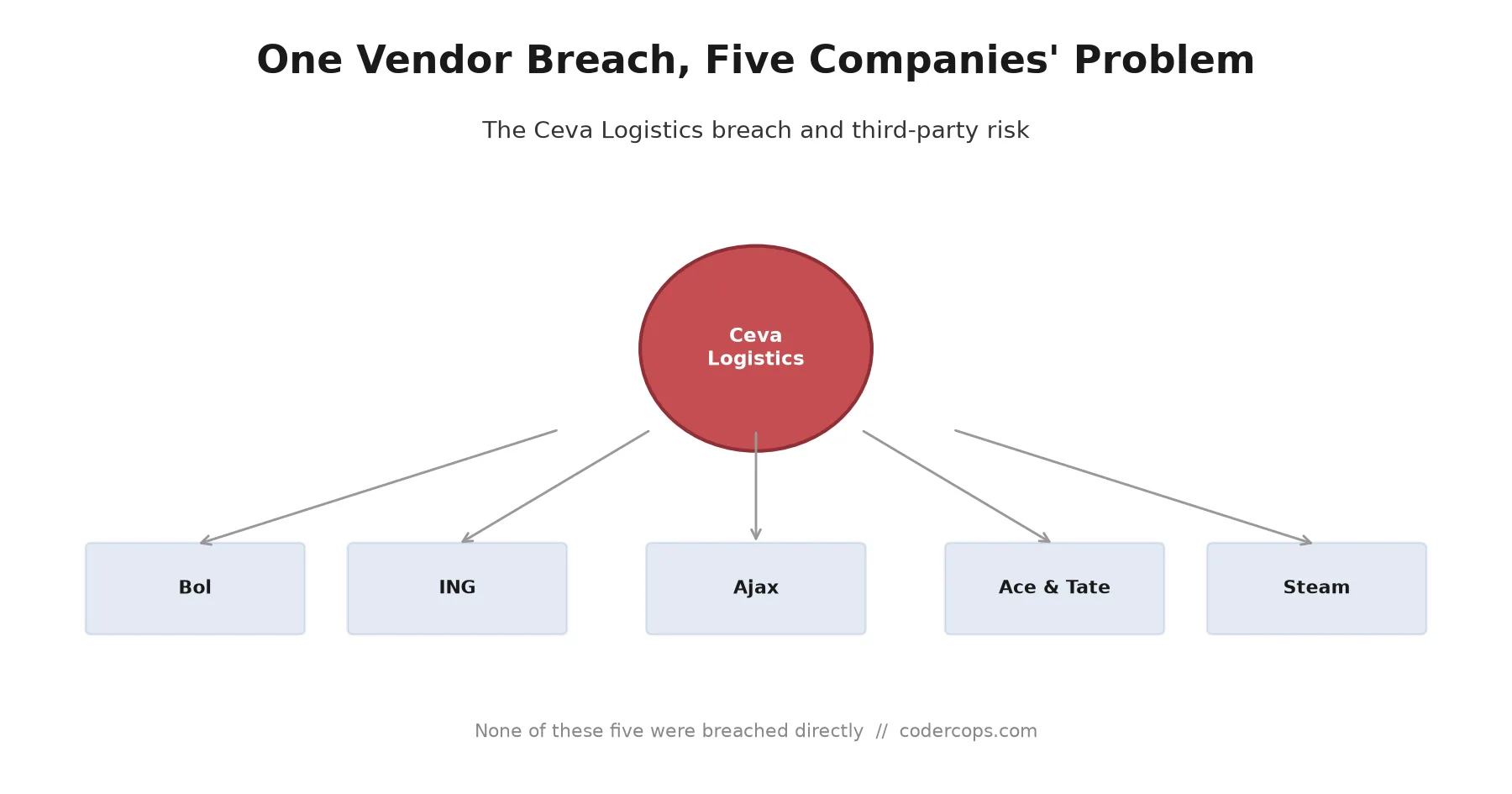
R.02 The Ceva Logistics Breach Shows Why Your Vendor's Vendor Is Your Problem
 R.03
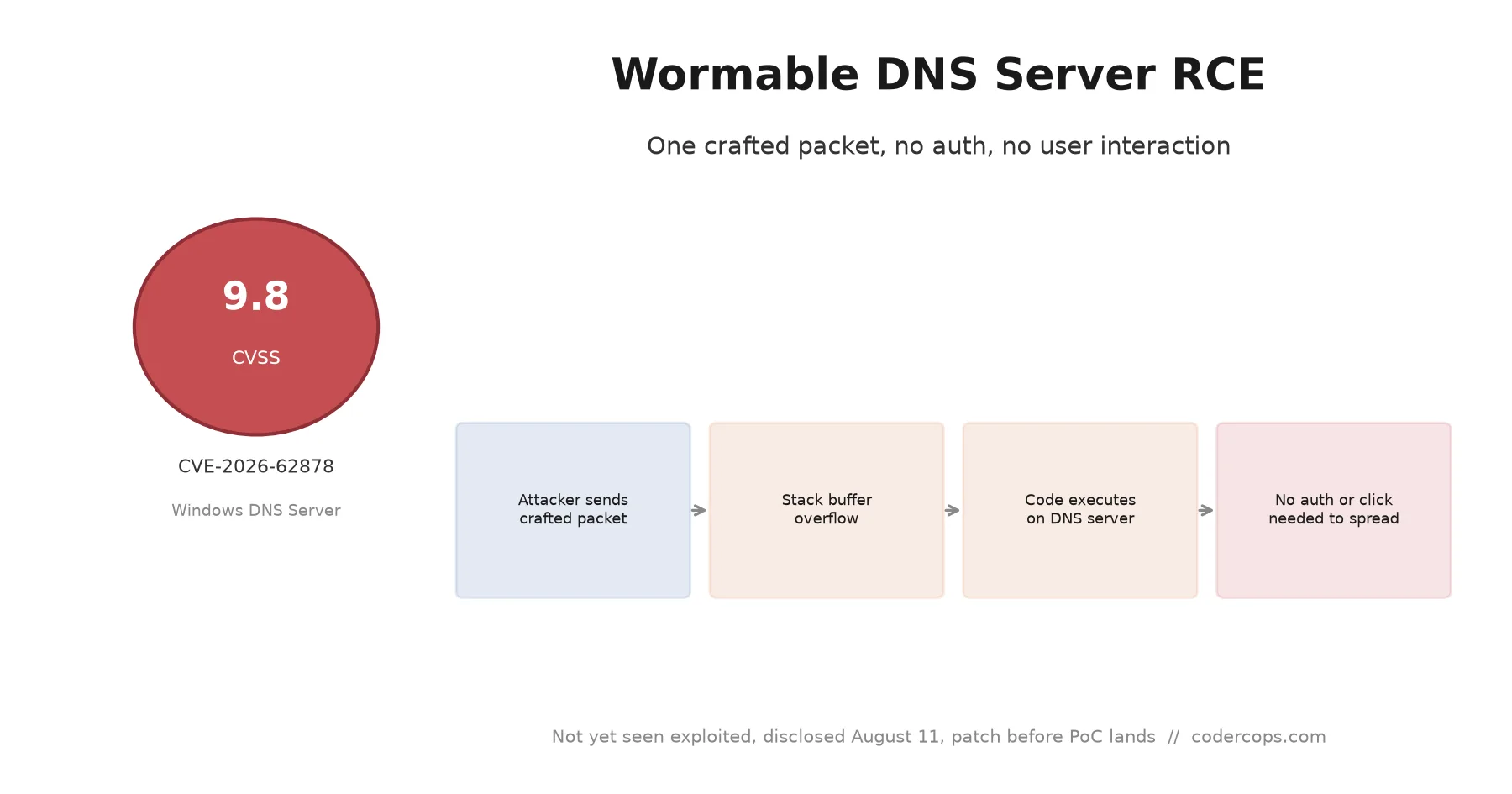
R.03 CVE-2026-62878: The Wormable Windows DNS Server Bug You Need to Patch Now
Sponsored
Discussion
Join the conversation.
Comments are powered by GitHub Discussions. Sign in with your GitHub account to leave a comment.
Sponsored