AI Integration · Model Releases
Qwen3.8-Max Is Out: Alibaba's Largest Model Yet, and the First Max-Class Qwen to Go Open-Weight
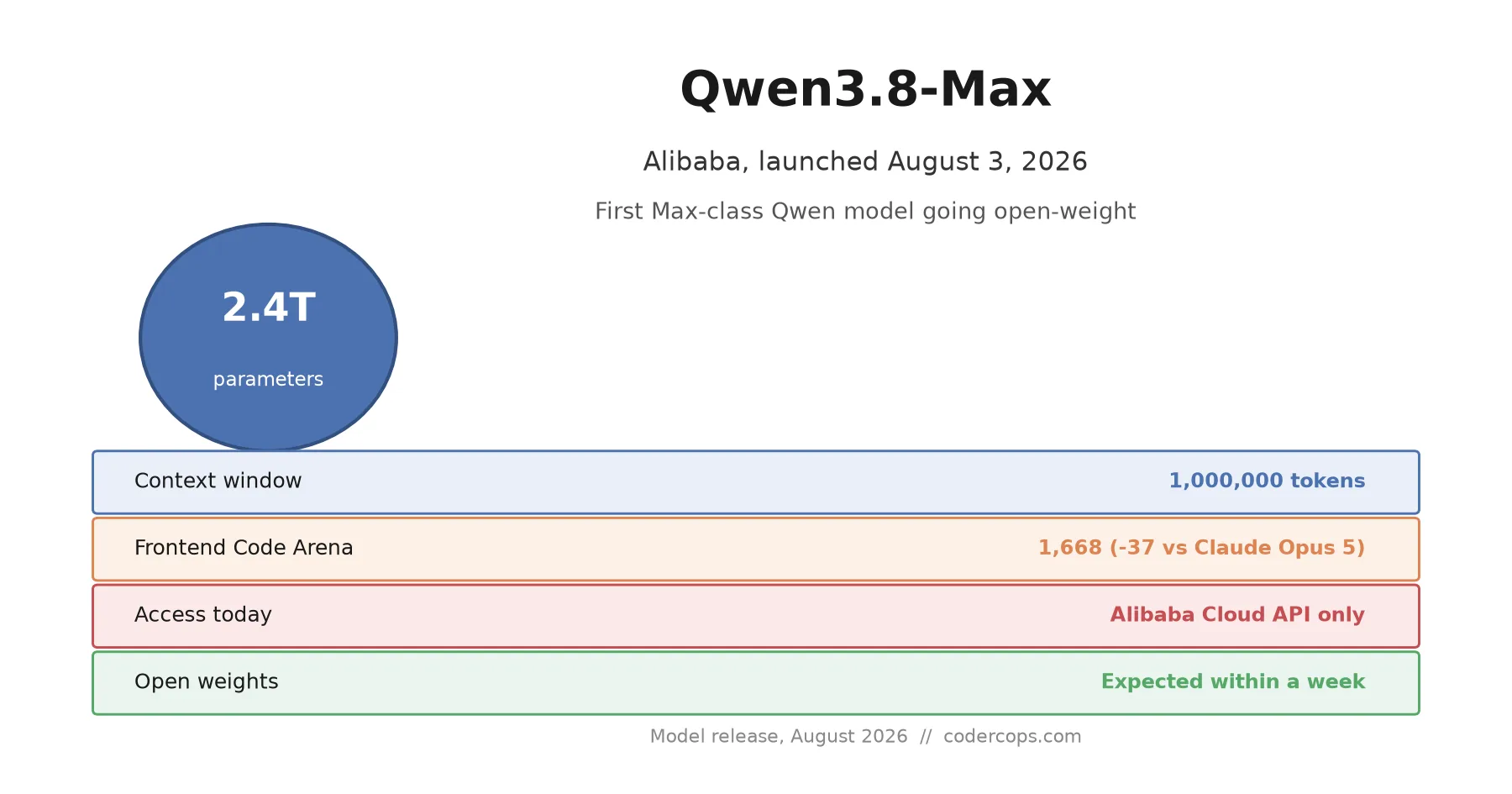
Alibaba's Qwen3.8-Max launched August 3 with 2.4 trillion parameters, a 1-million-token context window, and a promise to open-source the weights within a week. Here's what actually changes for teams evaluating it against closed frontier models.

Shashikant Gupta
4 min read
Sponsored
Alibaba shipped its largest model yet on August 3, and the headline number, 2.4 trillion parameters, is less interesting than what comes with it: this is the first Max-class Qwen model the company has committed to open-sourcing. For teams that have been treating “frontier-class” and “open-weight” as mutually exclusive categories, that combination is the actual news here.
What shipped
Qwen3.8-Max is a sparse mixture-of-experts model with roughly seven times the parameter count of Qwen3.5, the previous generation flagship. Despite the total parameter count, it activates only about 95 billion parameters per query, the design pattern that lets MoE models scale total capacity without a proportional increase in inference cost per request.
Context window tops out at 1 million tokens, enough to hand the model over 200 pages of text or around 100 hours of transcribed audio in a single call. Alibaba’s own testing describes the model completing a 16-day coding project end to end without human intervention and working through a chip design optimization task spanning more than 500 steps, the kind of long-horizon agentic benchmark that’s become the standard way frontier labs argue their models are ready for autonomous work rather than just chat.
On the Frontend Code Arena leaderboard, a benchmark widely used to compare coding ability across models, Qwen3.8-Max scored 1,668, placing 37 points behind Claude Opus 5. That’s a small enough gap that it says more about how competitive open-weight models have become than it says about which specific model you should pick, since a 37-point difference on one benchmark rarely predicts which model performs better on your actual codebase and tooling.
Available now, open-weight later
At launch, Qwen3.8-Max is accessible only through Alibaba Cloud’s API. Alibaba says the model weights will follow within a week, which would make this the first time a Max-tier Qwen model has been released for self-hosting rather than kept as a cloud-only product. That’s a deliberate positioning choice: previous Qwen open-weight releases topped out at smaller tiers, with the flagship Max models reserved for the paid API, similar to how most labs keep their best model behind a subscription while open-sourcing a lighter variant.
If the weights land as promised, it changes the calculus for teams that specifically wanted frontier-tier capability without a vendor API dependency, a group that’s grown considerably as open-weight models from Qwen, DeepSeek, and others have closed the gap with proprietary frontier labs over the past year. We’ve tracked that broader shift in open-source AI’s rising market share; Qwen3.8-Max going open-weight at the flagship tier is a continuation of that trend, not a break from it.
What this actually changes for a product team
A launch-day benchmark score is not a procurement decision. Three things are worth doing before treating Qwen3.8-Max as a candidate for a real workload:
Wait for the open-weight release if self-hosting matters to you. API-only access today means adding Alibaba Cloud as a new dependency, with the data residency, latency, and vendor lock-in questions that come with any new provider. If self-hosting is the actual reason you’re interested, there’s nothing to test yet.
Run it against your own tasks, not just the published benchmarks. Frontend Code Arena measures a specific kind of coding task. If your workload is backend refactoring, long-document analysis, or agentic tool use across an internal API surface, the 37-point gap to Claude Opus 5 on a UI-focused benchmark tells you very little about how the models compare on what you actually need.
Treat the 1-million-token window as a capability to test, not assume. Very long context windows tend to cost more per call and can lose accuracy on details buried deep in the middle of the input, a known failure mode across most long-context models regardless of vendor. If your use case genuinely needs that much context, benchmark retrieval accuracy at your actual document lengths before building around it.
Qwen3.8-Max is a legitimate data point in how fast the gap between open-weight and closed frontier models is closing, not a settled argument that one has overtaken the other. Teams that re-run their model evaluation matrix every time a release like this lands, rather than sticking with whatever they picked six months ago, are the ones who end up on the right side of that gap when it matters. If your team wants help building that kind of ongoing model evaluation into your stack, our engineering team has done this across a number of client AI integrations.
Frequently asked questions
- What is Qwen3.8-Max?
- Alibaba's largest and most capable language model to date, launched August 3, 2026. It's a 2.4 trillion parameter sparse mixture-of-experts model, roughly seven times the parameter count of Qwen3.5, activating about 95 billion parameters per query and supporting context windows up to 1 million tokens.
- Is Qwen3.8-Max open source?
- Not yet at launch. It's available through Alibaba Cloud's API first. Alibaba stated it will release the model weights for public download within a week of the announcement, which would make it the first Max-class model in the Qwen family to ship as open-weight rather than API-only.
- How does Qwen3.8-Max compare to Claude Opus 5 on coding tasks?
- On the Frontend Code Arena benchmark, Qwen3.8-Max scored 1,668 points against Claude Opus 5's higher score, a 37-point gap. That's a narrow margin on this specific benchmark, though a single leaderboard number shouldn't be the deciding factor for a production coding tool, since real workloads test tool use, long-context reasoning, and codebase-specific behavior that a single arena score doesn't capture.
- What can I actually do with a 1-million-token context window?
- In practical terms, it means feeding the model an entire mid-sized codebase, a full legal contract set, or roughly 100 hours of transcribed audio in a single request without chunking. The catch is that very long context windows are expensive per call and often see accuracy degrade on details buried in the middle of the input, so it's worth testing your actual use case rather than assuming the full window is usable in practice.
- Should we switch our production workload to Qwen3.8-Max now?
- Not immediately. It's API-only through Alibaba Cloud at launch, which means adding a new vendor dependency rather than a drop-in swap, and benchmark parity with closed frontier models doesn't guarantee parity on your specific workload. Worth testing against your actual tasks once the open-weight release lands and self-hosting becomes an option, rather than committing based on launch-day benchmarks alone.
Sources
Sponsored
More from this category
More from AI Integration
 R.01
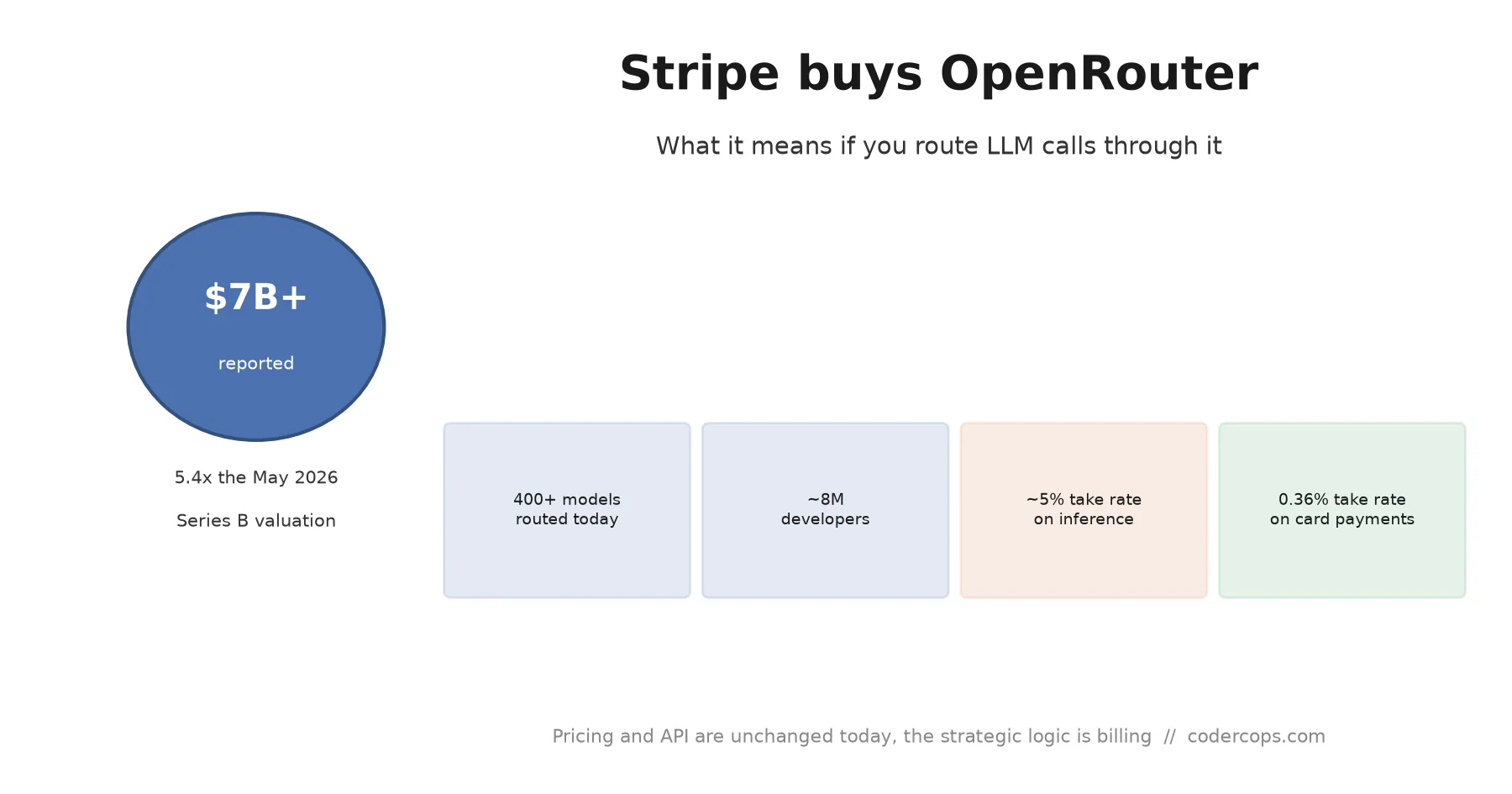
R.01 Stripe Bought OpenRouter for $7B. Here's What It Means If You Route LLM Calls
 R.02
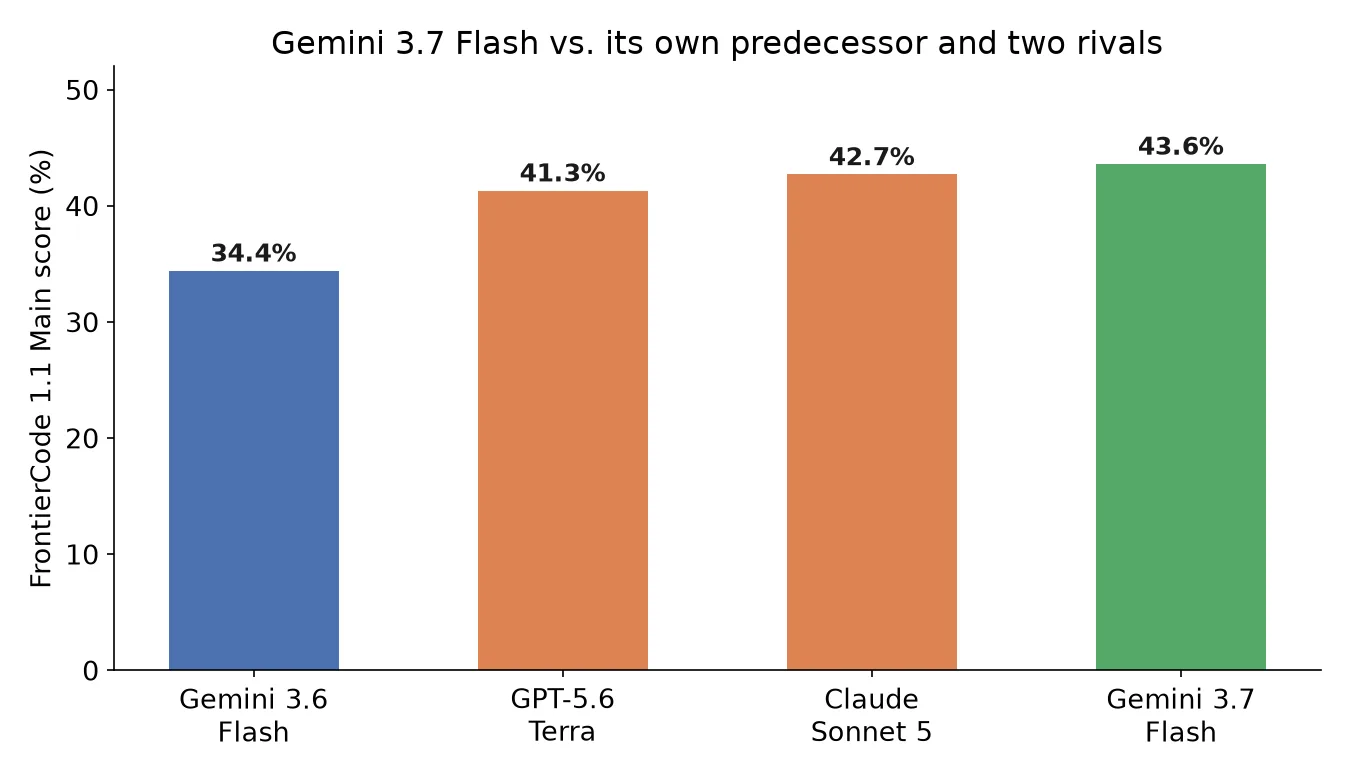
R.02 Gemini 3.7 Flash Is Out: What Google's Coding-Focused Model Actually Changes
 R.03
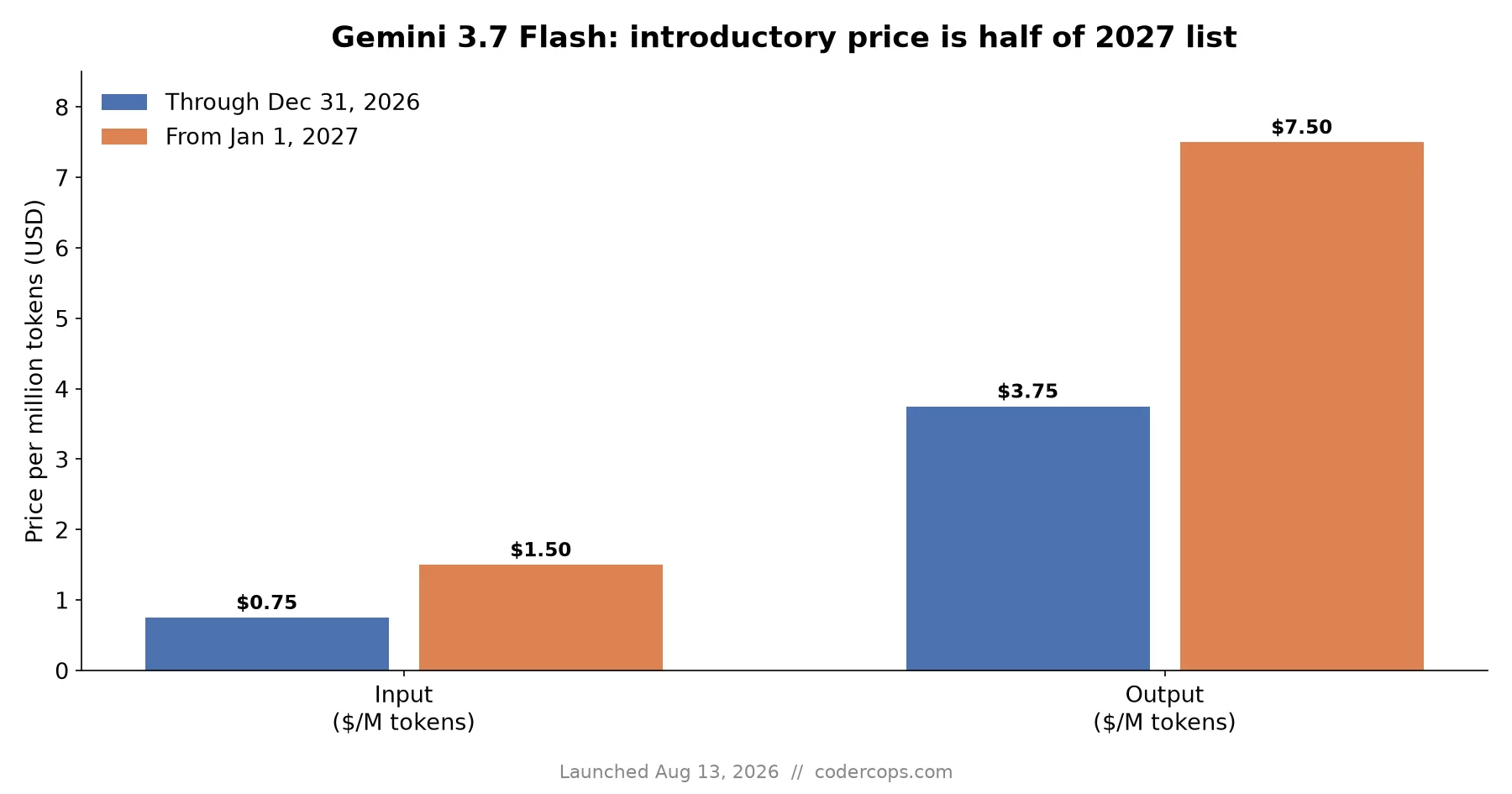
R.03 Gemini 3.7 Flash Is Out: Google's Cheap, Fast Coding Model Just Got Better at Both
Sponsored
Discussion
Join the conversation.
Comments are powered by GitHub Discussions. Sign in with your GitHub account to leave a comment.
Sponsored