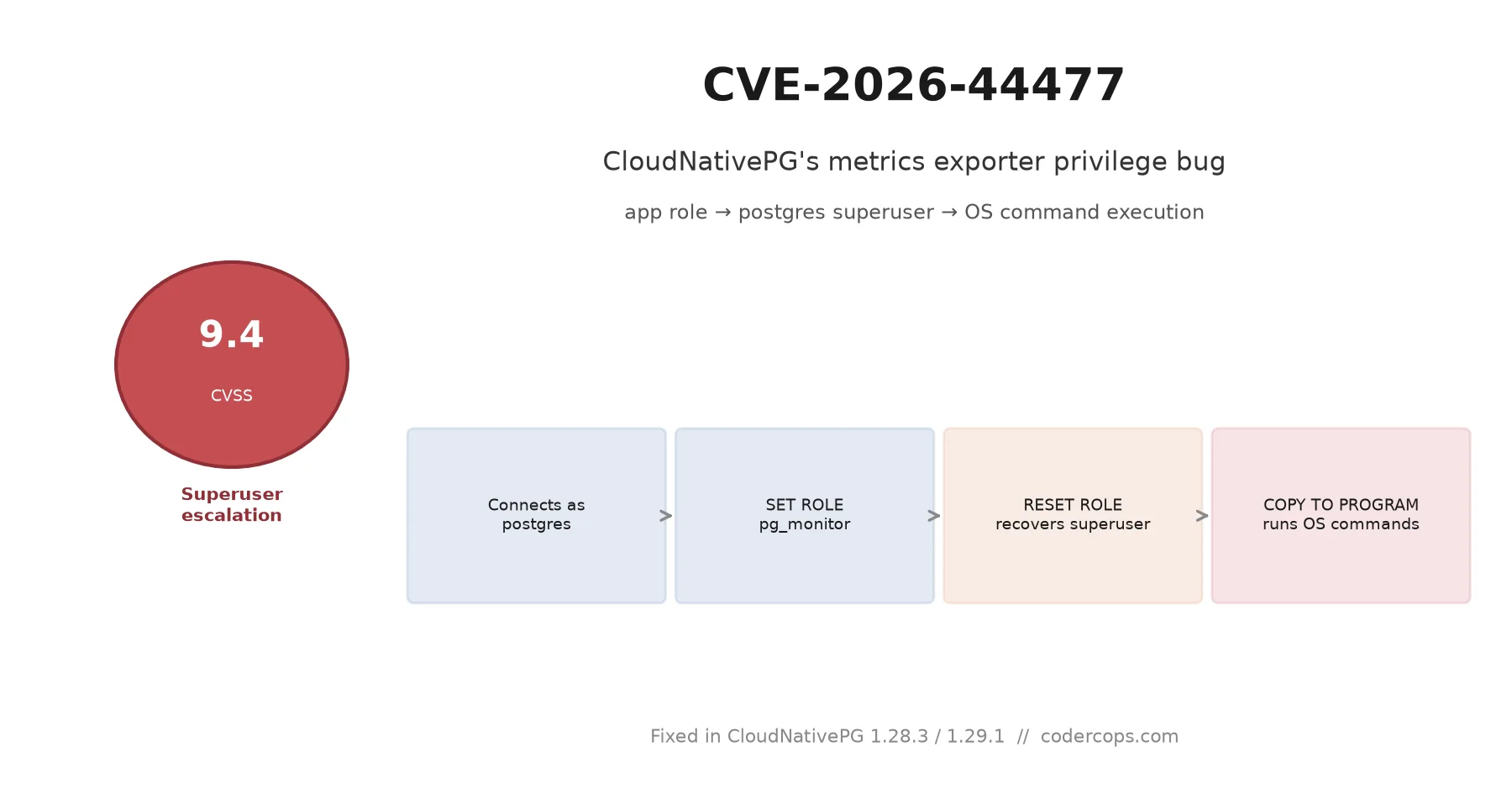
P.01CVE-2026-44477: CloudNativePG's Superuser Escalation Bug
CVE-2026-44477 lets any database owner escalate to postgres superuser and run OS commands in CloudNativePG. Here is who is affected and how to patch.
Tag
60 articles tagged #Cloud & Infrastructure.
P.01CVE-2026-44477 lets any database owner escalate to postgres superuser and run OS commands in CloudNativePG. Here is who is affected and how to patch.
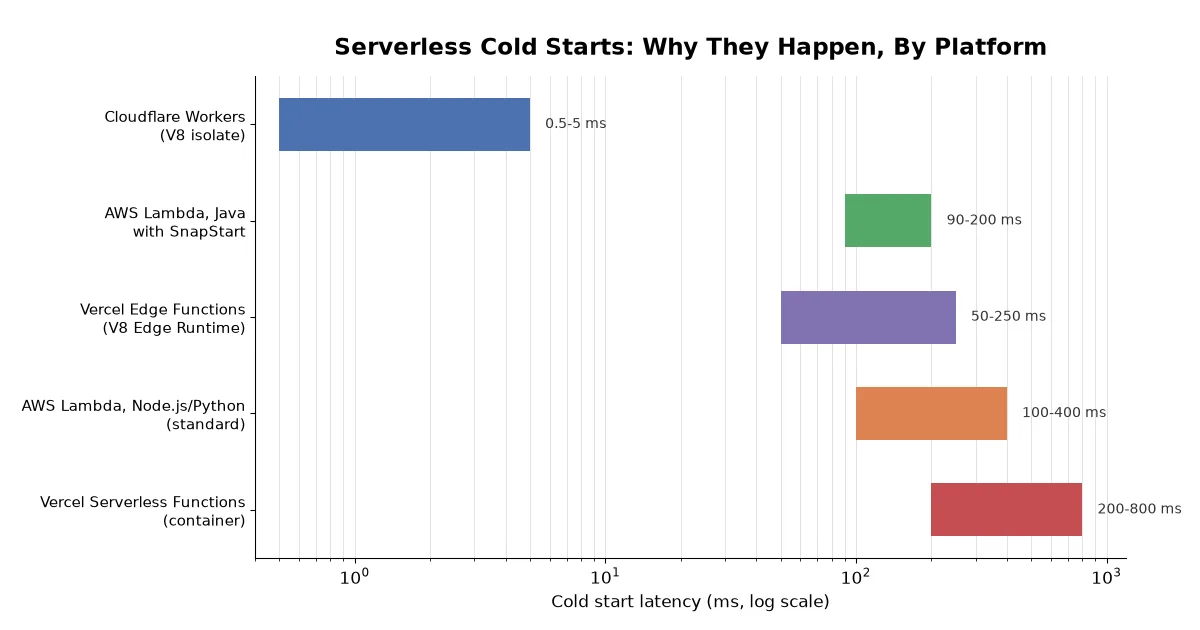
P.02A cold start is the fresh execution environment a platform builds before running your code. Some take 5ms, others 2 seconds. Here's why, and how to cut it.
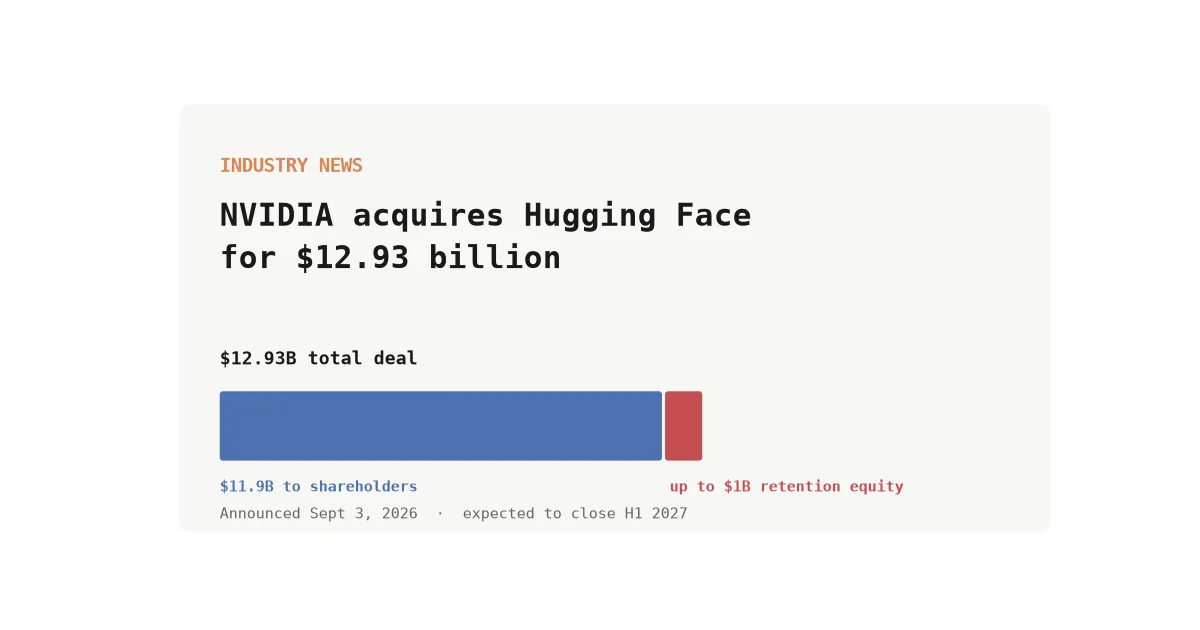
P.03NVIDIA is acquiring Hugging Face for $12.93B. Here's what actually changes for the Hub, Transformers, and Inference Endpoints, and what to do before the 2027 close.
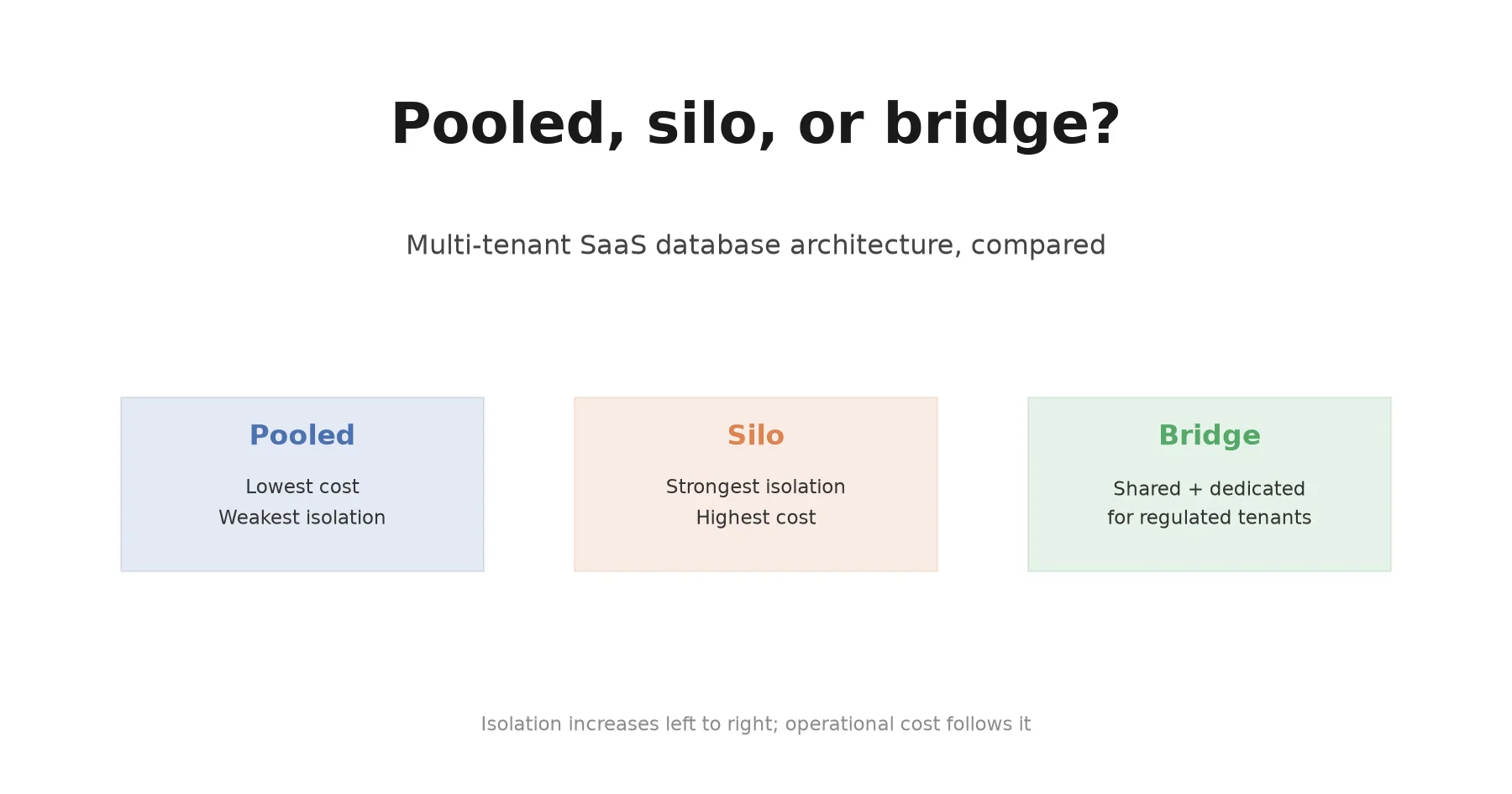
P.04Shared database or one per customer? Most SaaS teams pick wrong for their stage and pay later. How the three patterns trade off, and which one you need.
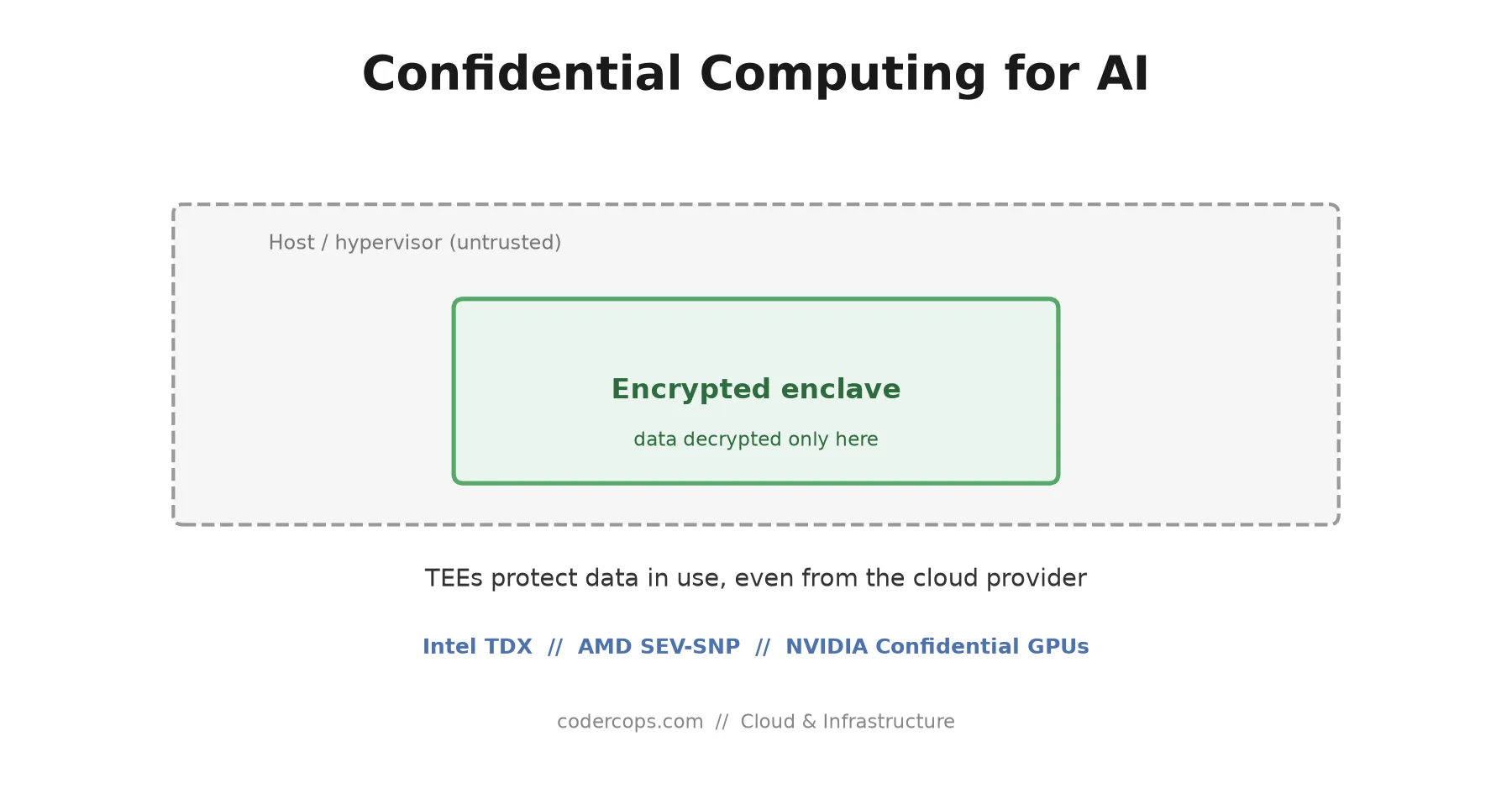
P.05TEEs encrypt data even from the cloud provider running it, which is why confidential computing became a real AI requirement. What it does and doesn't cover.
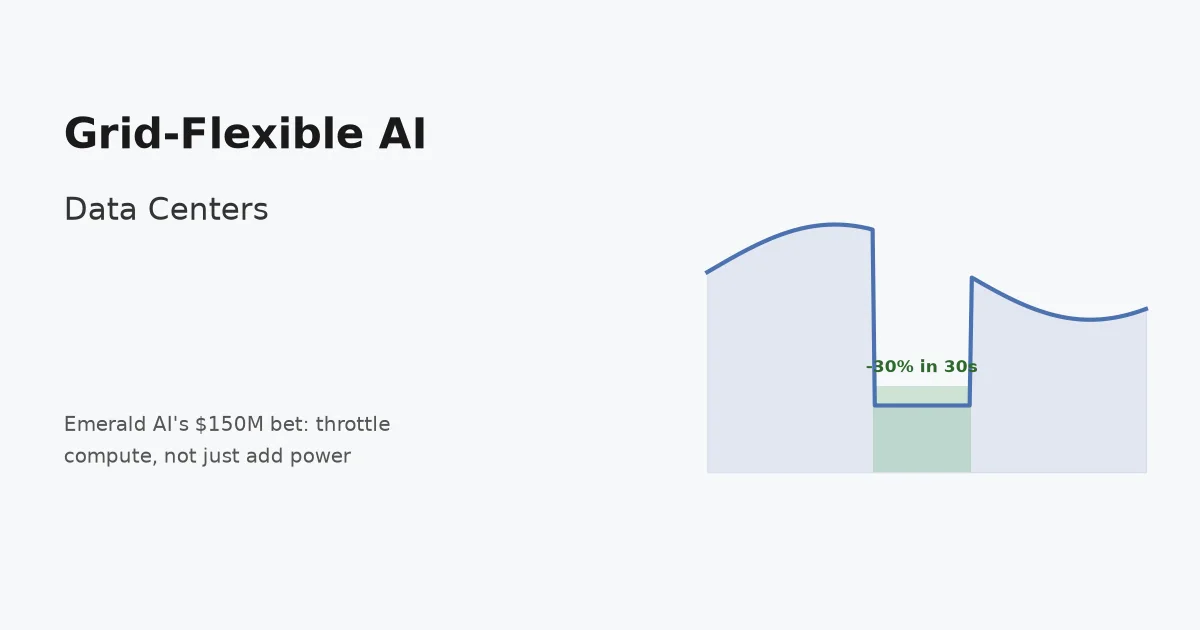
P.06Emerald AI raised $150M to make AI data centers shed power on demand. A 96-GPU Nvidia trial cut draw 30% in 30 seconds. What that means for capex plans.
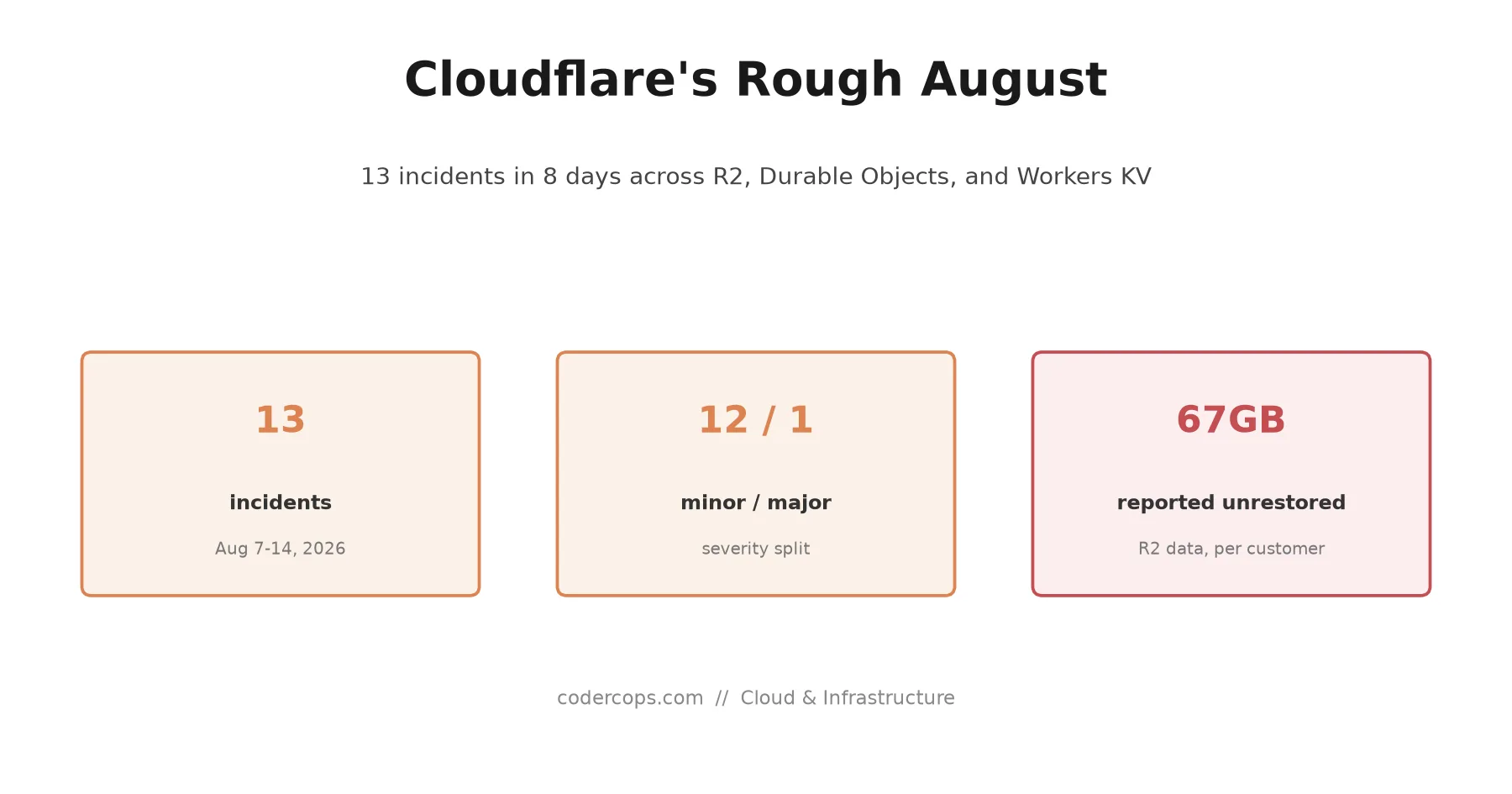
P.07Cloudflare logged 13 incidents between August 7 and 14, touching R2, Durable Objects, and Workers KV. What that means for building on one edge provider.
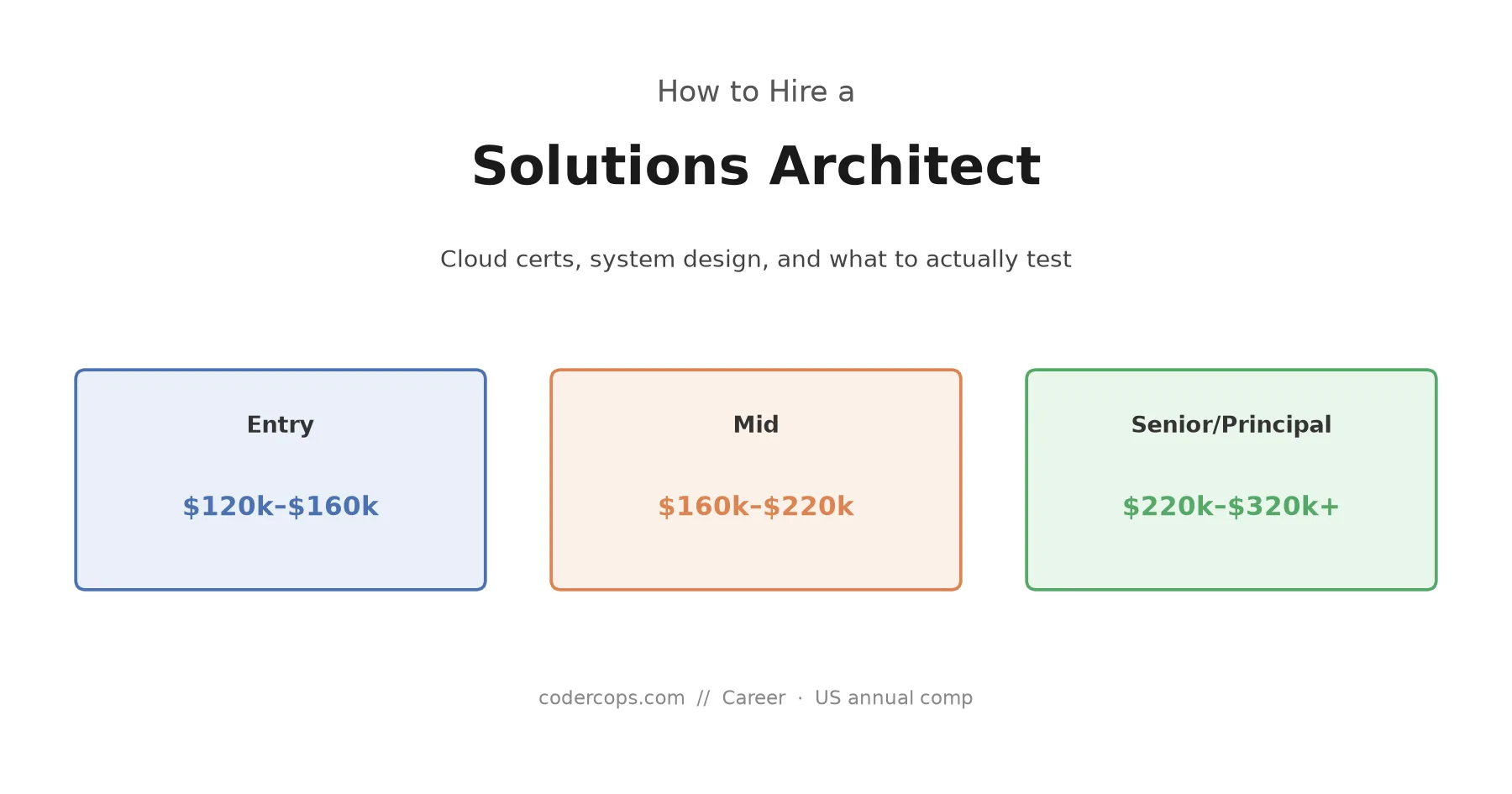
P.08A solutions architect posting attracts cloud generalists, ex-consultants, and people who haven't shipped in years. How to tell them apart, and what to test.
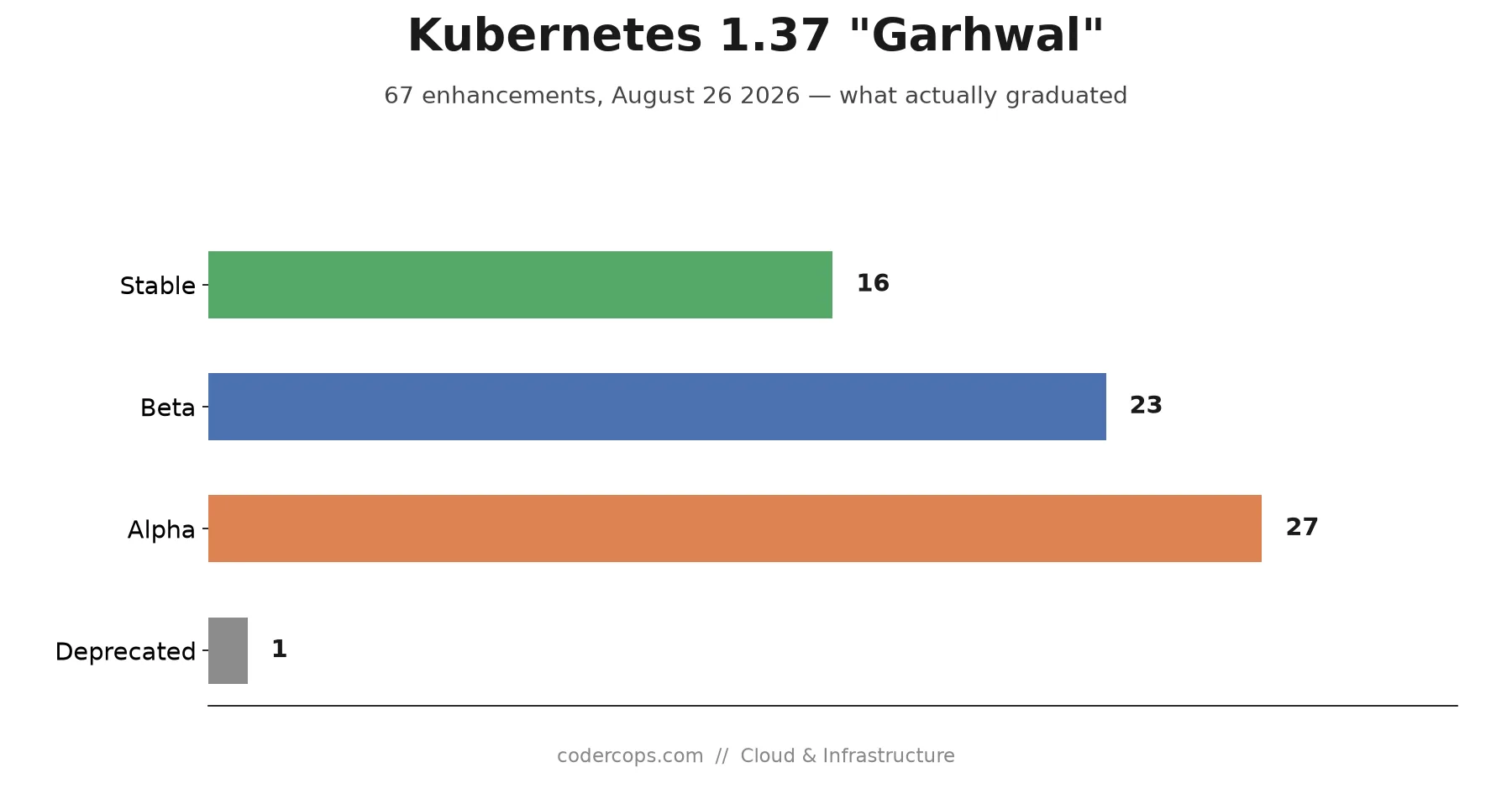
P.09Kubernetes 1.37 shipped August 26 with 67 enhancements. What actually graduated to stable, what's worth testing in beta, and what to leave alone for now.
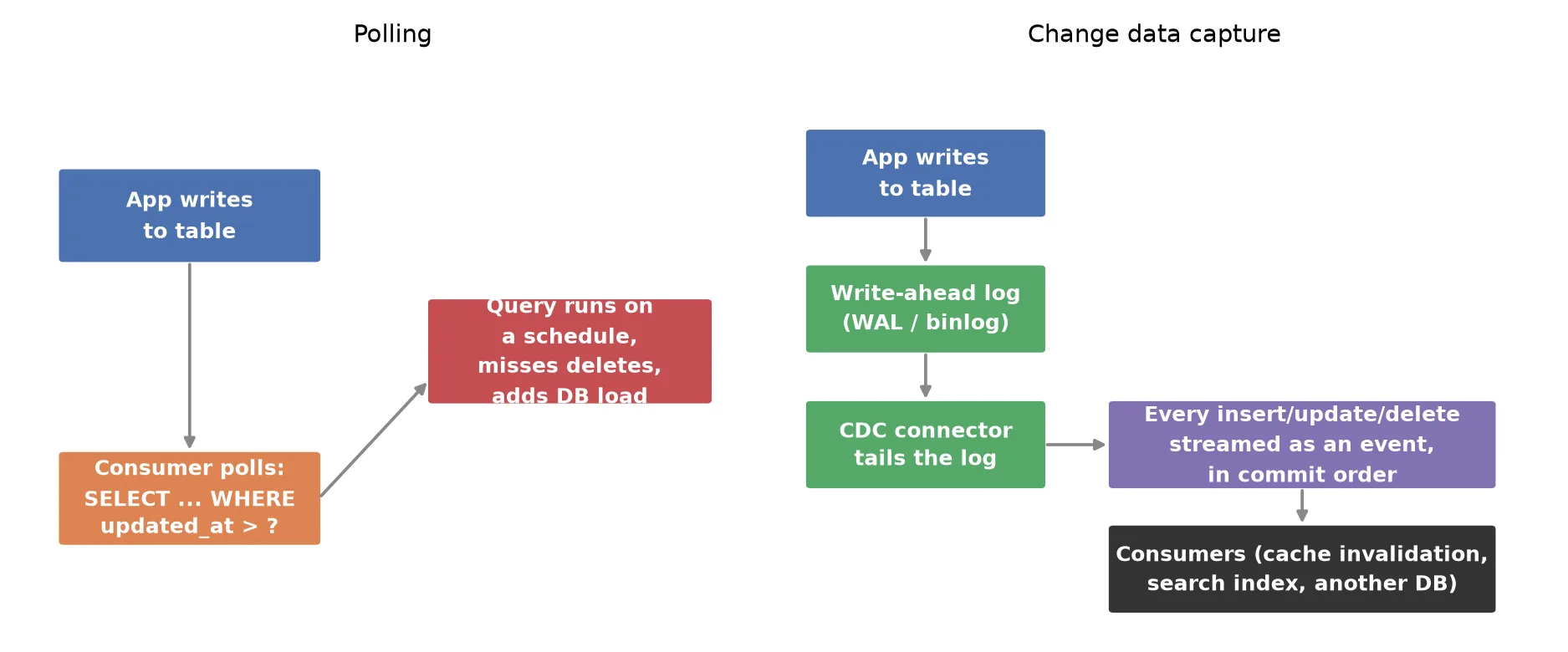
P.10Polling misses deletes, adds load, and always lags. CDC reads the write-ahead log instead, turning every insert, update, and delete into an event stream.
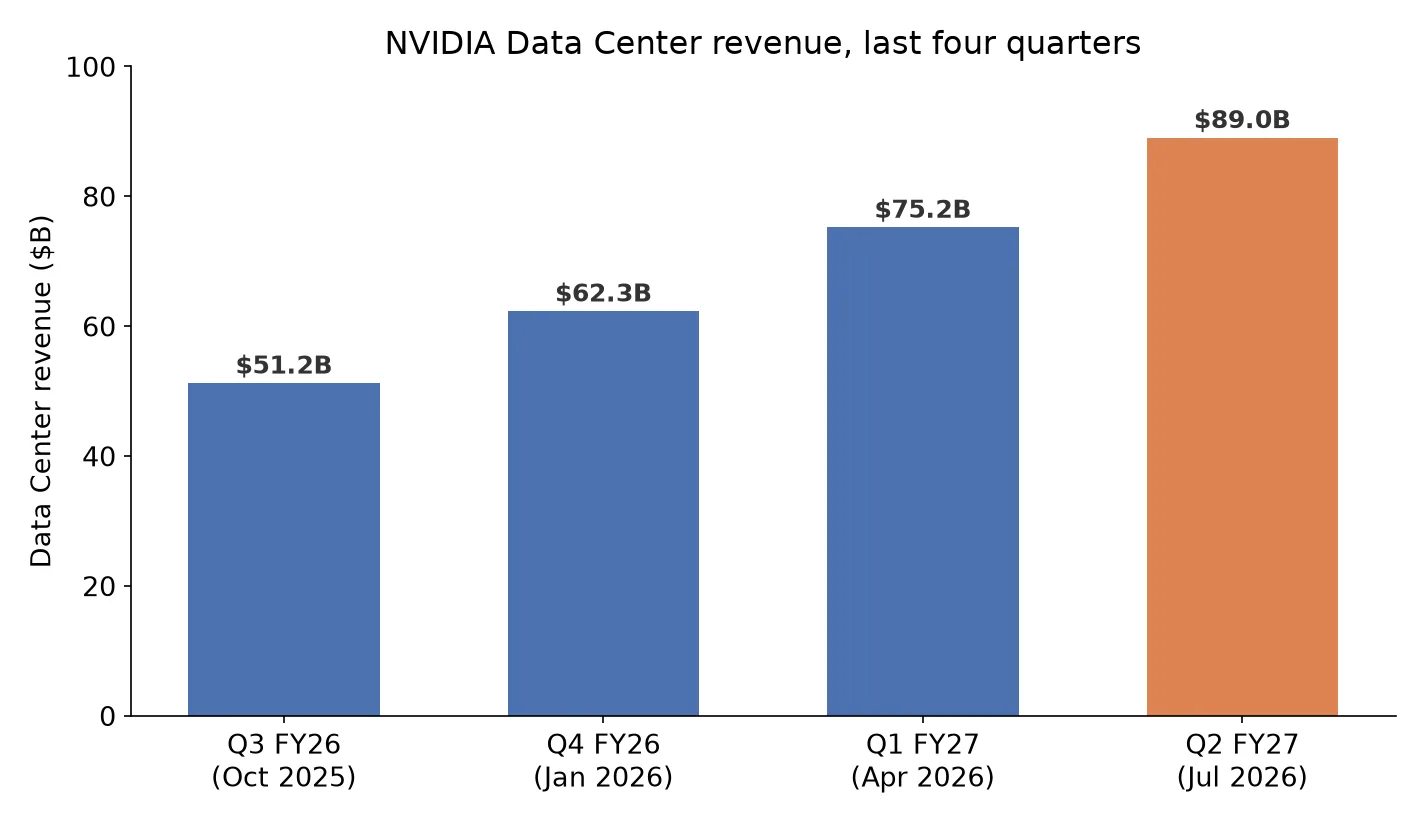
P.11Nvidia posted $96.2B in Q2 FY27 revenue, Data Center up 117% to $89B. What the number means if you're the one budgeting GPU capacity this quarter.
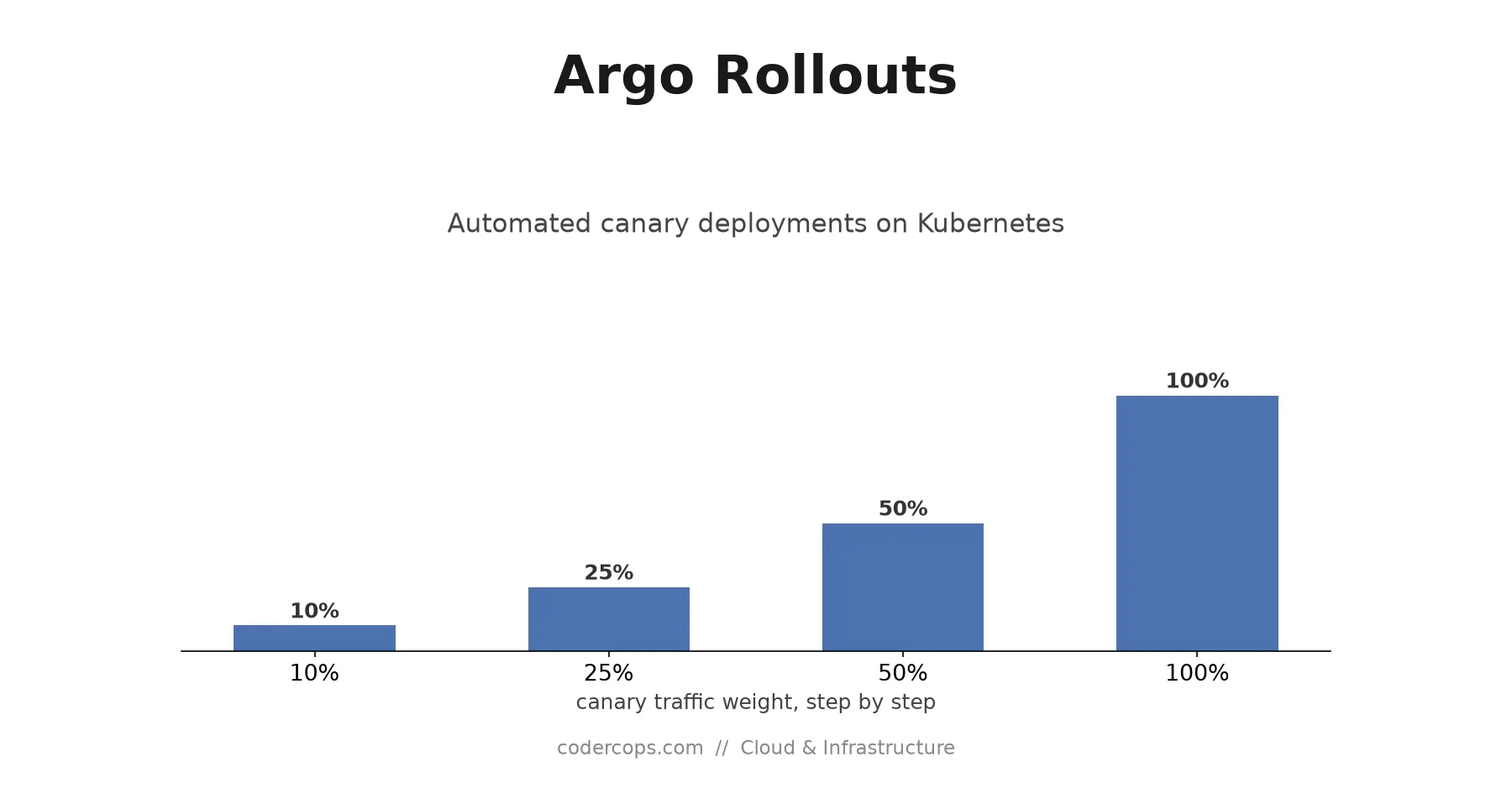
P.12Argo Rollouts replaces a Deployment with a controller that shifts traffic gradually and rolls back on bad metrics. Real manifests, plain Deployment to canary.
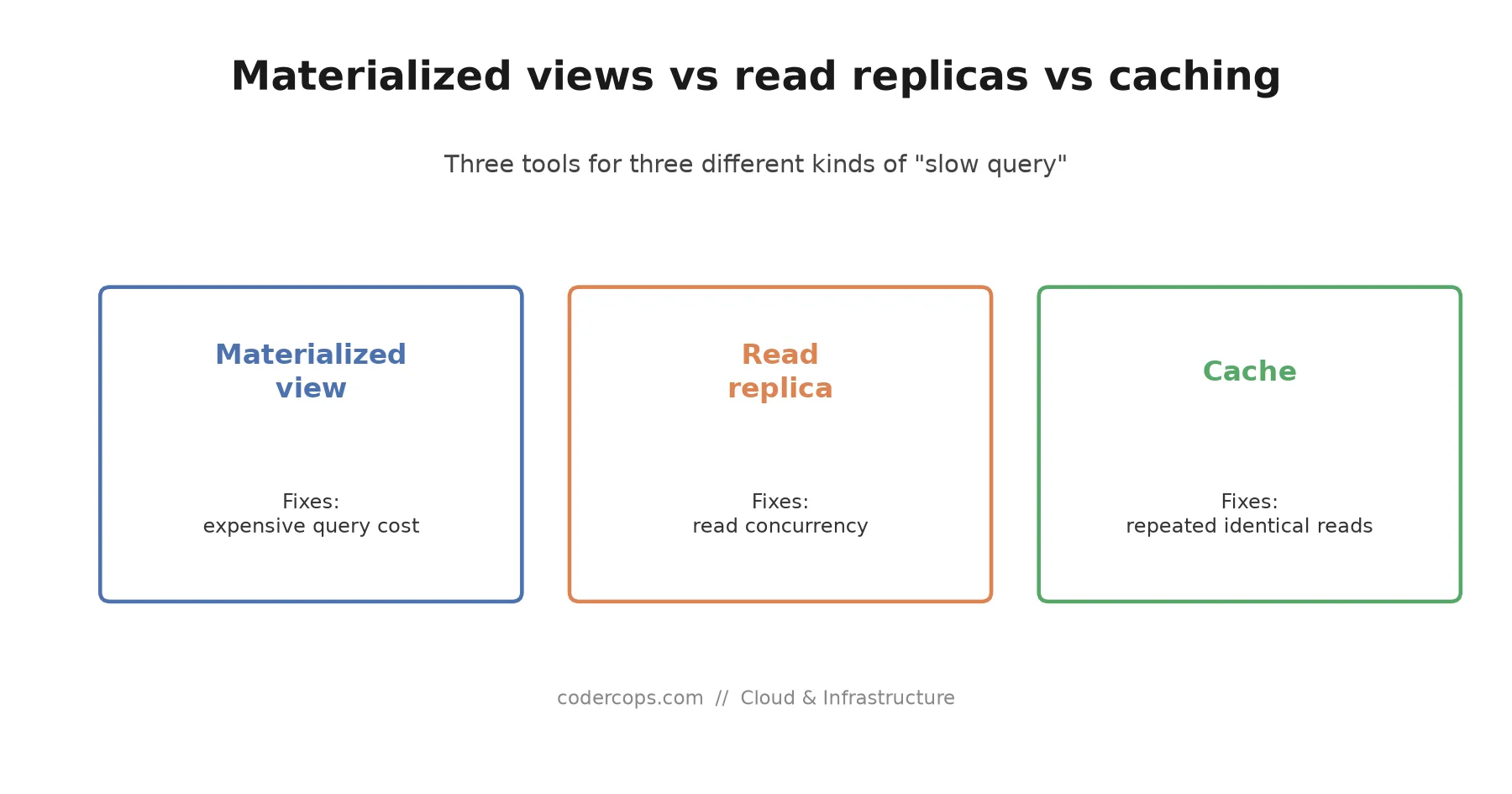
P.13Three tools solve three different versions of "this query is slow." How materialized views, read replicas, and caches differ, and how to pick one.
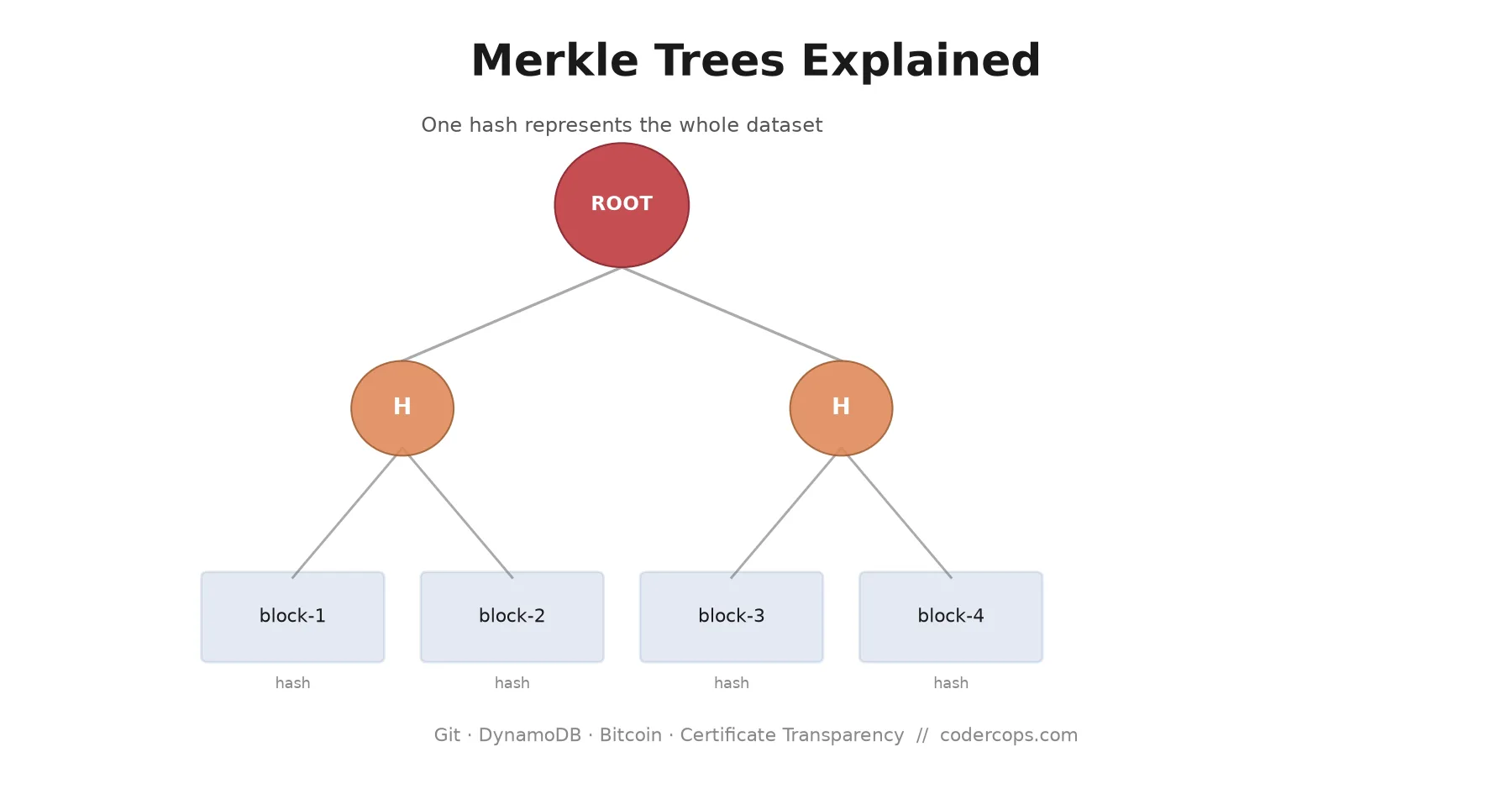
P.14A Merkle tree proves a piece of data belongs to a large dataset, or finds exactly what changed between copies, without reading all of it. How, and where.
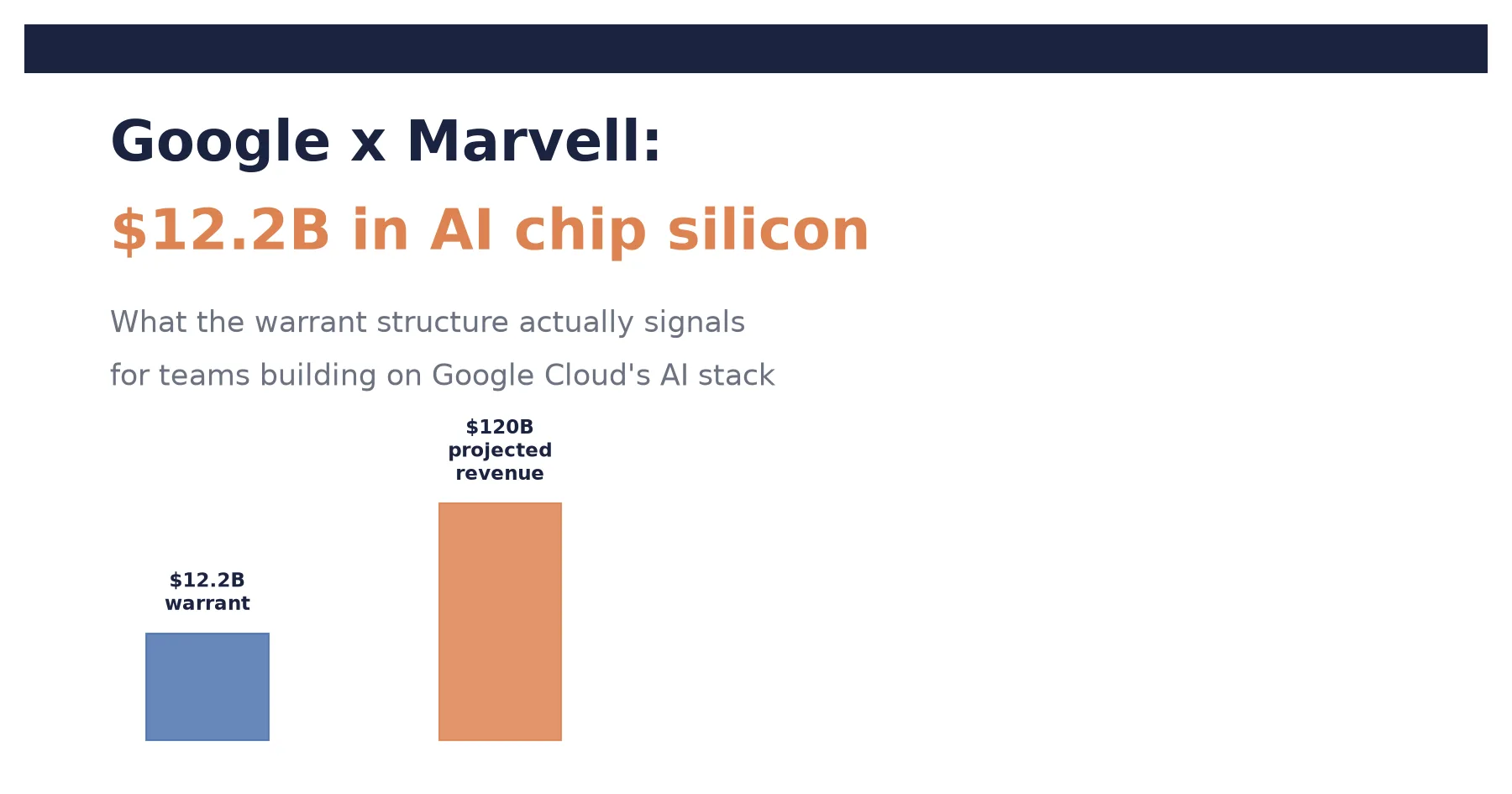
P.15Marvell gave Google a warrant on up to $12.2B in shares that vests as Google buys custom TPU silicon. What the structure says about GCP's AI roadmap.
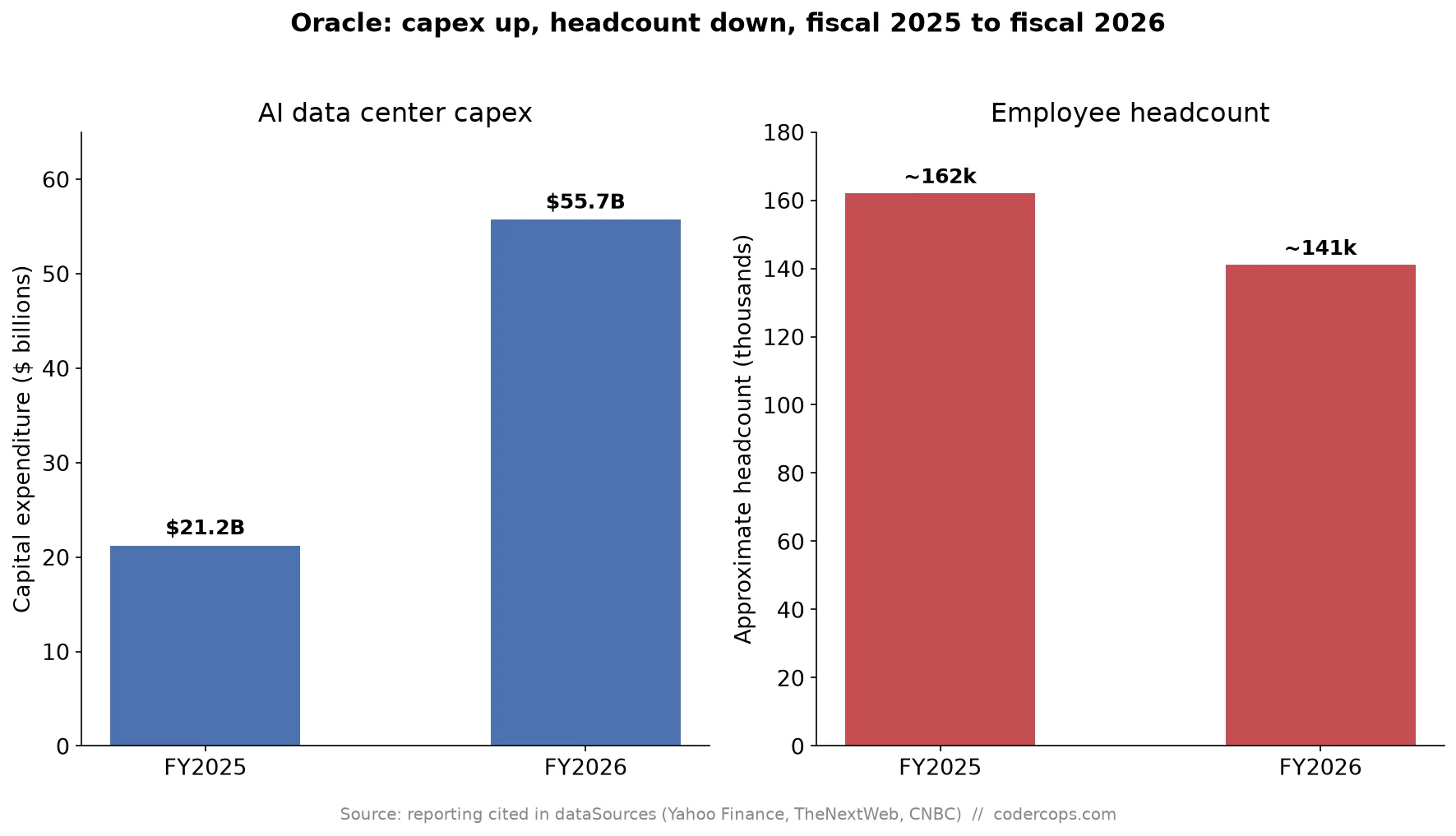
P.16Oracle cut about 21,000 jobs in FY2026 while AI data center capex nearly tripled to $55.7B. The math, and what it should change about your OCI vendor risk.
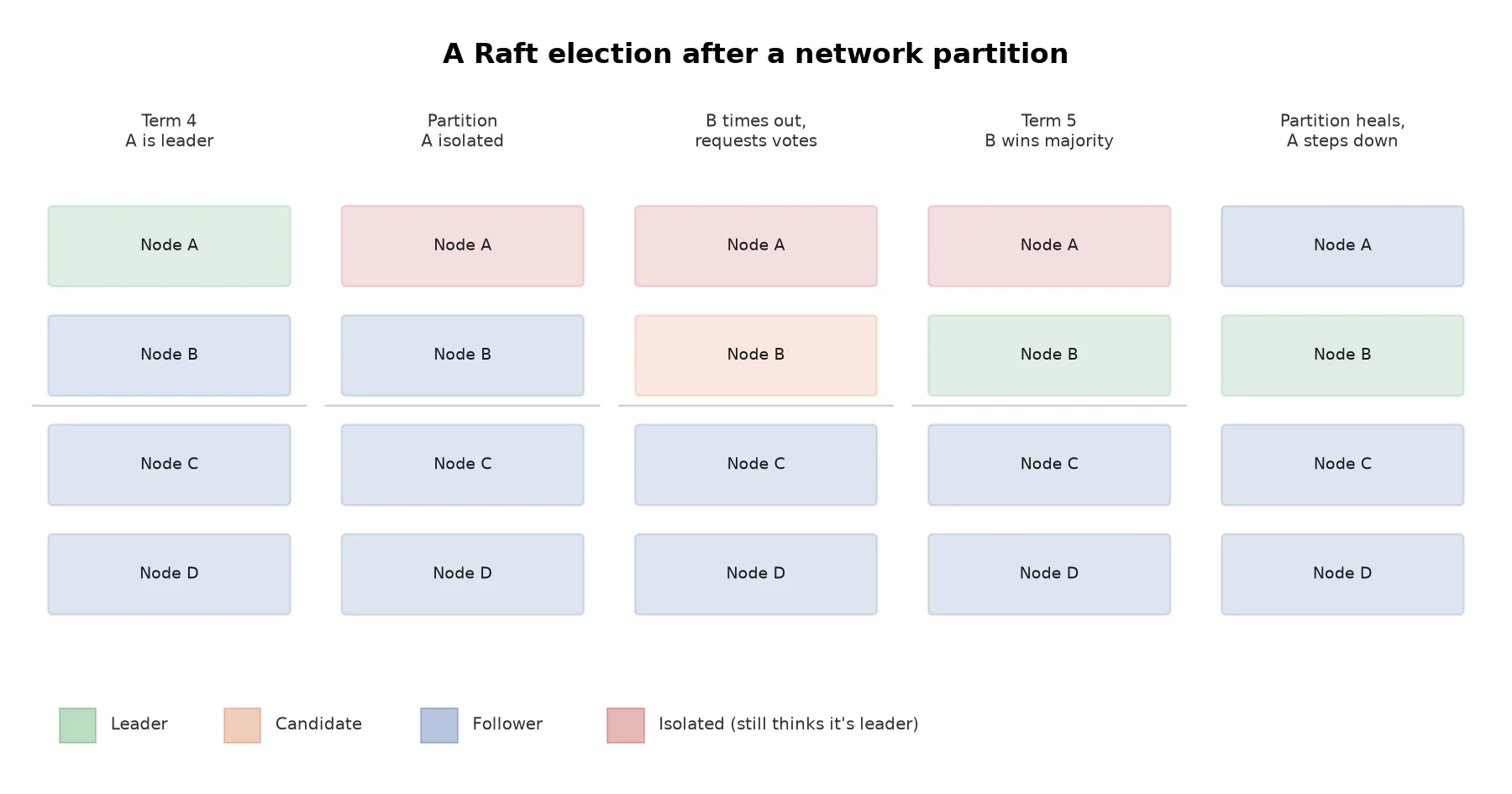
P.17Run three copies of a service and only one should do certain jobs. How leader election works, from Raft's term voting to the etcd lease pattern teams use.
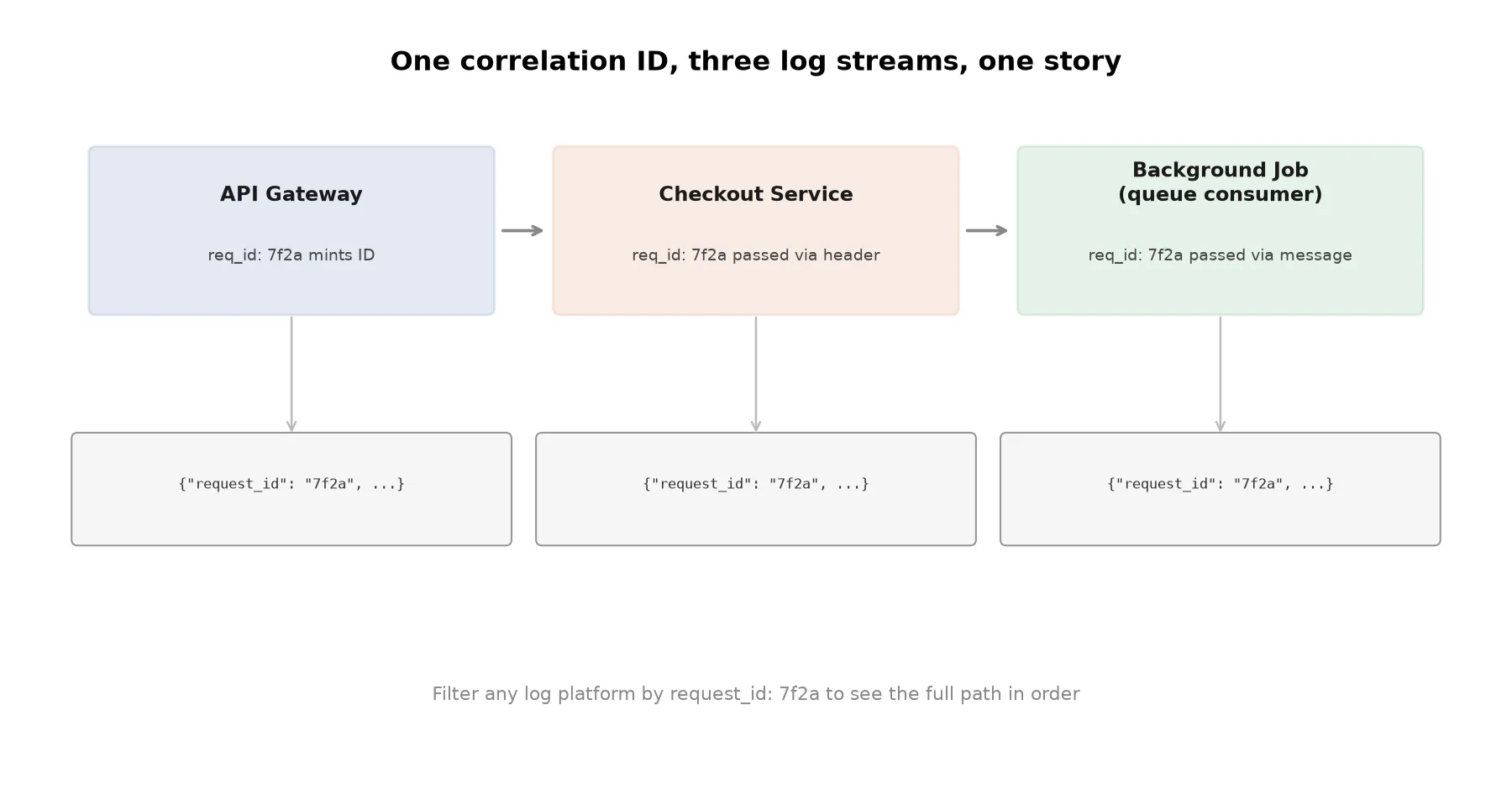
P.18A log line that's just a sentence is fine until you search a million at 2am. How structured logging works, threading a correlation ID, and what to skip.
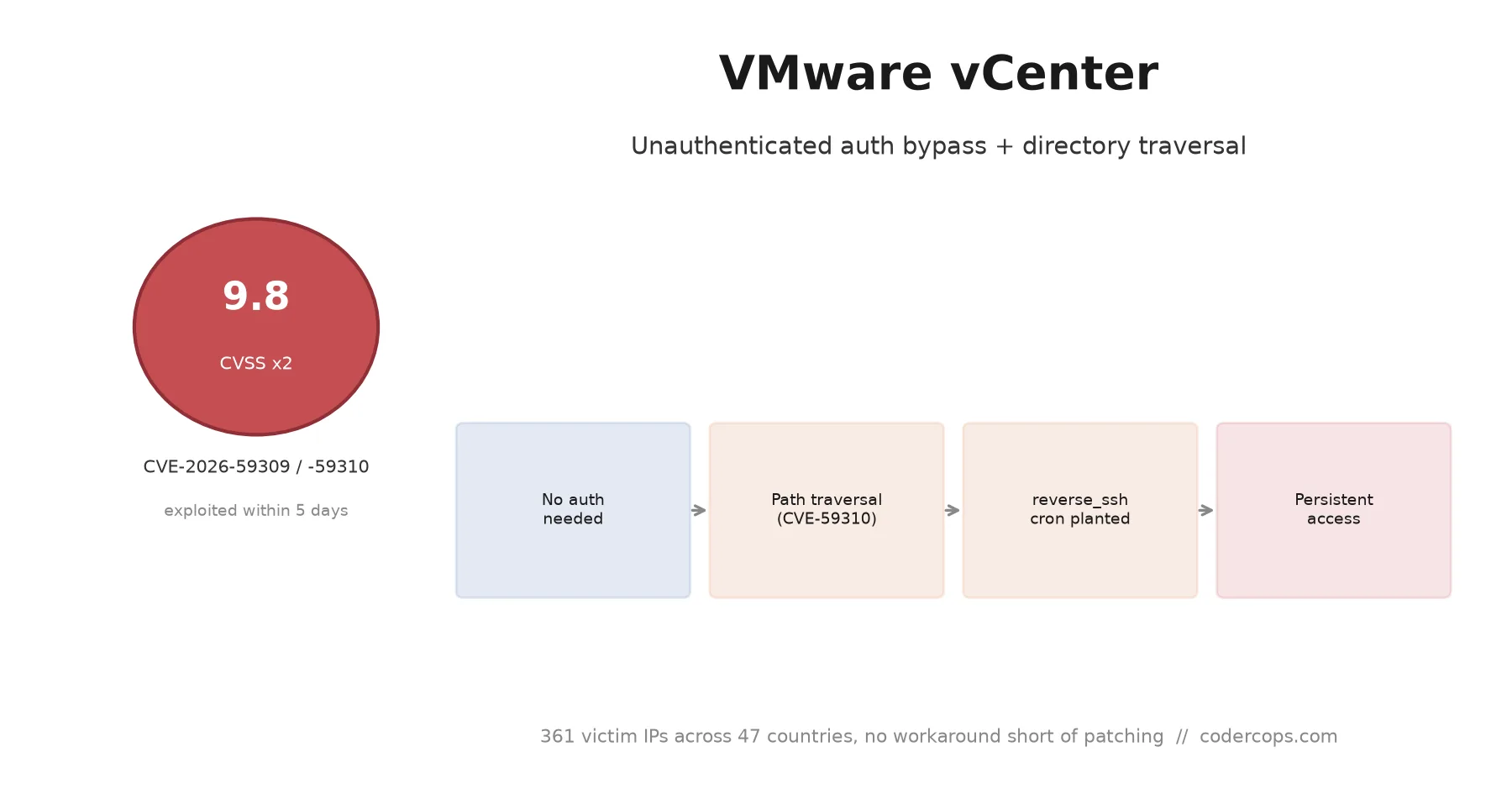
P.19Two critical unauthenticated vCenter flaws let attackers skip login and run code on the management plane. What's affected, and how to check for compromise.
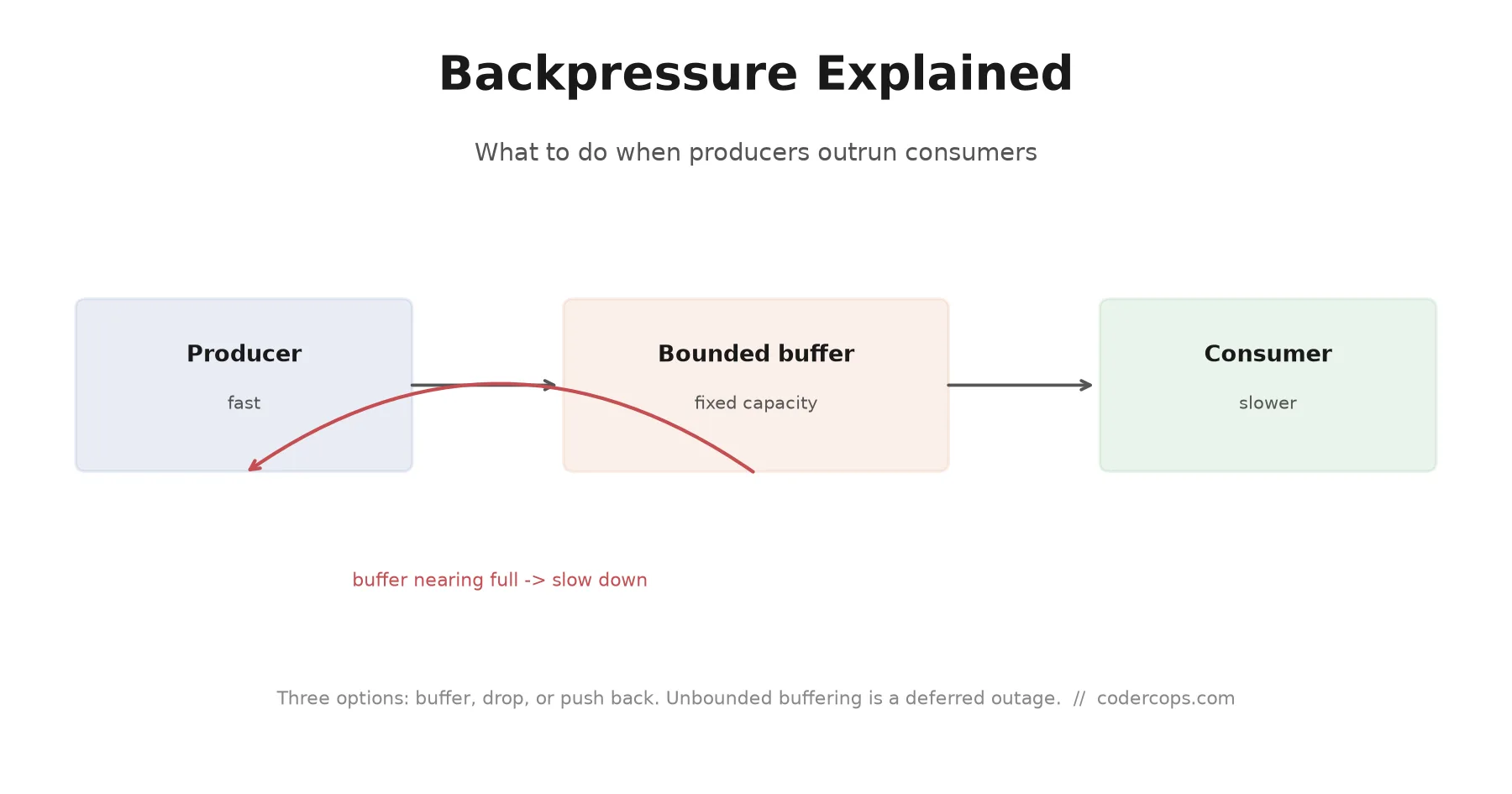
P.20When production outruns consumption, a system must buffer, drop, or push back. How backpressure works across queues, streams, and APIs, with patterns.
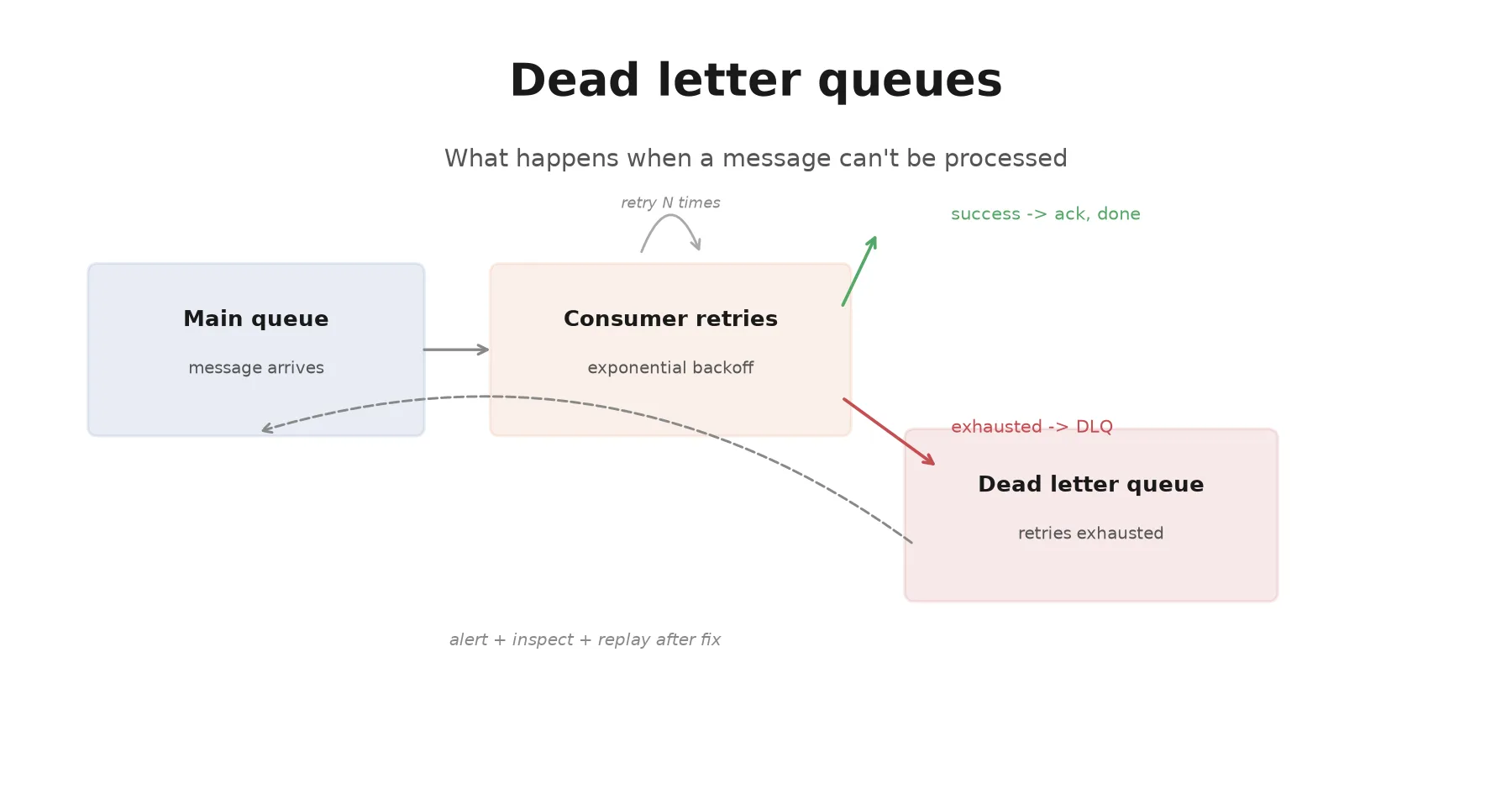
P.21A message that fails every retry shouldn't loop forever or vanish. How dead letter queues catch it, how to set retry limits, and the reprocessing workflow.
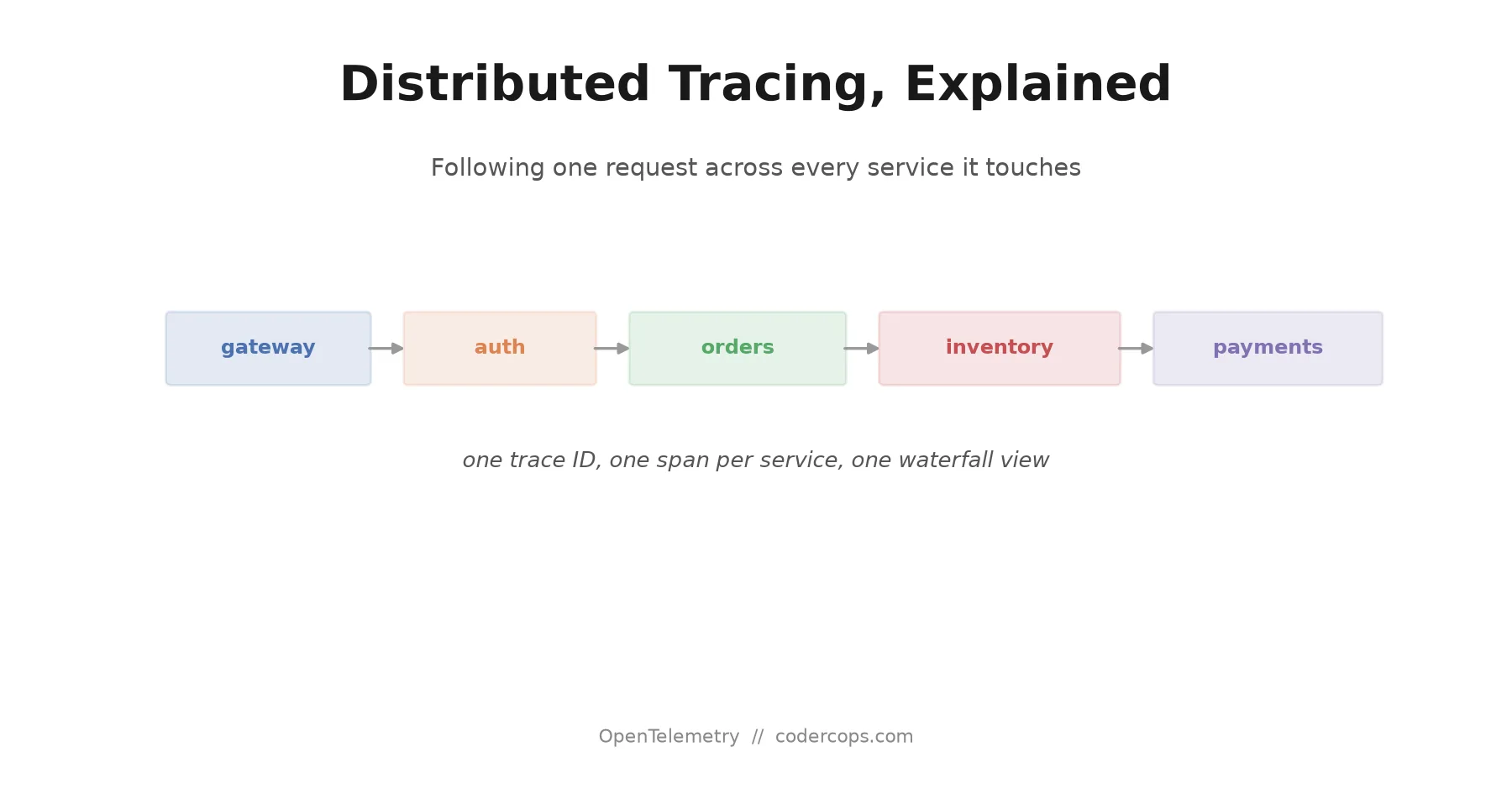
P.22One checkout request touches five services and nobody knows which is slow. How trace IDs, spans, and context propagation fix that, with OpenTelemetry code.
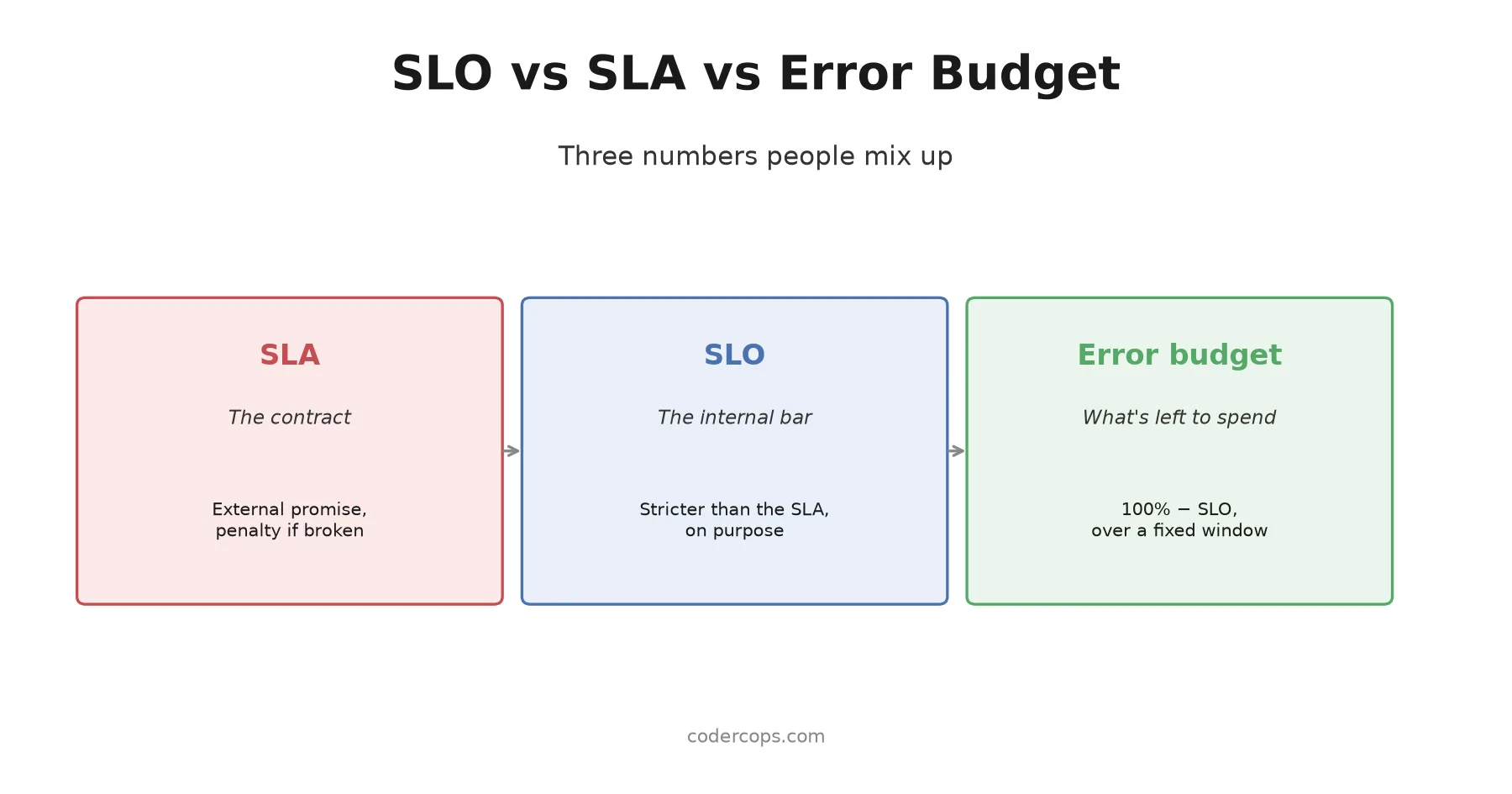
P.23An SLA is a promise with a penalty. An SLO is the internal target that keeps you inside it. An error budget is what's left. The math, on a real example.
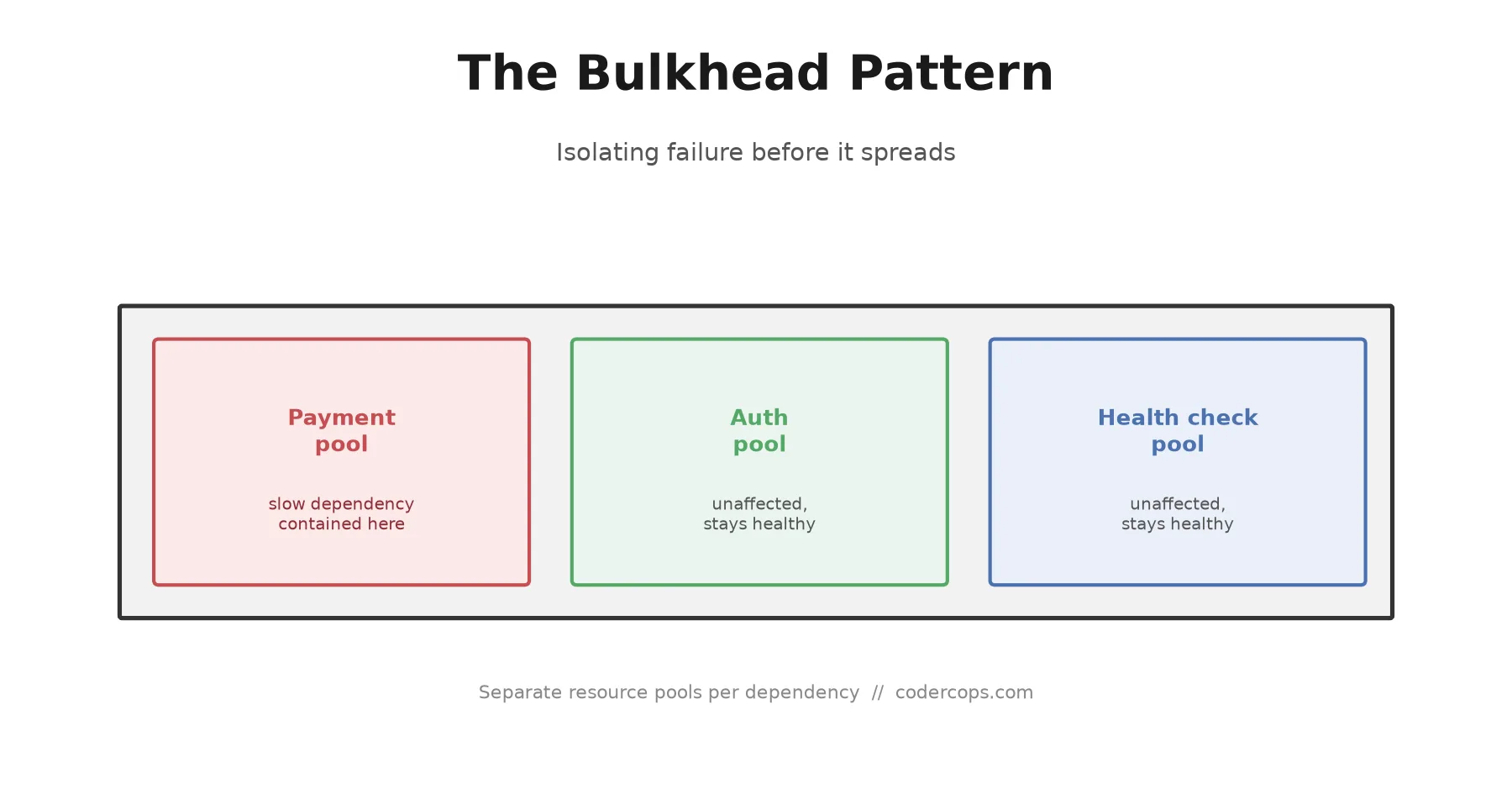
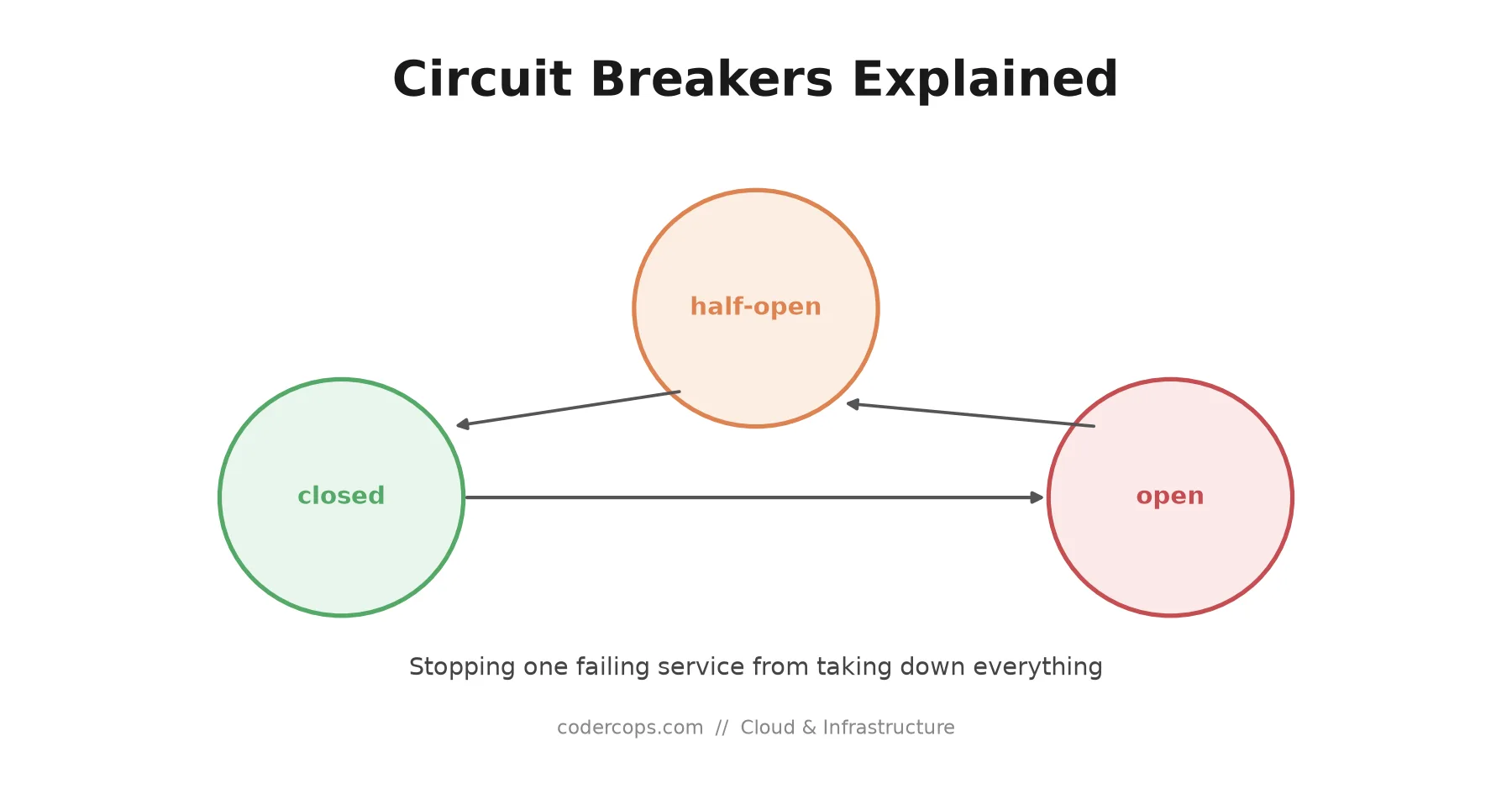
P.24A circuit breaker stops calls to a failed service. A bulkhead stops a merely slow one from eating every thread and starving the rest of your app.
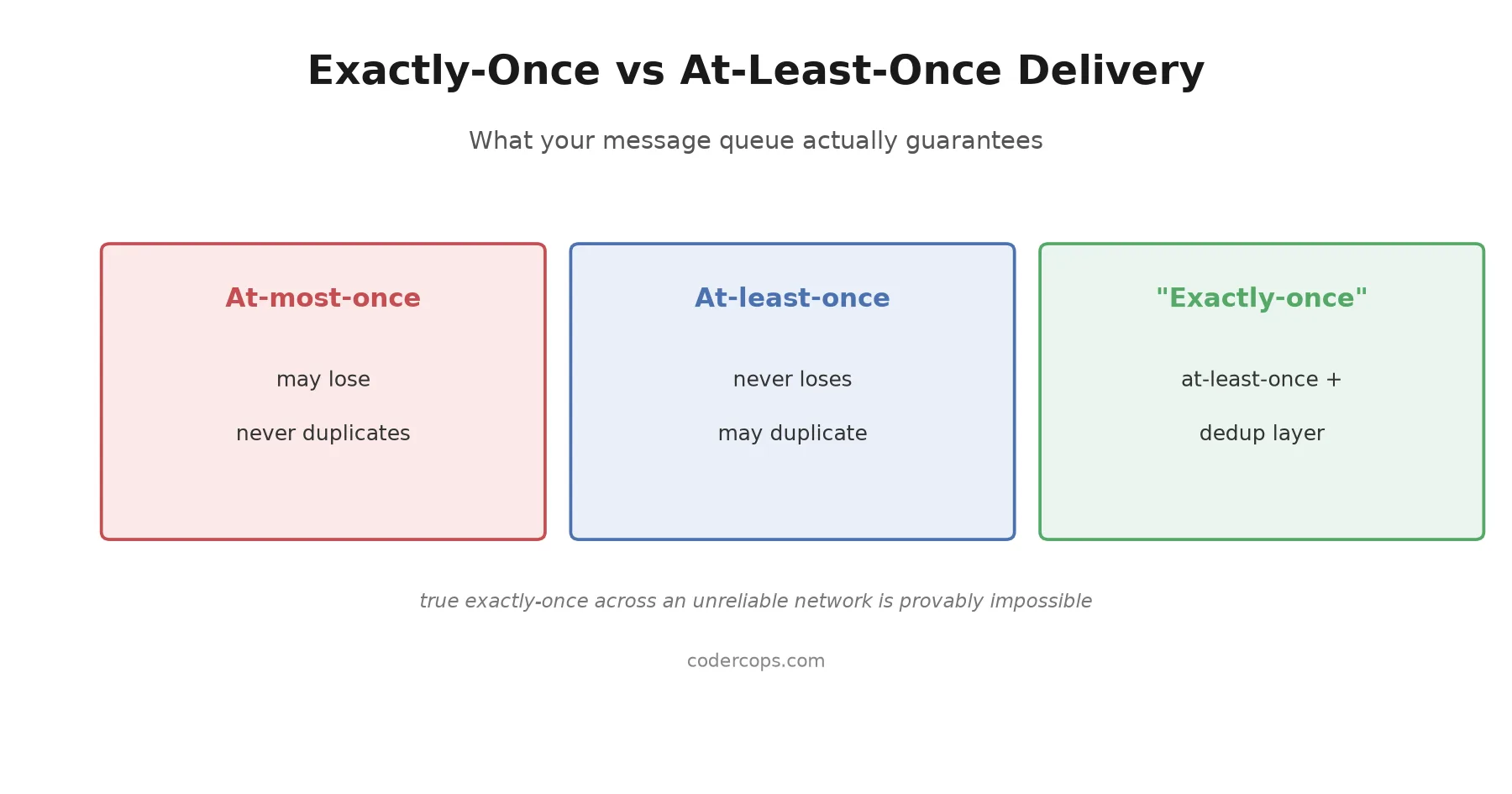
P.25Almost every queue advertising exactly-once actually gives you at-least-once plus a way to make your handler idempotent. The real distinction, and why.
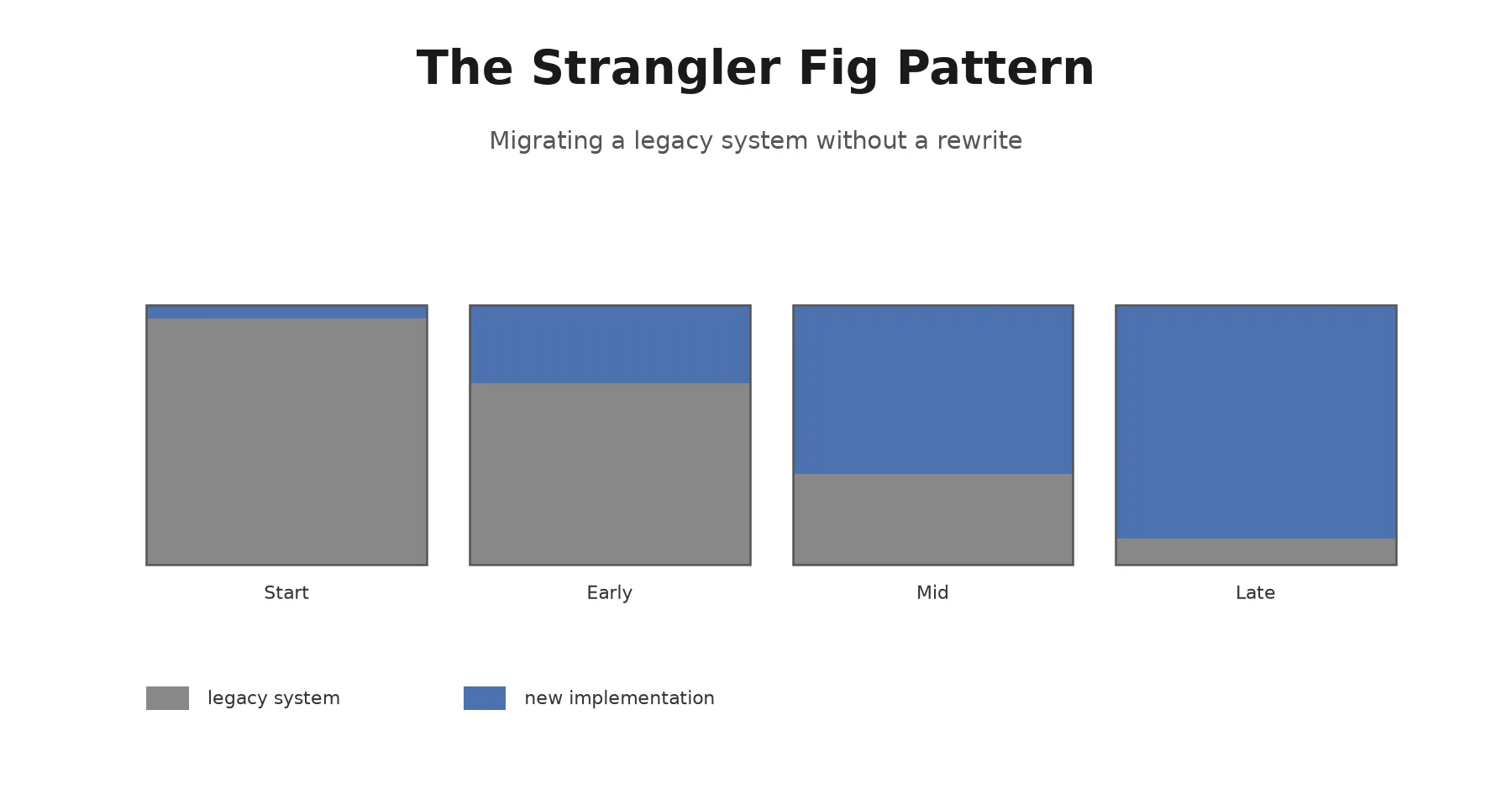
P.26Full rewrites fail because the business can't stand still for two years, not because the new code is bad. How the strangler fig moves traffic piece by piece.
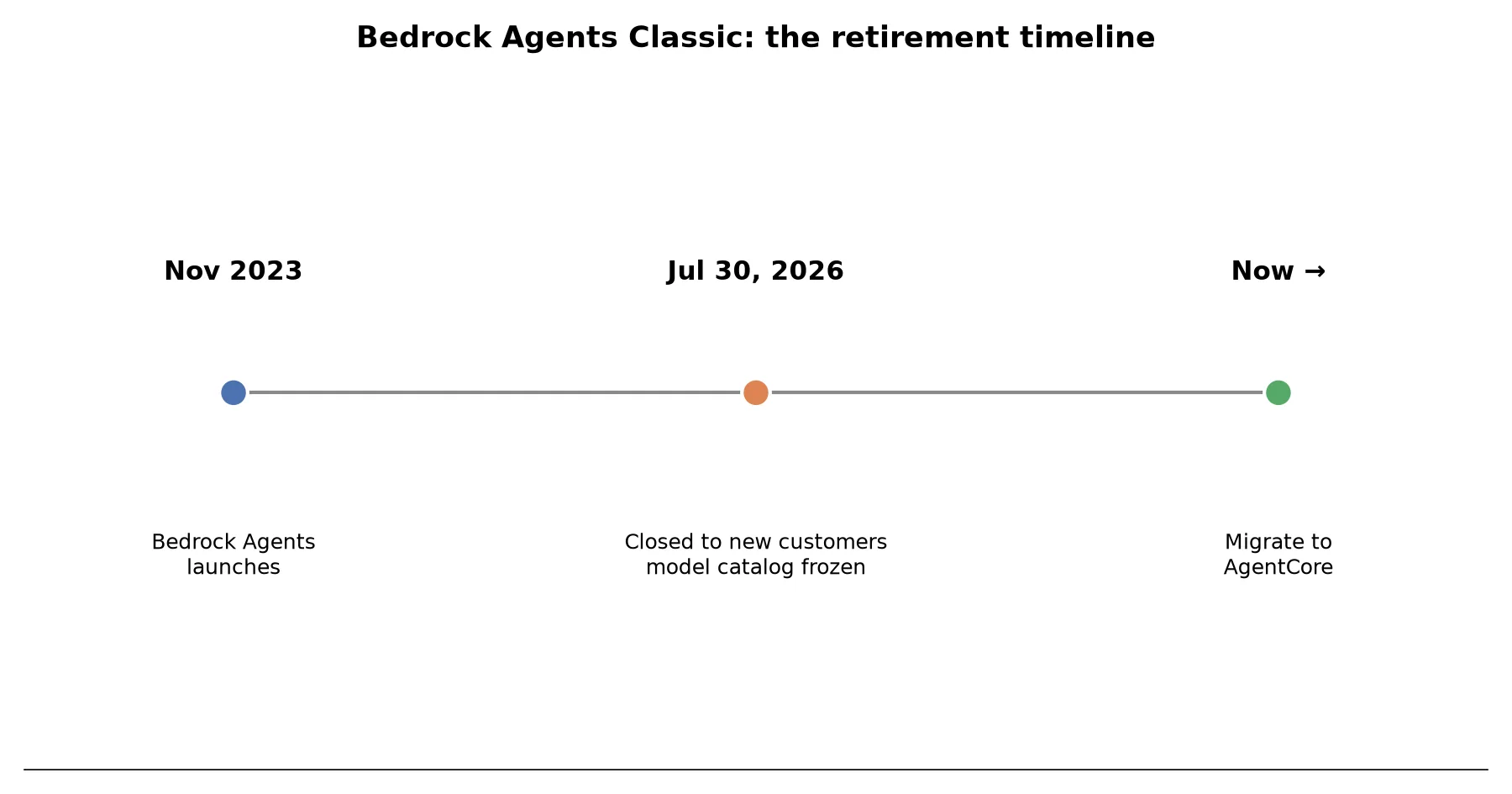
P.27Bedrock Agents Classic closes to new customers on July 30, 2026, and its model catalog freezes too. What that means, and how to move over to AgentCore.
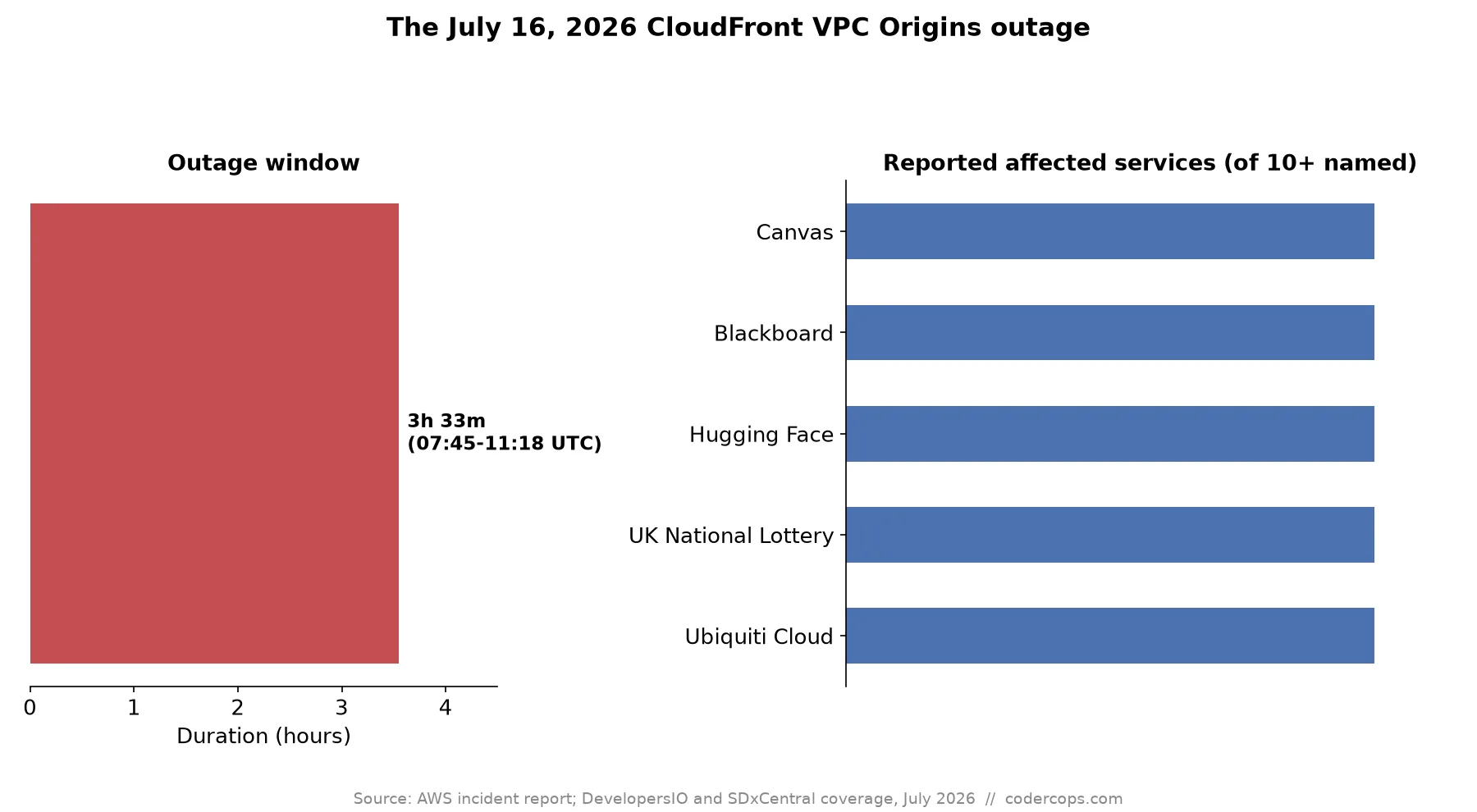
P.28A 3-hour-33-minute CloudFront VPC Origins failure knocked out ten unrelated services worldwide. The cause was a single-ingress design worth checking for.
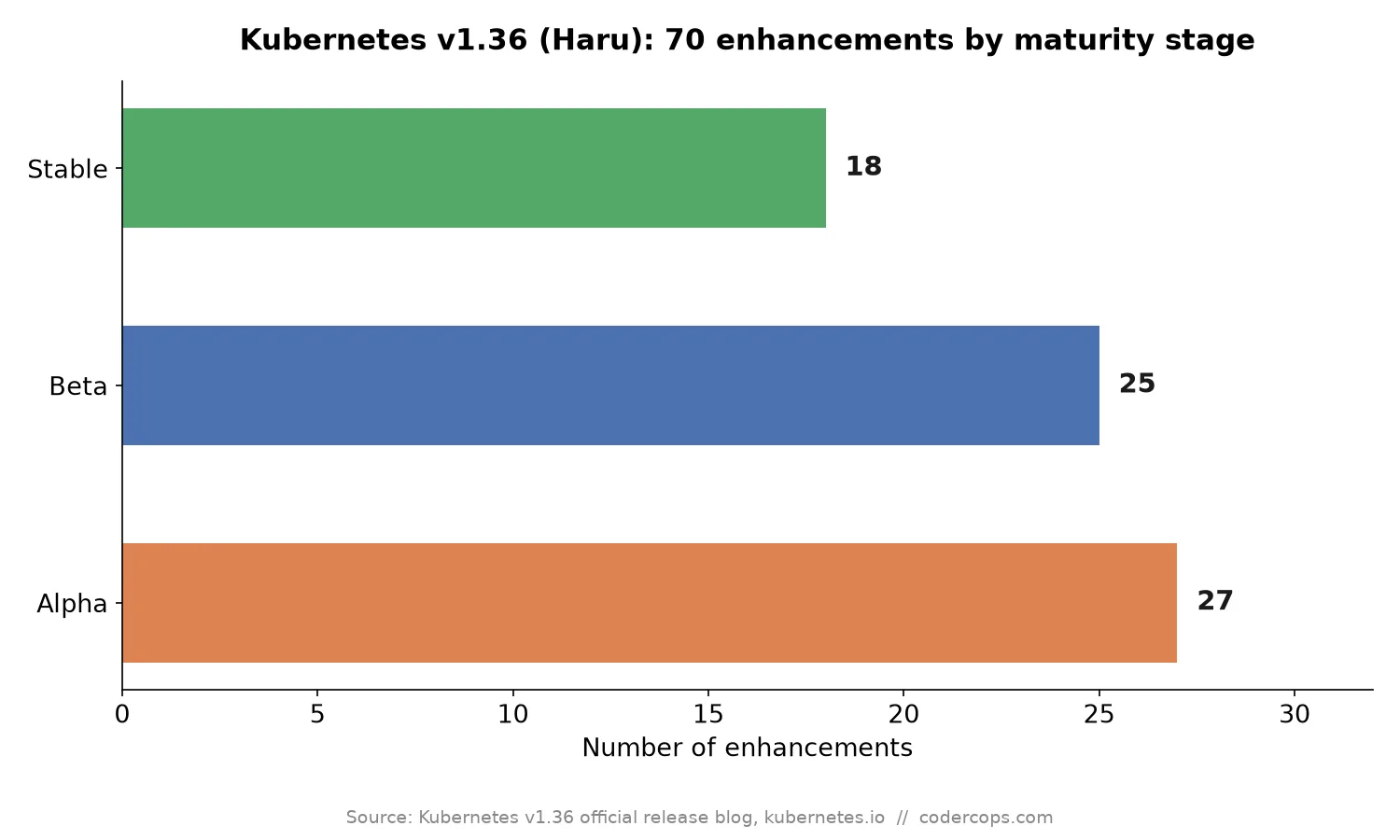
P.29Kubernetes 1.36 shipped 70 enhancements with no headline rewrite, just years of work reaching stable. What changes for platform teams, and what to skip.
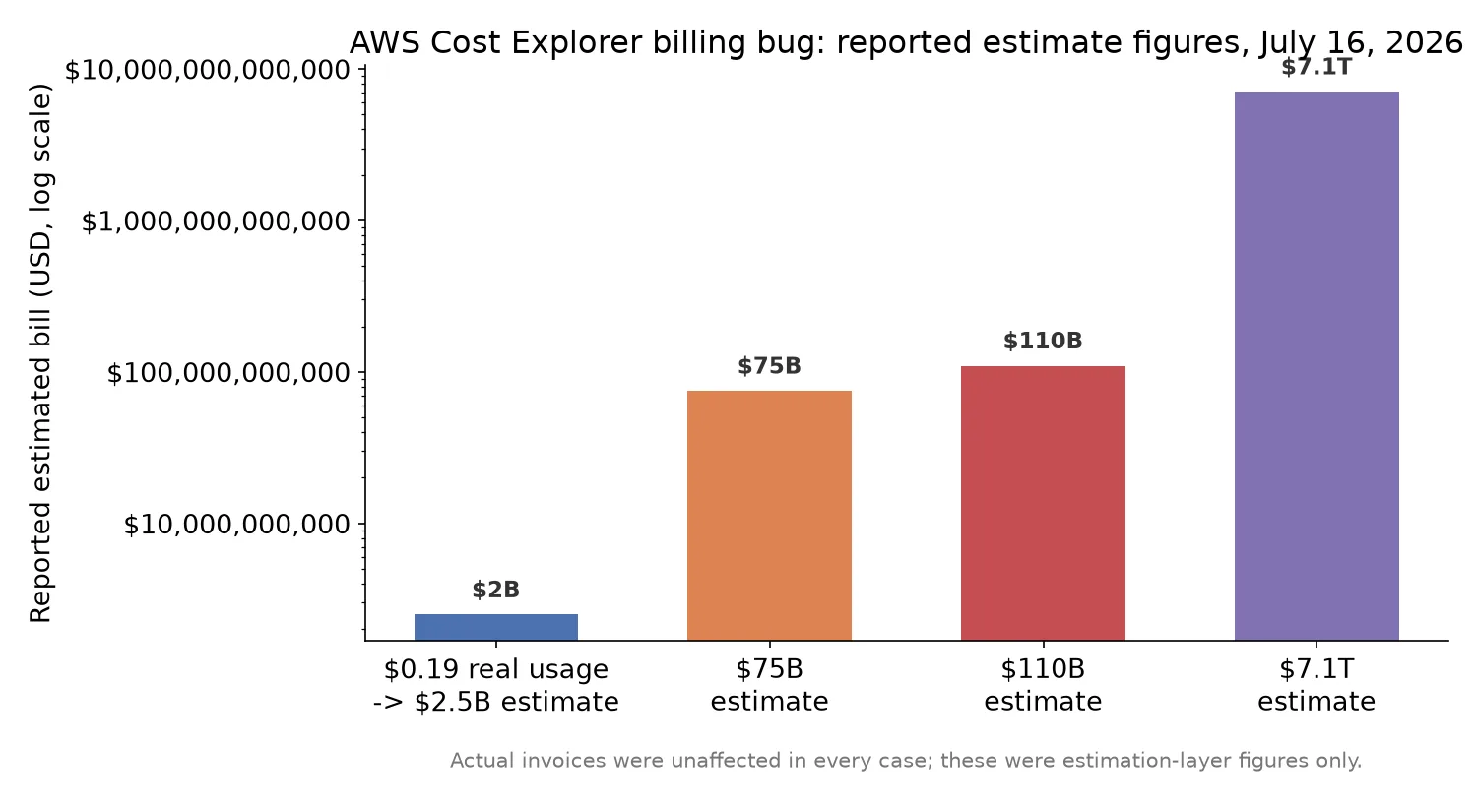
P.30A unit-pricing bug sent some AWS customers cost projections in the billions on July 16. Invoices were fine; automation wired to those estimates wasn't.
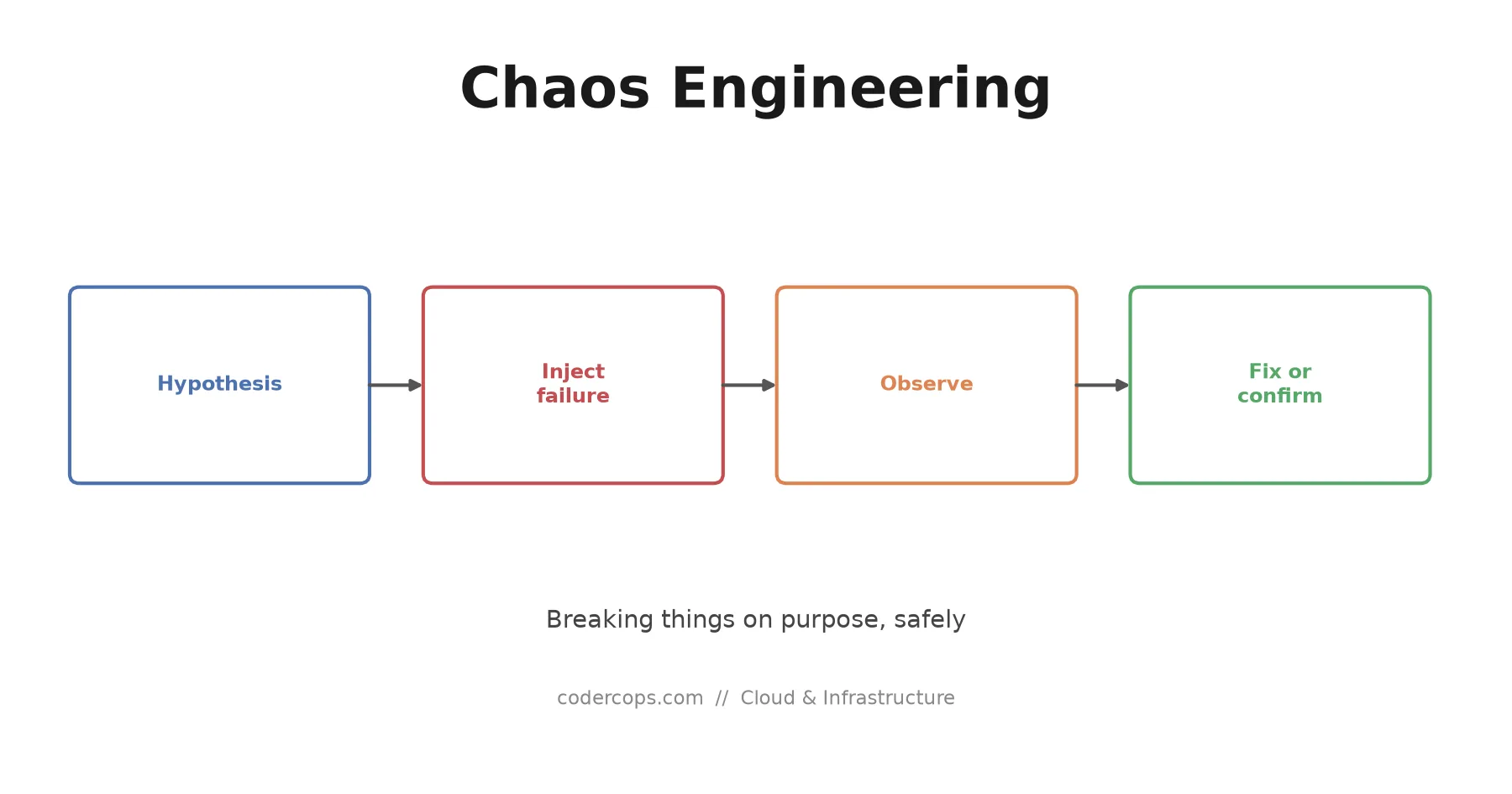
P.31Chaos engineering injects failure into a running system to find weaknesses before an outage does. What it involves, what tools help, and when to skip it.
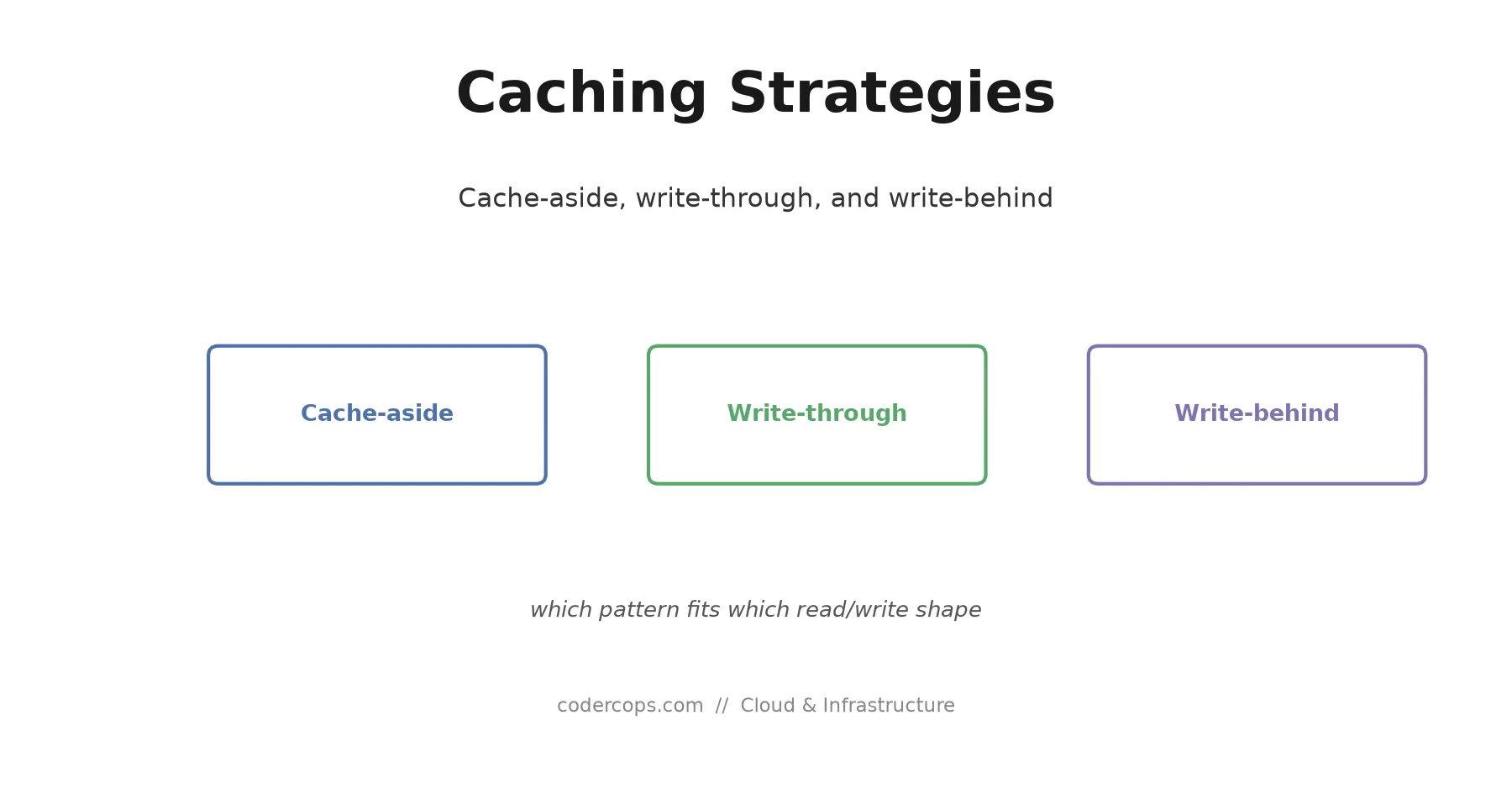
P.32Most teams reach for cache-aside by default and never ask if it's actually the right pattern. Here's how the three main caching strategies behave under real traffic, the consistency gap each one leaves open, and how to pick between them.
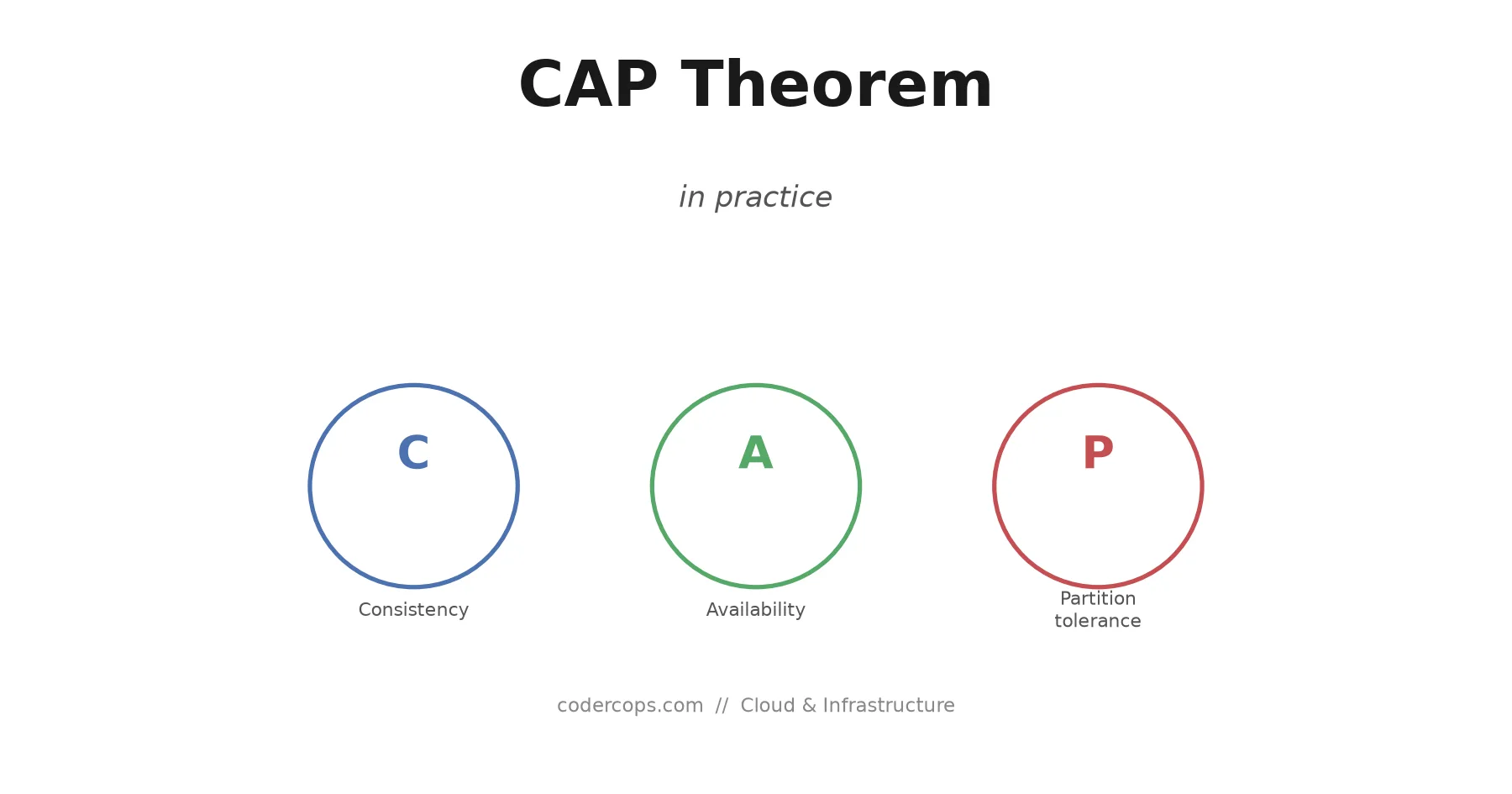
P.33CAP theorem gets summarized as 'pick two of three' so often that the summary has replaced the theorem. Here's what it actually says, why the real constraint only bites during a network partition, and how to pick a consistency model for a system you're actually building.
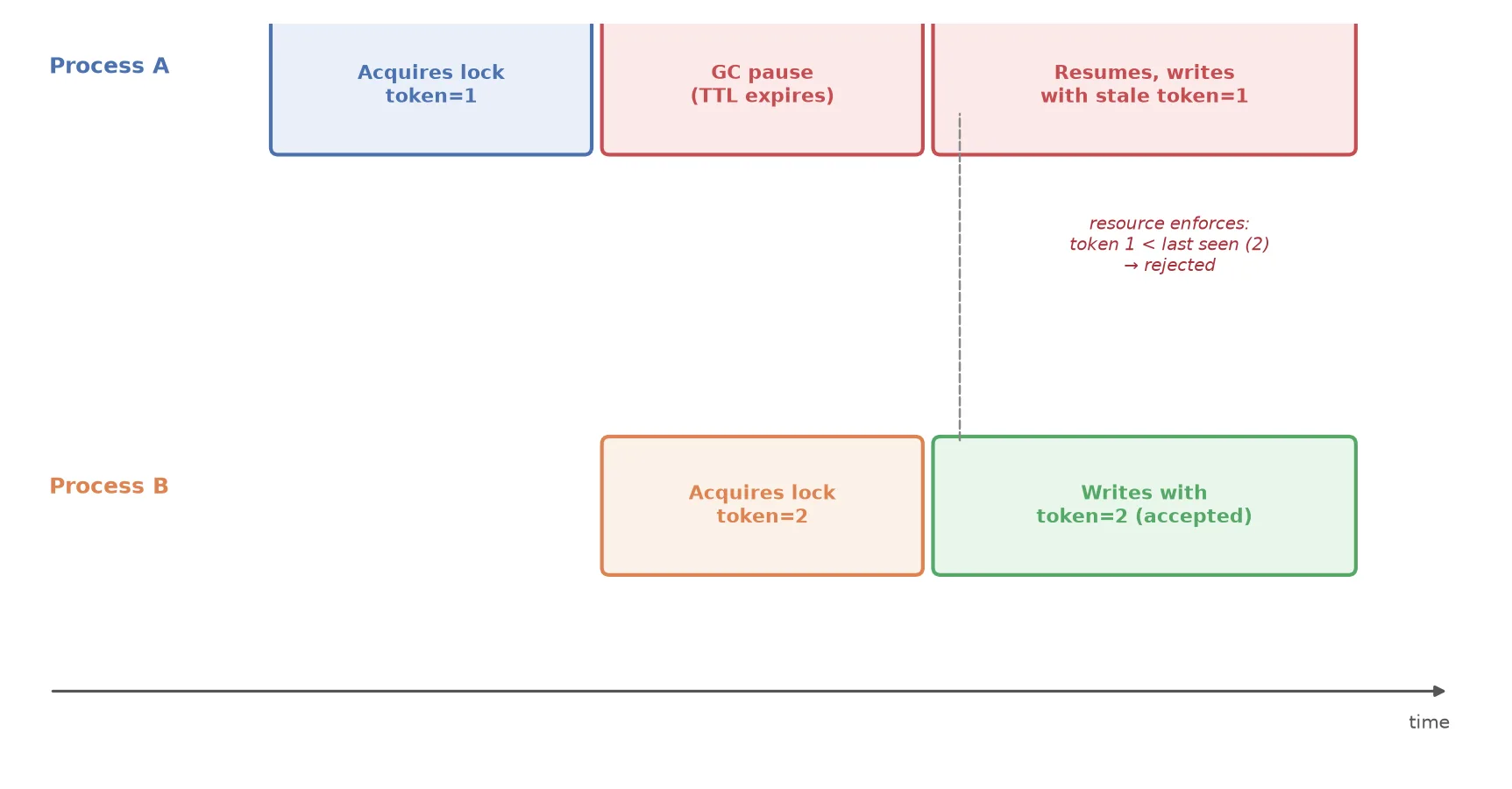
P.34A distributed lock keeps two processes on different machines from touching the same resource at once, but the naive Redis implementation has a gap that lets it fail silently. Here's how the pattern actually works, and the fencing token that closes the gap.
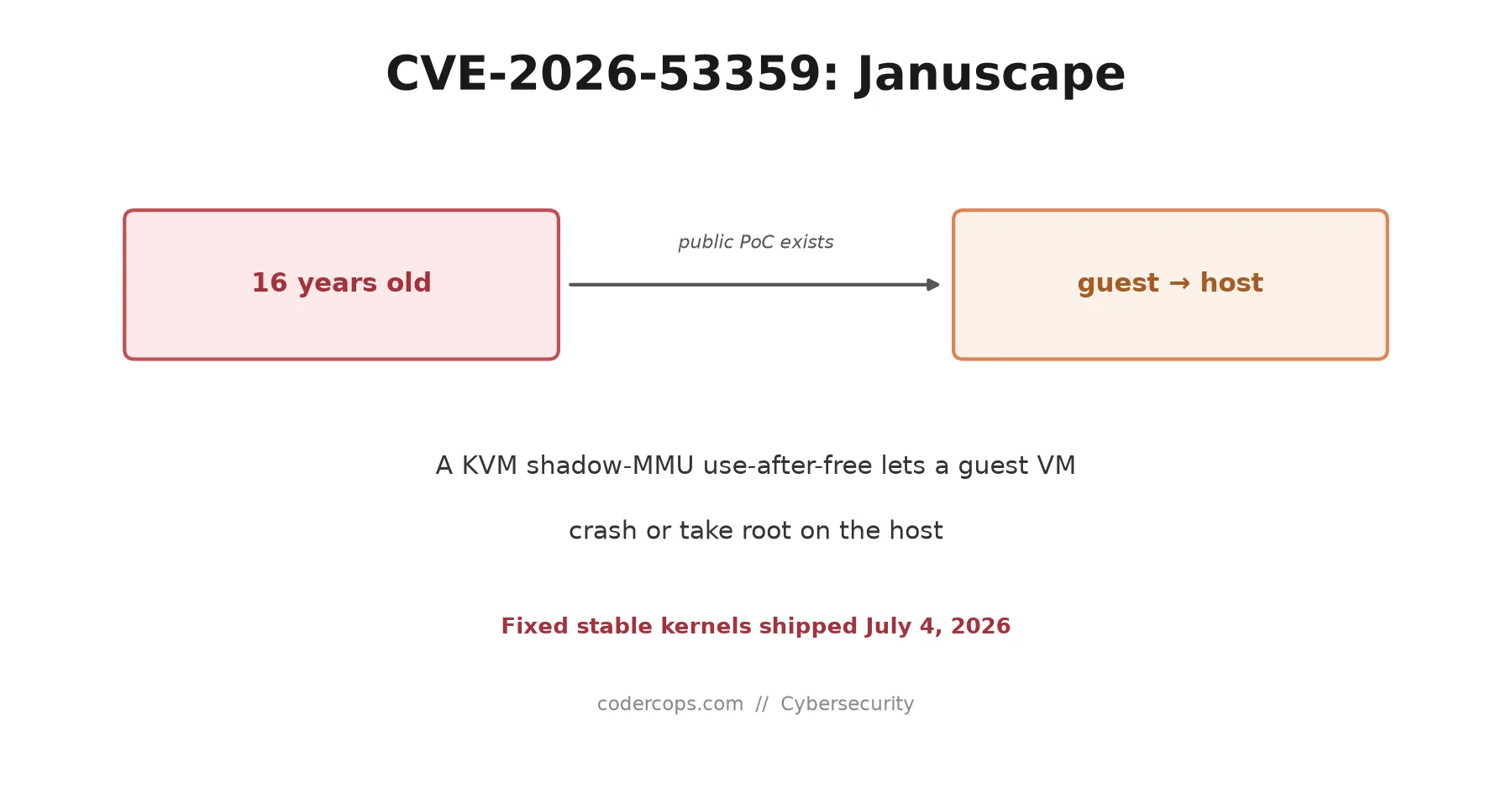
P.35A use-after-free in Linux KVM, present since 2010, lets an untrusted guest crash or compromise its host. Fixed kernels shipped July 4. Who's exposed.
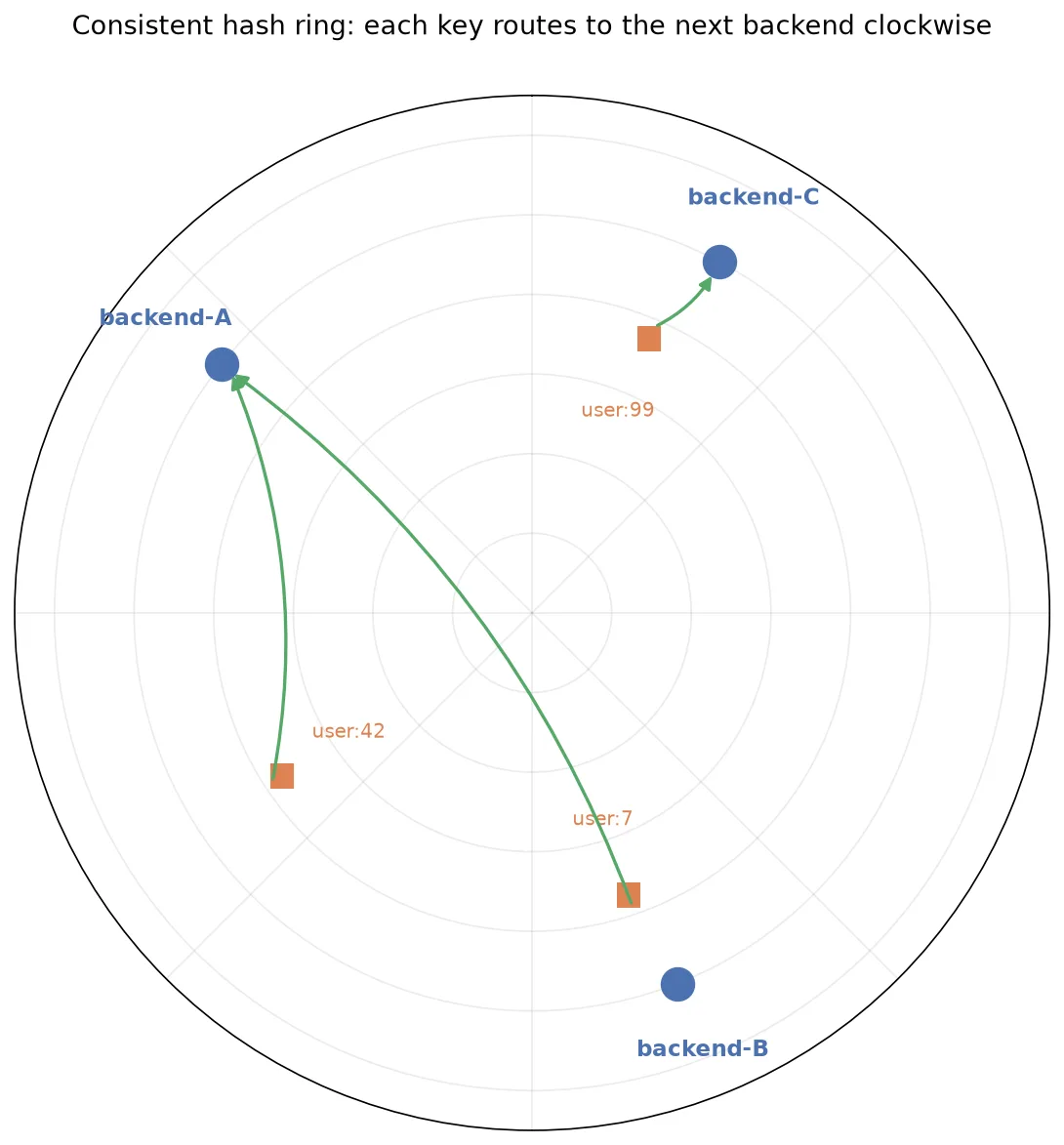
P.36Round robin isn't wrong, but it's the wrong default more often than teams realize. Here's how the main load balancing algorithms actually behave under uneven traffic, when each one earns its complexity, and a working consistent hashing implementation.
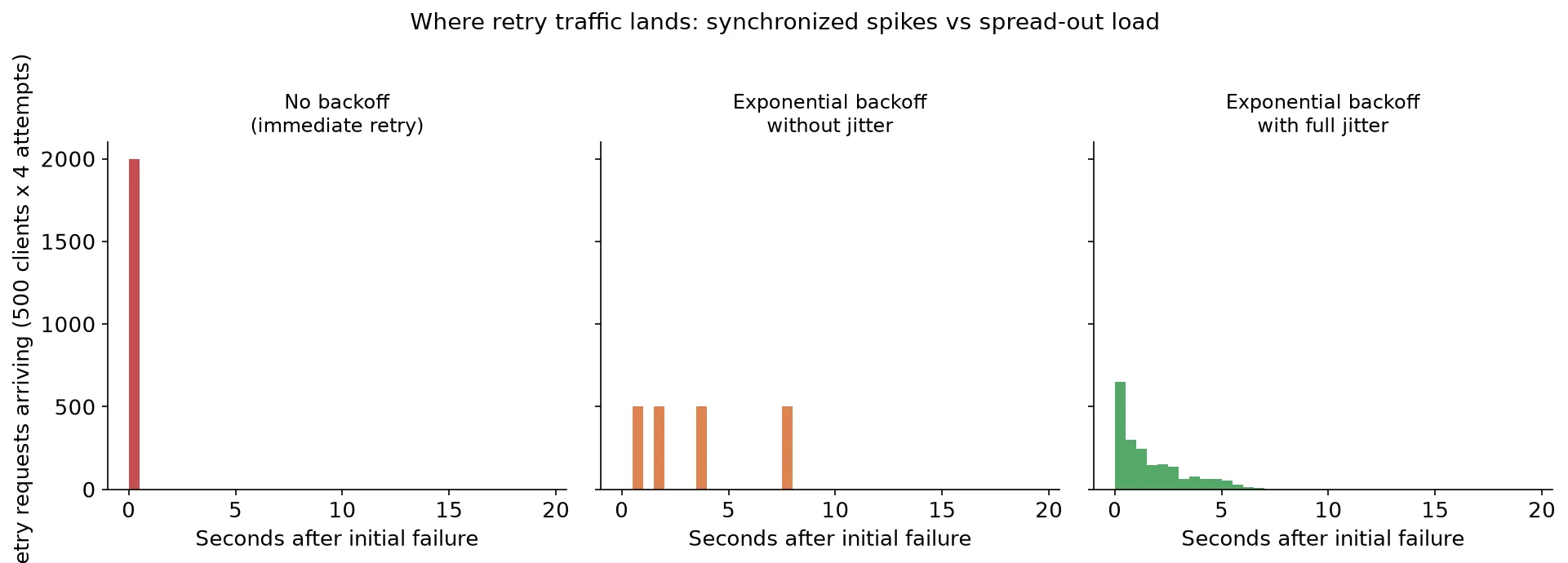
P.37A naive retry loop can turn a brief blip into a full outage by hammering a recovering service the instant it comes back. Here's how exponential backoff and jitter actually prevent that, with working code, not just the formula.
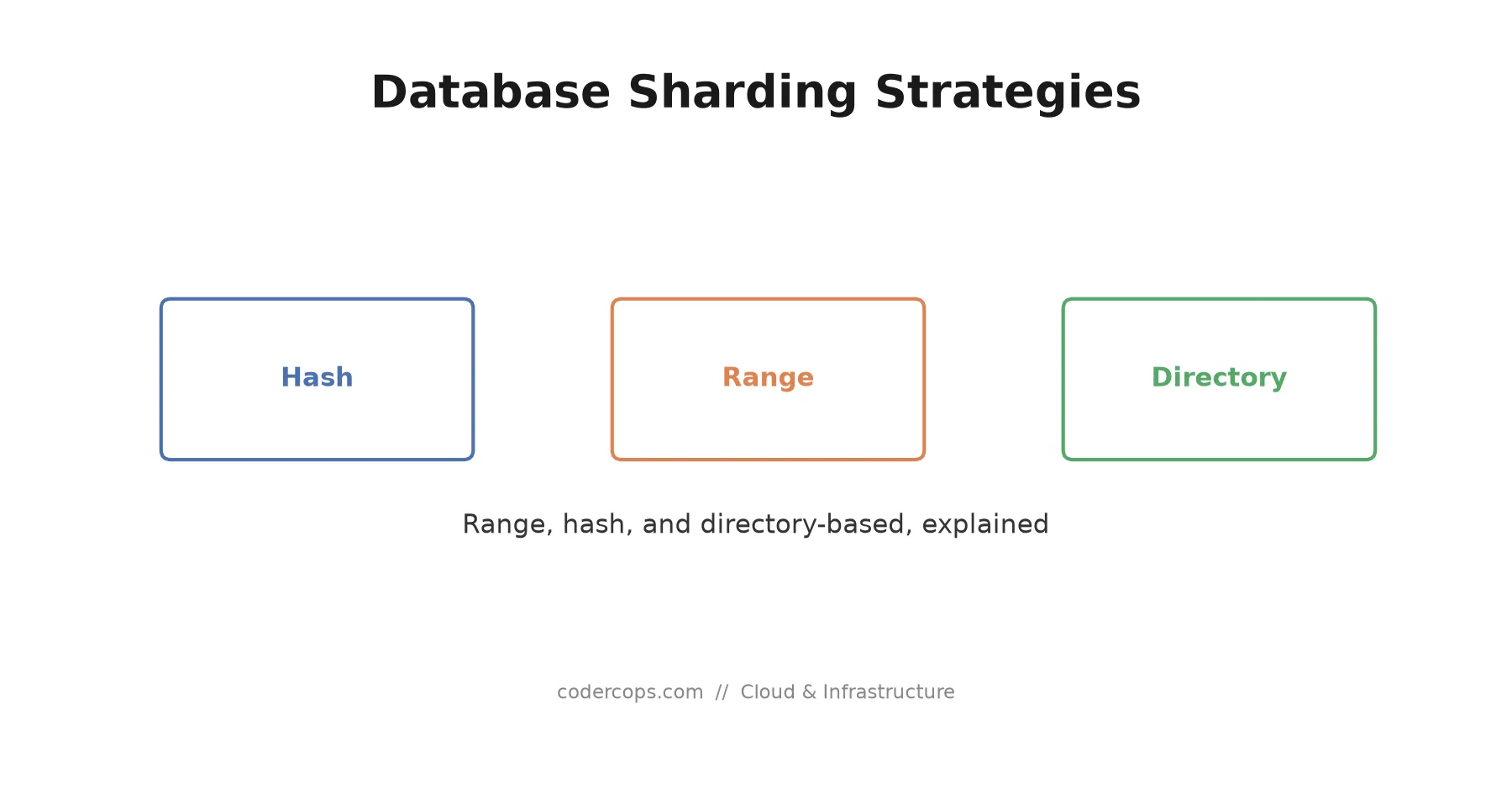
P.38Sharding splits one database across many machines. The strategy you pick decides whether you get hot spots, painful resharding, or something that scales.
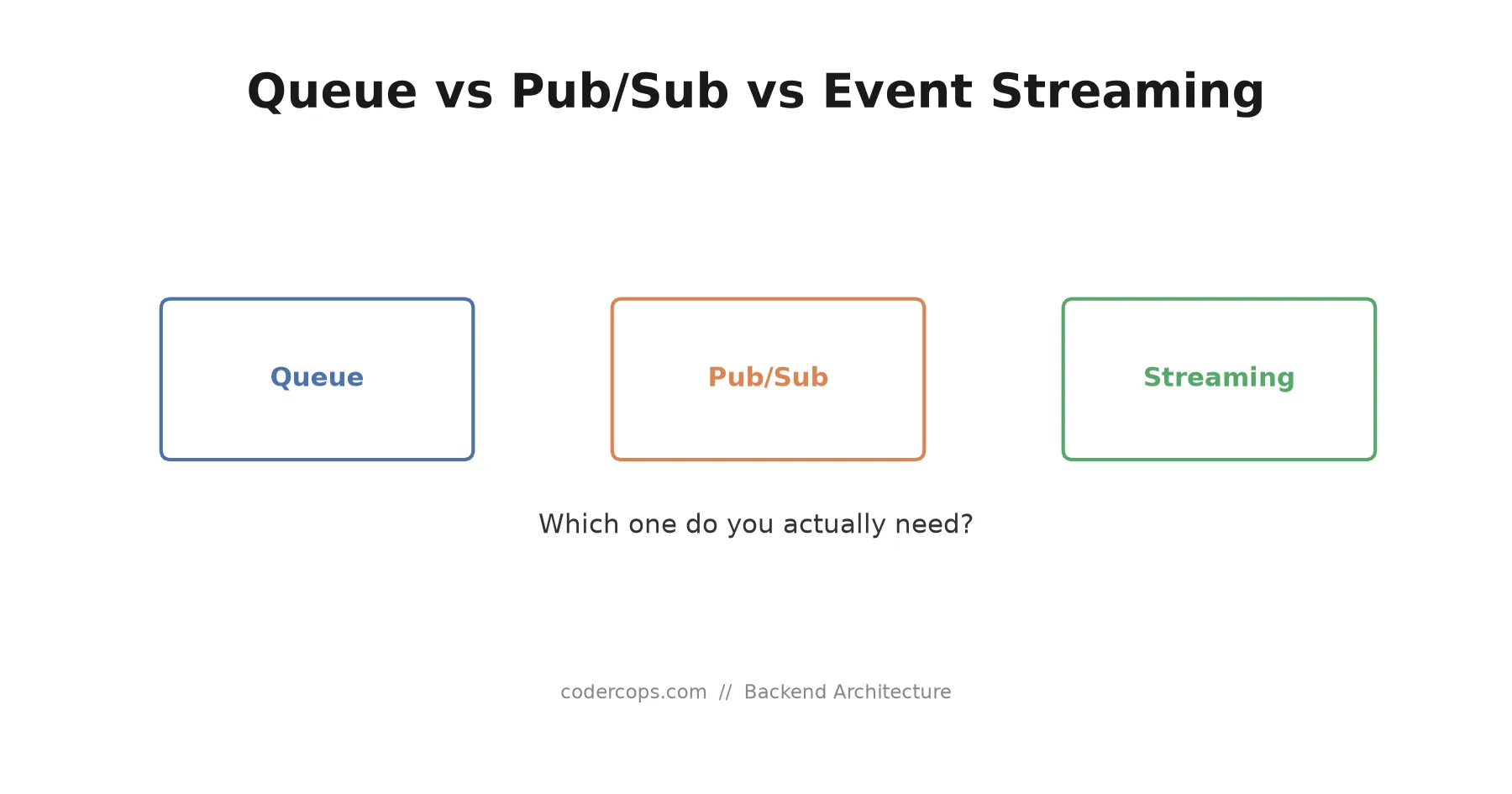
P.39All three move messages between services, but answer different questions about delivery, replay, and who reads what. The decision, and the failure modes.
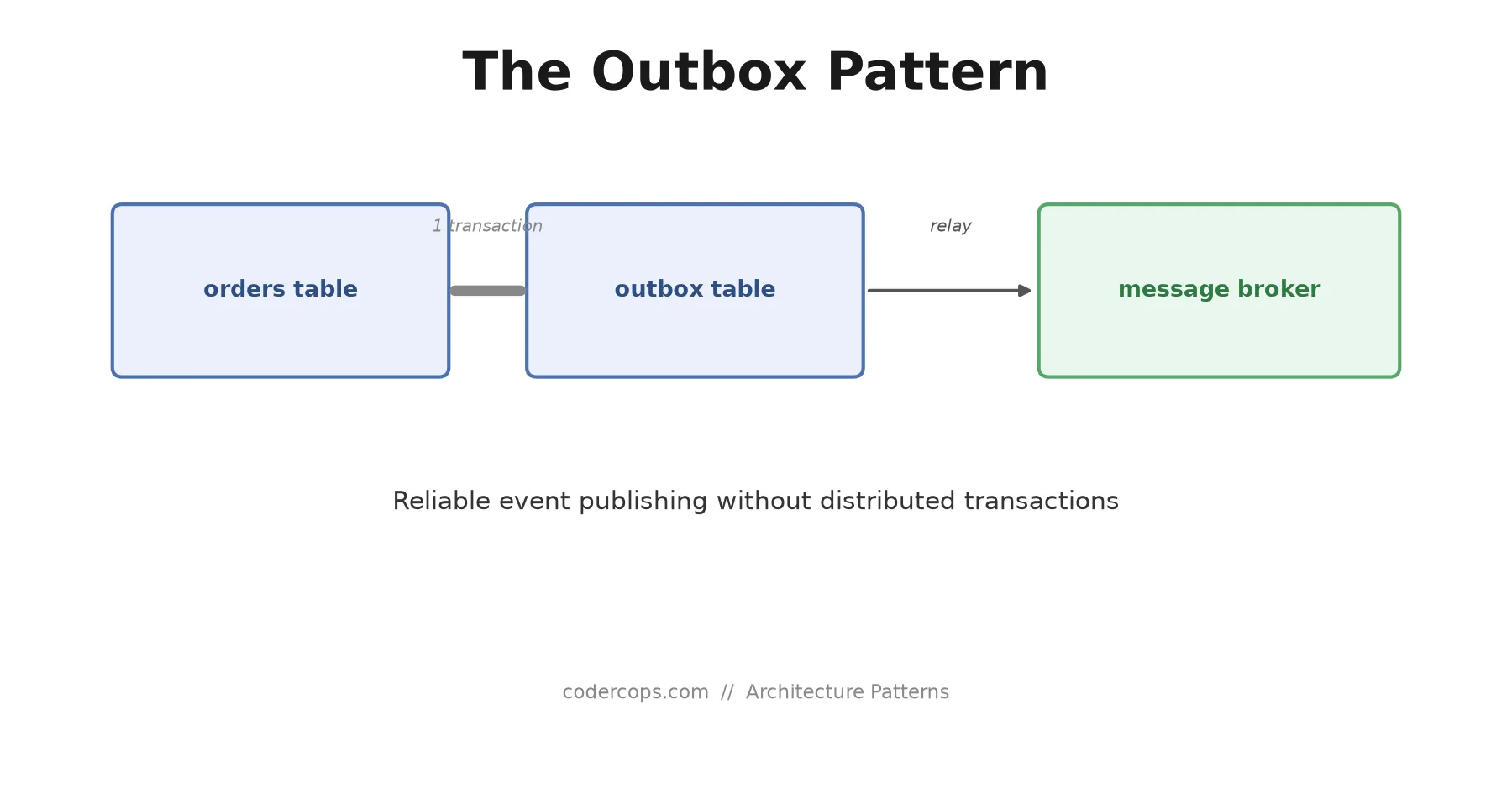
P.40Writing to your database and publishing an event are two operations, and a crash between them loses data silently. How the transactional outbox closes it.
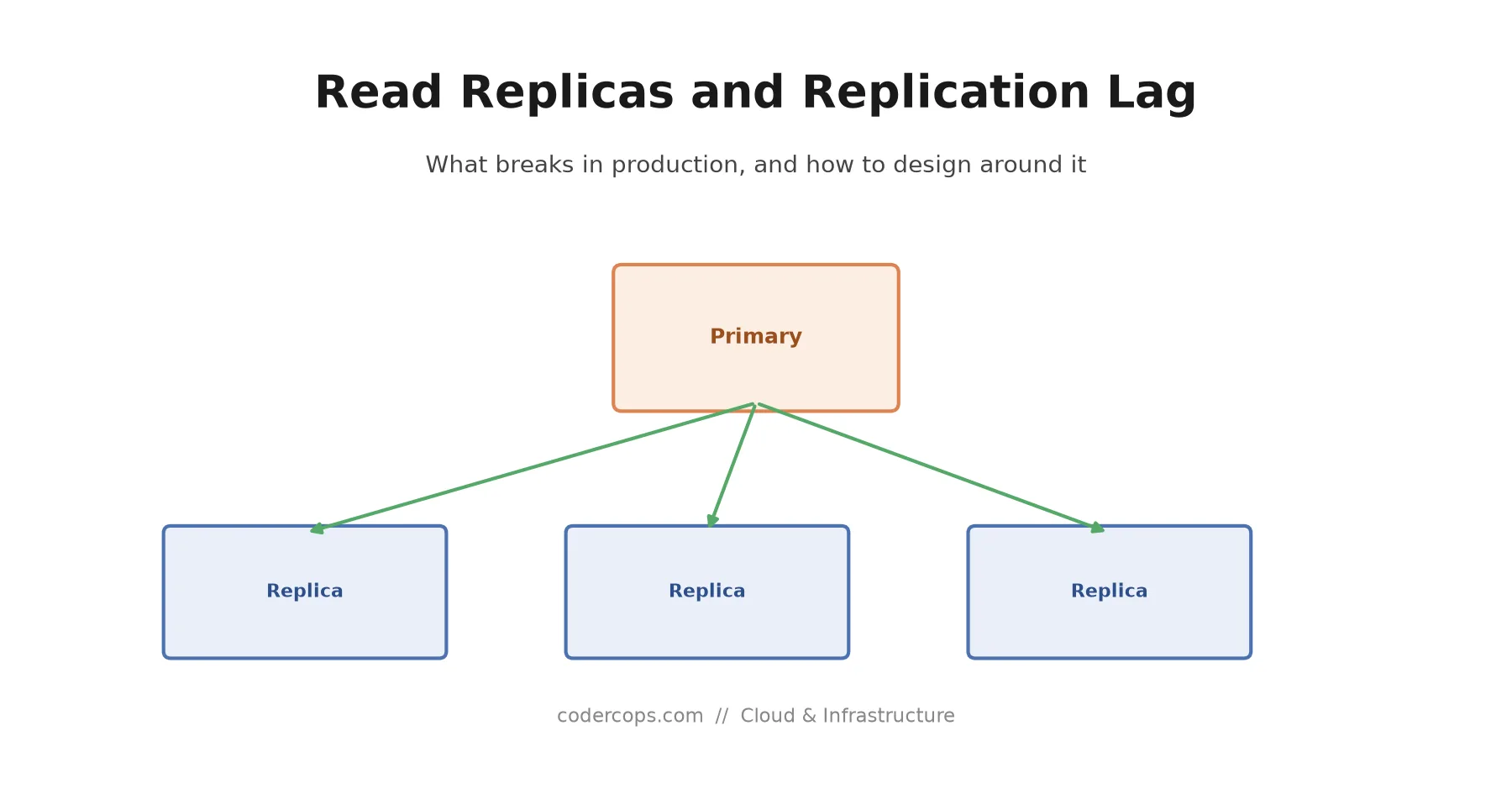
P.41Read replicas are the standard fix for read load, but they open a gap between writing data and reading it back. What lag breaks, and how to design around it.
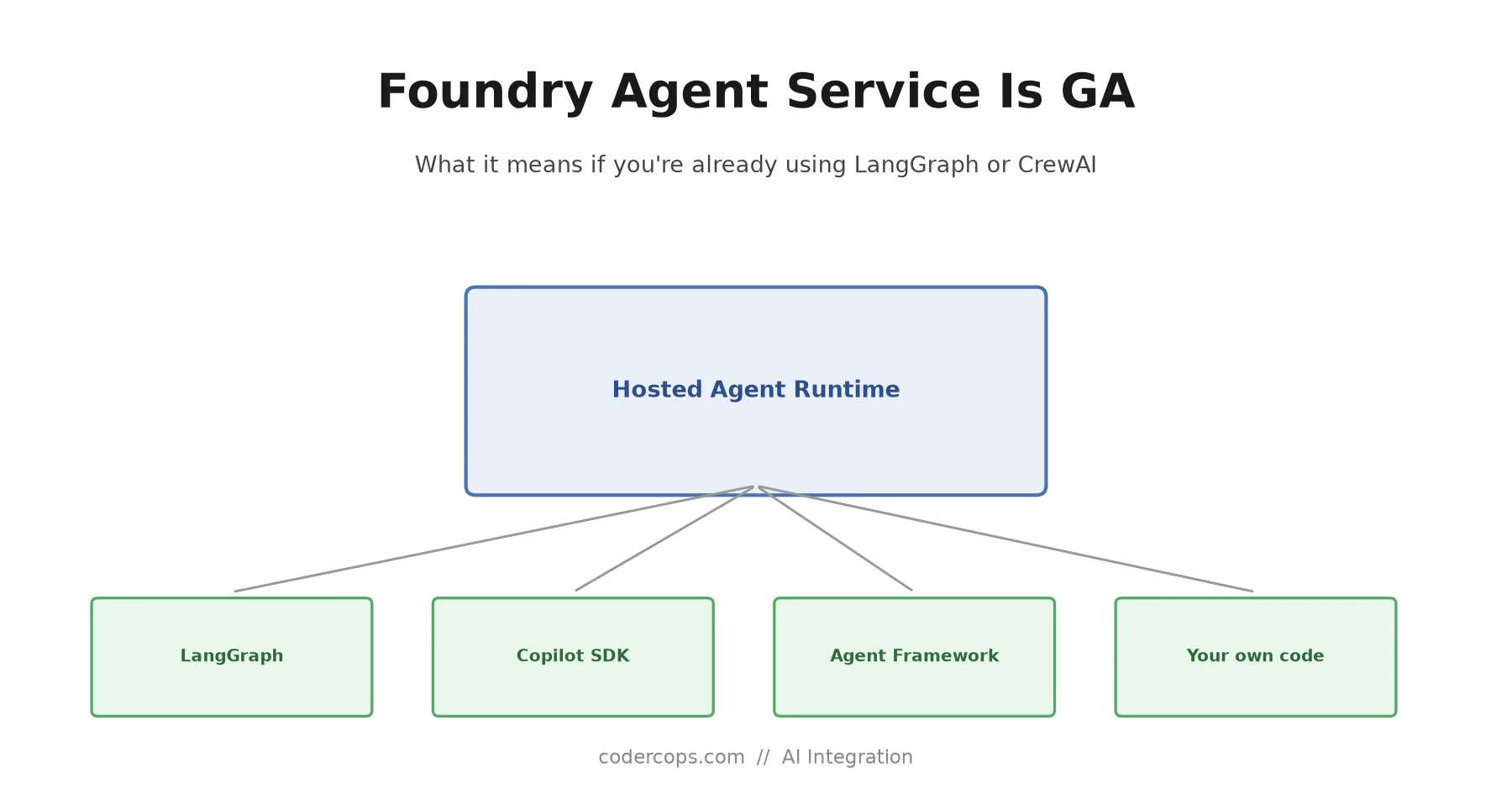
P.42Microsoft's Foundry Agent Service hit GA with a framework-agnostic hosted runtime. What's new, how sandboxing works, and whether LangGraph teams should move.
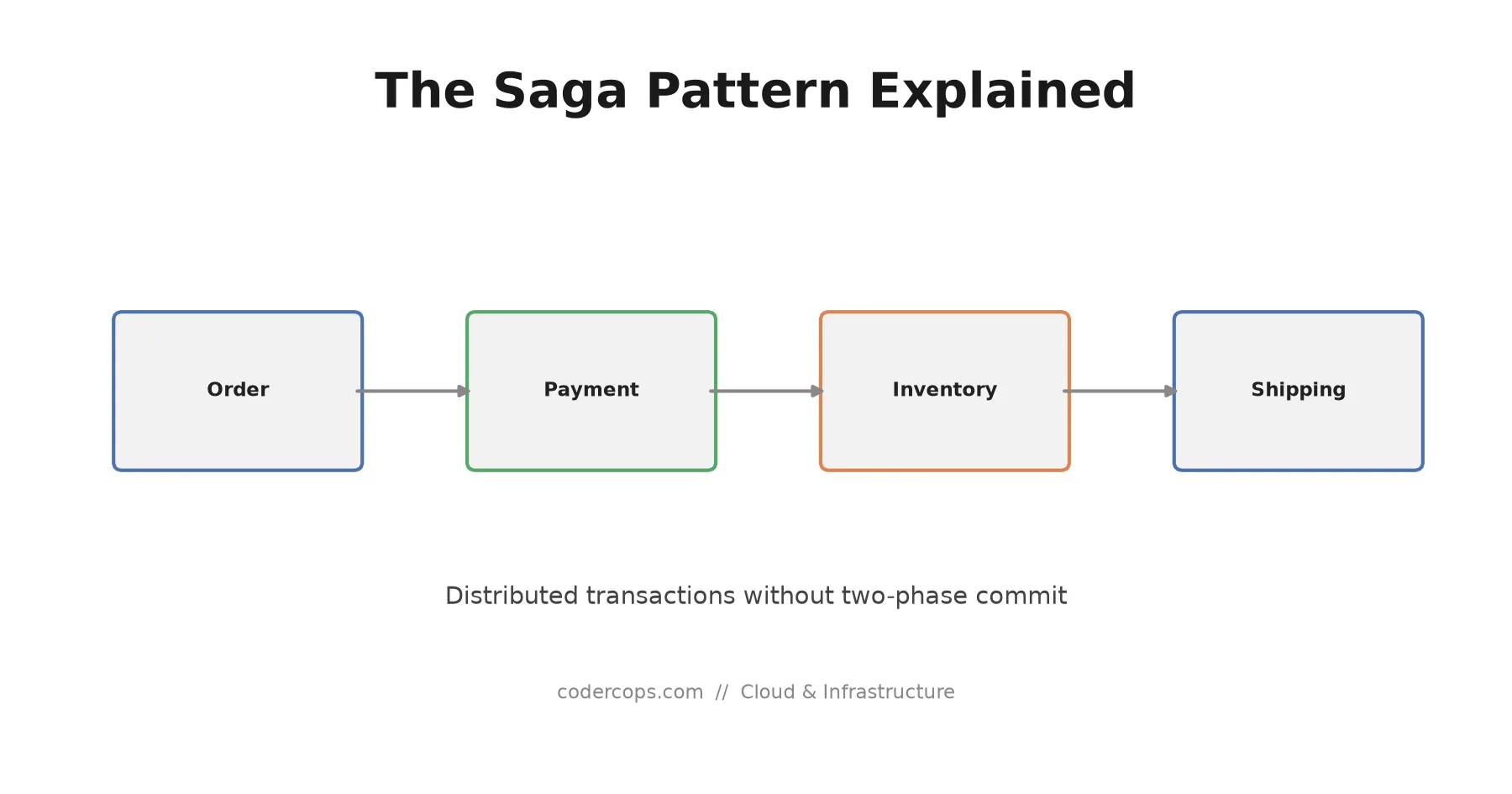
P.43When a transaction spans services you can't wrap it in one database transaction. Sagas use local transactions plus compensating actions. When that pays.
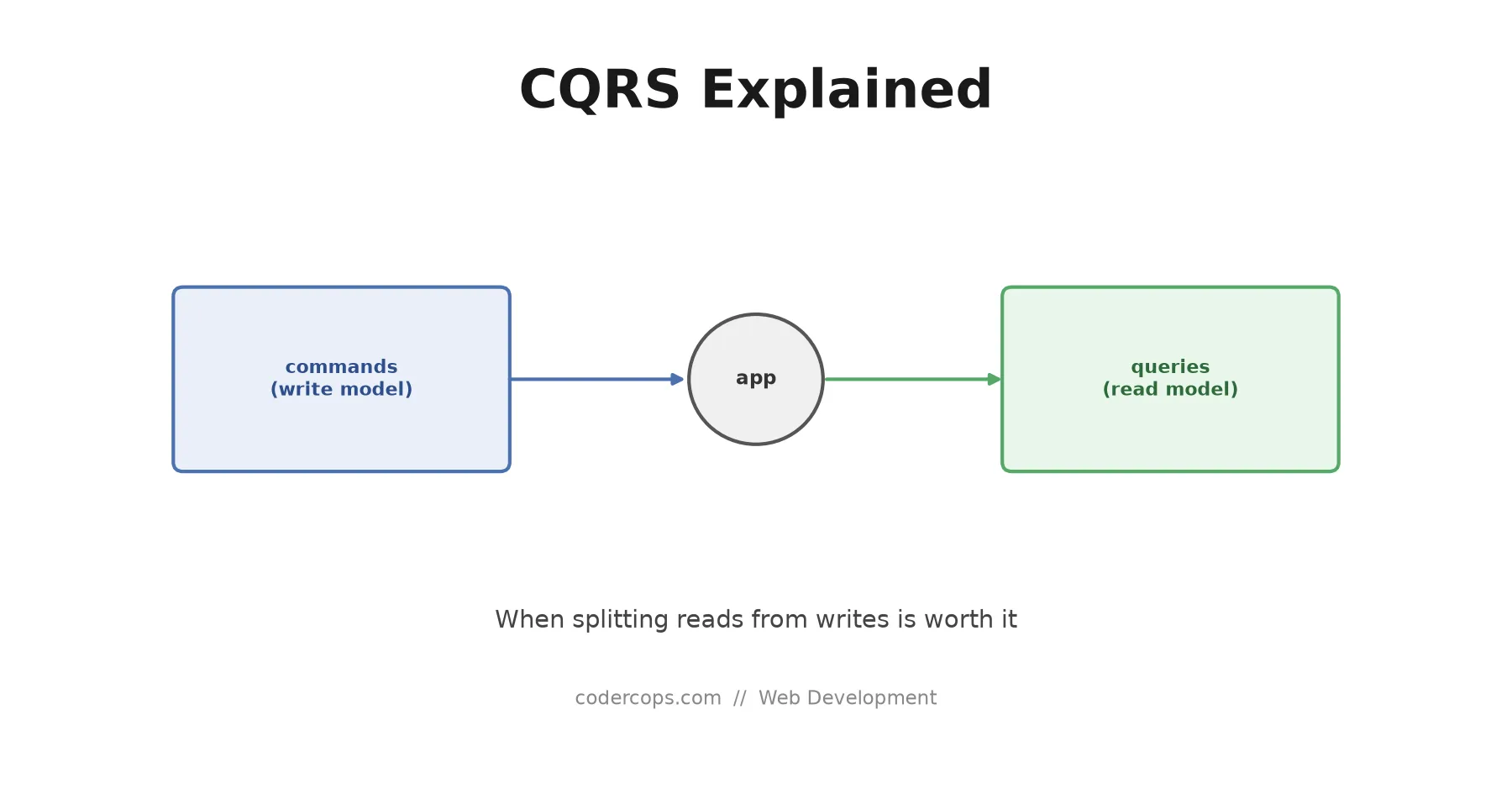
P.44CQRS separates the path that changes data from the path that reads it. It solves real problems and is heavily over-applied. When it earns its complexity.
P.45A circuit breaker stops your app hammering a failing dependency until it recovers. The three states, a minimal implementation, and how retries differ.
The DevOps engineer title now covers three jobs: platform engineer, SRE, and CI/CD specialist. What each does, what to screen for, and what the market pays.
Kafka is the default answer for message queuing at scale. But for teams running fewer than a million messages per day, NATS JetStream offers persistence, delivery guarantees, and a dramatically simpler operational footprint.
Multi-stage Docker builds cut image size by 80-90%, speeding up pulls, cold starts, and CI, while shrinking your attack surface and registry bill.
R2's zero-egress pricing looks compelling on paper. Here's when it actually saves money, when S3's ecosystem still wins, and how to migrate if you decide to switch.
Every cloud decision locks you in somewhere; the real question is which lock-in costs less. A practical framework for when to abstract and when to accept it.
Vercel dominates frontend hosting. AWS dominates enterprise infrastructure. Between those two extremes, Fly.io and Railway are the most practical choices for backend-heavy full-stack apps in 2026.
Workers AI runs open-weight models (Llama, Mistral, Whisper, embeddings) inside Cloudflare's network. What's useful, what the limits are, and when it fits.
Multi-cloud usually costs more in engineering time than the lock-in risk it prevents; most teams do better on one cloud with deliberate exceptions.
OpenTelemetry is the observability standard now. Most tutorials show you how to install the SDK and emit traces. Fewer explain which signals actually matter for web applications and which add noise without helping you debug anything.
HPA scales on CPU and memory. But most production workloads don't scale well on those signals. KEDA, VPA, and Goldilocks fill the gaps that HPA leaves open.
Neon separates storage from compute to make Postgres behave like a serverless resource. The branching feature is what actually changes the development workflow — here's how it works and when it's worth the migration.
From .env files to Vault to AWS Secrets Manager: a practical guide to storing credentials, API keys, and certificates without waking up to a breach notification.
A practical incident response process for small teams: severity tiers, on-call rotations, better alerting, and blameless postmortems, no SRE org required.
Service meshes promise secure, observable microservice communication. But most teams that adopt one do so before they need it. Here is how to decide, and what each option actually costs you.
P.60Explore the financial impact of the AI storage tax and the sharp rise in NAND and RAM costs, affecting enterprise IT budgets and cloud infrastructure strategies.